
Politics and Policy
“No dhongi dhagash”
Sincerity and genuineness of purpose are the hallmarks of a trustee
Getting the best new team of trustees for the Bombay Parsi Punchayet (BPP) is a vision of hope for our community which can be realized by every voter evaluating candidates through a checklist of questions. Here is my own checklist.
First, does the candidate have the required dhagash (zeal) for looking after the essential interests of not only the properties but of the welfare and progress of the Zoroastrian community as a whole? Not a "dhongi dhagash” — that is, not a pretended zeal — but a real deep and emotional-cum-intellectual involvement with the community that, if elected, he will really put service before self in all matters, and at all times. In this article ‘he’ everywhere includes ‘she.’
The measure of any genuine dedication or commitment is what one is prepared to give up for it. Let us ask ourselves: Is this candidate seeking election only for what he perceives to be the prestige and power of trusteeship or is he genuinely answering the call of conscience, duty and service to the community? Is he sincere or insincere?
Genuine dhagash is a very rare quality. Unlike Jack’s beanstalk in the fairy tale, it does not grow overnight. Voters can distinguish genuine dhagash from the fake version by ascertaining the candidate’s past track record. If a candidate has a good track record of service and committed dedicated work in the interest of the community in varied fields, such a candidate is likely to continue his commitment and dedication if elected as a BPP trustee. If the required dhagash is there, concern for the poor and needy, prompt action wherever required, and sparing the huge amount of time and energy that will be required will follow almost automatically.
A word of caution: While we require zeal, we do not require zealots — of any type, either ultra radical or ultra traditional. A zealot is an extreme partisan, a fanatic. Balance and moderation in most matters is alien to him. Courtesy and consideration for others who may have a different view are not his strong points.
Zealots destroy more than they construct. Zealots cannot disagree without being disagreeable. Zealots have a tendency to rant and rave. They accuse and abuse. Any debate with them becomes an exercise in defamation.
Their approach is essentially one of arrogance. The possibility that they may be wrong does not occur to them. Over-zealousness comes in the way of normal and balanced decisions which require deep thought and careful weighing of different viewpoints in the ultimate interests of the community.
In conclusion, while we need a kharo (true) Zarthoshti as a trustee, we do not want any self-proclaimed and self-certified kharo Zarthoshti who is convinced, beyond argument, that every one who just happens to take a different view from him is a khoto (false) Zarthoshti and must be publicly villified as such.
Another word of caution. We must choose only those candidates who are "team players,” not courtiers or hazoorias. We need candidates who can win friends and influence people. We need candidates who can form genuine ties of affection, friendship and understanding with their fellow trustees and who would therefore hopefully do their best to build a consensus among the trustees on all important matters and can gracefully give in on matters of comparative unimportance.
The second question of equal importance is: Does the candidate have the required high level of management and organizational skills? Voters must consider whether the candidate is merely a head nodder or head user. Can he think like a man of action and act like a man of thought?
Communal leadership necessarily implies leading the community from where it is in any field (including the controversy ridden fields of housing and problems relating to disposal of the dead) to where the leader thinks it ought to be led. Leadership in any field requires the abilities to listen, consider, decide and act. Therefore the candidate must be a person of farsighted vision, without being merely a visionary. Idealism and practicality must go hand in hand.
The candidate must be a good communicator, both verbally and in writing, and must be able to inspire and unite our people to work for what he believes in. As a leader he must think deeply and discuss frankly with co-trustees before he arrives at conclusions of any importance. However, once he arrives at a conclusion, he must not keep chopping and changing to be "popular.” He must not keep waffling or going round in circles — one step forward and one step backward — in a Mexican shuffle!
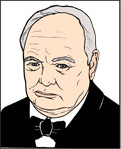
He must be prepared for opposition even if the opposition turns ugly. The life of a leader is seldom easy. Courage is an essential quality of a leader. Sir Winston Churchill called it the guarantor of all virtues.
As a leader of a community which, according to Mahatma Gandhi, was beneath contempt in numbers and beyond compare in its contribution to public life, the candidate must be a person who commands — not demands — respect wherever he goes and works. Can he remember at every stage that as a trustee he must be, and remain, trustworthy?
His words and actions must create confidence, and not confusion or contempt in the community!
The third question in my checklist is: Is the candidate a person of essential humanity, humility and humor? As poet Rudyard Kipling says, can he talk with crowds and keep his virtue or walk with kings and not lose the common touch? Can he avoid pride, the never failing vice of fools? As a prospective good leader does he realize that humility is the basis of every virtue and that "he that is humble, ever shall have God to be his guide?”
Last, but not the least, every candidate must have an innate sense of humor, which he can direct against himself. A candidate with such a sense of humor is likely to be both humane and humble. He will be on the same wavelength as the average Parsi, for ours is a community which loves to laugh and has lasted for these many years, by laughing at itself and laughing its way through the problems of life, realizing more often than not that if it did not laugh, it would cry.
Voters will have no chance of ascertaining what the qualities of the candidates are unless they happen to know the candidates personally or come in touch with them through meetings and discussion groups which can be organized either by the Punchayet or by some concerned organizations.
We must aim for the ideal and hope for the best. Once the trustees are elected, we must give them a fair chance to prove themselves and support them wherever we can, remembering that it is always easier to criticize than to be constructive.
The trustees, on their part, will need to remember that there are no bad soldiers, only bad officers and that the greatest generals are those who make the fewest mistakes.
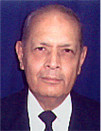
A solicitor of the Bombay High Court and an advocate of the Supreme Court, Nadir Modi fought to uphold the legality of the covenants restricting the use of over 100 buildings in the Mancherji Joshi Parsi Colony, Dadar, for Parsi Zoroastrians. Founder chairman of the Young Collegians Zoroastrian Association, he is chairman of the Athornan Mandal and a trustee of the H. B. Wadia Atas Bahram.
◆ ◆ ◆
From the archive