
Books
Religious reprints
The Dasatir by Sheriarji Dadabhai Bharucha. Pp: 56. Price: Rs 150. Zoroastrian Ethics by Maganlal A. Buch. Pp: 201. Price: Rs 250. The Religious Quest of India. The Treasure of the Magi. A study of Modern Zoroastrianism by James Hope Moulton. Edited by J . N. Farquhar and H. D. Griswold. Pp: xiii + 273. Price: Rs 375. Extracts from the Narrative of Mons. Anquetil Du Perron’s Travels in India by Kavasji Edalji Kanga. Pp: viii + 104. Price: Rs 250. Iranian Studies by Cursetji Erachji Pavry. Pp: xiii + 239. Price: Rs 375. Treatise about The Significance of the Sacred Girdle by Raham Asha. Pp: 126. Price: Rs 200. Reprinted and published in 2006 by The K. R. Cama Oriental Institute, 136, Bombay Sama-char Marg, Fort, Bombay 400001.
The Editor’s instructions were quite clear and specific: "Not more than two paragraphs per book.” I wondered whether the set of six books on the Zoroastrian religion, with its profound philosophy, teachings, ethics, morals, etc could be adequately condensed. You may think it is impossible. I venture to say, it is possible.
Every Parsi and Iranian Zoroastrian family should possess a complete set of these six excellent books, very reasonably priced at Rs 1,600.
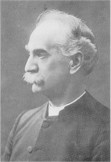
James Moulton: Authoritative writer
These books have been printed/reprinted by The K. R. Cama Oriental Institute from the proceeds of the munificent fund established by the generosity of the late Faridoon Zartoshty and his brother Mehraban. No tributes can pay enough accolades to their liberal generosity, farsightedness and vision. They deserve the deep gratitude of the community in general and of several deserving causes in particular.
The Dasatir is a paper submitted by Sheriarji Dadabhai Bharucha, the very first pupil of the eminent scholar K. R. Cama, at the Tenth International Congress of Orientalists held at Geneva in 1894. It is a rare book, consisting of a collection of 16 sacred revelations, said to have been written in asmani (heavenly) language. The Dasatir differs from Zoroastrianism in that it advocates self mortification, ascetic practices and unnecessary mortification of the body. The Zoroastrian religion is opposed to this doctrine. Only one manuscript of the book is reported to have existed. It was purchased in 1778 by Mulla Kaus, father of the learned scholar Mulla Feroze.
The authenticity of the work is doubtful. There is no perception of time and space in the invisible world as in this material world. But some doctrines in The Dasatir are in agreement with the Avesta texts. Similar to Zoroastrian philosophy and teachings The Dasatir also believes that the first creation is Behman-Vohu-man.
This book would be of great interest to the intelligent readers. It is brief and makes comprehensible reading.
Zoroastrian Ethics by Maganlal A. Buch is unique. The author, a non-Zoroastrian Indian scholar, has studied the religion of Zarathushtra in depth and has fully comprehended its philosophy, ethics and morals. As is well known, the Maharaja of Baroda was one of the most progressive rulers and a great patron of arts and learning. Buch undertook the study of Zoroastrian ethics as a Fellow in the Seminar for the Comparative Study of Religion established in the College at Baroda. The author refers to the available Zoroastrian literature, historical and social conditions. The general moral attitude, values of life, industry and indolence, truthfulness and deceit, purity and impurity, the ethics of sex relations and other rites and virtues are elaborated on.
A positive view of life is taken by Zoroastrians. There is no mysticism, no attempt to promote deeper and darker shadows of life. The author refers to Dr Dhalla’s observation, "Religion should be such that its ideals can be applied to our work... Its teachings should be applicable to the exigencies of daily life. This is the characteristic of Zoroastrianism through its very simplicity.” The individual contribution to the sum total of the good of the world receives special recognition in Zoroastrian Ethics. The concept of Parsi ethics is Asha where righteousness and purity are given the greatest importance. The Parsi ethics appear to be ethics of utility. If we desire that our youth should imbibe and practice the religion of Zarathushtra and follow the moral and ethical principles laid down by him, this magnum opus of Buch needs not a casual reading but an in depth study by all Zoroastrians.
The Religious Quest of India. The Treasure of the Magi. A Study of Modern Zoroastrianism gives a comprehensive account of the subject by an English author, James Hope Moulton, who was the Fellow of the Kings College, Cambridge. A highly qualified and authoritative writer he was known for his in-depth personal study. In this very absorbing book, first published in 1917, the author discusses various subjects such as Zoroaster and the Parsis, the teachings of Zarathushtra, after Zarathushtra, Zarathushtra and the outside world and the religion of the later Avesta. He quotes from Yasna 493: "I forbid all intercourse with the false.” Alexander is said to have burnt an Avesta which according to Hermippus extended to two million lines. The interpretation of dreams and the practice of astrology were famous accomplishments of the Magi. Neither has any place in the Avesta. The author opines that the Magi were responsible founders of the Sasanian dynasty and established Zoroastrianism as the religion of the state. The author pays great tribute to Adarbad Mahrespand who set himself to battle the heresies which had for long been distracting the faithful. He has a chapter describing the Parsis of his time, concentrating on the attitudes, approaches, customs and religious practices. He depicts facts as he sees them, refraining from giving his own personal views. The author opines that the reformers in the Parsi community took a missionary stand while the orthodox were interested in caste privileges.
The invitation to visit India had come within a week of losing his dear wife. While in India, he lost his eldest son, who was killed when fighting in France. This book is dedicated to his son. His lectures are published in both English and Gu-jarati.
Moulton realized after coming to Bombay that he had to keep excellent relations with the Parsis if he was to get firsthand knowledge, nay even well guarded secrets, from them. When a sanctum sanctorum of an atash behram was under repairs and the holy fire was shifted to an adjoining room, he was shown the inner room which normally housed the holy fire.
The Englishman had to return to England when the World War was nearing its end. Fearing that he may not reach England, he had the foresight of forwarding one advance copy of the manuscript. One copy he carried with him. The tragic part of the story is that when he sailed for his motherland, his steamer was torpedoed in mid-sea and he along with the manuscript found a watery grave.
Kavasji Edulji Kanga was a scholar of great repute the world over. He had the unique distinction of being the first scholar to translate into Gujarati, the entire Avesta. He translated the Vendidad, Yasna, Visperad, Khorde Avesta and the Yashts. He was the reputed author of the Practical Avesta Grammar and of the complete Dictionary of the Avesta Language. His authoritative books are of immense value to all scholars of our sacred scriptures.
In 1754 Anquetil du Perron had an occasion to see at Paris four Zend leaves copied from the Vendidad Sade which was at Oxford. He immediately resolved to go to India and acquire from the Parsis the knowledge which he needed. He was the first foreign scholar to tour India with a view to learning from the Parsis at first hand all about the very first revealed religion. At that time, travel in India entailed very great risk to life. Language difficulties surrounded all. The traveler did not know the terrain and had to depend on the natives to guide them. Great credit goes to Perron for knowingly bearing these countless difficulties solely with the purpose of ascertaining for himself at first hand the religion of Zarathushtra, his teachings, his philosophy morals and the ceremonials of Zoroastrians. He started the study of the ancient languages of Iran.
In Extracts from the Narrative of Mons. Anquetil Du Perron’s Travels in India, the author throws light on the ceremonials and ethical system of Zend and Pahlavi books. Depending on their ranks, Zarathushtra instructs his disciples to cultivate different qualities: kindness, justice and fairness in princes and chiefs, submission and respect in subjects, purity and patience in priests and perfect obedience to the precepts of the religion in laymen. Further, all men were directed to be in peace with one another, to take care of the world, to be as good as one’s word, to plough uncultivated land, to sink wells, to render the flocks numerous and to kill noxious animals.
Perron stayed in India for several years. On his return, he carried with him a very large and valuable collection of Zoroastrian manuscripts. The books greatly interested scholars and a new move of interest in the religion of Zarathushtra started in Europe. All credit to Perron for this unprecedented interest in the Zoroastrian religion, its sacred books, ceremonials, customs, etc.
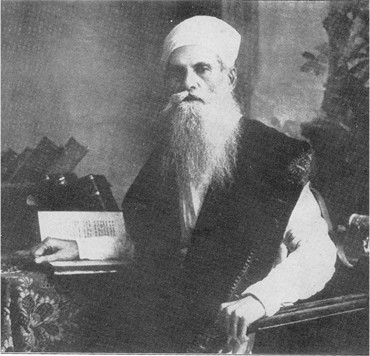
Cursetji Pavry: great religious insight
Cursetji Erachji Pavry has generously dedicated the book Iranian Studies to the scholars of the West. The western scholars had desired that some of the Gujarati scholarly works on Iranian studies be translated into English for their benefit. Hence the book. Being a pupil of Sheriarji Dadabhai Bharucha, Pavry’s insight into the religion of Zarathushtra is great and he explains some points very convincingly. He was the principal of the Tata Zend School at Navsari when he was barely 30. He has richly contributed to the religious literature of the Parsis.
The author refers to the early atash behrams of Iran as monuments of Persian glory. The connection between atash and behram, the enthronement of fire and the privileges associated with the foundation are elaborated. The wonders of the golden age of Jamshid are explained. Pahlavi literature is listed and duties to be performed by the Zoroastrians specified.
The performance of charitable deeds and their results are given at length. Great details are given on the essential requirements in mobeds, their duties, various ceremonies, etc. Patronage to religious knowledge and the charities of the Parsis are praised, as well as their values, devotion to religious studies and research. A full chapter is devoted to the final resting place of the Parsis, the astodans. Cherishing the memory of the dead was of great significance to the Iranians. Ceremonies connected with the dead and their significance are explained in depth. A study of this would eliminate most aspects of the present controversies. Another chapter is devoted to the Parsi dakhma, dar-e-meher, the abode of Meher Yazad, the Dar-e-Meher at Navsari…
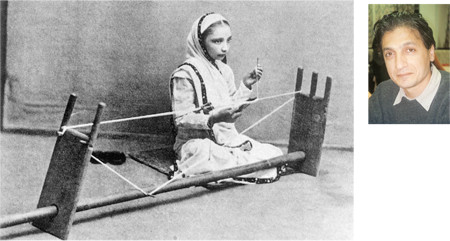
Kusti weaving in olden times and Raham Asha (above)
The author’s in depth study of the religion of Zarathushtra impresses the reader at every stage. This book must be read — nay studied by all Zoroastrians — particularly the priestly class and should be a text book in our madressas. Our mobeds would be much better informed regarding the ceremonies they perform and their spiritual significance. This book would enlighten the behdins too who desire to understand the main gist of our prayers and their spiritual significance.
Treatise about The Significance of the Sacred Girdle by Raham Asha is a lovely little book, profusely illustrated with excellent photographs. One depicts a Parsi lady weaving the sacred kusti, others refer to the ceremonies like navjote, navar, wedding, etc. It would have been an excellent idea to make the book simple for our youth to follow. Unfortunately in the chapter pertaining to the significance of the sacred girdle, the author has used "religious and scientific language” which makes it difficult for ordinary readers to follow what the author has in mind.
It was Yima who is said to have introduced the wearing of the girdle by male members of the Perso-Aryan people. After Zarathushtra, women too were allowed to put on the same.
◆ ◆ ◆
From the archive