
Books
A classic trio
The Parsis — Classic Collection: The Parsi Religion by John Wilson. Pp: 610. Price: Rs 495. The Parsis: Essays on their Sacred Language, Writings and Religion by Martin Haug. Pp: xlviii + 427. Price: Rs 295. Zoroastrianism: The Religion of the Good Life by Rustam Masani. Pp: 189. Price: Rs 225. Published in 2003 by Indigo Books, paperback division of Cosmo Publications, 24-B, Ansari Road, Darya Ganj, New Delhi 110002. Price for the set of three books: Rs 900.
Why would a publisher take two of the most hated authors in a large section of the Parsi community, reprint their seminal works on the religion of Zoroastrianism, and put them out in the market in an omnibus, along with the mild-mannered Rustom Masani, forming the trilogy? To fuel a century-old controversy once again? Or, to enable a new generation to know what had much incited their ancestors and be the judge in a new age?
Possibly neither of the two. It could just be ignorance, for the blurbs seem to describe both the works glowingly as welcome additions to Zoroastrian studies. Of John Wilson’s work on The Parsi Religion (why he has not titled his work ‘Zoroastrian religion’ beats the reviewer!) we are told that "these pages provide an insight into the fundamental principles of this religion and its code of ethics. Written by an eminent Orientalist, the book has remained a standard classic for a long time.” And for Martin Haug, the blurb claims that "this is the most detailed and authentic study on the Parsis, their sacred languages and writings...and their religion.”
Truth to tell, the blurb writer has not erred in his job. For the two books put together, or read singly, do tell of a thoroughly well-researched job undertaken by the authors. Wilson, whose work preceded Haug’s by a few decades in the 19th century, has patiently and painstakingly pored through Zoroastrian manuscripts over the ages, and on reading and understanding them, come to a heretic conclusion which he expounds in this book. He writes, "We believe that the Christian religion is that alone which has the truth on its side, and we wish all men to come to Christ and be saved...there is only one religion which brings man to knowledge and civilization, all other religions keep him in darkness.” It was statements like these that led to the conversion of two Parsi youths who opted for Christianity, and a long-time boycott and hatred for Wilson and Wilson College in Bombay where he taught.
What made Wilson come to this heretic conclusion is now offered once again to the community in this reprint. The question is, who in this modern age and time would be interested in reading it? A 600-page tome with detailed appendices is not every youth’s, or for that matter every Zoroastrian’s, reading matter. But, thanks to the reprint, even a rapid read of certain chapters could convince a modern day reader why the Parsi community detests Wilson. It disproves the ‘alleged’ prophetical mission of Zoroaster, impugns the external authority of the books which the Parsis reckon the standard of their faith and practice, complains about a want of due sense of responsibility, depravity and guilt of man as apparent in Parsi books (a whole lot of Parsi literature is brought into force here) and the consequent unsuitableness of the means of salvation proposed in the Zend Avesta.
Of particular denigration is the Vendidad, treated by the Parsis as a holy book on rites and tenets of the religion. Wilson rubbishes the work, attacks its contents, and wants the reader to exclude this book from Parsi literature and scripture. Whereas a book on rites and rituals and etiquette may not always be the Prophet’s words, they form an important treatise in all religions; a fact Wilson seems to overlook. The fourth book in the Vedas (the Atharva Veda) is certainly not a patch on the wisdom contained in the Rig Veda, but it cannot be denied its place in the quartet because it talks of the more mundane practice of the faith.
A few decades later when Haug, after years of research in which he visited libraries at all distant places in India and the world, compiled his "essays on the sacred language, writings and religion” of the Parsis, he seems to have come to a similar conclusion: rituals were not an essential part of the religion, as they are not mentioned in the Prophet’s hymns. To come to this conclusion, he researches the sacred writings on the basis of reports of the Greeks, Romans, Armenians, Mohammedans, Europeans and Zoroastrian texts. He points out the differences in the language of the Avesta, erroneously called Zend, Pahlavi and Pazand, translates the Yasnas, Yashts and Gathas and the shorter texts, such as Nyaishes, Afringan, Gahs, etc. And, of course, like Wilson, the Vendidad, offering heavy notes and comments to bolster his argument on all 22 fargards (chapters) in the book. Heavily annotated with footnotes, the book once again is no easy read in modern times, and perhaps, because it lacks the pamphleteering style of Wilson, not so engrossing as well. But, it is apparent that Haug has worked hard on his book, his erudition and labor showing on every page. His is not a book aimed at scoffing at the religion, but a treatise on documenting the magnificent panorama of the cultural and religious richness of the Parsis and their writings and literature.
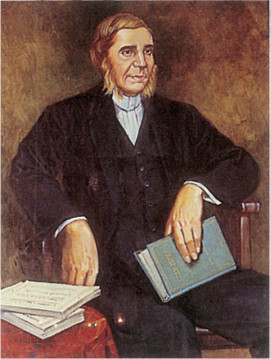
Wilson: pamphleteering style
However, coming as it did within a few decades of Wilson’s sweeping indictment, Haug’s book too got tarred in the same brush, for once again, what was apparent through his work was that the only true religion and its ethic lay in the Gathas, and not in any of the other works. This is a misconception, as many level-headed Zoroastrians yet hold, and Haug and Wilson are being held responsible for pioneering this ‘Gatha-only’ society. The Gathas contain the metaphysics of our religion, but the Bundahishn which deals with our Creation story cannot be dispelled; nor can the Arda Viraf Namah, which tells of life after death, and the conditions in a Zoroastrian hell and heaven. The Vendidad prayers contain the liturgy and purification part of Zoroastrianism, and to debunk them as done by many Western scholars and their acolytes, is possibly a grave mistake, responsibility of which must lie at the doorstep of Wilson and Haug.
The third book in the trilogy brought out by Indigo Books and Cosmo Publications is a much-reprinted edition of Masani’s book, detailing the social and religious system of the Parsis. The second part of Masani’s book on rituals, describing many Parsi ceremonies of purification, initiation, consecration and liturgy are, as acknowledged by the author, drawn from Sir Jivanji Modi’s "excellent thesis on the subject, The Religious Ceremonies and Customs of the Parsees,” and hence offer no new fresh insights or interpretations on the subject. The first part enthralls, as Masani writes in a simple and engaging style on various aspects of the religion, including cosmology, eschatology, without any frills of scholarship. He also explains to the reader the concept of the seven Ameshaspands (immortals), the two primeval principles of good and evil, and dualism in Zoroastrianism. Probably, the reason why the book forms a part of the omnibus is that Masani too with his Western education and upbringing, is more inclined to look at matters with a ‘catholic’ viewpoint, though not as didactically or forcefully as Wilson. Yet, the book is strewn with comparisons with Christian saints, Christian liturgy and practices.

Masani: engaging style
The three books in this "Classic Collection” are no doubt worth a read. But, in an age, where CDs and MP3s have replaced manuscripts, would they attract readers? The Gathas are a complex set of verses, their interpretations never the same because the language in which they were recited is rich with puns and similes, and the break-up of syllables determines the true meaning, which can be quite different from the reading. That, in itself should outdate the books, and many of the translations available of our texts. A new CD, we are informed, has just been released, wherein "the Gathas are recited as per the ancient Yasna tradition in the traditional way as stipulated in the Avesta.” Such a work could be more relevant and more authentic, as it could shed greater and clearer light on our ancient languages and how our prayers were uttered, leading to a better and more authentic translation.
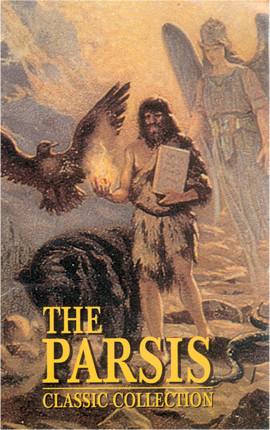
One final quibble with the omnibus: the overall jacket encompassing the three books has an illustration which on first sight looks more out from the Old Testament than the Avesta. But for the ball of fire held in one hand, the central character holding a tablet in the other reminds one more of Moses than Zoroaster coming down a mountainside with a snake crawling past, a bear at one side, and an archangel looking on. Maybe, the artist too got influenced by Wilson and Haug!
Homi J. RogerS
◆ ◆ ◆
From the archive