
Books
Children of a lesser God
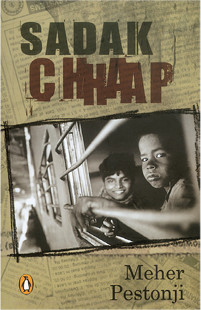
Sadak Chhaap by Meher Pestonji. Published in 2005 by Penguin Books India Private Limited, 11 Community Centre, Panchsheel Park, New Delhi 110017. Pp: 190. Price: Rs 250.
Sadak Chhaap by Meher Pestonji. Published in 2005 by Penguin Books India Private Limited, 11 Community Centre, Panchsheel Park, New Delhi 110017. Pp: 190. Price: Rs 250.
Meher Pestonji’s second novel Sadak Chhaap takes the reader into the at times sordid, at times pathetic, but always brave world of Bombay’s street children. This is not a book that has been written as a result of armchair research into exotic orientalism. This is a book which is grassroots and an outcome of the author’s own experience as a social activist and her connections with street children. In fact the book is dedicated to street children like her protagonist, Rahul.
Sadak Chhaap — which translated from Hindi means ‘Street Brand’ — is a kind of abuse hurled at children or adults who live on the streets of the city and have no roof other than the sky over their heads. The characters in Pestonji’s novel have for various reasons to live on the streets of Bombay and form a kind of comradeship, which sees them through emotional and economic crises. The brotherhood of the streets is of course a trope much romanticized in literature and cinema but not in this book.
Pestonji has presented her street children without any attempt at whitewashing or sentimentalization. They are presented to the readers with all their shortcomings. This makes the book realistic but at the same time the literary aspect of the novel is preserved by the writer.

Pestonji: street sensitive
Unlike in some of her earlier stories and novel, Pestonji has here grasped the art of narration and this book does read like a novel rather than a journalistic piece. The style is direct and lucid without any overt ornamentation of word or fancy images and metaphors. This is a definite plus point.
The plot of the novel revolves around the character of Rahul who comes to Bombay but in weak moments remembers his frail mother and the village he has had to leave behind. The craving that he experiences for love and affection are transferred to the abandoned baby he finds on the railway platform one night. The early part of the book is focussed on Rahul’ s bonding with this baby and the fight he puts up, with the help of a social organization and its ‘Didi,’ to save the life of the child. He begins to think of himself not just as an elder brother to this child, but its father.
For some time it appears that Rahul has escaped the meanness of the streets and will stay in the orphanage with the baby. Street life however reclaims the boy and he disappoints the nuns in charge of the orphanage who finally throw him out. On the streets once again Rahul finds that all his efforts to lead a decent, respectable life are being thwarted and he turns again towards drug abuse, petty crime and is even drawn into the despicable network of child sex workers who are abused by paedophiles — Indian and foreign — who make pornographic videos with these children and sell them for profit.
Rahul’s experiences with brutality and perversions are not papered over by Pestonji who lets the reader experience the full blast of the kind of abuse suffered by street children like Rahul at the hands of paedophiles. Pestonji has herself put up a fight and exposed similar rackets in recent years and this part of the novel obviously comes from her crusade and is replete with the anger she must have felt towards such abusers. However, a sense of balance is preserved as the author has shown how victims like Rahul are very often at least temporarily drawn towards such a life and enjoy the kind of luxuries and even physical pleasures until the sex turns brutal and leaves them emotionally and physically disabled.
When this happens to Rahul, he returns to the shelter of the social organization and to his ‘Didi’ Aparna. However, although he tries very hard to give up drugs and promises to save money to buy a taxi, when he would be 18, so that he would have a decent trade, he cannot resist the lure of the streets. So at the end of the book we find the sadak chhaap far from being a reformed drug addict, or child sex worker. We instead find him giving the slip to his well-meaning friends and loping off in the direction of the open streets and the ‘adda,’ the den, of his street friends. Aparna is thus deprived of the well-earned triumph of catching the paedophiles and exposing the men behind the racket. In real life though, Pestonji did succeed in having arrested the men behind the racket, even if many of her witnesses like Rahul had turned hostile.
What do we make of this book? Obviously it is not a book that one would read on a Sunday afternoon to while away the time, or a book which would provide literary pleasure. This is a serious thought-provoking book, which nevertheless has aesthetic appeal and the character of Rahul, although he refuses at the end to trod the straight and narrow path and chooses freedom and adventure again, is lovable and the reader will find it difficult to censure him too harshly. The kind of understanding Pestonji has towards sadak chhaaps like Rahul, could translate itself to the reader too who might regret the decision made by Rahul but cannot in the ultimate analysis hate him.
So this is definitely a book to be read by those who wish to understand the underbelly of Bombay and learn about the harsh realities of the life led by her sadak chhaaps.
Dr Nilufer Bharucha
◆ ◆ ◆
From the archive