
Books
The Soroushian saga
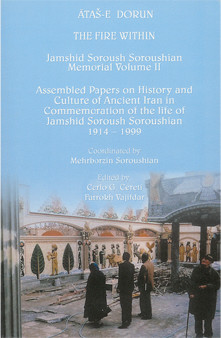
Atas-E Dorun The Fire Within: Jamshid Soroush Soroushian Memorial Volume II – Assembled Papers on History and Culture of Ancient Iran. Edited by Carlo G. Cereti and Farrokh Vajifdar, coordinated and published in 2003 by Mehrborzin Soroushian. Pp: xlix + 541. Price: £ 16.65 (paperback), £ 23.7 (hardcover) from Amazon.com
A citizen of Kerman, Iran, at the turn of the 20th century, circumstance spurred Jamshid Soroushian to scholarship and innate humanity made him a host to countless scholars who visited the country on their mission to learn what it meant to be a Zoroastrian in Iran. Over 40 original contributions in English and French by scholars of international repute, covering inter-disciplinary studies on ancient civilizations with particular reference to Iran, have been dedicated to his memory. The first volume of essays in Farsi, coordinated by Dr Katayun Mazdapour, has similarly been dedicated to him.
"He was profoundly interested…in the community’s traditions in every area of life, as his admirable publications attest…I count it a piece of greatest good fortune that I was myself briefly in a position to ask questions of him, and to profit from his patience, kindness and readiness to teach,” attests Prof Mary Boyce, adding, "This came about because, in the autumn of 1963, I was one of the succession of foreign scholars to whom, over the years, Arbab Jamshid and his most kind and gracious wife, Kha-num Homayun Kianian, gave generous and delightful hospitality, together with all possible help for the pursuit of their particular interests.” Boyce’s own contribution deals with "Some points of traditional observance and of change among the Zoroastrians of Kerman.”
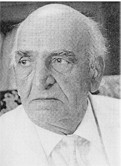
Jamshid Soroushian: scholar and humanist
A Foreword from the Family speaks of life as Soroushian found it in the early 1900s. "The misinformation and abusive language applied to the cause of ancient Iran that he encountered throughout his life was the ultimate motivating factor that set ablaze the fire within him and made the study and scholarship in the field of ancient Iranian studies a burning passion of his life. The impact of the first and second World Wars on his nation, birth city, family and himself gave him a sense of what he needed to do to ameliorate the situation. His personal quest to create awareness of the accomplishments and contributions of his forebears was a part of his mission…The pace of his writing increased as he advanced in age. Towards the end, through the very last days of his life, he continued to write with such a vigor that one could have drawn the conclusion that he was in a race with time to commit more and more of his knowledge and understanding to paper for the benefit of others.”
All the contributors to the tribute knew of Soroushian. Those who had known him personally have prefixed their scholastic articles with a few words about him. The range of topics include such varied fare as "Women and ritual in medieval Zoroastrianism,” "The nature of the ethical vision of Zarathushtra,” "Fire in Zoroastrianism,” "Gavri and Jeed dialects,” "Anquetil-Duperron and Rome,” "Truth and deception in Ancient Iran,” "Historical perspective on Zoroastrian and interfaith religious calendars,” "The Gathas and contemporary moral philosophy”…
In his piece on "Anglo-Parsi relations and the Iranian Zoroastrians” Burjor Avari, principal lecturer and coordinator for multicultural studies at the Manchester Metropolitan University, traces the development of the Zoroastrians in Iran and in India under the British. They raced in opposite directions – one to penury, the other to resounding success — until the establishment of the Persian Amelioration Society and the journey of Maneckji Ha-taria. The story of the savior of the Iranian Zoroastrians as told by Avari is set in the social conditions of both countries and the way the Parsis used their favorable status with the ruling colonial power to effect the amelioration of their Iranian brethren. In Avari’s words, "The Parsis had lived in India for nearly 800 years before Rustom Maneck, the Surat broker, started the interaction with the British in the early 18th century. During that long time they had neither the power nor the means to help the Iranian Zoroastrians. They acquired both during the British rule in India, because they avidly embraced the westernization project of the British without compromising their socio-religious identity. Their power and the means lay in their influence with the British and in the wealth that they accumulated through their British connection. The result was that a depressed community of 8,000 people, confined to desert towns of Yazd and Kerman, was given a new lease of life and a renaissance of spirit. The British Empire had not been without its uses for some people.”
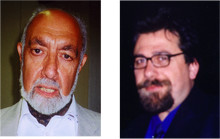
Co-editors Vajifdar (left) and Cereti
Writing about "Women and ritual in medieval Zoroastrianism,” Dr Albert de Jong, lecturer in the history of ancient religions at the Faculty of Theology, University of Leiden, notes, "Academic writing on the history of Zoroastrianism usually stresses the honorable and equal place women have in Zoroastrianism.” True in the ancient past and in modern times, the tradition in the intervening periods, after the fall of the Sasanian empire, was totally different, he argues. Quoting the Zoroastrian texts written in Persian dating from the 14th century, specifically the two known as the Sad Dar, de Jong writes, "Women are suddenly excluded from the most basic of all religious duties, the daily prayers.” Three times a day, de Jong notes, with quotations from the Sad Dar, women were required to stand before their husbands, fold their arms and say, "What do you think, so that I shall think the same, and what do you need me to say and what do you need me to do; what do you command?”
De Jong writes, "With these texts we have come a long way from the Sasanian situation, where at least upper class educated women could engage privately or for other women in rituals that are known otherwise as priestly. We are even further removed from the autonomous women, equal to men in religious matters, an image that was reconstructed on the basis of the earliest texts and of modern observance…If we want to think through the possibility that the change in women’s religious lives is somehow connected with the advent of Islam, it is important to be precise: it can have nothing to do with Islam as a religion or its views on marriage, conversion or women.” Offering a speculative explanation for the development, de Jong notes, "there seems to be a mechanism of tightening the grip on women by the men of a community, which perceives itself as endangered by a hostile environment... It is striking to see, in this respect, that the exclusion of women from religious life does not seem to have gained a foothold among the Zoroastrians who had moved to India.” Quoting from other texts, de Jong emphasizes that this development was a "blind alley and did not last very long. By the 15th or 16th century, it is no longer found in Zoroastrian texts.”
Harvard’s professor emeritus Richard Frye examines the Behistun inscription of Darius the Great "as tribute for an old friend and scholar Arbab Jamshid Soroushian.” Examining Darius’ claim to rule — he was not in the direct line of descent from Cyrus the Great — Frye notes, "From the Behistun inscription we may extract the following brief information.
"Cambyses was killed or murdered on his return from Egypt after an absence of three years. Darius took power by killing someone who was ruling in place of Cambyses, and by suppressing revolts against his own authority.
"Darius wished to justify his actions by proclaiming his legitimacy and recording it so all would accept his version of events. The much disputed question is whether he was lying or not.”
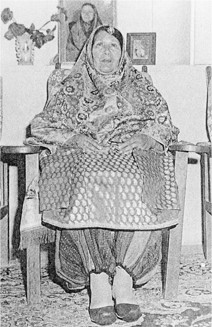
Khanum Homayun Kianian and (above) son Mehrborzin
Examining Darius’ Behistun claims in the light of evidence from Herodotus and Plato, as well as Babylonian texts and other cuneiform inscriptions, Frye writes of conflicts between the followers of Zarathushtra and those of the old Iranian deities. "The keyword was ‘if” in regard to the religion of the Achae-menid rulers. It must be remembered that in that age there were no concepts of orthodoxy or heresy, for religion had not become fixed, universalist and intolerant…Fanaticism, of course, always existed with or without an established religion, but probably more on an individual rather than a group or organized basis. I suggest that by the sixth century BC henotheism (concentration on one deity while recognizing the existence of others) was in vogue and the Achaemenid rulers followed this philosophy, as presumably also did Zarathushtra and his followers.”
The book offers rich and varied fare, intellectual speculation and known history, Gathic concepts and medieval Zoroastrianism, the rituals of consecrated fires and European interpretations… The contributors include Ervad (Dr) Jehan Bagli, A. D. H. Bivar, Jamsheed Choksy, Jerome Clinton (with a masterly analysis of the Rostam and Esfadiyar episode from the Shahnamah), Dasturs (Drs) Kaikhusroo JamaspAsa and Hormazdyar Mirza, Dina McIntyre, Farhang Mehr, Kaikhosrov Irani, Ali Jafarey and a host of other names high on the list of Zarathushtrian academics. But the most riveting chapter remains the recount of Soroushian’s life by the editors, how he journeyed from petty commodity merchant to one who shaped the life of the inhabitants of Kerman by his generosity, sagacity, physical and intellectual energy. And to think that this life might have been lost to an execu-tioner’s bullet as he escorted his father back after medical treatment in Berlin because the First World War had erupted and the father-son duo were stripped of their possessions and incarcerated as German spies as they traversed Syria with its French mandate! Reduced to begging for food to survive, it was a sympathetic villager who managed to get the word across by telegraph to Iran and an astute Arbab Keikhosrow Shahrokh who intervened on their behalf with the French embassy in Tehran. It is a tale told with sympathy and drama and deserves to be read.
◆ ◆ ◆
From the archive