
Institutions
The anjuman and its properties
Preserving the Palghar inheritance against legal hurdles and internal criticism has been the Iranian Zoroastrian Anjuman’s major preoccupation for decades
The Memorandum of Association of the Iranian Zoroastrian Anjuman (IZA) was signed in 1941, says Zal Eranee, a chartered accountant and small scale industrialist who was a long standing vice president of the body until 1999. Zal’s grandfather, Pestonjee Cursetjee Eranee (Aga), had been one of the founder members of the IZA whose early meetings were all held at the office of the Eranee Brothers in Anand Bhavan which houses the Siddharth College of Commerce. It was only later that it shifted to its present abode in Kermani Building on Sir Pherozeshah Mehta Road, he informs us.
The IZA’s object clause indicates that the founders were interested in improving the social, moral, physical and educational welfare of the Iranian Zoroastrians and to give their poor all sorts of help to improve their status. Specifically it charges the Anjuman to ensure social and educational welfare, help to the poor and needy, especially widows and orphans, promote technical and academic institutions and help Iranian Zoroastrians in India and Iran by way of relief and protection during unforeseen calamities. Accordingly, the IZA spends on educational grants, medical relief and upliftment of the poor, says Mehrwan Irani, IZA’s current president. The IZA is also charged with the duty to "advise the Iranian Zoroastrians to settle their disputes and differences… inter se or with other parties.” Other sub clauses require it to generally help, assist and cooperate with other bodies with similar goals, both in India and Iran, including the arrangement of religious ceremonies.
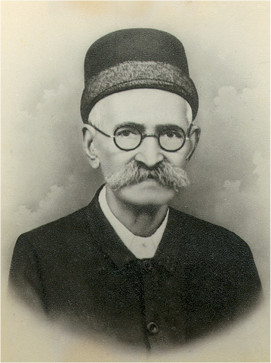
Jamshed Narsiabad: the original benefactor
"Settling differences between Iranis in an amicable manner was very difficult,” remembers Zal, who used to sit in on these adjudication sessions in the early years. The unfruitful activity was later dropped, he noted.
The Anjuman acquired financial strength as the result of the donation of 2,200 plus acres of land in village Mahim, Palghar district, by the late Jamshed Khodaram Narsiabadi (Irani) for the welfare of his brethren in three separate agreements in 1921, 1926 and 1928 as per the Maharashtra chief minister’s order of July 27, 2005. This was a part of the 2,334 plus acres of land which had been originally allotted by the government to Motabhai Bhikchand in 1898 on a 999-year lease. As Benafshay Irani notes, "The concept was that if the community is strong, the family is strong.” Good intentions notwithstanding, the generous donation — Narsiabadi left only 200 acres for his son — has spawned a trail of litigation.
The Anjuman trust leased out the land for 12 years from 1947 and then again for 10 years from 1959 to Hiruch Manekji Dalal, Pirojbai Bhikhaji Bhiladwala and Khodadad Bhikaji Bhiladwala. When the lessees approached the sub divisional officer - Dahanu to grant them tenancy rights, the officer by his order of March 1, 1968 decided that the Anjuman is the owner of the land and rejected the request. When the lessees failed to restore the land to the IZA, the latter filed a suit in the Civil Court in November 1969 to regain possession of the land.
Sometime in the mid 1950s the IZA had donated 500 acres from its holding to Acharya Vinoba Bhave’s bhoodan movement for the benefit of landless laborers.
While the civil suit was pending, the Government of Maharashtra (GoM) issued an order under the Agricultural Land Ceiling Act and, in February 1973, decreed 1,340 plus acres of IZA land as surplus and liable to be forfeit to the government. In an agreement reached between the GoM minister of revenue, the IZA and the lessees, the Trust agreed to cede 448 acres to the government, the lessees retained 108 acres and the Trust got the rest. These consent terms were recorded in the suit in the Civil Court in January 1974 and the Trust’s appeal before the Maharashtra Revenue Tribunal was withdrawn. The Trust even applied for and got the charity commissioner’s approval to alienate the land according to the consent terms. (All facts and figures as recorded in the Bombay High Court Order of April 6, 1984.)
In October 1975 section 47 of the Agricultural Land Ceiling Act was amended. A sub clause decreed that land held by a public trust before September 26, 1970, the major portion of the income of which is used to provide education and medical relief, is exempt from the provisions of the Act. The IZA sought exemption from the provisions of the Act under this head.
Despite these developments, an order from the Tehsildar, Palghar dated October 6, 1975 directed the IZA to hand over possession of 1,410 plus acres of land as per the earlier order of February 1973. A government order of 1978 argued that as the Trust was not in possession of the land on September 1970, it could not be granted the exemption it sought.
The IZA trustees appealed to the Bombay High Court in a writ petition in 1979 . The High Court noted (in its order of April 6, 1984) that the suit against the lessees had been instituted in November 1969 and hence the lessees were nothing but trespassers: "The right of the parties must be determined on the basis of facts as they exist on the day when the action is instituted… Hence… in law, in November 1969, the petitioners were in actual physical possession of the property. "In passing, their lordships further observed that the Trust had honored the agreement between itself and the Government even though it was to its own detriment. The Court remanded the case back to the Government for grant of exemption under section 47(2) of the Act.
The Government appealed to the Supreme Court which dismissed the appeal on July 25, 1991. Its order, as spelt out in the order of the Maharashtra chief minister, required the lessees to return 1,410 plus acres to the Trust. The Trust was required to pay Rs 2.5 lakh rupees to the heirs of the lessees in three equal installments. The lessees also retained 108 acres as tenants of the Trust. The GoM was charged to exempt the land of the Trust under section 47 of the Act on condition that it surrendered 449 acres for allotment to landless persons and of the income from its land the Trust spend 40 percent for medical/educational help for the poor persons of Thane district.
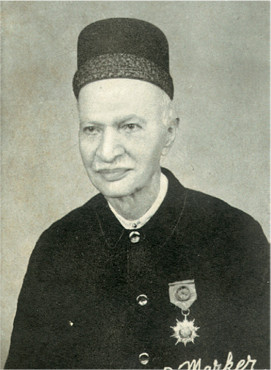
Peshotan Marker donated a building to IZA
Satisfying himself that the IZA had discharged its requirements under the order of the Supreme Court, chief minister Vilasrao Deshmukh noted in his order dated July 22, 2005: "I come to the conclusion that…the land in question was in possession of the Trust prior to September 26, 1970 (the appointed date) and the use of the land is for the public purpose and as per provisions of section 47(2) of the said Act more than 50 percent of the income is being spent for educational and medical help.” His order enforces all the provisions of the Supreme Court order.
However, the story does not end there. "When the time has come to execute the order, two Zoroastrians have appealed to the High Court and got a stay order,” notes Pervez. As the IZA is in possession of the land, where it grows grass, it floats tenders for cutting the grass during the rainy season which ends in February when the land is taken back, the shrubs are removed, the land cleaned, bare patches reseeded and urea spread all over, Pervez informs us. The Anjuman uses the income, amounting to about 22 lakh rupees, according to the objects of the trust, for education grants, medical and poverty relief, the gahambar it holds on Jamshedi Navroz, catered by Tanaz Godiwalla, when 3,500 persons dine free.
The new round of litigation is led by IZA working committee members Behram S. Irani and Cyrus B. Irani. Behram K. Tafti and Jamshed S. Irani are co-petitioners. Filed against the government and the IZA trustees, the petition seeks to quash the requirement of ceding 449 acres to the government and the enforced use of 40 percent of the trust’s income for the medical and educational relief of the poor of Thana district. Behram’s contention is, "Why should we agree to do this when we have our own poor to look after?”
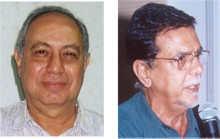
Zal Eranee (left) and Behram Irani: various views
Behram and Cyrus argue that innumerable trusts have been exempted from the Agricultural Land Ceiling Act under section 47(2). Copies of several such notifications have been filed with the petition as proof. If it is otherwise for the IZA, it is a case of discrimination, they note. They further ask, "Would the GoM have remained content with 449 acres if the Supreme Court had decided against the IZA?” Their advocate on record is Rumi Mirza; their senior advocate Fredun De Vitre. According to Behram the government has capitalized on a passing remark by the High Court judge that the IZA trustees were even willing to honor an agreement and give 400 plus acres.
These dissenters also allege that one of the heirs of the lessees has fraudulently added his name to the 7/12 land revenue records; that the area he is holding as tenant falls within the ambit of the expanding township and the value of the property is estimated in crores of rupees.
The IZA’s other major asset was a building in Lonavla donated by the late philanthropist Peshotan Marker. It was said to be encroached and provided measly returns and was recently sold by tender for 24 lakh rupees. Behram and Cyrus allege that not only did the committee decide to sell the building instead of fighting off the encroachers, they did so without calling for a surveyor to assess the price. They claim that there were three empty rooms in the building which should have been worth another 12 lakh rupees. The surveyor, they allege, was appointed after the sale and the price he quoted was the same as the sale price, indicating complicity with the buyer, the National Chiki shop which is an original tenant. The trustees, they allege are not charging transfer fees for the vacant rooms even though the property is not yet transferred. In this case they have moved the charity commissioner.
"Why do people go to the court or the charity commissioner?” asks Behram and proceeds to answer his question: "Because all roads are closed by the trustees. There are egos. We are not barbarians. The only recourse is to go to the law court when people are not listening.”
◆ ◆ ◆
From the archive