
Awards
In Palkhivala's footsteps
Navaz Kotwal and the People’s Union for Civil Liberties are the first awardees of the Nani A. Palkhivala Memorial Award for the Preservation of Civil Liberties
"We all live in a democracy but we all don’t work for the defense of civil liberties…We all benefit from the work of a few active people. Society at large must recognize the work of institutions and individuals.” Outspoken industrialist Anu Aga was speaking at the distribution of the First Nani A. Palkhivala Memorial Award for the Preservation of Civil Liberties at Bombay’s Tata Theatre on January 16, 2006 to the People’s Union for Civil Liberties (PUCL), the institutional winner, and Navaz Kotwal in the individuals’ category.
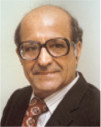
The feisty Aga, who had been among the first to protest against the Gujarat government’s handling of the communal riots there in February 2002, was speaking in her capacity as one of three judges appointed by the Nani A. Palkhivala Memorial Trust to select the winners from among 35 nominees. Her co-judges were former Chief Justices of India M. N. Venkatachaliah and Sam Bharucha.
The presentation of the awards — a citation plus purse of one lakh rupees each — was followed by the Third N. A. Palkhivala Memorial Lecture delivered by former governor of the Reserve Bank of India (RBI) Bimal Jalan. Jalan’s dissertation, "Separation of powers: the myth and the reality,” focused on the perceived conflict between the legislature and the judiciary and their roles in the fast changing political reality of our times.
PUCL’s ‘signal service’
PUCL, a Delhi based body, was founded by politician and social activist Jaya Prakash (JP) Narayan and retired justices V. M. Tarkunde and M. C. Chagla "in response to the dark times in our country’s history when the Emergency was declared and civil liberties denied to its citizens,” notes the citation read by the Nani A. Palkhivala Trust member secretary and the jurist’s long time assistant at Bombay House, Shirin Bharucha. Palkhivala was among the eminent citizens who had participated in the organization’s founding conference in 1980. Since then it has rendered "signal service” in the protection of civil liberties and the democratic way of life on the many occasions when they have been under attack. "With the broad palette of concerns that PUCL has and its reach in almost all the states of India, it has been involved with and acted in a variety of matters ranging from the deprivation of rights of the underprivileged, poor and oppressed both in the rural and urban areas, who would otherwise have no voice, women’s rights, corruption in our polity, preservation of human rights, independence of the judiciary and freedom of the press,” records the citation. The PUCL’s vigilance has led it to hold talks, seminars, workshops and media campaigns. It has mobilized public opinion, moved court by filing public interest litigations, investigated complaints of violation of civil liberties and "succeeded in redressing many violations of people’s rights (and thereby preserved)… the fragile fabric of our democracy.”
Dr Y. P. Chibber, general secretary of the PUCL, Delhi – the fourth to occupy the office after Arun Shourie, Rajni Kothari and Dilip Swami – accepted the award on behalf of the organization "in all humility.” Noting that he had been 25 years in the saddle, Chibber expressed his gratitude to "those large numbers of donors and sympathizers who regularly responded to our appeals for funds and other help in organizing our activities like the PUCL Journalism for Human Rights Award which we have organized for 23 years, the publication of our monthly journal PUCL Bulletin…the annual JP Memorial Lecture…” and cited a long list of lawyers and retired judges who have been a source of strength to the body.
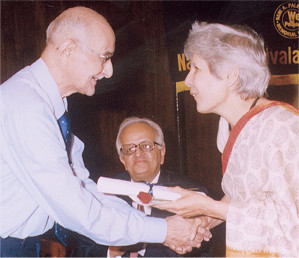
Tehmurasp Kotwal receiving the award from Aga. Jalan in the background
"The PUCL survives on donations and contributions from members and sympathizers as it does not accept funds from any Indian or foreign funding agency. We work as a traditional voluntary organization as JP and Tarkunde had visualized and not as an NGO. It is the only national level organization that takes up individual cases of violations of rights and liberties…
"The national PUCL and a number of state branches have secured several landmark judgments from the Supreme Court of India and from the respective High Courts. We have secured the intervention of the National Human Rights Commission in a number of cases…
"We cooperate, and whenever necessary, coordinate with the international organizations like the Human Rights Watch and the Amnesty International. But we do not seek their help and assistance in our work in the country,” noted Chibber.
Kotwal: securing justice
Navaz Kotwal, a fresher of four months with the Delhi based Commonwealth Human Rights Initiative, had been sent by the organization to Gujarat to see what assistance and legal relief could be organized for the victims of the riots there in 2002 because of her familiarity with spoken Gujarati. She "made the restoration of civil liberties for the people affected by Gujarat’s traumatic events her mission. Witness to the tragedies there, Navaz threw herself first into providing physical relief to the victims and then to restoring to them what was left of their homes and lives. In doing this, she realized that securing justice was the first step to communal peace and to the regaining of civil liberties. When the government moved hastily to shut down relief camps, despite not being able to ensure the safe return of the families to their villages, Navaz brought the plight of the people to the media, government and Parliament, thereby preventing the premature closure of the camps. Navaz, through her efforts, ensured the safe return of 49 families to their village homes they had been forced to flee….
"The poor and the oppressed are vulnerable to intimidation when seeking remedies for their wrongs, but the meticulous details of Navaz’s findings could not be denied and are now being examined by a Commission of Inquiry looking into the causes of this communal carnage…
"To ensure that people are armed with systems and resources, should such awful happenings occur again, Navaz has created and designed programs guided by paralegals for imparting legal literacy to the poor and unschooled of both communities so that they have a common language of understanding and mutual respect for each other’s rights and liberties… This, she and her colleagues did against high odds, risking their personal safety as they are constantly under threat…Navaz has now become the role model for the community,” reads the citation.
Kotwal’s award was received on her behalf by her father Tehmurasp as she had to leave some days before the ceremony to avail of a scholarship she had been conferred to attend a course in human rights protection in England. In her acknowledgement, as read out by her aunt Nergish Mistry, Kotwal stated, "Prizes such as these are given all over the world but it is this one created by a guardian of civil liberties in my own country and which honors the long history to preserve it, that makes it all the more valuable and dear to me personally.
"Human rights defenders are often wrongly seen as against the State, and challenging the authority of the Sate. This is a wrong perception. In a democracy every citizen is the State. A citizen actively involved in (his/her) democratic duty in the cause of civil liberties is the strongest ally of the State. They should be valued as such and be protected and encouraged to do this work. India in fact is blessed with hundreds of such people working in this field. They work without recognition in sometimes grave danger and very difficult circumstances. But there is a need for even more people to join in ensuring that justice is done. Often as passive citizens we at times take it for granted that rights are known and available to all and civil liberties are available to all. But the situation is far different. Today access to justice is just too hard in our country and we need to change this.”
Acknowledging the support of her colleagues in Gujarat, her family, her organization – the Commonwealth Human Rights Initiative – and most specifically that of its director Maja Daruwala "who has been my greatest mentor, friend, philosopher and guide,” Kotwal added, "Without her constant support, guidance and understanding, this work would not have been possible.”
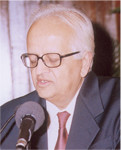
Jalan: varying agenda, new momentum
Jalan: "a regime of trust”
In his capacity as chairman of the Nani A. Palkhivala Trust, renowned accountant Yezdi Malegam had mentioned that they had instituted an elocution competition for law students, gold medals in Palkhivala’s memory for MA students in six leading law universities and that a biography of the legal doyen by noted journalist M. V. Kamath was due for publication together with a commentary on important judgments in which Palkhivala had been involved. He now introduced the Oxbridge educated Jalan who has worn many hats including that of chief economic advisor to the Union Government, member secretary of the Planning Commission, India’s director on the World Bank and author of several books on economics and governance. Citing the buildup of foreign exchange reserves, low interest rates and low inflation Malegam described Jalan’s term as RBI governor as "a regime of trust, deregulation and transparency.”
Describing his views as that of a "citizen-observer who has no particular professional background in law or electoral politics,” Jalan proposed, "As citizens, we have an equal if not greater stake in the outcome of the recent debate on separation of powers among the vital organs of our State.”
Acknowledging that the "basic structure” of the Indian Constitution with its separation of powers between the legislature, the executive and the judiciary was a feature unalterable even by an act of Parliament — a legacy bequeathed by Nani Palkhivala via the Kesavanada case in 1973 and 1975 — Jalan argued, "The issue of the relative jurisdictional boundaries of the organs of the State has acquired a new momentum… in the context of coalition politics in the center and the states…It is no accident that the political pressure to limit the powers of the judiciary and declare Parliament as being ‘supreme’ and representative of the will of the ‘People of India’ is the strongest when a coalition government of parties with varying agenda is in power or when the political survival of the undisputed leader of the majority party is threatened.”
Only six Prime Ministers ruled the country in the first 41 years post Independence. In the 16 years since 1989 the country has undergone six general elections and multiple coalitions of different parties have ruled the country. "Ideology and programs have become relatively less important” with the expectation that the tenure of a government is likely to be short, Jalan noted. He cited the report of the National Commission to review the working of the Constitution presented to government on March 2002: "There is increasing concern about the decline of Parliament, falling standards of debate, erosion of the moral authority and prestige of the supreme tribune of the people.” He gave the example of the women’s succession bill adopted by the Rajya Sabha on August 29, 2005 "in four minutes flat in the midst of shouting and shutting out of any debate and discussion on the Bill…Fortunately, this particular bill was concerned with providing equal treatment of persons, irrespective of gender, in respect of inheritance and it enjoyed wide public support. However, what was alarming was… the way in which it was passed. Based on this precedence, at least in principle, any other bill, whatever its contents, is capable of being passed in the same way.” Another example Jalan cited was the suspension of the question hour and the passage of the regular budget involving an expenditure of more than Rs 4,75,000 crore without any discussion within a few minutes on August 26, 2004.
Noting that Parliament now does what a handful of leaders want, Jalan said, "With some occasional and welcome exceptions …what the Parliament may be asked to do is in the immediate electoral interest of the parties in power rather than the interest of the people as a whole.” He also noted that ministries have become increasingly subject to the unilateral policy preference of the minister in charge as when the financial autonomy of the Indian Institutes of Management was drastically curtailed without the approval of the cabinet or a debate in Parliament. Jalan articulated the misgivings of many in the audience when he asked, "If a minister is able to turn the education system of the country one way or the other without adequate discussion and accountability, what stops him or her from passing laws or rules which have adverse long-term impact on the welfare of the people as a whole, or sections of the people who are not aligned to his or her party?” After discussing the propriety of the Supreme Court verdicts vis-à-vis the legislators and governors of Bihar and Jharkhand Jalan noted, "The final legal arbiter in such cases can only be the judiciary, which is directly accessible to the public, and whose verdicts are in any case subject to review and appeal.”
As Malegam had initially postulated, there is a shortage of many commodities in our country, the most acute being that of intellectual integrity and recalled Palkhivala’s fond hope that the silent majority would speak up and make its voice heard. With such role models as the PUCL and Navaz Kotwal there was renewed hope that India will remain a democracy where justice and civil liberties are never sacrificed.
◆ ◆ ◆
From the archive