
Media
Pen-chant for facts
Correspondent Dionne Bunsha’s in-depth writings on the riots in Gujarat and environmental issues earn her a continuous chain of awards
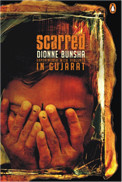
"People have more faith in journalists than we deserve. These are the times when you feel like a skunk journalist. There is nothing you can do for so many, except interview a handful. And then what?” enquires Dionne Bunsha in her Author’s Note in Scarred: Experiments with Violence in Gujarat. This 308-page book conveying the helplessness and injustice experienced by the minorities in the communal riots of 2002 earned her the 2006-07 Ramnath Goenka Excellence in Journalism Award for Books (non-fiction) that is presented to a writer "whose published work, through in-depth research and investigation, covers an issue/idea on a scale which newspapers or television channels with their limited space and time cannot aspire to tackle.”
An outcome of her years of extensive reportage on the Gujarat violence as a special correspondent of Frontline (one of India’s most respected news magazines published by The Hindu group) the critically acclaimed book went into its third reprint in the first year of publication in 2006. It made compelling reading for those who wanted to ascertain "Why did the country’s political leaders fiddle while Gandhi’s Gujarat burned?” as notes the provocative blurb on the back cover of the paperback. Also noteworthy is that extracts from Scarred feature alongside those of the best titles Penguin India has published in the last 20 years in The Non-Fiction Collection (volume 1) – 20 years of Penguin India (2007).
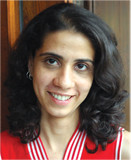
Reporting on human rights atrocities, refugees, justice, social and economic impacts, state complicity brought "a lot of sweat and tears” although this assignment also won her three journalism awards — the Sanskriti Award, the People’s Union for Civil Liberties Human Rights Award and the International Federation of Journalists Tolerance Prize for South Asia, 2005. "The situation of the people in camps was horrible. The place was divided. It was heartbreaking to see what was going on. The whole situation was very depressing,” recalls the 35-year-old gutsy journalist in an interview with Parsiana.
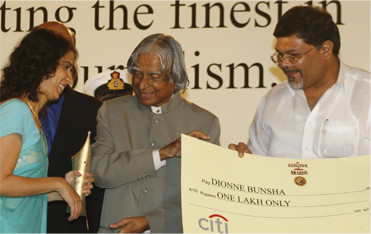
Dionne Bunsha (top) Photo: Ashima Narain (and above) receiving Ramnath Goenka Excellence in Journalism Award from Dr. A.P.J. Abdul Kalam (center)
Her ability to speak Gujarati, even though the syntax and grammar may be amiss, her identification as a Parsi, helped her bond with both, the victims as also the bigwigs, she realizes. Her motives were never suspect, her approach was not a threat but she was faulted — for belonging to the media. Whilst admitting that sections of the Gujarati Press had sparked violence, the irony of the situation had made Bunsha comment tongue-in-cheek in her book, "This was the icing on the cake — it wasn’t the hero Narendra Modi nor the angels from the Bajrang Dal, not even the police (what could they do?) who were blamed for the riots — no, it was the English Press (which said that Muslims were targeted). They were the demons giving Gujarat a bad name.”
Just as the subject of human rights concerns her greatly so too does Bunsha feel obligated to report on environment — the effects of globalization on agriculture and labor, food security, biotechnology, forced evictions, wildlife conservation — for which she won the Ramnath Goenka Excellence in Journalism Award for Environmental Reporting in the year 2006-07. This award is conferred to "an author of an article or series in a newspaper, magazine or television that makes an exceptional contribution to public awareness and understanding of environmental issues. The report/series of reports must be a substantive work that covers a story completely and raises public consciousness and awareness about environment,” as notes the catalog.
She was presented both the awards last year at the hands of then President of India Dr A. P. J. Abdul Kalam. Each of these awards carried a memento and a cash reward of Rs 1,00,000. Ever conscious of using the resources at her command wisely Bunsha chose to utilize "the prize money by distributing it to individuals who I thought needed it the most.”
Intensive and extensive reporting
As senior assistant editor of the Madras based Frontline, working from the Bombay bureau for the last seven years, Bunsha basically covers Maharashtra and Gujarat. Besides the riots issue in Gujarat Bunsha has reported on the suicide of farmers and on the loss of livelihoods along the Narmada River dam. In Maharashtra, she focused on the plight of the onion farmers and later grape farmers who are faced with debt or death. Through her writings she has also exposed the corruption, mismanagement and political fiefdoms of sugar cooperatives in Maharashtra. Having traveled extensively in rural Maharashtra she drew attention to the suicides of cotton farmers in the Vidarbha region, malnutrition in Melghat, human rights violations against ‘criminal tribes’ in Satara, the water crisis in Thana, earthquake rehabilitation in Latur and industrial pollution at Tarapur in Thana district.
Occasionally the reach may extend beyond these two states as when Bunsha wrote about the efforts to conserve the Asiatic lion population in the Gir National Park where the habitat was believed to be falling short of the growing lion population. To ensure that the lion population is not wiped out in the case of any unforeseen eventuality in the area it was decided that a satellite population of some lions would be translocated to the Kuno sanctuary in Madhya Pradesh for which reason tribals in that region were displaced on the promise of alternate accommodation. Ultimately the state did not permit its lions to leave the park, insisting they needed to keep the lions unique to Gujarat. Suffering in the end are the tribals, was her conclusion. On yet another occasion she traveled to the northeast and Gangotri region to study how climate change is impacting people in the area. Busy traveling, researching and writing stories, she is expected to contribute at least one article each month.
But for a year now she will be taking a sabbatical as she has earned a mid-career fellowship for journalists — a time to reflect and to explore new subjects of her choice — at the Stanford University. Valuing the backing she has received over the years from her "encouraging and supportive” Frontline editor N. Ram we learn that it was on his suggestion that she wrote Scarred. Bunsha was initially planning to write her experiences for Left World Publishing House. But thereafter she is happy that the paperback, priced at Rs 295, was published under the banner of Penguin Books (11 Community Centre, Panchsheel Park, New Delhi 110017).
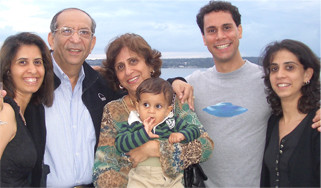
Dionne Bunsha (far right) with her family (from left): Rhea, Russi, Victy, Zephan and Percy Shroff
"Too shocking to forget”
Through the written word she explains her rationale for penning the book: "Too many people were lapping up the Bharatiya Janata Party’s version of events, however twisted. That’s when I realized the need to document what I had seen… Gujarat’s violence wasn’t a spontaneous Hindu versus Muslim conflict. It was politically engineered violence with a communal excuse. A planned, deliberate attempt to wipe out as many Muslims as possible. The targeting of Muslims had shades of the persecution of Jews by the Nazis... The marginalization of the Muslims in Gujarat continues till today. I have tried to describe the daily forms of bias that this minority encounters – ghettoization, school segregation, job discrimination…What happened to Gandhi’s Gujarat where intolerance reached such an extreme that Vishwa Hindu Parishad activists even attacked his Sabarmati Ashram?” One of the refugees is quoted in the book: "We are all Indians first. It’s only political leaders who have made us ‘majority’ and ‘minority.’”
"Hearing stories of inhumanity repeated in relief camp after relief camp…made me feel sick in the stomach. And it still hurts. The first time I left Gujarat, I hoped it would disappear. But Gujarat would not let me be. What I saw and heard was too shocking to forget…Did children deserve to be thrown into fires? Did women deserve to be gang raped and later burned to death? Did innocent men, indeed anyone, have to be cut into pieces?…I wanted to understand the minds of the people who could inflict such barbarism on others,” she adds.
These were the victims of the pogrom who were callously cast aside, whose marginalized existence was viewed as a threat by the Hindu fundamentalists, whose complaints of loss of life and limb or property the police would refuse to record. But in Bunsha they had found a sympathetic listener. "Everyone wanted their stories recorded. Those outside banged on the windows, desperate for their turn,” she writes.
A political agenda fueled by religious bigotry that perpetrated fear, intolerance and prejudice was the cause of wanton bloodshed in Gujarat, not the purported burning of a coach on the Sabarmati Express soon after some Hindutva activists and a Muslim vendor had got into a fight at the Godhra railway station on February 27, 2002. "What’s the easiest way to win an election?” questions Bunsha in the book before venturing to give an answer: "Simple — start a riot. Fuel hatred. Divide people. Make them fear each other. Keep the terror brewing. Then project yourself as the savior of the larger vote bank. Voters should stop blaming you for their problems, so give them a scapegoat.”
Valuable exposure
A crusader, emboldened to face the bureaucrats, Bunsha says she has become a "more adventurous person” ever since she completed her Masters in Development Studies from the London School of Economics. "The international exposure broadened my perspective and outlook incredibly,” she believes. Her earlier education was at the Bombay Scottish School after which she graduated in commerce from the Sydenham College and earned a diploma in Social Communications Media from the Sophia Polytechnic. For the next four years she worked as metro correspondent for The Times of India writing on diverse issues like environment, health, education, urban development, human rights, forced evictions, children’s rights and labor.
The decision to pursue a career in journalism was thanks to the inspiration of her professor P. Sainath at Sophia, acknowledges Bunsha. Her father being a pilot, as was her grandfather and paternal uncle, friends were surprised when neither Dionne nor her sister Rhea Percy Shroff chose to make a career in aviation. In the early days both her protective parents, Victy, a homemaker, and Russi were worried when she would venture out alone on assignments and espouse social causes but over the years they have learnt to respect her career choice.
"I try to live my life according to the philosophy of the religion,” declares Bunsha to whom visiting the agiary or wearing the sudreh-kusti is not as important as "following the religion in its principles. Some of us are too stuck in dogma. I don’t understand why anyone who wants to be a Zoroastrian can’t be. These exclusivist man-made rules are made by people who want control over the flock.” She still remembers being taken aback when "one of my hard-core colleagues in the Times insisted, ‘You can’t call yourself a Parsi.’” Bunsha may not have studied the religion but she believes that burning sandalwood is not environmentally friendly. The Towers of Silence may have been "a very good environmentally sound practice in a rural setting but in a city it becomes something else. We have to adapt to the urban setting.”
In her busy schedule Bunsha makes time for swimming, yoga, outdoor activities and watching movies. In addition to English, Hindi, Gujarati and Marathi, the young writer has basic knowledge of Spanish and French too. Since 2003 she has also served as contributing writer, New Internationalist magazine and as a visiting speaker has lectured at Rutgers University, McGill University, Marianapolis College (Montreal), University of British Columbia, Langara College (Vancouver), Delhi University, Bombay University, National Law College (Bangalore) and Gujarat Vidyapeeth (university founded by Mahatma Gandhi in Ahmedabad) as notes her website.
Evidently she has been inspired by Gandhiji for at the start of each of the chapters in Scarred is an apt quote by the legendary freedom fighter who believed in non-violence. Her quest for truth and facts is mirrored in the words of Mahatma Gandhi: "Truth is by nature self-evident. As soon as you remove the cobwebs of ignorance that surround it, it shines clear.”
◆ ◆ ◆
From the archive