
Books
Achievement chronicle
The Parsis 1947 to 2001: Highlights of Achievements after Independence by Hormazdyar Shapurshah Dalal. Published in 2004 by the author, Kohinoor, 1st floor, Flat no 302, B Wing, Oshiwara Lokhandwalla Complex, Andheri (W), Bombay 400053. Pp: x + 316. Price: Rs 400.
Even those with a most disputatious bent of mind would not deny that the miniscule Parsi community has made a contribution to national life, which is far in excess of its puny numerical strength. Given the above, it is surprising that there is no book which chronicles the individual achievements of Parsis after Independence. Correction: no such book existed till Hormazdyar Shapurshah Dalal’s brave and meritorious attempt in the form of The Parsis 1947 to 2001: Highlights of Achievements after Independence. (H. D. Darukhanawalla’s classic Parsi Lustre on Indian Soil chronicled the stalwarts of earlier times, volume two being published in the 1960s.)
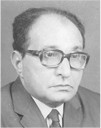
Dalal: inspiration for the youth
Dalal’s attempts at bringing together in one book the many and multifarious achievements of individual achievers in the Parsi community is a labor of love. Dalal has methodically covered every profession and field in which the Parsis have excelled, highlighting at the same time the tremendous contribution they have made to industry, trade and social welfare. It fills a long felt need, and is a painstakingly researched work, written in a direct and simple style.
After dwelling briefly on Parsi history, Dalal goes straight to the heart of his subject. We thus have separate chapters devoted to those who have distinguished themselves in a variety of fields ranging from politics, law, civil service, armed forces, banking to journalism, scientific pursuits, the fine and performing arts, cinema and sports. This book with its emphasis on bare facts could easily have become a dry catalog of individual achievements but humanizing visualization has prevented it from being a lifeless chronicle. The author, by his diligent and resourceful research, and a discerning eye for the colorful detail or anecdote, has ensured that he holds the reader’s interest.

It is an extensive, but by no means, an exhaustive book. In particular I have a bone to pick with Dalal’s coverage of Parsi achievers in the Indian Police, which deals exclusively with Bombay based officers. It is difficult to account for some glaring omissions, the most obvious being that of the doyen of Indian policemen, K. F. Rustamji — the only Parsi to receive both the Padma Bhushan and the Padma Vibhushan. He was closely associated with the personal security of Pandit Jawaharlal Nehru, served as inspector general of police of Madhya Pradesh, and more notably was the distinguished founder of the Border Security Force. Rustamji apart, Dalal has also omitted at least eight policemen whose careers culminated with the rank of inspector general/director general of police or its equivalent: Keki Nanavati, Jimmy Nagarwalla, Keki Pavri, Polly Writer, Noshir Sethna, Noshir Suntook, Keki Dadabhoy and Keki Daruwalla. (The last named finds mention as a poet but not as a policeman.) Also there is no mention of Parsis who have held high posts in the Indian Railways: J. F. Muncherji who was general manager of Western Railway in 1967 is a notable exclusion who comes to mind immediately. A few factual and proofing errors are visible. Still, this is a quibble really, and in no way detracts from the overall worth of this researched and well-presented book. Nor does it gainsay the undeniably meritorious contribution of those who dignified lower positions in the official hierarchy.
As Vispi Balaporia, former dean, faculty of arts, Bombay University has pointed out in the Foreword, this book will appeal to all generations. For the older generation it will reaffirm their pride and faith in the community. For the young, it will hopefully provide inspiration to emulate the great deeds of their illustrious forebears. This book is a must-read for anyone interested in knowing about the achievements of the Parsis. It will be enlightening, not only to non-Parsis, but will also serve as an eye-opener for the younger generation of Parsis who have missed out on the inspiring exploits of those who have gone before them. Here’s to many more outstanding achievements from the Parsis and more such happy books that chronicle the achievements of this great community.
◆ ◆ ◆
From the archive