
Medicine/Health
Mark on the medical monolith
Former J. J. Hospital and Grant Medical College dean Dr Gustad Daver oversaw a staff of 400 doctors, 1,500 students and 2,700 other employees
As dean of the Grant Medical College and Sir J. J. Group of Hospitals Dr Gustad Daver was required to "actively coordinate with the Directorate of Medical Education, the Government, the University and the Medical Council of India to achieve my goals...” Although a privilege it was "a heavy responsibility and tremendous hard work,” acknowledges the surgeon who, effective July 1, 2004 has taken over as director of professional services (medical director) at the Hinduja Hospital. Despite the Government of Maharashtra spending a huge amount to run the Sir J. J. Group of Hospitals, because of the rising cost of treatment in other private hospitals, the load on government hospitals is ever increasing. Also, being such a large organization, he was "answerable to the public, the media, the government, the courts and the politicians! To top it all, I continue to operate on about 600 patients every year.”
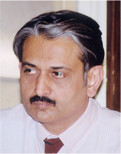
Daver: "prompt treatment to all”
As dean, the 51-year-old surgeon was in-charge of academics, patient care, administration and all other activities of the Grant Medical College. The Sir J. J. Hospital and its affiliated hospitals, viz. St George Hospital, G. T. Hospital, and Cama and Albless Hospitals, all come under the auspices of the Grant Medical College. He oversaw a staff of 400 senior doctors of all these hospitals and 1,000 undergraduate and 500 postgraduate students of the Grant Medical College. He also headed the J. J. Hospital staff of 800 nurses, 1,400 Class IV employees and 500 Class III employees (which included clerks, technicians, assistants, etc) of the J. J. Hospital and of the Grant Medical College. The Sir J. J. Hospital itself caters to 4.5 lakh outpatients (1,500 outpatients on a daily basis), 35,000 indoor patients and 18,000 surgeries, every year. The other affiliated hospitals also cater to thousands of patients and surgeries. Although they have their own superintendent, being in a different area in Bombay, Daver remained in-charge of those too.
"Being a government hospital, free treatment continues to be given to large sections of poor patients not only in Bombay and Maharashtra, but patients who come from all over India. During my tenure as dean, many Members of Parliament (MPs) and Members of Legislative Assembly (MLAs) have given donations, albeit from their public fund, for purchase of new equipment for use in the operation theater (OT), for advanced expensive machinery in cardiovascular surgery, dialysis machinery in nephrology, endoscopic surgery, etc. In fact, recently, the Government of Japan had also given a grant worth Rs 30 crores to the Sir J. J. Hospital and the Cama and Albless Hospitals for improvement of mother and child health services and related ancillary departments such as radiology, biochemistry and medicine. All the funds go into the betterment of the hospitals,” mentions Daver.
Last year Daver was in the limelight on "Black Monday” when the twin bomb blasts occurred in Bombay on August 25, 2003: "All the patients were treated by Sir J. J. Hospital, St George Hospital and G. T. Hospital. The largest load was shouldered by the Sir J. J. Hospital which received a hundred casualties (40 of whom were declared dead on arrival),” reports the dean. "Sixty-four patients were treated. It highly pained me to see those dead bodies, most of them youngsters. Such senseless acts of terrorism should be strongly condemned. Anyway, the speed and efficiency with which the patients were managed was highly appreciated by the chief minister Sushilkumar Shinde, then Deputy Prime Minister of India, L. K. Advani, and then leader of the opposition, Sonia Gandhi. All the doctors, nurses and staff rushed to help and manage the situation.” This incident also brought to light the necessity of developing more facilities in public hospitals to handle mass disasters. Continues Daver proudly: "Whether it is the twin bomb blasts in Bombay or the serial bomb blasts in 1993 or the riots in 1992, the Sir J. J. Hospital has always provided excellent and prompt treatment to all the victims, irrespective of caste and creed.” As a result, the dean was presented with the Life Time Achievement Award for meritorious services in the field of medicine by SEWA (Social Educational and Welfare Association) on August 29, 2003 and the Muslim Council of India felicitated him for excellent services rendered during the twin blasts in the city.
Some of the more recent developmental activities at the Sir J. J. Hospital under the leadership of the doctor were upgradation of nephrology department, renovation and upgradation of obstetrics-gynecology facilities, urology and pediatric operation theaters, renovation of the air-conditioning system in the OT and analysis of the workforce (studying the existing workforce and manpower requirement in all medical colleges) along with the Tata Institute of Social Sciences.
Just four years after passing his master of surgery Daver became in-charge of an independent surgical unit and got selected as professor of surgery for Grant Medical College through the Maharashtra Public Service Commission (MPSC), again, entirely on his merit. That was in 1990 when he was 38 years old. Daver had made news in 1992 when he removed 16 spoons and a broken toothbrush from the small intestine of 50-year-old Ganpat Pethe, an ex-military cook from Belgam who had the abnormal habit of swallowing spoons when frustrated. He, of course, went home fine with a promise never to swallow any other foreign body. Since then, in addition to being teacher and surgeon, Daver held additional responsibilities as vice-dean (postgraduate) for three years, officer on special duty and joint director for two years, head of the department of surgery for four years, and dean since February 2003, which gave him "wide experience as teacher, surgeon and administrator.”
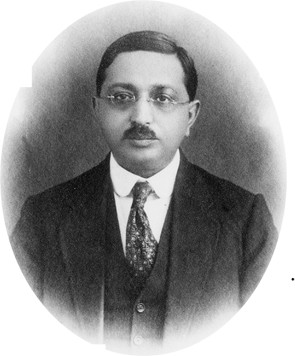
"My family’s association with the Grant Medical College and the Sir J. J. Group of Hospitals dates back to 1914 when my maternal grandfather, Dr Dadiba C. Talati, graduated from this prestigious institute and, after specializing in England, grew to become president and commissioner of the Baroda City Municipality,” conveys Daver.
Both Daver and his wife Dr Rekha decided to return to India in spite of getting a green card when in the USA. Disregarding the lucrative offers pouring in, they opted to serve a government hospital catering to poor patients in their motherland and train medical undergraduate and postgraduate students.
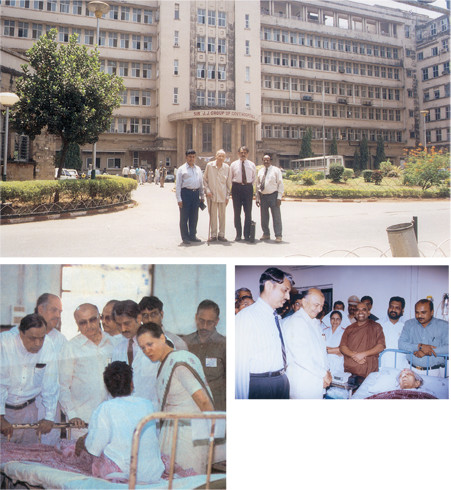
(Clockwise from top) Daver (second from right) beside present baronet Sir Jamsetjee Jejeebhoy (with walking stick) in front of the J. J. Hospital; attending to Mai Saheb Ambedkar with Shinde; with Gandhi, Shinde and Murli Deora attending to the victims of the twin bomb blasts
Rekha is professor and head of the department of obstetrics and gynecology at Grant Medical College and Sir J. J. Group of Hospitals since 1997. She is also known for her research in mother and child health. She is the national co-ordinator for prevention of mother to child transmission of HIV and principal investigator for Human Reproduction Research Centre, Indian Council for Medical Research, and has recently launched a long-term sub-dermal hormonal implant called "Implanon.” She is also working on a World Health Organisation (WHO) project on Safe Medical Abortion. Says Daver, "My wife is very sincere and hardworking. She has played a major role in my success and in the brilliant academic career of our children.” Twenty-three-year-old Dr Naval stood first in his final MBBS from Grant Medical College and plans to do residency in internal medicine in the USA. Daughter Roshni (19) is in her second year of medical studies at Terna Medical College, New Bombay. Although left with little time for leisure activities, Daver has authored and co-authored serveral publications.
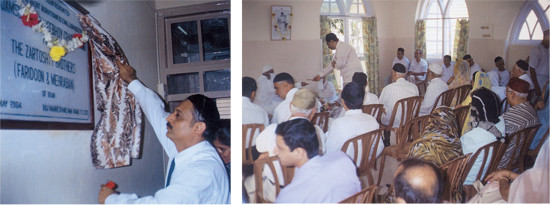
On the occasion of the extension of the Parsi Ward at J. J. Hospital
The doctor’s medical studies commenced at the Institute of Science where he did a premedical course before joining the Government Medical College, Nagpur on merit. From there he was transferred to the Government Medical College, Aurangabad, where Rekha was his classmate. Hailing from a Hindu (Marwadi) family, she is the daughter of freedom fighter and social reformist, the late Fulchand and Sharyu Nagori. She was captain of the women’s badminton team in College, while Gustad was captain of the men’s team. Their friendship grew during internship and the two tied the nuptial knot during their residency in 1976. Says Gustad: "Being an inter-caste marriage, there was initial resistance, but eventually both our families accepted it gracefully.”
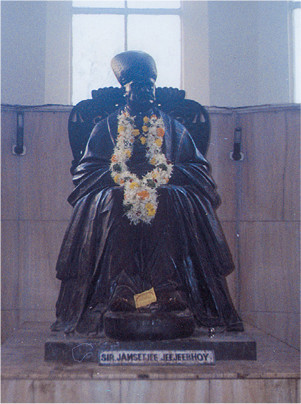
Erstwhile benefactor Sir Jamsetjee Jejeebhoy’s (1st Bart) bust in the Hospital building
Seeing his parents "work so hard, so dedicated to their services in the government sector and the tremendous amount of respect they commanded,” Daver was inspired to take up a government job and head the Hospital founded in 1843 by Sir Jamsetjee Jejeebhoy with the aim of providing relief to the poor. His father the late Bezun Manekshaw Daver (died in 2001 at the age of 80) was former chief engineer of Public Works Department, Vidarbha and mother Nergis, retired as inspectress of Girls Schools, Vidarbha. He has two brothers. Elder brother Sohrab is director of Masibus Electronics Private Limited, which deals in industrial electronic instruments, and younger brother Navroze is managing director of Maharashtra State Handloom Corporation, Nagpur. Gustad studied in Nagpur in St Francis Desales High School and Hadas High School.
After passing his MS (Surgery) in the first attempt, Daver worked at Bombay’s Tata Memorial Hospital for six months to gain experience in oncology. After being nominated by the MPSC, he joined as lecturer in surgery at the Government Medical College, Aurangabad, and was thereafter promoted as associate professor in 1981. He was soon given charge of an independent unit of 40 beds in the Government Medical College. Being the only medical college in the entire Aurangabad region, there was a flood of patients, and it is over here that the medico gained immense popularity as a young, dynamic surgeon. Thereafter he was awarded a post doctoral fellowship in cardiovascular surgery at the prestigious Baylor College of Medicine, Houston, Texas, USA. Working under Dr Michael E. DeBakey, the pioneer of cardiovascular and multi-organ transplant surgery, Daver says he "got rich experience in the field of multi-organ transplant from brain dead cadaveric donors, which, later, helped me organize the cadaveric transplant program in Maharashtra when the Human Organ Transplantation Act was introduced in 1994.”
Explains Daver: "Due to the introduction of the Human Organ Transplantation Act, it has been legally possible to declare a patient brain-dead, and it is now possible to use organs such as kidneys, liver and heart from such heart-beating, brain-dead cadavers. A system for organ sharing was evolved whereby the organs can be shared by different hospitals, according to certain laid out norms.” The Zonal Transplant Coordination Committee of which Daver was a pioneer member has given recognition to certain hospitals which could carry out these transplants and has also drafted guidelines for sharing organs from cadavers so that the distribution of the organs takes place as per merit and not on monetary or any other consideration. "As this program succeeds, the necessity of non-related kidney donors will, hopefully, be eliminated,” says Daver.
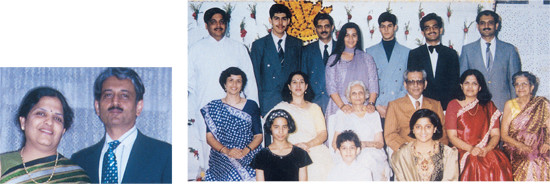
Grandfather Talati (above right), Gustad and Rekha (below) and the entire Davar family on Bezun and Nergis’ (seated center) 50th wedding anniversary
Quite aware of the dakhmenashini controversy dogging the Parsi community, Daver opines: "Electric cremation is by far the best method for last rites, but, actually, it is for the individuals and their families to decide. It is very difficult for traditions, which have been going on for years, to change, and it is never a wise idea to force these views on anybody.”
On the subject of inter-caste marriages, he points out that they are very common in all communities and are well accepted by society. Compatibility of the couple need not only be religion-based. Inter-caste marriages are usually a success when couples are in the same profession, and have the same ideologies and goals in life.”
He particularly appreciates the values of honesty and integrity which were instilled in him and his siblings by his parents in childhood and which have stood him in good stead to work tirelessly for those suffering and ailing.
◆ ◆ ◆
From the archive