
Institutions
Conservation at the Cama
Ancient manuscripts and books at the K. R. Cama Oriental Institute are undergoing restoration and preservative treatment
"Important originals. Please do not touch.” Not even the trustees of the K. R. Cama Oriental Institute (KRCOI) who are responsible for the preservation of the priceless books and heritage nor the scholars who visit the hallowed precincts are permitted to touch the documents while they are being specially tended by the team of conservation experts. The professionals are working under Anupam Sah of the INTACH (Indian National Trust for Art and Cultural Heritage) Indian Council of Conservation Institutes.
Pending conservation work at the KRCOI, the reading room facilities have temporarily been suspended although members can continue to borrow books from the library. Research scholars requiring access to reference materials on an urgent basis "will be given cooperation as far as possible,” assures trustee cum joint honorary secretary of the Institute Homai Modi.
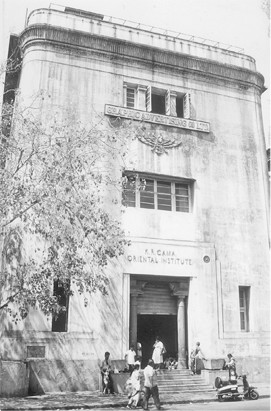
The frontage of the Cama Institute building
While some of the nearly 310 members of the Institute may view this as an inconvenience, most will appreciate that the precious literature at the KRCOI, several centuries old, needed differential treatment. Among their heritage documents, rated among the best on Zoroastrian religion and customs, are nearly 2,000 handwritten manuscripts plus books which are several centuries old. The condition of this wondrous collection may vary depending on the state in which they were originally presented to the KRCOI, say the trustees. A copy of the Webster’s International Dictionary, which had been gifted to Rustomji Manekji Kalapesi of Grant Medical College in 1896 and was handed over to the Cama Institute on July 25, 2003, was shown to Parsiana. The hardbound edition had pages, some of which had come asunder. Depending on the value of the publication or the owner of the book or the number of copies of that same title which the library may already have, the Institute decides whether to retain the books presented to it or to pass them on to someone else. This particular edition of the Webster’s Dictionary was of consequence to the Institute — for its antiquity value as also because its owner Kalapesi finds a mention in Parsi Lustre on Indian Soil.
To restore, or to give a new lease of life to the books in their care "we had to identify an organization which would do so with sincerity of purpose and without an ulterior objective,” declares Muncherji N. Cama who took over as president of the Institute following the resignation of Sir Jamsetjee Jejeebhoy. Their board is now left with only three trustees — ![]() Cama, Modi and Dastur (Dr) Kaikhusroo JamaspAsa, after Justice Dinshaw Mehta passed away on July 6, 2003. Appreciating the guidance they received from Cyrus Guzder, chairman of AFL Private Limited, Modi recalls, "It took us months to establish contact with INTACH. Then they came and looked through the library.” Impressed with the upkeep of the library Sah had commented in the Visitor’s book in mid-April 2003: "The collection is of immense value and is and will be a source of knowledge for years to come especially due to the sincere care and maintenance (and strict controls) that the administrators and staff take to keep the original documents in good health, thus ensuring their longevity. It is a privilege for us to be associated with the Institute’s visionary and pragmatic step to establish an effective curative and preventive conservation unit to conserve this priceless collection.”
Cama, Modi and Dastur (Dr) Kaikhusroo JamaspAsa, after Justice Dinshaw Mehta passed away on July 6, 2003. Appreciating the guidance they received from Cyrus Guzder, chairman of AFL Private Limited, Modi recalls, "It took us months to establish contact with INTACH. Then they came and looked through the library.” Impressed with the upkeep of the library Sah had commented in the Visitor’s book in mid-April 2003: "The collection is of immense value and is and will be a source of knowledge for years to come especially due to the sincere care and maintenance (and strict controls) that the administrators and staff take to keep the original documents in good health, thus ensuring their longevity. It is a privilege for us to be associated with the Institute’s visionary and pragmatic step to establish an effective curative and preventive conservation unit to conserve this priceless collection.”
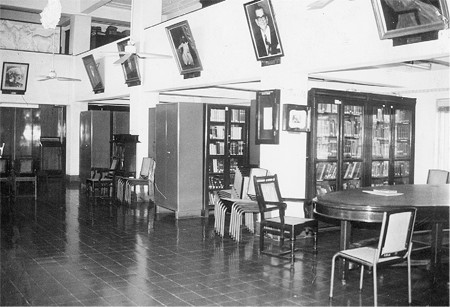
The library at the Cama Institute
These words served to heal the wounds inflicted 10 months earlier when eight community scholars, in their letter of June 26, 2002, seemed to imply that the trustees needed to wake up to the state of the heritage in their possession. "...a number of old and rare books...are in a very poor condition. In some cases the paper has become so brittle that the page breaks when it is turned. These books need your urgent attention if they are to be saved for posterity. We are also deeply concerned about the condition of the large number of manuscripts housed in the library. Since some of them are rare and few hundred years old, immediate steps should be taken to preserve them. We fully endorse the views expressed by Dr Homi Dhalla in his letters to you. We suggest that the Institute initiate a project to preserve our valuable manuscripts and literature at the earliest...” noted a letter signed conjointly by Dastur (Dr) Firoze Kotwal, JamaspAsa, Dastur (Dr) Hormazdiar Mirza, Ervad (Dr) Rooyintan Peer, Ervad (Dr) Ramiyar Karanjia, Ervad Parvez Bajan, Faribourz Nariman and Dr Mani Kamerkar.
Actually conservation had become the bone of contention between scholar Dhalla and the KRCOI trustees since 1998 when he impressed upon them the "urgency of preserving the precious manuscripts. I was informed that the Institute did not have the necessary funds for such a project...I therefore (suggested) that a joint project be undertaken in collaboration with the World Zarathushti Cultural Foundation (WZCF, of which Dhalla is founder president) to put these manuscripts on the CD-ROM. I offered that the necessary equipment would be kept in the library premises and be donated to the Institute when the project was completed,” relates Dhalla in his written missive to Parsiana. Dhalla had also penned a lengthy article in the Jam-e- Jamshed of May 9, 2003 criticizing the trustees for their management of the Institute.
Dhalla’s offer was reportedly turned down by the KRCOI on the rationale that "other offers from prestigious and well established Institutes have also been received...” Cama notes that Dhalla’s letter makes no mention of donating the equipment after the project is completed. Dhalla had stated in his letter of September 2, 1998: "All the expenses for the project, which will amount to a few lakhs, shall be borne by the WZCF. After the project is over, the WZCF would like to keep the computer and other equipment at your Institute. This shall enable scholars to study the manuscripts, with great ease, without handling them physically.” After three and a half years, Dhalla again wrote to them on April 19, 2002 to enquire what progress had been made in preserving the manuscripts, alleging that books like the Parsi Prakash (Vol I) had already crumbled. Barely a month later Dhalla wrote another letter enclosing a cheque of Rs 40,000 from NarYman Dubash to purchase the CD-ROM equipment. The trustees also showed a letter from noted solicitor and presently Bombay Parsi Punchayet trustee Burjor Antia stating the donation was being sent by Dubash. The trustees however sought Dubash’s permission to use the funds "for the general preservation of books and material in our library” stating that since "various methods of preservation (are) available, the library books should not be put on CD-ROM at this stage.” Dhalla thus decided to involve the other scholars, hoping a collectively signed letter would carry more weight.
On behalf of the trustees, joint honorary secretaries Modi and Navaz Mody responded: "...with due respect, your suggestion comes long after the process of preserving the K. R. Cama Oriental Institute library collections has been set in motion as the trustees of the KRCOI have also been very concerned about the condition of all the library books (and) manuscripts. We may inform you that the K. R. Cama library collection is in a far better state of preservation than the collections in a lot of other libraries...Dr Homi Dhalla’s letters refer to reproducing the contents of the manuscripts and rare books and not in their preservation and therefore the trustees had indicated their decision a long while ago expressing their inability to accept Dr Dhalla’s proposal...”
A subsequent letter from the scholars (to which JamaspAsa and Peer were not signatories but Dhalla was) dated October 10, 2002 reiterated to the trustees "that the CD-ROM method is most useful for the preservation of important documents and manuscripts, although it may be used also for reproducing material. In this context we would like to point out that if you are concerned that by adopting the CD-ROM project, the manuscripts/rare books would be reproduced surreptitiously and passed on to others, we may assure you that this cannot happen. The Cama Institute would undertake the project in its premises, using its own equipment, manned by its own staff and under its supervision. Moreover the other advantage is that once the data is preserved, it would not be necessary to refer to the original manuscript/rare book at all as one would have access to it on the CD...”
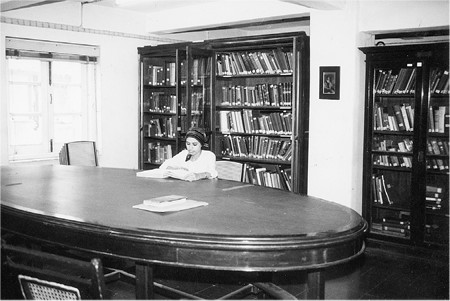
Reading room facilities at the Institute in abeyance
"They have a phobia that ‘our manuscripts should not be duplicated,’” related Dhalla in a subsequent discussion with Parsiana. "How many Parsi scholars must be studying the manuscripts? Maybe one or two. If it can be accessible to scholars all over the world and more light on the religion can be thrown” what’s the harm? Dhalla points out.
"We have a finite source of funds at our disposal and at this point of time our priority is to preserve the heritage and literature here,” asserts Cama as Modi adds, "We don’t know the life span of a CD. As technology changes, will a CD- ROM be in use after some years?” Associated with the KRCOI for the last 22 years when she was brought in as joint honorary secretary Modi reveals how different methods of preservation have been used over the decades to ensure that no insects damage the contents of their library. Initially they were recommended to spray DDT on all the books until its harmful effects were realized when Modi and her staff, at the cost of their health, wiped out all traces of the pesticide from the tomes. Later they tried butter paper, after that silica gel. Then lamination was believed to be the answer. At another time it was recommended that the volumes be exposed to the sun while piercing a needle through the holes in the pages to eliminate all chances of the insects’ survival. "Everyone has had a go at conservation to the best of their knowledge,” says Modi with Cama pointing out, "Who knows, 100 years later we may be castigated for adopting this new system of preservation.” "It could be 20 years down the line!” admits Modi.
Presently the conservation team will take in hand one book at a time, at their discretion. "For one year the accent will be not only on preservation and conservation, but preventive conservation,” explains Modi. After identifying the components of each sheet of paper — a single manuscript may have used different types of paper — they will set about restoring it. Paper and ink being made of minerals and vegetable dyes, it is prone to acidification, explains Cama. The use of deacidifiers and deoxidants is hence an integral process of preserving paper. The library which is temporarily converted into a conservation laboratory has the apparatus laid out on different tables. On one, there is a special magnifier to help study the flaws in the paper. It shares table space with a special instrument which emits cool vapor after it is fed with mineral water. While the restoration work is in progress there is special tissue paper used to support the original brittle sheet which could have tears or holes in it. There is no blood or nerves involved but the delicacy of the job bears a semblance to the task facing a surgeon at the operation table!
Scholars would be heartened to hear that these manuscripts here are being treated with such care and respect for barely some months ago they were in doubts as to what was happening to the originals. During the months of November-December 2002, there was an exchange of correspondence between Dhalla who wanted access to page 7 of Mss No 8 (containing Visperad Sade and other texts), page 14 of Mss No 16 (Yasna with Nirang and other texts) and page 16 of Mss No 19 (containing Yasna — Avesta and Pahlavi) and the joint honorary secretaries of the Institute. Questions were asked — why he wanted to see them, the theme of the paper — before he was permitted access to two of the manuscripts, the third being under preservation. "Does anyone in the world ask (a scholar) ‘Why do you need a manuscript? What is the subject of your paper, etc?’ This is sheer harassment. At that time there was no sign of conservation,” claims Dhalla who perceives the main problem at KRCOI is "they don’t have scholars as trustees. Objectively speaking, the only trustee who is a scholar of international repute and is academically qualified to appreciate the value of these precious books and manuscripts is JamaspAsa.”
"Libraries and books are meant to be read,” insists JamaspAsa who maintains that when he was joint honorary secretary of the Institute he has never denied access to books for fear of pages crumbling or books getting spoilt. Frequenting the Institute four or five times a week, JamaspAsa must be among the handful of Zoroastrian scholars who avails of the library facilities regularly, rating the collection as among the best in the world. While the secretaries who are in charge of the day-to-day running of the Institute may have the right to say ‘no,’ "the rules and regulations should be in consonance with the aims of the Institute,” he believes.
With this attitude prevailing at the KRCOI "scholarship mari parvaani (is going to die down),” declares Kotwal who alleges that there is no encouragement, facilities and open-door policy for budding scholars which could bring to light many new works. Having opted to discontinue using the library there for the last many years Kotwal says he has now built up his own personal library with over 2,000 books on religion which he is in the process of cataloging. He compares the treatment meted here with the cooperation extended by the Meherjirana Library at Navsari which has even permitted him to carry to Bombay a manuscript required by him and the libraries abroad which offer xeroxed documents on payment to facilitate researchers.
The KRCOI trustees though have a different tale to relate: "Scholars are supposed to respect books but they frequently make notations or fold the pages. Indiscriminate xeroxing and exposure to the light and heat damages the pages and also affects the spine. When dealing with scholars it is a tightrope walk...the prima donnas have this notion ‘tahmé soo jano (what do you know)!” As per the KRCOI library rule 11a: "No rare books, manuscripts, periodicals, encyclopedia or reference book, etc shall be issued or sent outside the premises of the library.” There are however some genuine scholars whose association they value, like the "humble, Christian gentleman” who with his knowledge of 20 languages is ever ready to come to the Institute’s assistance.
All the 250 manuscripts at the Meherjirana Library have been microfilmed at the instance of Parzor (a UNESCO sponsored project endeavoring to preserve the ethos of the community), reports Dhalla, the major financier for the project being scholar Piloo Jungalwalla of Delhi. But when the KRCOI has 10 times as many manuscripts would microfilming be the answer considering that microfilming is not the solution for conservation? From where would they procure the necessary funds? Earlier the microfilm reader installed at the KRCOI library ceased to function due to non usage and absence of airconditioning facilities, Modi clarifies.
There is no dearth of funding possibilities: individuals, trusts, government organizations, corporates and multinationals, would assist, says Dhalla referring to organizations like the National Archives which provides funds for microfilming, Delnet under the ministry of culture which places old books on the Delnet, The Indira Gandhi Institute for Art and Culture which offers free microfilming of manuscripts on the premises on the proviso that one negative will be retained by them... The WZCF has in the recent past helped set up libraries for institutes/anjumans in Poona, Bangalore and Baroda. They have also transferred to CD certain ancient books like Our Own Religion in Ancient Persia (1913) by Lawrence Mills, The Treasures of the Magi (1917) by James H. Moulton and the works of Kavi Khabardar to see that literature is not concentrated in one place. "Diffusion of knowledge and preservation of our literature” has been the aim of the WZCF, states Dhalla. Commending the Asiatic library’s successful conservation endeavors, Dhalla suggested that their "Adopt a book scheme,” where on payment of Rs 1,000 the maintenance of a particular book is ensured, could be implemented at the KRCOI too.
In fact the Asiatic has an independent conservation laboratory, microfilming laboratory and binding department, mentions Kamerkar, vice president of The Asiatic Society of Bombay and on the governing board of the KRCOI. As one of the 26 governing body members her role is confined to organizing programs, seminars and conferences. The governing body members serve on different committees — books, events, funds and finance, competitions, research — appointed by the trustees. Conceding that "they were not systematically conserving books at the Institute,” Kamerkar felt that probably the trustees "did not have the necessary expertise... (They) somehow did not accept the help offered to them.” Happy that they were now taking up conservation seriously, she feels that Dhalla perhaps "has worked as a catalyst.”
This year the Institute could not even afford a coat of tar for its building which houses six occupants with the result that there is rampant leakage through the open terrace during the monsoon, laid as it is with China mosaic tiles, explain the trustees. The money raised at the time of international congresses which they host has been drying up. Very few are willing to give donations for the general maintenance or day-to-day running of the Institute with 10 staff members being on its payroll, points out Modi. "People don’t realize that if you don’t have a building, you don’t have anything...” From the income of the corpus donation they have received from the Zartoshty Brothers Fund they have been annually reprinting extant books as recommended by their committee and vetted by the Zartoshtys. Due to shortage of storage space they reprint 300 copies of a book if it has a scholastic content, and 500 copies if it is of general interest. Presently they have financed research on Ravi Verma’s Parsi portraits and a translation of the Gujarati treatise Mumbai no bahaar.
"The library is a labor of love, not a means to a livelihood or occupation,” declares Modi with Cama clarifying, "The trustees are the custodians and legally liable for everything...” The contents and developments there are of consequence to the entire community for, as notes Dhalla, housed at the KRCOI is "not just a collection. They have a treasure of our heritage.”
◆ ◆ ◆
From the archive