
Cover Story
At the storehouse of knowledge
Scholars and lay people from around the world gathered for the First Dastoor Meherjirana Library Conference in Navsari
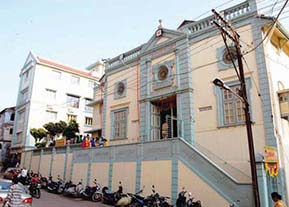
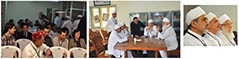
"As long ago as 125 years ago, in 1887, the great Avestan scholar James Darmesteter commented when he visited the Library that he was delighted with the contents of the Library and the kindness of the librarians, and these words still ring true today.” So observed Dastur (Dr) Firoze M. Kotwal in his inaugural address at the First Dastoor Meherjirana Library Conference on the evening of January 12, 2013. His sentiments were endorsed several times over by many of the 25 or so scholars and lay people from all over India and the world who attended the four-day meet held in the historic Library based in the south Gujarat town of Navsari.
Organized by a five-member team consisting of Katy Antia, chairman, board of trustees, First Dastoor Meherjirana Library, Bharti Gandhi, librarian, First Dastoor Meherjirana Library, Shernaz Cama, professor, Delhi University and founder of UNESCO Parsi-Zoroastrian Project (Parzor), Daniel Sheffield, Link-Cotsen Postdoctoral Fellow, Princeton University and Dinyar Patel, PhD candidate, Department of History, Harvard University, the scholarly gathering was welcomed by Sheffield followed by the lighting of the traditional lamp, a recitation of the Ashem Vohu by Kotwal, a Sanskrit slok by Gandhi and her son Smit and a song by Bakhtavar Minocher Homji, Jeroo Desai and Rashna Palia titled Aavo Padharo. Antia thanked Parzor for their "light and guidance” and recalled the late Lt Gen Adi Sethna as a "heartwarming person” who wielded a baton not a rifle that "made me work.” She recalled his considerable contribution to the Library.
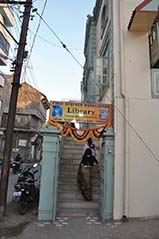 Antia acknowledged the financial support rendered for the Conference from well-wishers such as the Sir Dorab Tata Trust, the N. K. Tata Trust, F. E. Dinshaw Trust, N. M. Wadia Trust, the Pirojsha Godrej Trust, the WZO Trust Funds. Gandhi noted the 140-year-old Library had around 50,000 books and 500 to 600-year-old manuscripts. In 1999 Sethna and Cama began to raise funds for the National Archives scheme of the Library. She mentioned that the noted author Amitav Ghosh, author of River of Smoke would address the plenary session of the seminar on January 14 on "The Parsi Presence in Canton in the 19th century.” The protagonist of Ghosh’s novel is Bahram Modi (whose character is based on Sir Jamsetjee Jejeebhoy), one of the most successful Parsi opium merchants of the 19th century.
Cama recalled how the late Prof Mary Boyce of the School of Oriental and African Studies had urged Parzor "to save the Meherjirana Library.” She said she was "happy to see a young generation of scholars” taking an academic interest in the religion.
The invitation to participants to present papers at the Conference noted, "this veritable treasure of knowledge is housed in a historic turn-of-the-century building replete with an important collection of Parsi portraiture and stained-glass windows. The construction of the Sir Dorabji Tata Trust Annexe, inaugurated in 2009, has added modern facilities to the Library, including an air conditioned conference center with digital presentation facilities, apartments for visiting scholars, a book preservation laboratory, and study space for students. The Library is equipped with wireless internet, and maintains its website at http://www.meherjiranalibrary.com”
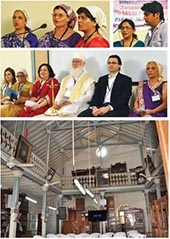 The subjects covered at the Conference included research on Zoroastrian manuscripts, Parsi history in Gujarat, a reassessment of the study of Zoroastrianism, Zoroastrian tradition and rituals in Iran and Zoroastrianism and Islam in the Persian world. The topics included preservation and artistic aspects of manuscripts, the Kisseh Sanjan and the Iransha Atash Behram, the shoe question pertaining to fashion in colonial Bombay, the Parsi Prakash, the Navsari Atash Bahram in literature and song, the nassessalars and khandhias in India and Iran, the life and times of Dinshah Irani, the Banaji and Mehta families of Calcutta, Dastur Dhalla’s autobiography, religious and cultural identities amongst Bombay and Delhi Zoroastrians, early Persian newspapers of Bombay and Parsi philologists of the 19th century.
The first day being Kotwal’s birthday, a cake made by the Dotivala Bakery in Surat was shared by all and a book Gifts to a Magus: Indo-Iraniran Studies Honoring Firoze Kotwal edited by Jamsheed K. Choksy and Jennifer Dubeansky was released by Kotwal. The 340-page book, comprising 22 articles by scholars of Zoroastrianism and lay people from around the world, published by Peter Lang "was made possible by the equally bountiful generosity of the Zoroastrian Society of Ontario, Canada, and the Zoroastrian Trust Funds of Europe, United Kingdom, in conjunction with the Centre for Avestic Research, USA,” states the book’s acknowledgments section.
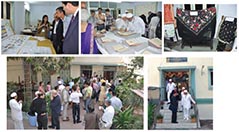
An exhibition of restored manuscripts, garas and other embroidered items, a pictorial display of Navsari’s architectural heritage were on show on the top floor of the annexe.
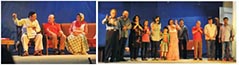
On the evening of January 13, skits were performed by the Yazdi Karanjia troupe from Surat at Jamshed Baug, the venue for breakfast and dinner for the delegates.
On the last day of the Conference a "walking tour of Navsari” was arranged when the delegates had an opportunity to visit homes of Navsari residents and meet with them.
Organized by a five-member team consisting of Katy Antia, chairman, board of trustees, First Dastoor Meherjirana Library, Bharti Gandhi, librarian, First Dastoor Meherjirana Library, Shernaz Cama, professor, Delhi University and founder of UNESCO Parsi-Zoroastrian Project (Parzor), Daniel Sheffield, Link-Cotsen Postdoctoral Fellow, Princeton University and Dinyar Patel, PhD candidate, Department of History, Harvard University, the scholarly gathering was welcomed by Sheffield followed by the lighting of the traditional lamp, a recitation of the Ashem Vohu by Kotwal, a Sanskrit slok by Gandhi and her son Smit and a song by Bakhtavar Minocher Homji, Jeroo Desai and Rashna Palia titled Aavo Padharo. Antia thanked Parzor for their "light and guidance” and recalled the late Lt Gen Adi Sethna as a "heartwarming person” who wielded a baton not a rifle that "made me work.” She recalled his considerable contribution to the Library.
Antia acknowledged the financial support rendered for the Conference from well-wishers such as the Sir Dorab Tata Trust, the N. K. Tata Trust, F. E. Dinshaw Trust, N. M. Wadia Trust, the Pirojsha Godrej Trust, the WZO Trust Funds. Gandhi noted the 140-year-old Library had around 50,000 books and 500 to 600-year-old manuscripts. In 1999 Sethna and Cama began to raise funds for the National Archives scheme of the Library. She mentioned that the noted author Amitav Ghosh, author of River of Smoke would address the plenary session of the seminar on January 14 on "The Parsi Presence in Canton in the 19th century.” The protagonist of Ghosh’s novel is Bahram Modi (whose character is based on Sir Jamsetjee Jejeebhoy), one of the most successful Parsi opium merchants of the 19th century. Cama recalled how the late Prof Mary Boyce of the School of Oriental and African Studies had urged Parzor "to save the Meherjirana Library.” She said she was "happy to see a young generation of scholars” taking an academic interest in the religion.
The invitation to participants to present papers at the Conference noted, "this veritable treasure of knowledge is housed in a historic turn-of-the-century building replete with an important collection of Parsi portraiture and stained-glass windows. The construction of the Sir Dorabji Tata Trust Annexe, inaugurated in 2009, has added modern facilities to the Library, including an air conditioned conference center with digital presentation facilities, apartments for visiting scholars, a book preservation laboratory, and study space for students. The Library is equipped with wireless internet, and maintains its website at http://www.meherjiranalibrary.com”
The subjects covered at the Conference included research on Zoroastrian manuscripts, Parsi history in Gujarat, a reassessment of the study of Zoroastrianism, Zoroastrian tradition and rituals in Iran and Zoroastrianism and Islam in the Persian world. The topics included preservation and artistic aspects of manuscripts, the Kisseh Sanjan and the Iransha Atash Behram, the shoe question pertaining to fashion in colonial Bombay, the Parsi Prakash, the Navsari Atash Bahram in literature and song, the nassessalars and khandhias in India and Iran, the life and times of Dinshah Irani, the Banaji and Mehta families of Calcutta, Dastur Dhalla’s autobiography, religious and cultural identities amongst Bombay and Delhi Zoroastrians, early Persian newspapers of Bombay and Parsi philologists of the 19th century. The first day being Kotwal’s birthday, a cake made by the Dotivala Bakery in Surat was shared by all and a book Gifts to a Magus: Indo-Iraniran Studies Honoring Firoze Kotwal edited by Jamsheed K. Choksy and Jennifer Dubeansky was released by Kotwal. The 340-page book, comprising 22 articles by scholars of Zoroastrianism and lay people from around the world, published by Peter Lang "was made possible by the equally bountiful generosity of the Zoroastrian Society of Ontario, Canada, and the Zoroastrian Trust Funds of Europe, United Kingdom, in conjunction with the Centre for Avestic Research, USA,” states the book’s acknowledgments section.
An exhibition of restored manuscripts, garas and other embroidered items, a pictorial display of Navsari’s architectural heritage were on show on the top floor of the annexe.
On the evening of January 13, skits were performed by the Yazdi Karanjia troupe from Surat at Jamshed Baug, the venue for breakfast and dinner for the delegates.
On the last day of the Conference a "walking tour of Navsari” was arranged when the delegates had an opportunity to visit homes of Navsari residents and meet with them.
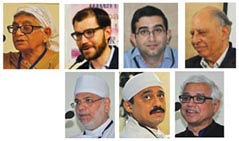
The "co-sharers”
In his address titled "A Historic overview of the Parsi settlement in Navsari and its rise as the Bastion” of Zoroastrianism Kotwal focused on the Navsari priesthood and the most sacred fires of the community. "The first priest who arrived in Navsari from Sanjan in 1142 CE was Kamdin Zartosht. With his arrival, religious ceremonies came to be performed in a modest house which over the course of time became a proper agiary, later known historically as the Vadi Dar-I Mihr, ‘The Great Dar-I Mihr,’” the oldest Dar-I Mihr in India.
Seventy-three years later the Parsi population of Navsari grew to such an extent that "two priests Hom Bahmanyar and his son Faredun, were invited by the descendants of Mobed Kamdin Zartosht to cater to the increasing ritual demands of the Parsis of Navsari. Hom Bahmanyar accepted on the condition that the descendants of Mobed Kamdin Zartosht agree to share the ritual workload with him and his son Faredun. This formal agreement to share the workload between the families of Kamdin Zartosht and Hom Bahmanyar, gave rise to the term Bhagaria or co-sharers and is used exclusively for priests who owe their allegiance to Navsari…”
"About 300 years after our founding fathers arrived in Sanjan, the Parsis began to migrate to various ports of Gujarat and formed independent territorial spheres of ecclesiastical control called panthaks. The term panthak is derived from Sanskrit panthan, cognate with Avestan panta, meaning ‘path.’ The five original panthaks were carved out by the heads of the various priestly groups in the 13th century, and were demarcated geographically. At a formal meeting in Sanjan, it was agreed, that no priest could perform any ceremony in a panthak which he was not officially linked to. Of the five panthaks, the panthak of the Bhagaria priests with their headquarters in Navsari was considered a leading one. From Navsari, priests were sent to serve in Surat, from where they went to Godavara, Bharuch and Khambhat. They, the Godavaras, Bharuchas and Khambhatas together with the original Bhagarias and Sanjanas, formed the historic five panths of priests…
"By the 16th century, the Dar-I Mihr of Navsari, although without a permanently burning fire, began to be recognized as the center of Zoroastrian orthodoxy by both the Sanjana and the Bhagaria priests settled in Navsari. The various priestly groups took pride in initiating their sons into priesthood in the Dar-I Mihr, which also catered to their ritual needs by providing the requisite alat (ritual tools) for their panthaks. The institution of the Dar-I Mihr acquired over time a socio-religious status: when fatwas or religious commandments were proclaimed, all such meetings were held by community leaders in the old Dar-I Mihr, indicating that it de facto became a seat of governance for the Parsi community in Navsari…
"With the appointment in 1579 of Dastur Meherjirana as the first high priest in India, recognized by both the Sanjanas and the Bhagaria mobeds, and the whole Anjuman of Navsari, the ecclesiastical position of the Dar-I Mihr was further strengthened…
"However, over the course of time, the authority of the Navsari Bhagarsath anjuman was challenged, as attempts were made by individual priestly groups to bolster their religious power base independent of Navsari. So, for example, when the Wadia and Anjuman Atash Behrams were installed in Bombay in the 19th century, this was done without the parvanagi or permission of the Navsari Anjuman despite the priests involved in the two Atash Behrams being Bhagarias…
"Despite the Vadi Dar-I Mihr being at the center of the of all rituals performed in Navsari, the only ever burning fire at the time was… the fire of Sanjan… the term Iranshah was adopted much later… Thirteen years after the sack of Sanjan by the forces of Mahmud Begada, the Sanjana priests brought the sacred Sanjan fire to Navsari, after having removed it first to Bahrot and then to Vansda, at the behest of the influential Desai of Navsari, Changa Asa, an event probably dated to circa 1479 CE. This is recorded in the Persian Rivayats brought to India by Noshirwan Khusraw and Marzban Isfandiar in 1481 CE…
"With the coming of the fire from Vansda, Navsari now became the headquarters of both the Sanjana and Bhagaria group of priests. Under Changa Asa, … the Sanjanas agreed to share the ashes (bhasam) of the Sanjan fire with the Bhagaria priests, who in turn provided the Sanjanas with facilities for housing the ever-burning sacred fire. All ritual work concerning the sacred fire was kept in the hands of the Sanjana priests, while it was agreed that all ritual work related to death, marriage, after-life prayers, jashans, etc, were the responsibility of the Bhagaria mobeds…
"Meherjirana’s meeting with Mogul Emperor Akbar (1542-1605) and his experiences at the Mogul Court are well-documented. In recognition of his learning and the fame he brought to his community, the whole priestly guild of Navsari, both Bhagarias and Sanjanas, honored him by making him the first high priest (Dastur) in India through a proclamation, addressed to the Anjuman of Navsari on March 12, 1579…
"For a period of nearly 300 years, the Sanjanas lived in Navsari peacefully and in harmony with the Bhagarias, tending to the great fire.
In his address titled "A Historic overview of the Parsi settlement in Navsari and its rise as the Bastion” of Zoroastrianism Kotwal focused on the Navsari priesthood and the most sacred fires of the community. "The first priest who arrived in Navsari from Sanjan in 1142 CE was Kamdin Zartosht. With his arrival, religious ceremonies came to be performed in a modest house which over the course of time became a proper agiary, later known historically as the Vadi Dar-I Mihr, ‘The Great Dar-I Mihr,’” the oldest Dar-I Mihr in India.
Seventy-three years later the Parsi population of Navsari grew to such an extent that "two priests Hom Bahmanyar and his son Faredun, were invited by the descendants of Mobed Kamdin Zartosht to cater to the increasing ritual demands of the Parsis of Navsari. Hom Bahmanyar accepted on the condition that the descendants of Mobed Kamdin Zartosht agree to share the ritual workload with him and his son Faredun. This formal agreement to share the workload between the families of Kamdin Zartosht and Hom Bahmanyar, gave rise to the term Bhagaria or co-sharers and is used exclusively for priests who owe their allegiance to Navsari…”
"About 300 years after our founding fathers arrived in Sanjan, the Parsis began to migrate to various ports of Gujarat and formed independent territorial spheres of ecclesiastical control called panthaks. The term panthak is derived from Sanskrit panthan, cognate with Avestan panta, meaning ‘path.’ The five original panthaks were carved out by the heads of the various priestly groups in the 13th century, and were demarcated geographically. At a formal meeting in Sanjan, it was agreed, that no priest could perform any ceremony in a panthak which he was not officially linked to. Of the five panthaks, the panthak of the Bhagaria priests with their headquarters in Navsari was considered a leading one. From Navsari, priests were sent to serve in Surat, from where they went to Godavara, Bharuch and Khambhat. They, the Godavaras, Bharuchas and Khambhatas together with the original Bhagarias and Sanjanas, formed the historic five panths of priests…
"By the 16th century, the Dar-I Mihr of Navsari, although without a permanently burning fire, began to be recognized as the center of Zoroastrian orthodoxy by both the Sanjana and the Bhagaria priests settled in Navsari. The various priestly groups took pride in initiating their sons into priesthood in the Dar-I Mihr, which also catered to their ritual needs by providing the requisite alat (ritual tools) for their panthaks. The institution of the Dar-I Mihr acquired over time a socio-religious status: when fatwas or religious commandments were proclaimed, all such meetings were held by community leaders in the old Dar-I Mihr, indicating that it de facto became a seat of governance for the Parsi community in Navsari…
"With the appointment in 1579 of Dastur Meherjirana as the first high priest in India, recognized by both the Sanjanas and the Bhagaria mobeds, and the whole Anjuman of Navsari, the ecclesiastical position of the Dar-I Mihr was further strengthened…
"However, over the course of time, the authority of the Navsari Bhagarsath anjuman was challenged, as attempts were made by individual priestly groups to bolster their religious power base independent of Navsari. So, for example, when the Wadia and Anjuman Atash Behrams were installed in Bombay in the 19th century, this was done without the parvanagi or permission of the Navsari Anjuman despite the priests involved in the two Atash Behrams being Bhagarias…
"Despite the Vadi Dar-I Mihr being at the center of the of all rituals performed in Navsari, the only ever burning fire at the time was… the fire of Sanjan… the term Iranshah was adopted much later… Thirteen years after the sack of Sanjan by the forces of Mahmud Begada, the Sanjana priests brought the sacred Sanjan fire to Navsari, after having removed it first to Bahrot and then to Vansda, at the behest of the influential Desai of Navsari, Changa Asa, an event probably dated to circa 1479 CE. This is recorded in the Persian Rivayats brought to India by Noshirwan Khusraw and Marzban Isfandiar in 1481 CE…
"With the coming of the fire from Vansda, Navsari now became the headquarters of both the Sanjana and Bhagaria group of priests. Under Changa Asa, … the Sanjanas agreed to share the ashes (bhasam) of the Sanjan fire with the Bhagaria priests, who in turn provided the Sanjanas with facilities for housing the ever-burning sacred fire. All ritual work concerning the sacred fire was kept in the hands of the Sanjana priests, while it was agreed that all ritual work related to death, marriage, after-life prayers, jashans, etc, were the responsibility of the Bhagaria mobeds…
"Meherjirana’s meeting with Mogul Emperor Akbar (1542-1605) and his experiences at the Mogul Court are well-documented. In recognition of his learning and the fame he brought to his community, the whole priestly guild of Navsari, both Bhagarias and Sanjanas, honored him by making him the first high priest (Dastur) in India through a proclamation, addressed to the Anjuman of Navsari on March 12, 1579…
"For a period of nearly 300 years, the Sanjanas lived in Navsari peacefully and in harmony with the Bhagarias, tending to the great fire.
Priestly murders
"Yet, this harmony between Bhagarias and Sanjanas was not to last. On mah Bahman, roz Rashna 1686 CE, disputes involving the Bhagarias, Sanjanas and the laity deteriorated into violence in an incident which came to be known as the Tarota murders, which took their name from the Tarota area where this Library stands. Two Bhagaria priests Rustam Shapur Antia and Manek Behram Nariman were martyred by the behdins. A jashan is still held to this day in their honor. The Bhagaria priests, seething with anger, killed seven behdins. The 12 accused priests were chained and imprisoned in Surat for three months. Among them was Pahlan Faredun, the father of Dastur Darab Pahlan who wrote the Kholaseh-I Din. After three months, the prisoners were eventually released with the help of Kuverji Nanabhai Modi, the Davar of Surat. Nevertheless disputes continued unabated and at the core was the desire of the Sanjana priests to officiate ceremonies at their own houses, at those of the laity…
"The matter of ecclesiastic rights between the Sanjanas eventually went to court. An elder of the Polia Desai’s family, Kuka Meherji, who was in his 80s, took up the cause together with Khurshedji Bapa, Dasturji Jamasp Asa, and Bachaji Mehernoshji. Mehernoshji was the ancestor of the Dordi family (the shining gem of the Parsi community, Dadabhai Naoroji was his sixth descendant). These leaders of the Bhagaria community went to the Gaekwad Gangaji Rao’s court at Songadh to fight the case. Armed with ancient documents they were able to prove that the division of the work as claimed by the Bhagarias had been agreed to by the Sanjanas centuries before. On September 27, 1740 CE the verdict was given in favor of the Bhagaria priests.
"The Sanjanas found the verdict intolerable and in the same year they left Navsari with their Atash Behram, taking the holy fire to Valsad (Bulsar). Their stay there was short-lived owing to a punitive agreement they were forced to sign with the Valsad community. The two main Sanjana priests involved in the removal of the Sanjan fire from Navsari were Rustom Sheriyar of the present Mirza family and Bhikha Rustom from the Dastur family of Udvada. After leaving Navsari, one of their first acts was to appoint Bhikha Rustom and Rustom Sheriyar as their high priests. Ultimately the Iranshah was taken to the small village of Udvada and installed there. Nine priestly families from the Sanjan panthak declared their right to care for the sacred fire.
"After the Sanjana priests left Navsari, the Bhagaria priests were disheartened. They had enjoyed the presence of the divine force of the Atash Behram for more than three centuries and its absence was greatly felt by all. The installation and consecration of an Atash Behram in Navsari became critical for the continuation of ritual practice…
"Yet, this harmony between Bhagarias and Sanjanas was not to last. On mah Bahman, roz Rashna 1686 CE, disputes involving the Bhagarias, Sanjanas and the laity deteriorated into violence in an incident which came to be known as the Tarota murders, which took their name from the Tarota area where this Library stands. Two Bhagaria priests Rustam Shapur Antia and Manek Behram Nariman were martyred by the behdins. A jashan is still held to this day in their honor. The Bhagaria priests, seething with anger, killed seven behdins. The 12 accused priests were chained and imprisoned in Surat for three months. Among them was Pahlan Faredun, the father of Dastur Darab Pahlan who wrote the Kholaseh-I Din. After three months, the prisoners were eventually released with the help of Kuverji Nanabhai Modi, the Davar of Surat. Nevertheless disputes continued unabated and at the core was the desire of the Sanjana priests to officiate ceremonies at their own houses, at those of the laity…
"The matter of ecclesiastic rights between the Sanjanas eventually went to court. An elder of the Polia Desai’s family, Kuka Meherji, who was in his 80s, took up the cause together with Khurshedji Bapa, Dasturji Jamasp Asa, and Bachaji Mehernoshji. Mehernoshji was the ancestor of the Dordi family (the shining gem of the Parsi community, Dadabhai Naoroji was his sixth descendant). These leaders of the Bhagaria community went to the Gaekwad Gangaji Rao’s court at Songadh to fight the case. Armed with ancient documents they were able to prove that the division of the work as claimed by the Bhagarias had been agreed to by the Sanjanas centuries before. On September 27, 1740 CE the verdict was given in favor of the Bhagaria priests.
"The Sanjanas found the verdict intolerable and in the same year they left Navsari with their Atash Behram, taking the holy fire to Valsad (Bulsar). Their stay there was short-lived owing to a punitive agreement they were forced to sign with the Valsad community. The two main Sanjana priests involved in the removal of the Sanjan fire from Navsari were Rustom Sheriyar of the present Mirza family and Bhikha Rustom from the Dastur family of Udvada. After leaving Navsari, one of their first acts was to appoint Bhikha Rustom and Rustom Sheriyar as their high priests. Ultimately the Iranshah was taken to the small village of Udvada and installed there. Nine priestly families from the Sanjan panthak declared their right to care for the sacred fire.
"After the Sanjana priests left Navsari, the Bhagaria priests were disheartened. They had enjoyed the presence of the divine force of the Atash Behram for more than three centuries and its absence was greatly felt by all. The installation and consecration of an Atash Behram in Navsari became critical for the continuation of ritual practice…
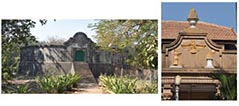
"In 1765, under the leadership of Khurshedji Tehmulji Desai and with the munificent support of the Seth family of Surat, the Navsari Anjumanna Atash Behram was established in the same place where the Sanjana Atash Behram had previously been housed.
"The Navsari Atash Behram was constructed with the help of several charitable and devout Parsis who contributed monies and set aside jagirs (estates) for the maintenance of the Atash Behram. The Dastur who performed the first boi ceremony was Dastur Sohrabji Rustomji Meherjirana. In accordance to ritual practice he took his barashnum in the Vadi Dar-I Mihr. Ever since its consecration in 1765, the fire has continued to flourish in this location. More recently, a new building was constructed to house the Atash Behram, which was completed in 1925, and it is this same palatial building which you see today.
"The place where the Navsari Atash Behram stands today is a particularly holy site as it is the only place known to have had a continuously burning sacred fire housed there, since the great Sanjan fire was first brought to Navsari in circa 1479 CE — a period of more than 530 years.”
* * *
"Mother and daughter-in-law”
The first dakhma in Navsari (assumed to be built around 500 years ago) "was built by two pious women, Behdin Malan Behram and her daughter-in-law, who it is said worked ceaselessly spinning the thick cotton bands needed to wrap round wooden bed frames to form a base on which a mattress or quilt could be laid. They sold these bands and collected enough money to build a dakhma. This dakhma is colloquially referred to in Gujarati as the sasu-vahu dakhma or the dakhma built by a mother and her daughter-in-law. A new dakhma was built later in red stone, by Minocher Bahman, the grandson of Manek Changa Asa. The last dakhma was built by Nusserwanji Tata in 1878.”
"The Navsari Atash Behram was constructed with the help of several charitable and devout Parsis who contributed monies and set aside jagirs (estates) for the maintenance of the Atash Behram. The Dastur who performed the first boi ceremony was Dastur Sohrabji Rustomji Meherjirana. In accordance to ritual practice he took his barashnum in the Vadi Dar-I Mihr. Ever since its consecration in 1765, the fire has continued to flourish in this location. More recently, a new building was constructed to house the Atash Behram, which was completed in 1925, and it is this same palatial building which you see today.
"The place where the Navsari Atash Behram stands today is a particularly holy site as it is the only place known to have had a continuously burning sacred fire housed there, since the great Sanjan fire was first brought to Navsari in circa 1479 CE — a period of more than 530 years.”
* * *
"Mother and daughter-in-law”
The first dakhma in Navsari (assumed to be built around 500 years ago) "was built by two pious women, Behdin Malan Behram and her daughter-in-law, who it is said worked ceaselessly spinning the thick cotton bands needed to wrap round wooden bed frames to form a base on which a mattress or quilt could be laid. They sold these bands and collected enough money to build a dakhma. This dakhma is colloquially referred to in Gujarati as the sasu-vahu dakhma or the dakhma built by a mother and her daughter-in-law. A new dakhma was built later in red stone, by Minocher Bahman, the grandson of Manek Changa Asa. The last dakhma was built by Nusserwanji Tata in 1878.”
◆ ◆ ◆
From the archive