
Politics and Policy
Desai’s denigrations
Adult franchise and traditionalism are the two positive planks in defeated trusteeship candidate Yazdi Desai’s armory
Defeated Bombay Parsi Punchayet (BPP) trustee aspirant Yazdi Desai is a self-professed "orthodox.” "I won’t maim another like the ultraorthodox or kill like the fundamentalist,” he jests. His petition to the BPP trustees to set aside the reelection of Dinshaw Tamboly and declare himself (Desai) the winner pends with the board’s remaining six members and he has been called on November 11 to plead his case in person, Desai told Parsiana on November 4, 2003. Responding to Parsiana’s request for an interview Desai organized the meet at Bombay’s Sea Lounge. Depending on the outcome Desai says he will move the City Civil Court. (At the time of going to press the Punchayet is yet to receive the further information the trustees have sought after the November 11 meet.)
Admitting that he was a "totally unknown commodity” at election time Desai wants to know, "How come I didn’t lose my deposit? How did I get 23 percent of the votes?” He alleges that winning candidate Dinshaw Tamboly is a "worried man” because at the election, "barely 50 people shook my hand; 146 didn’t. (Tamboly received 490 votes to Desai’s 146.) The rest shook his hand and voted for me!” (The Tamboly camp had predicted to Parsiana around 150 votes for Desai on the election day afternoon.) He refused to accept this writer’s suggestion that his voters were supporters of former BPP trustee and Tamboly opponent Rustom Tirandaz. Neither Tirandaz nor BPP trustee Dinshaw Mehta supported him, he claims.
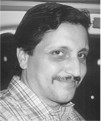
Desai: gaining community attention
Desai says that it was with the intention of exposing and bringing the alleged errant deeds of Tamboly to the knowledge of the community that prompted him to stand for election. Only at election time can one gain the attention of the community, he claims. One such deed, according to Desai, is that pictures of the dakhmas’ contents were shown at Godrej Baug. "I have seen the pictures. You can’t identify the bodies,” he adds. He justifies the negativeness of his campaign on the ground that he had done nothing so far to speak of; so he had to denigrate what the other had done!
The WZO’s (World Zoroastrian Organisation) "reformist ideas” are the proverbial red rag to this orthodox bull. "The Jamé is WZO’s mouthpiece for the last three to four years,” avers Desai, citing WZO founder president Shahpur Captain’s three-page article with its reformist ideas. He says he has the "strongest conviction that Tamboly wrote the Jamé editorials,” especially the ones that he claims devastated Noshir Dadrawala. ("Rusi Dhondy has been Jamé’s editor for many years. He has written umpteen editorials. Why would I need to write them?” asks Tamboly. "I have been editor of the Jam-e-Jamshed since 1987. I should know my job by now!” exclaims Dhondy adding that Jamé has been caught in an "unnecessary controversy.”)
Desai alleges that when the WZO paid Dhondy four lakh rupees ostensibly to rescue a failing community institution, the Jamé’s balance sheet had registered a profit. "Now Dhondy says that it was a loan which he will pay back! Is it shown as a loan in the WZO books? É tau ghérno ghambar chè (it’s all in the family)... Parsis are afraid to say the truth (because) the list of WZO beneficiaries and list of voters [on the BPP’s Anjuman Committee (AC)] are almost subsets!” The only WZO project that Desai said he "admired” was the floodlighting of the baugs as "it brings the youths together.”
("It is the height of absurdity to say that all voters were beneficiaries. It is insulting the integrity of the voters!” notes Tamboly angrily. He explains how he received an appeal from Dhondy for financial support to the ailing Jamé in November 1999 which he forwarded to various donors. One donor responded and Tamboly says he passed on the donation to Jamé. "No special treatment was given. For all beneficiaries the financial and rehabilitation assistance is considered as an application of funds on the objects of the trust. No interest is charged,” he adds.
("There may be a profit on a mercantile basis. But what happens when you need cash to pay for various needs like paper, printing, etc?” counters Dhondy. "The amount is not a largesse. We’ll start paying back in instalments,” he notes.)
Desai alleges a concerted attempt of the reformist lobby to gain power on the BPP board. As an example, he says, Dr Nawaz Mody, Bombay University’s head of the department of civics and politics (and a Tamboly supporter) had told Desai’s wife Anahita during the election of Burjor Antia, "By next year we’ll have the people we want. We’ll pack the BPP with our people.” (Mody told Parsiana she had no idea who Anahita Desai was until the day of Tamboly’s reelection. She says she had spoken to Tirandaz supporter Tanaz Parakh at the Antia election but disclaims such a statement. "Why would I want to make a statement like that?” she asks Parsiana.)
Despite Tamboly’s repeated disclaimers, Desai alleges that "the AZA (Alert Zoroastrians Association) are Tamboly’s agents.” ("Though Percy Patel and I have known each other since our diaper days, I have had nothing to do with the creation of AZA,” says Tamboly.) Desai supports his statement by claiming that AZA’s Kersi Randeria had told Anahita at the Antia election, that the AZA "will always oppose a sitting trustee because we are opposed to the BPP’s housing policy.” Yet Randeria and Patel were Tamboly volunteers, Desai noted. [The AZA as an association of people aims at ensuring that funds of community trusts are utilized in accordance with the settlors’ mandates, explains Randeria. Currently they are focussing on the Punchayet and its housing policy, he notes. The individuals who constitute AZA have their own ideas about which candidate to support for BPP trusteeship. Hence, says Randeria, he could never have made such a statement to Anahita. For example, AZA member Hoshidar Gandhy had supported Godrej vice president Maneck Engineer in his winning contest against sitting trustee Rustom Tirandaz and had been reviled by Desai on the e-mail. Gandhy however was a firm supporter of Noshir Dadrawala against Tamboly and had arranged meetings with Dadrawala for other AZA members in their individual capacity, says Randeria. Some AZA members worked overtly or covertly for Desai as well, he adds. As for the creation of AZA, Randeria recalls that Maneck Engineer’s supporters (at the earlier election which he lost to sitting trustee Dinshaw Mehta) had heard that Engineer’s old mother-in-law had received menacing phone calls while Engineer was out of town after losing the election to Mehta. They charged into the BPP boardroom to register their complaint where Mehta reportedly disparaged them stating "Haathi chaalé né kutra bhasé (when an elephant walks, dogs bark).” That remark spurred the creation of AZA, noted Randeria.]
Desai says he is supporting the petition against builder/developer Zarir Bhathena who he alleges is circumventing the agreement for the development of the Lal Baug Agiary property. The case is currently being argued in the City Civil Court, says Desai. He sees Bhathena, his lawyer and B. D. Petit Parsee General Hospital president Homa Petit, Tamboly and supporters like Nariman Mehta of Nowroz Baug and chartered accountant Yezdi Bhagwagar as part of the "reformist” clique.
He also intends to intervene in favor of Universal Adult Franchise in the BPP electoral scheme when hearings begin in the Bombay High Court. The BPP has asked for the court’s approval of its proposal to double the elected members on the AC, currently pegged to a number equal to the number of donors. Laughing off the demographic fears of the liberal groups, Desai says, "Before we die out at least let’s get a chance to vote!”
If he were to get on to the BPP board Desai says he would run it by its objectives: provide religious education — "market it professionally. It should appeal to children;” set up a helpline for the aged. He also stresses that BPP trustees need to "behave as akabars... treat people with dignity.”
Questioned about the expletives peppering the e-mails he exchanged with Godrej employee Gandhy at the time of Engineer’s election (see "An acrimonious election,” Parsiana, September 2003), Desai initially said he was not always prone to use them, then added that they were in common use by the community! "I was provoked! Maneck Engineer’s manifesto came on my office e-mail!... (He) had collected signatures for DDD-AG (Disposal of the Dead with Dignity-Action Group)!” When this reporter criticized his denigration of the House of Godrej which has done so much for the community, Desai alleged that the company "used the community as a source of cheap labor, encouraged them to remain (backward).” When we reminded him that it was the late Naoroji Godrej who rescued the Athravan Educational Trust from the avalanche of community criticism, gave it physical and emotional space to establish itself, Desai relented, exonerating the earlier generation but maintained that it was now an ailing concern with its FSI and warehouses on sale. On being told that Godrej, through Engineer, had a substantial role to play in the beautification of Doongerwadi, he countered, "They’re destroying Doongerwadi with gardens and manicured lawns! Let it be a jungle! Let the wild boars and peacocks roam!” ("I have never had anything to do with the DDD-AG,” says Engineer. "These allegations are made against me because of the late Soonumai Godrej’s cremation. Even a staunch orthodox like Eruch Desai had attended the uthamna,” he adds. Engineer told Parsiana that Godrej is leasing out its facilities in Bombay and moving to other sites because the cost of labor here is four to five times higher than in other places. As for Desai’s allegation regarding the House of Godrej using the community as a source of cheap labor, Engineer counter questions: "To how many Parsis has Desai given employment?”)
Another source of Desai’s ire against Godrej pertained to the launch of the book A Zoroastrian Tapestry [coauthored by Pheroza Godrej and Firoza Punthakey Mistree of Zoroastrian Studies (ZS)] at the Taj Mahal Hotel in 2002: "The seniormost High Priest, Dastur JamaspAsa was sitting in the rear! He should have been on the podium! Instead, a printer was sitting there!” (Contacted by Parsiana, Punthakey Mistree explained that she had gone up to JamaspAsa twice, urging him to come forward but he declined. "We should have asked the high priests for a benediction that day, but we slipped up. It was not intentional. All the high priests are very friendly with us,” she noted.)
Desai says he is planning to form a trust or association of likeminded people with a middle-of-the-road ideology, generate an alternate avenue for funds. His aim is a seed capital of 35 to 40 lakh rupees. And "with or without ZS” he wants to pursue religious education for youths. He also intends to start a helpline for the aged to deliver doles to their door instead of the old people trekking to the BPP to receive their monthly support. (On checking with BPP CEO Behram Dastur Parsiana learns that doles to various beneficiaries including those in central and south Gujarat and distant Bombay suburbs are despatched by money order. Only those who choose to come and collect in person and are fit enough to do so, receive the amount in cash every quarter.)
Son of Hosi Desai, a former employee of Bombay Dyeing and the late Katie, Desai, 44, grew up in a cosmopolitan area of Byculla opposite Rustom Baug where he now lives with his wife Anahita, his elder brother Viraf who freelances as a freight forwarder and his ailing father. After graduating in the commerce stream from Sydenham College, Desai completed his chartered accountancy, articling with A. F. Ferguson and Company. Currently a director of Writer Corporation, Desai looks after its finance, legal and administrative work along with Denzil DeSouza. The company which is said to be a market leader in corporate relocations, information and records management, freight forwarding, travel services, etc had begun as a Parsi concern founded by P. N. Writer who had learnt the art of packing peoples’ personal effects at the Army and Navy Stores. When the A&N Stores closed after India’s independence, Writer commercialized his expertise to help individuals change houses, move from one city to another. He was joined by Charles DeSouza, a typist with entrepreneurial flair and when Writer retired in 1964, the company became the DeSouzas’ family concern.
When Desai joined then in 1984 they had one branch in Delhi and about 100 employees. But the relocation business had become focussed on corporates with a few individual exceptions like J. R. D. Tata and under the "dynamic” second generation of DeSouzas — Denzil and the late William — the company began offering other related services to its generally repeat customers which include top corporates, consulates, multinational banks. Their records and information management center, located in a warehouse and an airconditioned room in Vashi stores documents and files for its clients and can produce an urgently required item in an hour’s time or, at the most leisurely pace, take upto 24, says Desai. Their ticketing and tours department has grown from the corporates’ need for travel at short notice.
Starting as an accounts assistant Desai had found himself "involved in almost everything — octroi, customs, legal matters. Denzil, William and (I) did everything as the company grew.” With 22 locations in nine cities in India, over 1,000 employees and growing, Writer Corporation is now a professional concern rather than a family one. They believe in centralized control however and play a "steering role in every meeting... every major decision is passed through Denzil or me,” says Desai.
It was Denzil’s mother Alice who induced them to support the Kripa Foundation which had been formed in 1981 by Fr Joe Pereira and a recovering addict Ossie Pereira to fight the menace of substance abuse, Desai informs us. Desai, along with the DeSouzas, joined it in 1986. Now a nominee trustee on behalf of Denzil, Desai says he is actively involved. The trust’s 21 centers, many of them in North East India, have earned international recognition and receive funding from government. The success rate fluctuates at 50-60 percent as at least 40 percent of the addicts who are put through detoxification, counselling and rehabilitation, tend to relapse. About a dozen Zoroastrian youths have availed of the trust’s facilities in the course of 20 years, reckons Desai.
Desai’s hours of work are eclectic. Most days he is at the office from noon to midnight or later. Nonetheless he feels he can devote at least an hour a day or four to six hours a week to community work. He says he enjoyed the experience of standing for election — even the spate of critical e-mails — and would like to stand again. The experience has taught him that "it’s always good to be forthright and say the truth. It’s easier to defend...”
"You get the leader you deserve”
"When you are on the wrong side of 60 you are more acceptable to the community!” notes Noshir Dadrawala acerbically. He had withdrawn from the electoral fray a day before the nominations closed on August 27, 2003. A frequent lecturer on religious topics under the BPP’s Zartoshty Brothers Fund program, Dadrawala has also been a spokesperson for the orthodox lobby.
There was no doubt, he says, that he was "extremely disturbed by the Jamé editorial and the language used” but he discounts the claims made by Yazdi Desai that he had had a "nervous breakdown” (see: "Ethnicity: an electoral issue?” Parsiana, October 2003): "Far from it.” He also disclaimed any "direct badgering” from his opponent. "Certain circumstances were created which made things bitter. If people around Tamboly were so keen... if the chair was so important to him, go ahead. You get the leader you deserve. My idea was to be of some service in view of my professional background.” Dadrawala assured Parsiana that the pamphlet disparaging Tamboly "was not my work.”
As a very active executive secretary of the Centre for Advancement of Philanthropy, Dadrawala has been doing a lot of traveling. Even before the election on September 27 he had spent time in the Philippines. During the election he was in India but not in Bombay and on October 24 left again for the US on professional work. When he returned after "two happy weeks in the US,” his secretary told Parsiana that he did not want to speak to the Press. However, when Parsiana called him at his residence a couple of days later, Dadrawala, an old friend and contributor, was agreeable to a short telephonic chat.
We asked him if he would stand again. "I don’t think I have any plans... nothing right now... I (just) want to put a lid on this and get on with life.”
◆ ◆ ◆
From the archive