
Comment
Tips for trusts
The principles of managing a trust and a corporate enterprise are not dissimilar Subhead
In the hope that Parsi managed trusts will become professional, asset-minded, cost conscious, better organized and vibrant, to face the 21st century successfully, I am summarizing the contents of an important talk given by Minoo R. Shroff, a senior trustee of the Bombay Parsi Punchayet (BPP), as part of a two-day seminar organized by Sampradaan — Indian Centre for Philanthropy.
Many principles of good governance run across not only different institutions but across continents and different political ideologies. Principles of good governance can be common to tightly controlled economies (as of China and erstwhile USSR) and to the fountainheads of free enterprise [the US, Britain (for many years now), Germany, Singapore and Hong Kong].
There is a misconception amongst many charitable trusts (not only the Parsi trusts) that there has to be a great divergence between charitable trusts and business operations. The R. C. Church in the USA is one of the best organized charities and run very professionally.
At the outset non-governmental organizations (NGOs) should allow for philanthropy plus 10 percent profit. If the profits are not generated, on an enduring basis, the NGOs would come to grief, and would have to go hat in hand, ever so often. Enlightened self-interest and enduring solvency are the corner stones of a good NGO which enable it to work for any good cause or a set of good causes. The Harvard University (whose first corpus was created by a British donor) is an excellently organized, forward looking and very solvent NGO.
For any NGO/institution, its character and credentials are reflected in the composition of its board. Character and reputation are not identical. One may have a reputation, for enormous energy, to do something but may not have the character (the moral fiber) to project oneself. The board must be composed, essentially, on grounds of merit, i.e. ‘meritocracy’ should be the cardinal principle behind its composition. Compatibility at board level is vital and the board needs more doers than talkers. There is an old management adage which says "talkers get paid more than the doers.” Though true it may be in many cases, it doesn’t augur well for any institution.
"If gold rusted, what can iron do?” When that happens, not only does the image suffer but the entire value system suffers. We have seen how insider trading, manipulation and concealment of financial data have ruined gigantic undertakings, both in India and abroad (Unit Trust of India and Enron being recent examples).
Like with any office, every employee is not a star performer and so also at the board level, one third or half of the board is effective and, over a period of time, it carries some ‘pedestrians.’
As a natural corollary to that phenomenon, some conflict of interest arises and it has to be resolved in the interest of the institution (whether a charity or a business). An absence of conflict need not demand an absence of a healthy abrasion of ideas. Dissent stimulates thinking and logic, and demands a second look at many proposals and propositions. Conflict weakens an organization. Constructive dissent is mostly healthy.
Old institutions have a tendency to develop dead wood. It applies to trusts, family run businesses and other institutions. So what is the remedy against developing slumber and dead wood? A periodic renewal and churning of the board. Those who have been long on it can make room for younger, and deserving blood. Employment and human resource development managers welcome retirements and resignations as necessary to inject ‘hormones’ in any organization.
The chairman of any organization is (supposed to be) the pivot and wears the personality of the organization on his right sleeve. The chairman must lay down the mission statement, whether it be for an NGO or for a commercial organization. He must set up a road map of service and welfare. More importantly, he must develop a delivery system whereby their plans, objects and the main mission get translated into action and do not remain, only on paper, as noble intentions. The chairman should help formulate a sound plan for funding and a conscionable profit on an ongoing basis so that when a need arises they are ready with the funds at their command. An organized charity, or a business organization, has an orderly plan for the generation and distribution of funds.
Credibility is a crucial ingredient in fund-raising. Funds flow in when a charity or a business perform well and there is no skepticism about it. For a successful NGO/business, detailed delegation is very necessary — a compulsion. Without it, the operating style would be cramped and suffocating. There is a distinction between delegation and abdication. A detailed delegation does not imply a well laid down plan for abdication. The responsibility for results (or the absence of them) always rests with the delegator. He has a moral, functional and legal responsibility towards what he/she delegates.
The reporting relationships should disable the delegator from pleading ignorance of what happened after the delegation. The chairman in particular and the board, in general, should ensure precautionary compliance of all rules. A sound selection is central to the functioning of a CEO (chief executive officer).
Many above average qualities are expected from a CEO and these should not only be latent in him but properly visible to those who deal with him. Some of these are integrity, maturity and competence. Only with the passage of time may these attributes be demonstrated, but in order to ensure that the potential CEO has an intrinsic worth, his selectors have to check on his antecedents thoroughly — more so about his service orientation.
The CEO should have good human relations, be approachable/amiable and develop good networking facilities. He should have a smile. Just as he has to be guided by the board, he should also guide the board and help it formulate the basic policies and strategies.
The CEO has to create the right image and perception not only about himself but also about the organization he serves. He must enjoy the trust of the board, and should be bold enough "to wake up a sleepy board.”
For him to be a good networker, and to get the best out of his juniors, he will have to select his junior staff with as much care and precaution as his board selected him. He should foresee and meet the demands of the day, and plan for the imponderables. Merit should be his motto. He should not be swayed only by the old school tie, but demonstrate that he is a believer in and supporter of merit.
A CEO should plan for a successor, after periodic ratings of potential juniors. The CEO should have a five-year rolling budget and his project planning must be tight so that there are minimal deviations. Some deviations will be inevitable but those should be explainable. The CEO must develop the ability to smell ‘rats,’ at once. Like a good scout, he should always be prepared for unforeseen contingencies and anticipate shortfalls in collections. He must complement this anticipation with a plan to meet such shortfalls. The CEO should be a very good practitioner of time management and should have innovative ideas for funding.
At a very recent seminar which was organized at the launch of "Smart Manager,” a pointed question was asked whether Indian CEOs were dynamos or dinosaurs? The collective consensus of corporate chief honchos, and a business think tank, was that they were ‘dinosaurs!’ One very pertinent comment which was made by S. Ramadorai, chairman of Tata Consultancy Services, was: "Competition should drive innovation. And companies, therefore, have to look beyond their noses and bodies to propel themselves into dynamic heights.” The buzz word today is competition. Only that enables an NGO or a business entity to hone its skills sufficiently and substantially.
There is a lot to learn for a Parsi trust from the above observations. Some of our trusts are moribund in character and one way they can pull up their socks is to implement, in toto, Shroff’s simple but practicable suggestions.
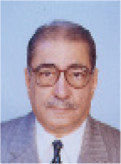
Chief Executive Officer of the Bombay Parsi Punchayet, Dastur had 31 years’ experience with multinationals in materials, systems and corporate development. His last position was as a senior general manager (materials) with Burroughs Wellcome (India) Limited. He represented the chemicals and drug industries before the finance and commerce ministries on tariff issues.
◆ ◆ ◆
From the archive