
Cover Story
The tenor of Bejun
His perfect pitch, versatility and dramatic presence have rapidly made countertenor Bejun Mehta an international star
As a boy soprano, his dulcet voice had set audience spirits soaring. At age 14, for his first solo compact disc (CD) Bejun on the Delos label Bejun Mehta won approbation and applause, including the coveted "Debut Recording Artist of the Year” from Stereo Review.
When his voice broke a year later, triumph gave way to tribulation. For a while, his life centered around the cello. He graduated from Yale University magna cum laude in 1990 with distinction in Germanic languages and literature. He conducted, he won a Grammy in 1998 as a producer in the recording studio for his production of cellist János Starker’s recording of Bach’s Six Suites. After a seven-year interval he took to singing once again, in what he himself termed a "pleasant” baritone voice. But the inner restlessness persisted till one day in November 1997 he chanced to read an article on the well-known countertenor David Daniels. Struck by the similarity to his own life, Mehta decided he had nothing to lose by trying to sing countertenor — and finally found his voice!
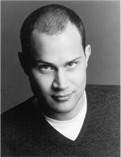
The countertenor, first popularized by Handel and other baroque composers, sings in a high range, equivalent to that of a female alto, using a highly developed falsetto. (It’s a contemporary version of the castrato voice, which is to say it’s natural, no surgery required.) "It’s a freaky thing — certain people can do it, certain people can’t,” Mehta stated on the program "The Countertenor,” 60 Minutes II aired in January 2002 on CBS television. "I don’t sing like a woman. My voice comes out like a woman, in that range.”
Currently one of the most bankable voices in the business, Mehta’s operatic assignments over the past four years have seen him perform on stage in all parts of the USA, in London, Vienna, Paris, Frankfurt, Brussels, Venice, Sydney... Writing from New York in Opera News (May/June ’99) critic Matthew Gurewitsch stated: "His registers are seamless, from the bell-like top... down to low notes that are rich and sensuous. Equally remarkable are his sheer power and his expressive freedom... Among the remarkable crop of new countertenors, Mehta takes his place in the very front ranks.”
"Mehta cultivates his chest voice and gets astonishing results. The voice never sounds forced, but big, round and full — like crescendo up the scale, right up to the top — like a diva. His strength lies in the lyrical and dramatic, as the young singer proved with his rendition...” notes a translation of a review in German, forwarded by ICM Artists Ltd of New York, of Mehta’s European debut, where he sang in Vienna and Frankfurt as a last minute replacement for the indisposed star Daniels. "At first disapproving noises could be heard from the audience... but the discontent was quickly dispelled.”
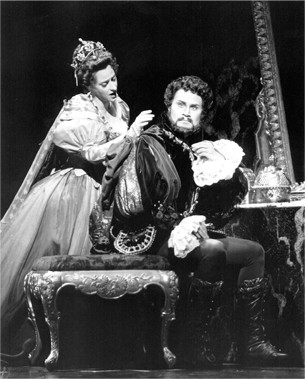
Mehta (top and seated alongside) with soprano Lisa Saffer in Handel’s Ariodante. Photo: Carol Rosegg, courtesy New York City Opera
During the 2000-2001 season, Mehta made yet more prestigious debuts. States the New York Times Magazine of March 4, 2001: "The Los Angeles Opera is currently putting on a much-awaited production of Handel’s Giulio Cesare (Julius Caesar) that features possibly the three best countertenors in the world: Daniels, David Walker and Mehta. Mehta... is the youngest (in his early 30s) and the least experienced of the three, but his sound may be the most beautiful and dramatic. His story is one you could write an opera about.” That concert season also saw Mehta play the part of Ottone in the Netherlands Opera’s L’incoronazione di Poppea and Farnace in The Santa Fe Opera’s production of Mitridate.
The following season Mehta returned to the Thèâtre du Châtelet as Masha in Three Sisters and as the Voice of Apollo in Death in Venice at the Teatro Comunale di Firenza in Italy. This year Mehta makes his Metropolitan Opera debut in New York as Oberon in A Midsummer Night’s Dream and at the San Francisco Opera as Tolomeo in Giulio Cesare.
His datebook is full and includes debuts at the Edinburgh Festival, the Paris Opera, etc. His piercing blue eyes, "close-shaved head and Parsi ancestry (give) him the look of a Himalayan ascetic,” comments Town and Country in its profile on Mehta. Notes Financial Times (December 18-19, 1999): "He demurs from talking about God-given gifts,” though he believes that every time someone sings beautifully "it’s a miracle.”
When younger, Mehta was greatly interested in visiting India, the land of his forefathers, "but my father (Dady) discouraged me, he himself having few fond memories of his home country. Now it’s a matter of scheduling — it’s almost impossible to find a suitable length of time for such a journey,” writes Mehta in his e-mail response to Parsiana’s queries. Believing Zoroastrainism to be "a tolerant faith,” Mehta notes: "I believe there must be some spiritual center to life... In principle there are good aspects to many organized religions but in practice it seems most of them break down in some way, many horridly... too much of the evil in the world has been committed in its name.”
Strongly moved even as a child by the Muse within him (the inner world of his musical sensibilities), Mehta recounts in the chapter "A Process of Prodigy” the traumas and triumphs of growing up as a prodigy. The chapter forms the epilogue of Claude Kenneson’s book Musical Prodigies: Perilous Journeys, Remarkable Lives first published in 1998 by Amadeus Press. (The book was first brought to Parsiana’s attention by Bombay solicitor Keki Mehta of Payne and Company. Parsiana also acknowledges the lead provided by Rusi Kapadia of Poona who put us in touch with ICM Artists.)
Born on June 29, 1968 in the little North Carolina town of Laurinburg, Mehta moved as a small boy with his family to Ann Arbor, Michigan. His Bombay-born father Dady (who is Zubin Mehta’s cousin, Dady’s father Nariman and Zubin’s father Mehli being brothers) lived in India before he left the country to study the piano in Paris and Vienna. Dady later played and taught in North Carolina and at the Eastern Michigan University, having concertized and taught in Europe as well. Bejun’s mother Martha was born in Pennsylvania and was his first voice teacher. Martha received her vocal training in Vienna with the celebrated Elisabeth Rado. Bejun’s older brother Nuvi (Navroj) is an accomplished violinist and conductor who studied with Joseph Gingold at Indiana University, with violin virtuoso Nathan Milstein and at the Juillard School. ‘Regulars’ on the concert stage, harmony and counterpoint, melody and polyphony are at the core of Mehta family life.
Bejun’s first musical memories, as he narrates them in his autobiographical sketch, are from the time he crawled around under his dad’s piano, gazing in amazement at the struts and sounding board while his father practised. Later, it was on the piano stool, on his father’s lap with Dady slowly striking the keys, that Bejun imbibed the beginnings of voice leading, counterpoint, and a good deal of music theory. "While my father showed me very specific things about the piece at hand, he also showed me how much he loved music, and by sharing these things, how much he loved me... I also realized that a truly wonderful thing about having grown up in our family, given my particular gifts, was that there was an atmosphere in which you knew that artistic things were noble.”
As a baby, Bejun was ironically non-verbal, till a fall from his high chair and the resulting smack on the head on the kitchen table seemed to loosen the floodgates of speech! Words soon gave way to song: "Nuvi, who is five years older, recalls many an afternoon trying to do his homework while I was embarked upon what he has since affectionately named ‘Opera for One.’” Singing was spontaneous for Bejun — he would sing every part from an opera recording, circling the kitchen table ("our home had a big resonant kitchen”) for hours on end, till he was hoarse! He sang in the car; tunes bubbled in his throat even during independent work time in school, prompting his teacher to ask his parents to "talk to him about this.” His parents, of course, did not talk to him about it at all!
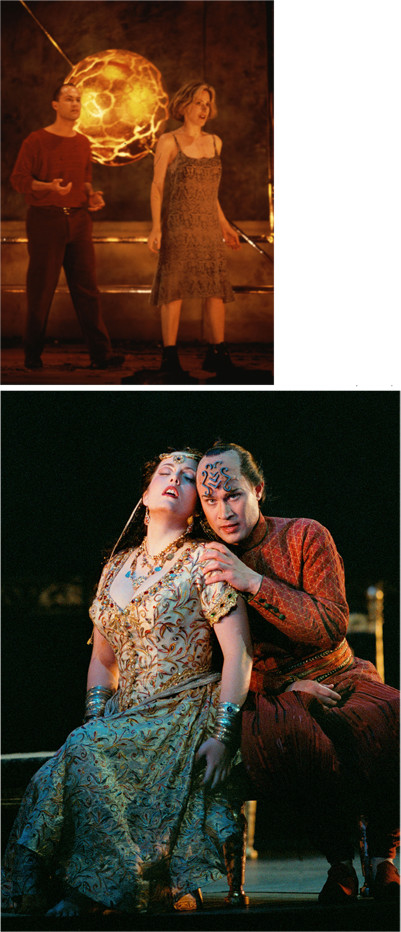
(Above) Mehta and Saffer Photo: Carol Rosegg, courtesy New York City Opera and with Celena Shafer in Mozart’s Mitridate. Photo: Ken Howard, courtesy The Santa Fe Opera
"When it became apparent that school presented me little challenge... my parents were quite free about letting me find my own way to do things that did engage me. My mother, particularly, was just as happy to have me at home with a serious book in hand, or Beethoven on the turntable, than in school every single day.” This freedom also marked Martha’s early stewardship of his voice — a ‘gentling’ of him along his own path. "I also sensed that somehow I was substantially different from everybody else, and that made me quite lonely at times.”
At five, his first stage experience was as a little Siamese child in a local high school production of The King and I. At six, he was singled out for a small part in the University of Michigan’s production of Puccini’s La Bohème — singing solo all of seven notes! "Between the ages of five and 10, my singing was very free and easy. I never really thought or worried about anything” — till one day a woman in the audience came backstage in tears, crying because she couldn’t get over the beauty of his voice! "It was the first time I realized that what I was doing onstage could have a serious effect on people.” It increased his joy, yet heightened his isolation.
At 12, Bejun was reengaged as a soloist for a series of Handel’s Messiah concerts, having sung the same series the year before, with a 200-strong choir, orchestra, in front of a 5,000-strong audience! In 1983, the recording of Bejun preserved for posterity his vocal tapestry in songs by Schubert, Brahms, Britten, Handel...
At 15, he faced what was for a boy soprano the peril of puberty — he could no longer sing like a little angel. At nine, at his parents’ suggestion, he had begun casting about for an instrument to play. "After a brief contretemps (struggle) with the French horn, a battle I quite lost, ...(I) settled on the cello.” He left home at 16, to study the cello in New Haven with Aldo Parisot. As a member of the Yale Cellos, in 1986 in the University’s Sprague Hall 35 cellists, all students of Parisot, recorded a new CD for Delos that included Bejun’s arrangement for solo cello and ensemble of Sergei Rachmaninov’s Vocalise, Opus 34, No 14. In 1990 he graduated from Yale. By then, his musical life in New Haven had carried him to the conductor’s podium, coaching for a while with legendary conductor Leonard Bernstein.
At the recording studio, his production of cellist János Starker’s A Tribute to David Popper was nominated for a Grammy Award in ’89, and in 1998 he won a Grammy for Starker’s recording of Bach’s Six Suites. Bejun’s CD reissue productions for Sony Classical numbered several hundred; he won acclaim for his work on the "Masterworks Heritage” and "Essential Classics” series. Bejun Mehta Productions Inc, his own classical audio production company, linked him to many outstanding classical artistes.
In 1991, he began singing again as a baritone, performing as soloist and recitalist. But it was "decidedly average,” Bejun told his CBS interviewer. "I had never been average, it was not (a) great (feeling).” In 1997, admitting defeat, he stopped singing for six months, sitting lonely and despondent in front of the telly, soap opera filling the empty space in his life. "I was broke, depressed and going nowhere,” he said, till the article on Daniels and his own assessment of his countertenor singing spurred him to contact his friend and mentor — Metropolitan mezzo Marilyn Horne who presented him in concert under the auspices of the Marilyn Horne Foundation. "He sang this extraordinary, really fast coloratura (with ornamental trills and runs) aria... It was like a star had arrived,” the prima donna told CBS.
Finding the present success and popularity of countertenor singing "incredibly exciting” and predicting countertenors to be the superstars of the future Bejun stated: "Ten years from now you wouldn’t be doing this story because there would be no story!”
◆ ◆ ◆
From the archive