
Comment
Dealing with dissent
To ensure harmonious working, no trustee should be isolated on the Bombay Parsi Punchayet board, even if there are differences of opinion
Those were the days, my community people, more than 15 years ago, when I and my colleagues on the board used to enjoy working as trustees of the Bombay Parsi Punchayet (BPP), not for any personal benefit or glory, but with an ardent desire to serve the community. Even then, we had healthy differences and disagreements on quite a few issues, but never leading to isolation of anyone who differed. The work relating to the trust went on merrily, undisturbed. Once the issue was sorted out, the differences were dead as a dodo. I recall that, after heated discussions on issues between Jamshed Guzder and me, once his temper had cooled down on reflection overnight, the first step he would take was to send me a bottle of whisky or present me with a silken tie.
Is the style of working at the BPP today the same? I feel not, from what we hear in dinner circles, or read in newspapers. I wish the newspapers would open their columns also to those who may have opposing views. This may bring the community closer. I learn that there are persons outside the trust who initiate one or the other proceeding against the trustees in one or the other forums, defending which takes away the valuable time of the trustees and prevents them from devoting sufficient time to look after the trust affairs. If the trustees respond with a united response, such attempts of outside parties would suffer a dent.
All the present trustees, without exception, are honorable men and women. Why should they not work towards bringing about a change in the working atmosphere? To achieve this, is it not worth trying to ensure more involvement of all the trustees in the decision making process? The trust activities extend to various fields such as housing, education, medical relief, monetary assistance, looking after the aged and infirm. In my time, if I recall correctly, there were nearly 30 committees of the trust on which at least two or three trustees found place, besides a band of dedicated voluntary social workers of the community. Each such committee (according to the activities within its domain) should be headed by a trustee who has an aptitude in that particular field. This would result in greater involvement of the trustees in the administration of the trust affairs and give him/her a sense of satisfaction in discharging his/her responsibilities to the best of his/her abilities. Such an approach should result ultimately in involvement of all the trustees when the matters handled by different committees come up for discussion before the full board, leaving no trustee isolated as if he/she is a pariah in the trust body.
A fine example of such harmonious working is that institution catering to the health of the community at affordable rates — the B. D. Petit Parsee General Hospital. The present day team of Aban and Homa Petit, along with Maj Gen Malik and general manager Jal Adajania, have contributed greatly to improve not only its getup, but have also achieved noticeable improvement in the services at the Hospital, which can now be styled as one of the best hospitals in the city, perhaps in the country. It is manned by eminent doctors of the community, the foremost amongst whom is that doyen of the medical profession Dr Farokh Udwadia, and a host of other visiting doctors who are all of top class caliber, including Dr Sharukh Golwala, Dr Jamshed Bunshah and others. Its committee of management that meets on most Saturdays, works as a team.
In any institution, however well managed, there is always room for improvement. This could possibly be due to a shortage of funds, when there arises the need for the affluent of the community to contribute to the funds, whatever their mite. There should be many more Areez Khambattas in the community. One may not agree with his style of writing or method of working, but he cannot be ignored. Such Parsi sethias who disburse so much money out of their own funds for the betterment of the community and for the preservation of our properties are now a rare commodity. Khambatta is needed for a long, long time by the community for his much needed resources and Khojeste Mistree is needed for his oratorical skills to convince an audience to achieve the objectives outlined above. Let me clarify that I am not a member of the World Alliance of Parsi Irani Zarthoshtis (WAPIZ).
Coming back to the working of the BPP, I feel that considering the noisy onslaught of reforms, the present lot of trustees are the right people for the right job at the right time. All without exception seem to be of one mind that there cannot be any tinkering with our existing practices, particularly at Doonger-wadi, so as to entail even the remotest risk of endangering the property. Reforms cannot be embarked upon to cater to the individual fads of a minuscule minority, as if such reforms would improve the lot of the community overnight.
Dissent is one’s right, whether it is on day-to-day working or on issues of importance. Some time back, I read in Jamé an article referring to the dissent of some of the trustees on the board during my tenure, particularly on the issue whether the seniormost trustee (as I was then) should automatically take the chair or whether the chairman could be elected by a majority, contrary to the tradition which had been followed since nearly a 100 years. Actually it was not I who initiated the dissent, but my then colleagues Homi Ranina and Dr Mehroo Bengalee. In fact, I was a party to the proceedings as one of the defendants.
On reading the newspapers, one gets an impression that there is a chasm between the middle class of the community and the rich and the affluent. There is actually a dislike for the BPP. The late J. R. D. Tata, when he learnt that I was a trustee, inquired of me as to how I could be entangled with such a body. In my view, such a chasm should be bridged either by periodic interaction or by enlightening such persons on how easy the trustees’ task would be with their support. Actually, some persons who matter should be persuaded to join the trust board. When I was a trustee I had cursorily sounded out Ratan Tata, Jamshyd Godrej and Cyrus Guzder to spare their valuable time and join the board. Only recently, I also sounded out Rustom N. B. Jeejeebhoy. However, all of them expressed their inability, possibly because they did not like to undergo the hassle of an election process even at a time when the electoral college was quite small. Even the late Nani Palkhivala was reluctant to go through the election process, but agreed to be a trustee provided he was elected unopposed. Those who mattered in the community then did not agree and the trust body became poorer in status when his presence would have enhanced its prestige in the eyes of all.
With the introduction of the system of adult franchise, which was a monumental blunder, the reluctance would be even more. To reverse the present system of election would be a herculean task. A way out could be to so arrange that no candidate would throw his hat in the ring against a candidate such as the persons mentioned above. But that perhaps would also be wishful thinking. If that succeeds, it would go a long way in bridging this gap between the classes so that the Parsi luster on Indian soil shines more brightly.
A trustee’s task to handle and preserve community assets and securities should be made easier. The role of the trustees is to act without fear or favor and according to conscience, without any party or group politics to sway, or strings to pull them. Their role is only to assist the community, and their only obligation is to the trust. Their guidelines should be: integrity serving as the architect, honesty, the upholsterer, impartiality, the ventilator, and independence, the shield, buckler, helmet and crown. As the saying goes, you can play the piano with white keys only, and you can also play the piano with black keys alone, but if you want to have melody in music you have to play piano with both sets of keys. Only with such collective efforts will the BPP trustees be able to render utmost assistance to the Parsi community.
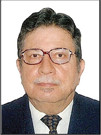
Former chairman of the Bombay Parsi Punchayet and a senior partner of Mulla and Mulla and Cragie, Blunt and Caroe, Eruch B. Desai is a director of around 15 companies and trustee of the General Electoral Trust formed by the House of Birlas and some other trusts. He has also made representations before the authorities for the amendments to the Bombay Rent Act.
◆ ◆ ◆
From the archive