
Law
Of trusts and taxes
The income-tax benefits available to charitable and religious trusts and institutions should be availed of by the community
At the commencement of the 21st century we have Zoroastrians who have given crores of rupees as charity for deserving causes. The late Shapoorji Jokhi and his philanthropic brother Keki of Hongkong have during recent years donated an amount of over Rs 17 crore in India in support of diverse causes relating to our small community, including the establishment of Avan Baug in Navsari and a state of the art wing (the modern nursing home) of the B. D. Petit Parsee General Hospital in Bombay.
Establishment and maintenance of agiaries (including dar-e-mehers) are acts of charity highly favored by Parsis in India. The inauguration of the Shapoorji Jokhi Agiary in Godrej Baug in Bombay on December 21, 1999 made possible by a munificent donation from the Jokhi family of Hongkong bears eloquent testimony to the charity of our microscopic but philanthropic community. However, the maintenance of some of the economically weak agiaries has become really difficult due to the acute shortage of qualified priests (mobeds or dasturs) to keep the fire burning besides the ever increasing cost of sandalwood, kathi, oil, etc. The fire of such agiaries should be merged with the fire of other economically viable agiaries.
Many Parsis make donations to atash behrams and agiaries in the hope of getting tax benefit under the Income-tax Act, 1961. However in several cases they get disappointed when it subsequently transpires that no such benefit is available to them in respect of communal trusts. In view thereof this brief article highlights some income-tax benefits available in respect of donations to charitable trusts and institutions in general and trusts relating to atash behrams, agiaries and the Doongerwadi complex in Bombay in particular.
Eligibility for tax deduction
Donations to an institution or fund are entitled to a deduction equivalent to 50 percent of the amount donated if it is established in India for a charitable purpose and fulfils the conditions specified in sub-section (5) of section 80-G. "Charitable purpose” as defined by section 2 (15) is wide enough to include religious purpose too. However, in section 80-G "charitable purpose” does not include any purpose, the whole or substantially the whole of which is of a religious nature (Explanation 3 to section 80-G). Hence to claim the benefit of the section each and every object of the trust must be charitable in nature. If any of its objects is of a religious nature the benefit of the section would not be available. Donors making donations to such a trust would not be entitled to claim deduction under the said section.
Trusts or institutions doing charitable work are often inspired by the tenets of the religion. In view thereof it is provided that if a trust or institution established for a charitable purpose incurs expenditure of a religious nature for an amount not exceeding five percent of its total income during the previous year, the benefit of the section will not be denied to it. This is by way of an exception to the rule that the trust must be purely of a charitable nature.
Further no relief can be claimed under the section unless the donation is "of a sum of money” (e.g. cash, cheque, draft, etc) and not in kind. The donation of a fixed deposit receipt would qualify for deduction under the section since it represents a sum of money though it is not cash.
To claim the benefit of section 80-G one of the important conditions is that the institution or fund is not established for the benefit of any particular religious community or caste. Benefit of the section is thus allowed in respect of donations to a non-communal charitable trust or institution fulfilling specified conditions. Most of the charitable trusts created by Parsis are communal in nature, generally for the benefit of Parsi Zoroastrians, and are not therefore entitled to the benefit of the section. Exceptions to this rule are referred to hereafter.
Another important condition is that the institution or fund must be approved by the commissioner in accordance with the rules made in this behalf. An application for the purpose must be made in Form No. 10-G prescribed under rule 11 AA of the Income-tax Rules, 1962. Such approval shall have effect for such number of assessment years (not exceeding five) as may be specified in the approval.
Other conditions are that any income derived by the institution or fund must be exempt from tax. Further it must be constituted as a public charitable trust and must maintain regular accounts of its receipts and expenditure.
On the grant of commissioner’s approval potential donors may be motivated to make handsome donations to the trust and thereby its funds could be well augmented and used for the benefit of the trust. Receipts for the donations issued by the trust must bear the number and date of the certificate of approval granted by the commissioner and the period for which such certificate is valid. No revenue stamp need be affixed on receipts for the donation issued by the trust.
Permissible exceptions
An exception to the rule that a charitable trust must be non-communal is contained in explanation 1 to section 80-G. It provides that an institution or fund established for the benefit inter alia of women and children is not deemed to be an institution or fund expressed for the benefit of a religious community or caste. "Women and children” form a well defined separate class of the public, recognized as such by the Constitution of India. An institution or fund established for the benefit of women and children would clearly be one for "the advancement of an object of general public utility” and would constitute "charitable purpose” as defined by section 2(15). Donations to such an institution or fund would qualify for deduction of income under section 80-G, if it fulfils specified conditions, notwithstanding that the particular institution or fund is expressed to be for the benefit of only Parsi women and children. The WZO Trust for Women and Children is one of such trusts approved by the commissioner under section 80-G(5)(vi) of the Act.
Another exception to the above rule is contained in section 80-G(2)(b). Under this section deduction is available in respect of donations made by an assessee for the renovation or repair of any place notified by the central government in the official gazette to be a place of public worship of renown throughout any state or states. "Public worship” connotes worship by the public or a section of the public and not by a group of private individuals. Worship in an atash behram or an agiary by members of the Parsi community is "public worship” as contemplated by the said section, though members of other communities are not allowed entry in these places. Further the place must be a reputed or well-known place of renown throughout any state or states and must be notified by the central government for the purpose. Donations received by the trust must be utilized exclusively for the renovation or repair of the place of public worship of renown and for no other purpose.
To claim the benefit of Section 80-G(2)(b) an application must be made to the commissioner in Form No. 10-G referred to above. The government considers the objects of the trust or institution relating to the place of worship, its importance in the state or states and compliance by it with the conditions contained in the section. While notifying the place of worship under the said section, the government imposes the conditions that the trust shall obtain every year a certificate from a chartered accountant that the donations received by it are utilized exclusively for the renovation or repair of the place and that separate accounts will be maintained in respect of donations received and their disbursements. The notification issued under the section is of a permanent nature. Once the place is so notified donations for the renovation or repair of such place would be eligible to deduction, even if it is for the benefit of a particular religious community or caste, e.g. the Parsi community. Conditions contained in section 80-G(5) regarding donations to charitable trusts in general (e.g. commissioner’s approval) are not applicable to a case falling under section 80- G(2)(b) of the Act.
The Kaikhushru Pallonji Katrak Dar-e-Meher in New Delhi has been accordingly notified by the central government on November 28, 1975. Donations to the trust of the Dar-e-Meher are entitled to deduction of 50 percent of the sum donated to its renovation or repair.
Donations to Doongerwadi complex
Prayers are offered in the bunglis and sagdis in the Doongerwadi complex by qualified ordained priests for the soul of the deceased Parsi Zoroastrians. Prayers for the first four days after death form an essential part of the Zoroastrian religion and are aimed at facilitating the transference of the soul of the deceased across the "Chinvat Pul” (the bridge of judgment) into the heaven of eternal repose. The words "public worship” as contemplated in section 80-G(2)(b) would include worship by a section of the public. Parsi Zoroastrians clearly qualify as a well-known section of the public. The entire complex is thus a "place of public worship.” It is well-known that the Doongerwadi complex (generally known as Towers of Silence) is the main place for the disposal of deceased Parsi Zoroastrians in Bombay. It is therefore a place "of renown.” Thus the entire Doongerwadi complex (including the bunglis and sagdis therein) qualifies as "a place of public worship of renown” in the state of Maharashtra as contemplated by section 80-G(2)(b). Notifications issued by the central government under the said section support the view that all places where prayers are offered by a particular community or by followers of a particular religion according to the tenets of that community or religion must be regarded under the said section as places of public worship of renown in the concerned state. This is therefore eminently a fit and proper case to move the central government under the said section to notify the entire Doongerwadi complex as a place of public worship of renown throughout the state of Maharashtra. This view has been now confirmed by eminent jurist Fali Nariman whose opinion was obtained by the trustees of the Bombay Parsi Punchayet last year. It is gathered that the matter is under consideration of the trustees.
Corpus and revenue donations
Donations are of two kinds, corpus donations and revenue donations. Corpus donations are donations made by a donor to the trust with a specific direction that they shall form part of the corpus of the trust. Being capital receipts in the hands of the trust, they are not considered as income of the trust and should not be used for advancing charitable objects of the trust. Trustees of a trust have no power to treat any donation as corpus donation at their will. Directions for the purpose can only be given by the donors to the trust. It is advisable to obtain such directions in writing. Trustees should utilize only the income from such donations (and not the corpus itself) for charitable purposes of the trust by keeping the corpus intact to be used for capital expenses and such other expenses relating to the trust.
On the other hand revenue donations are received by the trust without any such direction as aforesaid. They are deemed to be the income of the trust and must be utilized for charitable purposes in order to claim exemption from income-tax. They are deemed to be income derived from property held under trust and hence the conditions and restrictions imposed by sections 11 and 13 must be fulfilled to claim exemption from tax. Donations received in charity boxes or collection boxes and anonymous donations received by the trust are revenue donations and are treated as income of the trust.
It is thus clear that revenue donations are deemed to be the income of the recipient trust, whereas corpus donations are not such income.
Foreign donations
Charitable or religious trusts and in-stitutions established in India at times receive contributions or donations from foreign sources. Such donations are governed by the provisions of the Foreign Contribution (Regulation) Act, 1976. As regards donations so received the trust or institution must in the first instance be registered with the central government before accepting foreign donations. Where registration is refused or the trust or institution is not registered it will have to obtain prior permission of the central government for accepting foreign donations [Section 6 (1) and (1A) of the Act of 1976]. The ministry of home affairs, Government of India, deals with cases falling under the said Act.
Where donations received by a trust or institution are rare or very few, it may directly apply to the central government for prior permission under section 6(1A). While giving permission the government usually imposes a condition that the trust or institution shall intimate to the government as to the amount of the foreign donation received by it, the source from which and the manner in which such donation was utilized. A certificate from the chartered accountant in the prescribed form must be annexed.
Charitable or religious trusts and institutions must comply with the provisions of the Act of 1976 before accepting any foreign contributions or donations. They may thereafter claim deduction under section 80-G of the Income-tax Act, 1961 on fulfilling the conditions contained therein.
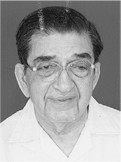
Rustom S. Gae, a former law secretary to the Government of India, is presently a senior advocate practising in the Supreme Court of India. He is known for his expertise on subjects relating to fiscal laws, company law and constitutional law. He writes frequently on legal issues pertaining to the community.
◆ ◆ ◆
From the archive