
Politics and Policy
The Calcutta confluence
A five rupee coin with the impress of Dadabhai Naoroji and a steep rise in the Doongerwadi deficit to Rs 72 lakhs were some of the issues discussed at the Calcutta Federation meet
A forthcoming edition of the five-rupee coin will bear the impress of Dadabhai Naoroji. Lt Gen (retd) Adi Sethna’s announcement to the executive council meet of the Federation of Parsi Zoroastrian Anjumans of India in Calcutta, December 1 and 2, 2001 was met with resounding applause. Sethna is president of the Delhi Parsi Anjuman (DPA), vice president (north zone) of the Federation and the Zoroastrian member of the National Minorities Commission (NMC).
On the anvil is the Third World Zoroastrian Youth Congress to be held in Bombay, probably in 2003. With Ahmedabad’s Porus Karanjawalla, former president and prime mover of the Federation of Zoroastrian Youth Associations (FOZYA) having retired from that body, clear cut plans/agenda are now being formulated by his successor Sarosh Palkhiwala.
The annual loss to the Bombay Parsi Punchayet (BPP) on the Doongerwadi account has nearly tripled from the earlier Rs 25 lakhs to Rs 72 lakhs (now said to be Rs 90 lakhs) due to the increasing number of deaths in the community and the disappearance of the vultures, leading to the deployment of a variety of efforts to contain the resulting odors and hasten the disposal of the corpses. On the other hand the DPA representatives reported that the ashes of its members and next of kin who die in Delhi or elsewhere can now be taken for burial in the Delhi aramgah, according to a recent resolve of the Anjuman.
The lease of the popular Jeejeebhoy Dadabhoy Agiary in Colaba, Bombay a choice venue for wedding and navjote celebrations, has run out and efforts are on to renew the lease. The Navy, reportedly, wants to recover its land.
With the necessary permissions in hand, the Zoroastrian Co-operative Bank is all set to open as a scheduled bank in Udvada. Another matter of financial import to the community is the proposed dovetailing of the facilities sought to be provided by the newly established Zoroastrian Venture Capital Fund with what is statutorily available under the state minority finance corporations.
The representatives of the member anjumans had the pleasure of sampling three different venues where they were hosted by the Calcutta Zoroastrian Community’s Religious and Charity Funds (CZCRCF).
In the absence of BPP chairman Jamshed Guzder who is ex-officio president of the Federation, the meet was chaired by the east zone vice president, Homi Bodhanwala of Jamshedpur on the first day, noting that this was the third time that the Federation had met in Calcutta since the revival of the splintered body in 1981. The next day Sethna took the chair.
The splendid Olpadvala Hall was bedecked with flowers in joyous welcome. The following day the venue shifted to the Royal Calcutta Turf Club as the Olpadvala Hall had been hired out for a function. The same evening the delegates met the Calcutta community at their beloved ‘tambu’ — the Calcutta Parsi Club’s sports tent in the maidan which has not only spawned Zoroastrian sportsmen and athletes down the years but established an enduring niche in the community psyche.
That evening witnessed the presentation of the Surat Parsi Panchayat Award for adventure in 1997 to Nauzer Batlivala, President’s scout and mountaineer. He and his teammates were the first humans to reach the top of a 6,005-meter unnamed peak in Tibet, as per the citation. Earlier expeditions had taken him to Bhutan, Nepal, Ladakh and Chile. It was gratifying to Federation officials to honor young Batlivala, the grandson of the late Ardeshir Batlivala, the Federation’s founding vice president, in his home town.
The all-new team of trustees of the CZCRCF — Bahadur Postwalla, Cyrus Madan, Beji Bulsara, Rohinton Indorewalla led by senior trustee Noomi Mehta — was at pains to learn about Zoroastrian problems and achievements in other parts of India and to share its own expertise.
The proceedings began with Sethna paying tribute to the late Kershasp Satarawala, former governor of Goa and the Punjab and ambassador to Mexico. Having spent a lifetime in the Indian Administrative Service (IAS), Satarawala "did everything one could possibly expect of a government officer,” noted Sethna. Satarawala’s integrity and his humility were extolled by all who knew him, added Sethna.
Postwalla recalled veteran athlete Jehanbux Kapadia who "died at the relatively young age of 95,” succumbing to malaria. "He was an inspiration to all of us at the Calcutta Parsi Club,” said Postwalla of the father of six who arrived in Calcutta at the age of 50, played "an immaculate game of tennis” until his eyesight began failing at 75 years when he took to athletics. Surviving the loss of his wife and his only son, he was "an example to all of us to lead a good, healthy life,” recalled Postwalla. Bodhanwala remembered that Kapadia "had taken a promise from me to join him at the next (veteran) olympics!” He had become hard of hearing so he often didn’t hear the starting whistle "but he ran and he won!” laughed Bodhanwala.
Federation honorary secretary Keki Gandhi, company secretary of Machine Tools (India) Limited (MTI) seized the rare presence of the MTI president, the quiet, retiring Yezi Tata, to acknowledge the Federation’s gratitude: "The Federation’s office expenses are virtually nil because we are using the facilities of MTI... I have been given the special privilege of serving the community because of his permission and consent.” The delegates responded with a standing ovation to Tata and his wife Aloo.
Gandhi informed the gathering that the Panchgani Zoroastrian Anjuman had applied for membership. The delegates agreed to welcome the new member.
Despite the excellent arrangements made by the CZCRCF, the attendance was low. Noticeably absent were Federation stalwarts from Poona, Madras, Ahmedabad, Dahanu and Mhow who are generally regular attendees. Nor was there any FOZYA representative.
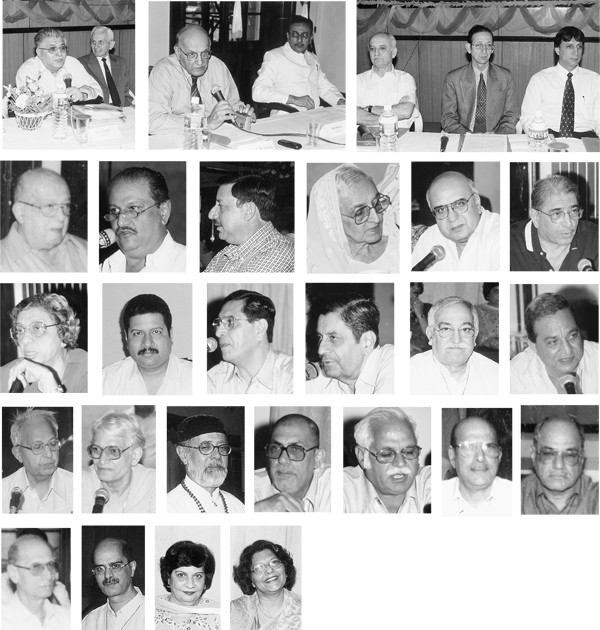
(L to R) First row: Gandhi, Bodhanwala, Sethna, Bhacca, Postwalla, Madan and N. Mehta; Second row: Bhesania, Bulsara, Indorewalla, Kavarana, Tamboly and Dastur; Third row: Master, Colah, N. Paghdiwalla, Heerjee, Mistry and M. Irani; Fourth row: Dandiwalla, S. Surti, M. Wadia, Debara, Dick, Bhagwagar and Antia; Fifth row: Medhora, Pithawala, Perin Dastur and Pansy Mehta
Nargol Anjuman president Hoshang Wania who had mooted the idea of group medical insurance to the Federation did not attend the Calcutta meet. He had earlier noted that group insurance schemes had to be approved by the GICI and the matter has been dormant since then.
Gandhi happily announced that the Fed Newsletter is now self-supporting. He noted that the Federation’s budget was to be submitted to the charity commissioner by March 31, 2002. It was required to spend up to 75 percent of the income to avoid income tax. Most of this money is spent on social projects co-sponsored by the Federation and the BPP like school and family counselling, day care, etc. The Federation also donates annually to the Athornan Boarding Madressa at Dadar.
At the end of the meet Mehta and Madan presented mementoes to the Federation’s office-bearers on behalf of the CZCRCF noting tongue in cheek, "We’ve had two days of discussions and meetings — no fights!”
The next meeting of the executive council is scheduled to be held in Bombay on June 15 and 16, 2002.
Individual anjumans
Bulsara, the Calcutta trustee who attended the prior Federation meet in Bombay in June 2001 introduced his fellow trustees: Mehta who, as managing director heads the all-India operations of Selvel Advertising is an excellent sportsman, Postwalla, managing director of McNally Bharat Engineering Company Limited and one of the community’s senior chartered accountants, has "helped all associations, whenever required... most of us have looked up to him;” Madan, scion of one of Calcutta’s oldest families whose forebears invited other Parsis to Calcutta after settling down so that the Zoroastrian population there began to rise, is associated with the Royal Calcutta Turf Club and is a well-known racing commentator on TV; Indorewalla, whose father had a pair of trucks plying between Calcutta and Jamshedpur, has successfully raised his fleet to 350, becoming one of the largest truckers in the area. He also has his own petrol pump. Indorewalla spoke of Bulsara’s Adam’s Garage, the largest Maruti facility in the area. Gandhi spoke of Bulsara’s prowess in cricket as an all-rounder, adding that his son is currently captain of the Parsi team.
Welcoming the delegates on behalf of the CZCRCF Madan noted, "The community is dwindling, but we are better off today than before.” He referred to the Rusi Gimi memorial bus which provides transport to senior citizens; to the visit by Dastur (Dr) Firoze Kotwal, Ervad Aspandiar Dadachanji and Zoroastrian Studies founder Khojeste Mistree with all of whom the trustees discussed their religious problems. A string of volunteers are so well organized that one phone call to the ravangah and everything pertaining to funerary requirements is taken care of, said Madan. At the Ervad D. B. Mehta Zoroastrian Anjuman Atash Adaran dedicated priests keep the atash burning bright.
Acknowledging the help of former trustee Adi Rabadi whenever required, of Shirin Mody who teaches religious songs and the tremendous response from volunteers "whether for clearing the dakhma or for serving at ghambars,” Madan described the guidelines for welfare currently being followed by the CZCRCF as Postwalla’s brainchild which were being faithfully implemented by CZCRCF chief executive officer (CEO) Sam Medhora.
Recalling how the CZCRCF was a deficit trust with a diminishing corpus until 1984/85, Postwalla said, "It was the foresight of trustees, especially Dr Russy Anklesaria, to develop Olpadvala’s benevolence. (The development of the property gifted by the late Edulji Shapurji Olpadvala to the community with commercial accommodation and the hall, regularly rented out, has been a substantial source of income.) In line with current trends, the trustees have divided the community into three categories. The 10 flats adjacent to the Agiary at Grant Lane, have been reserved for category A — four for the Agiary mobeds and six for families where the per capita income is less than Rs 4,000. The rest will get rent subsidies if needed, noted Postwalla. The trust also provides housing loans at nominal interest against security. Loans would also be given for self-employment. On the education front it subsidizes tuition fees up to 75 percent plus some measure of the cost of private tuitions "so that every child can get basic education at least.” A very limited amount is also provided for higher education. While the CZCRCF stands guarantee for medicare expenses, entrepreneurs can avail of a loan up to three lakh rupees at three percent interest against securities. The trust grants a subsistence allowance to retired persons with small capital. Postwalla said that this social scheme will be enhanced or modified as per their experience and the advice that may be forthcoming.
The office bearers of several other community bodies in Calcutta also gave a firsthand report of their activities:
Pervin Nusserwanji, president of the Calcutta Zoroastrian Stree Mandal (CZSM) recalled how the body had germinated in 1936 with the objective of helping needy Zoroastrians. Any Zoroastrian female above the age of 18 is welcome to join the current 400 members on the CZSM rolls. Its main charity functions include the distribution of rations and defraying of hospital and medical expenses including attendants’ wages for those who need the support. It provides for school and college fees where appropriate as also for uniforms, books and tuitions. The Mandal owns a building which houses nine indigent families. Originally affiliated to the West Bengal Council of Women, donations to the CZSM are exempt under section 80G of the Income Tax Act, noted Nusserwanji. Apart from its statutory obligations, the CZSM organizes picnics and outings, and programs for the physical and mental well-being of the community, and especially for senior citizens.
The BPP’s CEO Behram Dastur asked Nusserwanji about the major causes of death in Calcutta but she was unable to provide the information. Dastur said he has been seeking data on births and deaths (including the four major causes of death) in each anjuman to be able to compile a demographic profile of the Indian Zoroastrian community.
Bachoo Parakh, president of the Calcutta Parsi Amateur Dramatic Club, spoke of their 94-year-old tradition of staging a Parsi Gujarati play at Pateti since 1907, though the rules and regulations of the Club were framed as late as 1950. For the first 47 years the Club was an all-male bastion with men enacting female roles; it was only in 1957 that lady members began to be accepted, noted Parakh. A unique characteristic of the Club was the absence of any membership fee. Initially "members were accepted only for their histrionic ability” and later for backstage handling, Parakh informed the gathering. The first show on Pateti is for the community; the second show is open to Gujarati speaking Calcuttans. The shows are staged, rain or riots notwithstanding, and have been graced by the presence of the West Bengal Governor and his wife, said Parakh. Lakhs of rupees thus collected are distributed in charity and in annual scholarships, she added.
The Saklat Physical Culture Institute, founded by Prof D. N. Wadia in 1933 to develop the character and physical conditioning of the youths through gymnasium, swimming and scouting, was augmented in 1936 with a cub pack, a bulbul flock and a girl guide company, its president Noshir Wadia informed the gathering. To all of them the late Ardeshir Batlivala was the "skipper.” Though the Institute’s gymnasium and swimming activities are now at a standstill, with its motto ‘service before self,’ the scouts and guides flourish and the Institute participates in gate duties and flag day activities, winning awards at unit and state levels, said Wadia. Since 1970 it has been publishing the periodical Our Venture.
Gandhi provided a further vignette on Batlivala who he said "never missed a single Federation meet, travelling by ordinary second class at his personal expense. "At a crucial meet in Bombay in 1980 the DPA was to be thrown out of the Federation for its liberal policies. Batlivala chaired the meet and helped defeat the move to oust the DPA. Hence the Federation owes its continued existence to Batlivala,” noted Gandhi.
Postwalla spoke of the Calcutta Parsi Club which was established in 1908 ("Calcuttans of 1900-1912 were hyperactive. Six institutions were formed during that period,” he noted). The second largest club tent in Calcutta (the largest being Mohun Bagan’s), it promoted hockey, cricket, football, tennis, table-tennis and badminton for the 2,500 strong community of the early years. The 800 Zoroastrians of Calcutta today are represented by the Club which plays in the first division in the Calcutta Hockey League, in the second division in cricket and the fifth division in football. "Most maidan clubs are professional. We are the only truly amateur club contributing to state and national level sports,” remarked Postwalla.
Added Medhora, "Every Parsi boy or girl can play any sport every day (for a payment of) Rs 5 per month.” Noting how Calcuttans who go elsewhere remember the Calcutta Parsi Club which is never short of donations or respect, Medhora said currently 20-50 youngsters and a larger number of adults participate in a string of functions there from November to March.
Dastur had informed the delegates that the BPP is to republish a few out of print books and is considering the production of a TV serial on ancient, medieval and modern Persian emigrants patterned on the Ramayana. According to Dastur the episodes, which will run for about a year, expect to receive funding from the BBC and Doordarshan.
DPA vice president Dadi Mistry recalled the late DPA president Shiavax Nargolwala’s yearning for an agiary. The 40th anniversary of the event has since been celebrated in Delhi, December 21-23, 2001. Their Mengusi Dharamshala which has an average occupancy rate of 80 percent finds holiday groups sleeping in the hall. The need has since been met with six rooms constructed from a donation by the Neterwala Foundation.
The professionwise breakup of the community and percentage figures of fatal diseases sought by the BPP to provide a profile of the community’s physical and financial health has found few givers. President Noshir Paghdiwalla of the Borivli anjuman dismissed the request as "impossible.” With over 1,000 Parsis settled in the outlying suburb and a regular influx from South Bombay, Paghdiwalla could only say that the overriding majority were not entrepreneurs or industrialists but belonged to the professional/salaried class, with only three or four percent in the community being below the graduate level. He believed the great majority were in the 30-50 year age-group.
Though the anjuman’s finances are "not very healthy,” Paghdiwalla spoke of silver jubilee celebrations apart from their 14 or 15 well-attended annual events which included slide shows, picnics, religious talks and a lecture-demonstration of the jashan ceremony, antakshari and dumb charades, etc. Boman Irani of the Ideal Java group has set up a Parsi school in Borivli, hence there is no problem of school admissions, said Paghdiwalla, adding that Irani is also intending to set up a polytechnic and management school. Gandhi advised Paghdiwalla to monitor the project and ensure that it retains Parsi management.
Davier, which has been seeking funds for the repair and refurbishing of its agiary has received a donation of Rs 15,000 from the Kuwait Anjuman, said Marzban Wadia. The collection has now reached about rupees three-and-a-half lakhs as against their target of eight-10 lakh rupees.
PZASH’s (Parsi Zoroastrian Anjuman of Secunderabad and Hyderabad) case vis-à-vis the endowment commissioner has still not been resolved. Its representative Omin Debara told the delegates that the commissioner wanted Zoroastrian scholars to discuss with him, so Mistree was called at considerable expense. The respondent summoned columnist Noshir Dadrawala who also spoke in favor of the Anjuman, noted Debara, hoping that "the decision will come in favor of the Anjuman because of its all-India ramifications.”
With two dakhmas, one of them managed by the Anjuman, PZASH has built a bungli in the anjuman agiary premises for the use of those opting for dakhmenashini. A recent social highlight was the filming of an episode of Frohar Films cosponsored by the Bank of India, PZASH and the Zoroastrian Stree Mandal which provides groceries and medical and educational aid to poor families. The scenes depicting Zarathushtra in the court of Vishtaspa were enacted by 10 to 12-year-old Zarathushti kids, the event being covered by the Hyderabad edition of The Times of India. Debara noted in passing that their Parsi school enjoys a 92 percent success rate at SSC examinations.
While the Jiji Irani Cup (cricket) matches were scheduled to be hosted by The Zoroastrian Club in January when Parsi teams from other parts of India were expected to participate, the Club was short of funds for its normal activities as it had recently invested 14 lakh rupees to purchase the land on which it stands.
At the agiary in Saronda donations help maintain the fire. The resident mobed gets a salary of Rs 7,000 per month from interest on the anjuman’s funds maintained by the BPP, noted Ervad Yezdi Panthaki. Zoroastrians from all the surrounding villages joined Saronda’s six families for an annual celebration in May 2001 to which Guzder and BPP trustee Dinshaw Mehta had contributed Rs 50,000 each. Some donations were also received from Kuwait, noted Panthaki.
BPP trustee and World Zoroastrian Organisation (WZO) trust funds chairman Dinshaw Tamboly noted that quotations for the construction of a wall to surround the Stambh property in Sanjan had been called for. He had anticipated that construction would start in a month’s time.
The only problem at Jhansi according to the anjuman president Ronnie Dick was the encroachment of the dharamshala land which matter they had taken up with the collector.
Mehrwan Irani of the Iranian Zoroastrian Anjuman had nothing new to report about his anjuman but sought a letter from the Federation expressing the community’s interest in the Tithal land. The case against the sale of the land had been reverted to the charity commissioner by the Supreme Court so that the community could frame an adequate proposal/project for its use.
The lack of job opportunities in and around Nagpur has spawned more Parsi entrepreneurs, noted the anjuman president Edul Bhagwagar. Speaking of 5,200 Parsis in the Nagpur-Kamtee belt Bhagwagar emphasized the all-India fame of the liquor house of the Bapunas and Dinshaw Icecream. Steel and wood factories, mining, interior designing were some of the other outlets for Parsi talent. The anjuman is on the lookout for a priest for their huge agiary which is currently being served by a temporary priest sent from Bombay by Dadachanji. With the aging community’s increasing dependence on medical help, Bhagwagar emphasized the need for a scheme of group medical insurance for the community.
The over 100-year-old bungli of the Indore Parsi Zoroastrian Anjuman has developed huge cracks, reported its president Bomi Heerjee. The question according to him was whether to repair, rebuild or relocate. "An outmarried Parsi lady who continues to profess Zoroastrianism, would be entitled to (the use of) the agiary,” he noted, adding that a few community members are restive and a signature campaign is afoot to prevent her from attending. Heerjee also pressed the point made at an intercity meet of Madhya Pradesh (MP) seeking a separate central zone representation on the Federation’s executive council. He sought a response from the Federation which he could report at their next meet.
The MP government is to declare Jains as a minority community with representation on its state minorities commission. There is no Zoroastrian representation on the commission and no response to letters from the anjuman, noted Heerjee. He also urged Sethna to produce a pamphlet indicating all the facilities available to the minorities in various states. Sethna replied that he had been "fighting for nine months” for a Parsi on the MP state minorities commission. He sought the number of Parsis and their location in the state to enable him to argue more cogently.
Allahabad Parsi Zarthosty Anjuman president Capt Homi Dandiwalla reported one marriage and one death in 2001 and one death in 2000.
Surat Parsi Panchayat (SPP) president Dr Sam Bhacca noted that Rajiv Gandhi’s uncle (Keki Gandhi) had left the SPP a legacy of 90 lakh rupees which was likely to materialize soon. In the meanwhile the SPP’s largest expense is feeding about 300 individuals including the residents in the boys’ and girls’ orphanages and the 25 to 30 inmates of the Nariman Home for the Aged.
Sethna applauded the Nariman Home as "the oldest old-people’s home in the country.” He then remarked, "These people are not totally destitute. They are thrust away from their families. (There is) an architect who has lost his mind, a polylingual lady, other 40-year-olds... 23.5 percent of our community is over the age of 65. A whole host of services could be provided for them.” Sethna noted that when Delhi’s young Farohars (four to 14-year age-group under religious and cultural training) visited the Home during a tour of Gujarat, they were too distressed to sleep. His advice to the community at large was "samp raakho (be united). (Even) the government can’t do anything for a community that raises problems for itself.” Sethna’s remark was a veiled reference to the infighting in Surat which culminated in a member of the Panchayat board writing to the central vigilance commissioner who has, in turn, set the charity commissioner to investigate the affairs of the SPP.
Jamshedpur’s Silloo Surti noted that old people prefer to remain in their own surroundings. She advocated the employment of a professional who could visit the elderly to keep an eye on their welfare.
Youth affairs
Noting that the annual FOZYA youth seminar was scheduled for December 7, 2001 in Jaipur, Sethna condoned the absence of the FOZYA representatives from this executive council meet.
The BPP has been occupied in detailed costing of the proposed third world Zoroastrian Youth Congress in Bombay. The exercise in which senior executives Sheroo Master, Mehli Colah and Dastur and Holiday Programme for Youth (HPY) coordinator Diana Marfatia are involved is to work out a self-funding mode for the event, with any shortfalls being met by the BPP and other trusts, said Dastur.
The BPP CEO expressed his personal conviction that the community needs to invest much more in its next generation and informed the delegates that the BPP/WZO had provided capitation fees for bright students opting for medicine or engineering. With the combined resources of the WZO, the BPP, the R. D. Sethna Trust and the Tata Endowment 58 boys and girls had succeeded in gaining admissions for higher education abroad.
Sethna sounded a note of dissent: "72 of every 75 children going abroad will not come back.” Acknowledging that his thinking was a bit parochial, Sethna’s contention was that 15 to 20 years later the same bright people may find obstacles in their progress as other sub-continental people are now finding in Europe and North America.
While Khurshed Bhesania of Jamshedpur maintained that "it doesn’t matter where they are... (We are) investing in them as Parsis,” Postwalla contended that community support is not required by the bright sparks as much as poor and mediocre students. Sethna agreed, "For over 100 years education (has been) our cutting edge... yet we don’t seem to be doing so well. We don’t see Parsi names among the alumni coming and putting money in IITs. How many Parsis were there in Clinton’s or Vajpayee’s delegations?” Sethna believes that as parents and grandparents we have not seized the initiative in guiding our children and grandchildren.
Referring to the coaching classes, school fees and other perquisites offered by the BPP, Tamboly noted that 250 youths within the Indian educational system were aided, apart from the foreign goers. He quoted a figure of over 43 lakh rupees spent by the BPP on education for the community. Noting that the BPP has not denied any child’s right to education, Master spoke about the rise in school fees by 66 percent which is a difficult burden to bear even when both parents are earning. Hence the BPP provides assistance to those who apply. "We go out of our way to help even those who have failed so that they don’t drop out,” added Master.
Surti noted, "Many children have come back (after completing their studies abroad) with great expectations but become greatly disappointed.”
One of the youths from Jamshedpur asked what provisions there were for extracurricular activities, for sportspeople who need help and was assured by Master that the BPP aids participation in events all over India and abroad. Another youth asked for reservation, a third for moral and financial support for average students "because the cream can do well anywhere.” Others spoke of the "moral duty of the youth to repay when they are settled;” "once people know you are a Parsi they put faith in you.” Coming out strongly against reservation was Nauzer Batlivala who felt that a 100 percent literate community should be able to find jobs without government support. When the pro-reservation lobby complained that others not as good get admissions/jobs because of reservation, Batlivala shrugged, "Accept it as a part of life!” While the DPA uses its contacts with the central government to help the Parsis all over India, Sethna asked, "Why are we not known outside (Bombay)?” He urged the BPP to "make your good work better known... You should be receiving bouquets, not brickbats!” Dividing the community between "achievers and whiners,” Sethna said he was "proud to hear people say ‘we can do it!’” Noting that even "on the fringes of medicine and science (there are) hundreds of new things to be done at various strata,” Sethna urged a change of attitude, "Let us get out of our argumentation, talk of what we are doing today, not what we did a hundred years ago.”
Various suggestions and directions percolated through the ensuing debate which echoed what has been repeated over the years: that reserved seats were lost when there were no takers; that government seeks the opinion of prominent Parsis who, never having had the experience of rejected applications, continue to believe that Parsis do not need reservation; the fact that reservation is only for scheduled castes and tribes and other backward communities; that domicile is a factor that often works against the community; that Parsis can avail of seats as a Gujarati speaking community in institutions like the Narsee Monjee College in Bombay. Sethna emphasized the need to plan a child’s career and work towards it from standard VIII onward.
Jennifer Paghdiwalla of Borivli described how the youths there had taken over the responsibility of organizing the anjuman’s activities, visit the needy to provide support.
Yazneen Rana and Parzan Gandhy of Jamshedpur spoke of the navjote of 10 children undertaken by the youths with the encouragement of the Jamshedpur Parsi Association and the Stree Mandal. Their normal activities like prayer/elocution/debate competitions, talent contests, sports meets and youth camps continue on an ongoing basis.
The 16th edition of the BPP’s HPY will be held in May 2002. The Youth Club, composed of HPY alumni meets every other month and the BPP had financed five students to participate in the FOZYA meet in Jaipur, noted Master.
While there are no youths in Jhansi, Aloo Tata, who has recently returned to India after her marriage, spoke of seven children born into the community in Boston.
Bhagwagar spoke of the "vibrant” youths of Nagpur who work in tandem with the anjuman. While the Parsi Gymkhana and the Youth Club have merged, the couple of weddings that resulted from the last youth association meet to encourage entrepreneurship were a source of joy.
Though there is no youth organization as such in Indore, the youths are well motivated and participated in the Heart Meet organized in Baroda in April ’01 but "the results were not up to expectations,” noted Heerjee.
In Delhi the Farohar Club of the four to 14-year olds meets every alternate Saturday at the Bhiwandiwalla Hall to learn about the Zoroastrian religion and Parsi culture, to play together and maintain peer contact within the community, related Yezdi Pithawala of the DPA.
Open forum
In the words of Sethna, "Unlike 13-14 years ago when we had a full range of problems, (these have now been) replaced by achievements.” Those who now require aid are the aged who need greater medical help. The youth, he noted, are doing well but are "contemptuous of things we consider important.” He referred to the "discord among the apex bodies of the community,” as in Hyderabad and Surat. A small minority community whose very existence is known to few outside Gujarat and Maharashtra, this discord "affects our functioning and our future,” he maintained.
While a five-rupee coin stamped with the bust of Naoroji is likely to roll off the mint in the near future, Sethna felt that a posthumous Bharat Ratna for Naoroji was not as relevant as one for Field Marshal Sam Manekshaw and urged the community bigwigs to lobby for it.
Sethna noted that at the last meet in Bombay the Save Udwada Committee had urged him to intercede for central government help for the project but he was yet to receive the concrete points he needed before he could move the relevant authorities.
"More and more childless families are adopting by the back door. Do we want to make it legal?” asked Sethna adding that he was seeking legal opinions because demography is a major problem.
Dastur was of the opinion that we should do what is juridically valid, not by the back door. Should the adopted child be deprived of religious rights? he asked. In the absence of any enforcement machinery, he termed the position a "sham.” Quoting the Haptan Yasht and the Ahunavar he was convinced that "choice is embedded in our religion.”
Mehta who was averse to the idea of disregarding the needs of childless Parsi couples wondered "What would happen to the children of adopted children? Would they be considered proper Parsis or blemished?”
There were suggestions that the anachronism of a jury system which persists in India only under the Parsi Marriage and Divorce Act should be eliminated. Heerjee noted that a Parsi jury would be difficult to constitute in MP as per the law. Sethna referred to suggestions from a section of the community to effect changes in the interpretation of Parsi personal laws via public interest litigation (PIL) but the idea had not found favor with outstanding community lawyers who feared the ensuing schism in the community. As for the government, Sethna noted that it would be "happy to let the matters roll along because one community’s change bounces off on another.”
The dakhmenashini issue — its relevance under changed conditions and the steps being taken in Bombay to shore up the system in the absence of vultures — was discussed threadbare. Mehta emphasized that the referendum on the issue held in Calcutta had produced the largest number of votes for dakhmenashini but if those who voted for cremation and those who voted for burial were added together it would demonstrate that the majority’s thinking in Calcutta was away from the traditionalist attitude on the matter of disposal of the dead.
Tamboly reiterated what the BPP is doing. The effectiveness of the solar concentrators has been a source of relief for BPP trustees. Even Poona and Navsari have opted for solar panels, he noted. The proposed aviary will cost two-and-a-half crore rupees, noted Tamboly adding, "We’ve made it clear that costs above one crore rupees must be raised from the community.”
"Why is Bombay so intent on washing dirty linen in public?” queried Mehta, suggesting that scholars should debate in camera and come to a conclusion to avoid this "game of finding facts to establish one’s cause.” But Gandhi pointed out the difficulty of ascertaining levels of scholarship, expertise and intellectual integrity. He noted that at international congresses organized by the K. R. Cama Oriental Institute both Indian and international scholars steer clear of contentious community issues. That is why "in the Federation we accept all views, whatever be the views of the local community.”
Postwalla’s query about the availability of priests for those who opt for other modes of disposal of the body reminded Sethna of the time, more than 20 years ago, when the first DPA president died with his desire for cremation expressed in his will. When resident priest Ervad Darius Bagli refused to pray, then DPA president Shiavax Nargolwala told him to flag the prayers and depart. "Any Parsi can say the prayers,” noted Sethna, adding "Since then (in Delhi) prayers are said for everybody irrespective of the mode of disposal.”
With Afghanistan so much in the news then, Sethna was reminded of the soldiers of the ancient Zoroastrian empires, many of whom died in battle. "The greatest honor a warrior received was to be carried away on the shields of his comrades. Many were Zoroastrians, many were not. How they were disposed of, we can only guess, (but) a lot of research is being done by non-Zoroastrian Iranians. (Our) so-called educated elite could look there for answers,” added the general with asperity.
Mehta spoke about jinde ravan prayers (funerary rites performed in one’s lifetime) as having been the custom with soldiers in the old days and reiterated his suggestion of providing "a mandate to scholars to debate (the issue)” and decide. Responded Gandhi cryptically, "If you go to the wrong doctor, you’ve had it! Ditto with a wrong lawyer (and, by implication, the wrong scholar).” Referring to marriage, adoption and disposal of the body as an individual’s personal choice, Gandhi noted, "Trustees cannot abdicate their responsibility... to give individuals freedom to decide.”
Madan pointed out that unconventional options are adopted when convenient as in the case of the atash from Aden that was flown in by air (the priests are normally adamant that the fire’s contact with land cannot be broken). "If certain individuals can exercise options at certain times, why can’t others?” asked Madan.
Citing the inconsistent stand of the high priests who permitted the navjote of Neville and Nusli Wadia, both of whom are the children of mixed marriages, both of whom had been raised in other faiths, Gandhi noted that even the orthodox objected on the basis of "one law for the rich, another law for the poor.” The very mobeds who object to the performance of funerary prayers for those who are disposed of without dakhmenashini "have no objection to doing the subsequent prayers (because) that’s where the money is,” he added.
"I’m a strong supporter of dakhmenashini but do dasturs have the scriptural right to deprive others of religious prayers? Is the ostracism of priests fair?” asked Master. Panthaki noted that priests as a group work under the jurisdiction of the high priests. ("There are) unwritten laws, strictures. I was ostracized by (the late) Dastur Daboo for not wearing a cap.”
Sethna reasoned that by denying a free-thinking Zarathushti of funerary prayers the priests make it difficult for others to follow him/her. He was dismayed by the acrimony pulling the community apart.
Unlike the broadly accepting atmosphere in Delhi, Heerjee spoke of the difficulty of anjuman trustees in mofus-sil towns when, as in Indore, a Parsi woman who had contracted a civil marriage outside the community under the Special Marriage Act attended prayers for a deceased family member in the agiary. At the subsequent general body meet "the die-hards said this can’t be allowed. (But) under the Special Marriage Act, out-married women have the right to do so. We have to maintain that position,” he argued.
Heerjee also contended that rituals have a place in Zoroastrian life provided they can be observed. For example there is no hearse in Indore. The body is transported in an ambulance and ambulance drivers are not Parsis. Also, there are no dogs at the dharamshala or agiary. "We said, leave it to the relatives. If they can’t find it, forget it,” Heerjee related his experiences. He suggested that athornan madressas should inject a bit of liberalization, teach how the tenets fit into present day lives. Unless the institutions ensure that the doctrine and rituals are understood, they will produce people with fundamentalist ideas, he noted.
Dastur acquainted the council with the current scenario at the Jeejeebhoy Dadabhoy Agiary at Colaba whose 99-year lease has expired and the defense ministry is trying to regain possession. The situation demands public relations and legal groundwork, noted Dastur.
Bulsara noted that the Olpadvala Hall is rented out between 80-120 days in the year. Other communities pay Rs 75,000 per day for weddings and Rs 30,000 for birthday parties. The rates for the community are lower and depend also on whether the airconditioning is required. Bulsara’s family had owned two liquor shops in India but his own interest lay in automobiles and he was keen to start his own workshop. He said he built his own car from scratch on advice from Boman Phezeshaw, a racing car enthusiast of Calcutta who has since settled in Jamshedpur. "It gave me the courage to go into business,” he added.
"(This) shows how traditional concepts of Parsis in India is changing,” commented Sethna. Gandhi noted that families are often unwilling to hazard money on business and queried, "What prevents anjumans from doing business?... Have a subsidiary trust, pay tax, earn money and use it for the benefit of the community.”
Dastur pointed out that the BPP had taken the first step and established a polyclinic. Citing the example of people who originally earned Rs 700-800 per month now grossing Rs 5,000-6,000 thanks to entrepreneurial capital provided by the WZO Trust and hardly any bad debts, Dastur recommended that anjumans provide the community the edge of higher education, funds for entrepreneurship and medicare. "For a community to be productive, it should be healthy,” he noted.
Gandhi wondered if there is any training facility available for would-be entrepreneurs and if not, could the subject be introduced in Parsi funded schools? People have been trying to establish compact courses, answered Sethna, adding that autorickshaws and taxis with Zoroastrian logos, a status symbol in Navsari, have been made possible by the WZO. The land of the Tithal Sanatorium, other areas in its vicinity and in Surat still remain in Parsi hands. The conversion of old Parsi homes into havelis catering to the tourist traffic is a coming trend, he remarked.
Paghdiwalla, an officer in the Zoroastrian Cooperative Bank, spoke of "the mental block (in the community) that one should do business only with one’s own money. (Parsis) are averse to bank loans. Étlo karaj nahi joiyé (mustn’t go into debt).” Almost 38 percent of limits sanctioned remain unused. "Underhand deals are a part of business today (but Parsis) are not willing to give under the table... Only 10 percent of the Zoroastrian Bank’s borrowers are Parsis though 80 percent of its depositors are Parsis,” he commented.
Venture capital
Businessman Khushrooh Byramjee is chairman of the board of the Venture Capital (VC) Fund floated by the BPP with an initial outlay of Rs 20 lakhs. It will give another Rs 50 lakhs shortly to the Fund which visualized an initial capital of five crore rupees, informed Dastur. People who opt for voluntary retirement are seen as lenders and borrowers from the Fund.
Sethna urged the new body to interact with state minority financial and development corporations. He had learnt that only three Parsis had applied in Gujarat and their applications had been accepted. He had heard that the community was not applying in greater numbers because of lack of knowledge of the facility or because they believed it would be too difficult to apply. "At the national level banks have been told to make funds available to minorities. We should tap these funds,” counseled Sethna.
Tamboly added that apart from providing loans the VC Fund could participate in equity capital of the new ventures. "We are looking at projects over Rs 50 lakhs,” he noted. Guidelines on the VC Fund’s working — whether it would provide seed capital only or also working capital — are being decided by Zarir Cama (CEO of the Hongkong and Shanghai Banking Corporation) and others, he informed the delegates.
Bhesania suggested a letter from the Federation should seek donor participation from all the member anjumans in the VC Fund.
Noting that an Indore lad’s application for a three-and-a-half lakh rupee loan had been returned by the BPP without explanation Heerjee asked, "If (the VC Fund) gives only large loans, where do small entrepreneurs go?” Speaking for people who needed a lakh or two or even a few thousand rupees, Heerjee told the gathering that state minority finance corporations do not exist in all states. He urged Sethna, as a member of the NMC to get the central body to publish such information in a pamphlet.
Tamboly said the WZO has schemes for the small entrepreneur, its repayment schedule incorporating a moratorium of three to six months. Seemingly aware of the Indore case Tamboly said the matter was pending because "there was no response from Indore.”
Noting that banks now work with "very liberal lines of credit,” Paghdiwalla said, "Only the right approach is required. The paper work should be properly done.”
Gandhi noted that experts from financial institutions are guiding the VC project and added that there are "many schemes but no takers... If a man is not capable of preparing an application, is he worth helping?”
Those present at the Federation meeting were: Capt Homi and Shirin Dandiwalla from Allabahad; Silloo Kavarana, Dinshaw Tamboly, Behram Dastur, Sheroo Master, Mehli Colah and Gool Kias from Bombay; Noshir Paghdiwalla, Jennifer Paghdiwalla, Kaizad Motiwala and M. A. Khan from Borivli; Noomi Mehta, Bahadur Postwalla, Cyrus Madan, Beji Bulsara, Rohinton Indorewalla and Sam Medhora from Calcutta; Marzban Wadia from Davier; Lt Gen Adi Sethna, Dadi Mistry, Keki Gandhi and Yezdi Pithawala from Delhi; Mehrwan Irani from the Iranian Zoroastrian Anjuman; Bomi Heerjee from Indore; Homi Bodhanwala, Khurshed Bhesania, Silloo Surti, Banoo Billimoria, Yazneen Rana and Parzan Gandhy, from Jamshedpur; Ronny Dick from Jhansi; Edul Bhagwagar and Yezdi Bhagwagar from Nagpur; Dinsha Mehta, Sarosh and Yezdi Panthaki from Saronda; Omin Debara and K. B. Antia from Secunderabad and Hyderabad; Dr Sam Bhacca from Surat and Eruch Surti from the East Zone. The Press was represented by Parsiana.
◆ ◆ ◆
From the archive