
Politics and Policy
The Parsi panorama
Settlements in different parts of India face similar problems
The first installment of the Federation of Parsi Zoroastrian Anjumans of India meeting on September 3rd and 4th at the Banaji Atash Behram hall in Bombay was carried in our September 21 issue. This second installment pertains to the reports presented by the representatives of the various anjumans. Subsequent issues will carry the report on youth affairs, the world body discussion, guest speakers and Federation awards.
Several of the photographs in this article are courtesy Sarosh Daruwalla of Mazda Audio Video Labs.

Porus Debara
Agra
There are 15 Zarathushtis in Agra including two families on posting, the anjuman’s trustee Porus Debara informed the council. They are finding it difficult to maintain the 200 graves in their aramgah. Debara noted that they belong to people not connected with the anjuman. "Once in two years a relative visits the aramgah and is ready with criticism but no financial or other help. They expect the place to look like Bombay’s doongerwadi!” Acknowledging that the Delhi anjuman faces similar problems, its president Lt Gen Adi Sethna suggested that the BPP Review and the Fed Newsletter should carry an item informing relatives of people buried in mofussil aramgahs to contact the host anjuman with offers of help in view of the declining population everywhere.
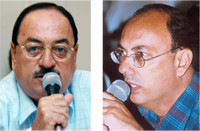
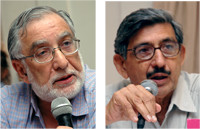
From left: Farokh Kavina and Porus Karanja-walla
Ahmedabad
The Ahmedabad Parsi Punchayet "has done well on every front,” says trustee Farokh Kavina. It has a full-time mobed as panthaky with three mobeds assisting him who receive all perks including free education for their children. The annual income of the anjuman has risen three-fold with the 60 shops and offices constructed on farvardian land in three months given out on leave and licence basis adding 15 lakh rupees to their annual income, all of which he attributed to the zeal and determination of their president Areez Khambatta. Aid to needy families, the planting of trees at doongerwadi are continuing activities. More projects are said to be in the pipeline.
Col K. G. Jalnawala
Ahmednagar
The 63-member Ahmednagar anjuman has an agiary in town and substantial land on the outskirts where the municipality wanted to build residential quarters. This was avoided with Sethna’s help and the area has now been walled in, said trustee Col K. G. Jalnawala. They too have a problem with their mobed. Jalnawala suggested that one way to overcome the mobed problem would be to allow female priests. "Let us not be MCPs (male chauvinist pigs),” he said but was chastised by the chair for raising "extraneous issues which are in the domain of high priests and scholars.”
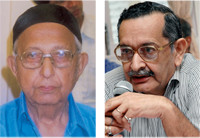
From left: Capt Homi Dandiwalla and Rustom Gandhi
Allahabad
Capt Homi Dandiwalla, president of the Anjuman provided the age structure of the community in his anjuman as six below the age of 16, four in the 40-60 age group and 16 over 60. "The future is bleak, but the truth must be faced. No arguments can change the facts,” he noted, even though community members have a coffee shop, a hotel and other enterprises in the area. In a thoughtful, reasoned letter to the Press published by the Jam-e-Jamshed and The Bombay Samachar Dandiwalla had protested against the unruly behavior witnessed at the Ahmedabad meet, to which he briefly alluded.
Jamshed Mohta
Bardoli
Speaking of developments in and around Bardoli, president Jamshed Mohta described how they had managed to regain their dakhma land from the encroachers: "We took the police in confidence, (won over) the mamlatdar and recaptured our land.” It has now been entrusted to a trustee for farming. The anjuman’s medical center is flourishing but money is short, as services and medicine (are) provided at subsidized rates. "We have approached WAPIZ (World Alliance of Parsi Irani Zarthoshtis) for funds… We can’t go to the BPP (Bombay Parsi Punchayet) and WZO (World Zoroastrian Organisation) every time.”
In response to a query from Federation honorary secretary Keki Gandhi regarding a Parsi family under threat from the surrounding Adivasis who menaced them in every possible way, Mohta said that Gujarat chief minister Narendra Modi had helped them with security, etc.
From left: Jal Patel and Baman Cama
Baroda
At Baroda seven sitting trustees have been reelected and have an on-going project for the construction of residential accommodation with the aid of the Bai Maneckbai Jeejeebhoy Trust, noted trustee Baman Cama. The floods had damaged their dakhma boundary wall and they were trying to settle with the insurance company. They have registered 17 deaths this year, their highest according to Cama and one birth "that we know of.”

Khojeste Mistree
Belgaum
The Belgaum anjuman needs a priest but with a community population of 76 he may not find significant additional income though both the Shahenshahi and Kadmi muktads are observed, as noted its representative Khojeste Mistree. Mistree suggested that the Federation identify and subsidize a pool of about six mobeds who would be willing to go to the mofussil anjumans for short terms. He also proposed that each anjuman provide copies of the land records of its properties for maintenance in central custody for use if the anjuman should become defunct at some future date.
Dara Irani noted that the outgoing priest had a punchayet flat in Poona which he had been allowed to keep locked up because of Mistree’s reference. The mobed had agreed to stay in Belgaum for three years but quit since Khordadsal, responded Mistree.
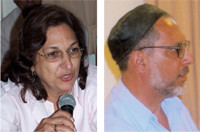
From left: Piloo and Sarosh Ginwalla
Bharuch
There are about 200 Parsis in Bharuch and the Bharuch Parsi Punchayet (BhPP) provides medical and educational aid to those who need it, notes Pilloo Ginwalla. The BhPP also helps Parsis in the surrounding villages with house repair and sanitation. The four agiaries in Bharuch are well tended by a mobed and his two sons as also one other mobed, she adds. A recently renovated dharamshala in the heart of the city has attached baths, running hot and cold water, Ginwalla told the delegates.
When Keki Gandhi, Federation honorary secretary enquired the feasibility of using an agiary as a community nerve center, Ginwalla stated that they were trying to get the youth to meet in rotation at every place. She said there were about 10 youths in the strict sense and eight to 10 in the under 10 age group.
Bhavnagar
Sixteen families comprising 24 individuals make up the Parsi population of Bhavnagar, according to its representative Dr Peshotan Sinor. Their agiary, founded in 1889 and covered by the trust deed of 1905 comprises a large property. There is no mobed. With hardly any Parsis visiting the area the large dharamshala poses problems of maintenance. Attempts to develop their property has landed them into litigation because they had accepted earnest money from a developer who then did not proceed for two years. Having reportedly said to have received and accepted a proposal from another party the original developer has taken them to court. Claiming "we are not defunct but have problems,” Sinor hoped young entrepreneur and guest speaker Boman Irani can take up a project there.
(According to the defunct anjumans report presented by Sohrab Katpitia, the land that the Bhavnagar trustees have been trying to dispose of as their own had been gifted by Dinsha Burjorji Behramji to build a Parsi club with the proviso that if that aim is not fulfilled because of a decline in the population, the land should be handed over to the BPP. Accordingly, litigation with the BPP is the second aspect of the Bhavnagar imbroglio.)
Billimora
Billimora is a 106-year-old anjuman with a 180-year-old dadgah, says representative Marazban Baria. Community land given to a gardener to grow flowers for muktad had been virtually usurped by the cultivator who had "become like a proprietor.” After a prolonged litigation the anjuman has regained its property and now intends to build flats on it for the poor.
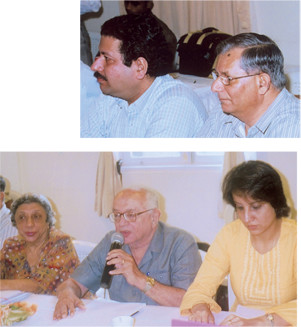
Top: Mehli Colah (left) and Cowas Panthaki; bottom from left: Sheroo Master, Godrej Dotivala and Pareecheher Daviervala.
Bombay
With time rapidly running out, the BPP made no oral presentation. A succinct account of their 7.80 crore rupee annual expenditure was circulated showing the breakup as Rs 1.3 crores for religious expenses including Rs 1.18 crores on the doongerwadi maintenance alone; Rs 1.04 crores for education inclusive of school and college fees and scholarships for higher education, coaching, counseling, vocational guidance, etc; Rs 75.67 lakhs towards medical expenses on behalf of the community, including fertility treatment and third child allowance amounting to Rs 15.76 lakhs; Rs 76.97 lakhs towards relief of poverty, including maintenance of the Parukh Dharamshalla; and Rs 3.93 crore for service charges, salaries, maintenance, etc in respect of the Punchayet’s properties.
Solicitor and BPP trustee Burjor Antia noted in passing that while the BPP charges Rs 1,000 per body for the use of doongerwadi facilities, the expenses there work out to Rs 13,000 per body. "For two hours we have been hearing about the plight of anjumans…Mere discussion won’t stop the problem. We need a time-bound action plan,” he noted. He identified four salient features of contemporary anjuman life:
"30 to 40 people spoke of the dwindling population though there are some who don’t want to accept that the problem exists;”
how to encourage priestly families to avail of the facility of madressas and attract young boys to the priesthood;
the need to educate the young: "The community should live like a joint family, adopt all its children…”
"we have the land but we don’t know what to do with it. Sell it? Keep it?”
In the discussion that ensued, Dara Irani of Poona referred to another grey area: the lack of tolerance that leads young couples to divorce and suggested that anjumans try to counsel them to prevent a family breakup. In response BPP chairman and Federation president Minoo Shroff spoke of his discussion with the dean of the jury, retired judges of the Bombay High Court and lawyers who questioned the need for a jury system for such a small community. (The jury which functions under the Parsi Marriage and Divorce Act is the only one left in India.) Though the Parsi jury tries to bring warring spouses together, the general opinion is that young couples are cussed and come with their minds made up. "Our divorce rate is not much higher than in other communities, but theirs is not so publicized. Today women are independent, not dependent on men for security. It makes the salvaging of (rocky) marriages more difficult…Within the (operational) limits we are doing the best we can,” maintained Shroff.
Jamsetji Jejeebhoy Trust’s CEO Farokh Rustomji suggested that the anjumans ponder the few points he raised — "issues which they can address and report on next time:”
Salvage defunct anjuman properties in the neighborhood
Look after families without a source of income in the neighboring villages. How can they be raised above the poverty line?
Promote matrimony in rural areas.
Can the fertility rate be raised? Would it help to organize fertility camps?
Christians and Muslims are looking after aramgahs where Parsis no longer reside. What about neglected agiaries?
Take advantage of the WZCC. If you have surplus property, tell young entrepreneurs it is available.

Noshir Paghdiwala
Borivli
The thriving, vibrant Borivli anjuman has 550 member families spread out all the way to Virar. Many are still not formal members of the anjuman but participate in its 14 annual sociocultural and religious activities, says president Noshir Paghdiwala. They have hosted talks by all Parsi scholars in and around Bombay and their newsletter acquaints the community with the scheduled program, which includes an annual trip to Udvada when a scholar priest like Ervad (Dr) Ramiyar Karanjia is invited to accompany them "to explain the hidden values of the rituals.” With several musicians in their midst, Paghdiwala said they had taken the entire orchestra to entertain the old people in the WZO senior citizens home in Navsari. He said they were "touched” by the hospitality shown to the inmates by Dinshaw and Bachi Tamboly. The Borivli community has been happily reelecting the committee unanimously, he notes with a combination of humility and pride.
Largely a working population which spends up to four hours a day in commuting to work, they are nonetheless blessed with seven mobeds some of whom help out other anjumans like Hyderabad and Belgaum during muk-tads. Without a Parsi colony or hall to call their own, Paghdiwala says "Boman Irani is our benefactor par excellence.” His school hall or classroom is always available free of charge. "He tells us, ‘Just go ahead and arrange your program.’ We owe our survival to him.”
Firoza Punthakey-Mistree
Calicut
Describing Darius Marshall, president of the Calicut Anjuman as "very charitable,” Firoza Punthakey-Mistree noted that there is no mobed and no ever burning fire in the dar-e-meher. The family (the only Parsis in the city) go every Sunday as "an act of worship.”
Parvez Itaria
Chikhli
There is an old mobed at the Chikhli Agiary who is worried about his future, noted anjuman representative Parvez Itaria. The dakhma land is in a bad way and needs fencing but there is no large fund or income to cover the cost. The five to six families in Chikhli have received much help from BPP chairman emeritus Jamshed Guzder who has also provided the Shirinbai Guzder Hall
From left: Hoshang Vakil and Firoz Jamshedji
Dahanu
Of the 400 members of the Dahanu anjuman 80 percent have been involved in agriculture and horticulture, noted its president Firoz Jamshedji. However, they are now seeking a modification of the notification of 1991, which describes Dahanu as an eco-fragile zone, so that sustainable non-polluting industrial development can take place. Pervez Irani of the Iranian Zoroastrian Anjuman seconded the plea, noting that chikoo yields have been declining because of the pollution allegedly generated by the BSES thermal plant. "Coconut saplings are dying, the chikoo crop is declining…Farmers are cutting their trees but the land use cannot be changed; we can’t even develop housing.”
Former Indian Administrative Service officer and ex BPP trustee Jamsheed Kanga, representing Satara at the meet, suggested that they approach the Ministry of Environment through the National Minorities Commission (NMC) after the agriculture department ascertains that farming is no longer sustainable. Sethna, Zoroastrian member of the NMC noted, "Not only the Zarathushti community; the entire Warli tribe has been affected; the mangroves are destroyed. It is too too big. The Reliance power plant is involved. Orders are issued and flouted. The problem has to be addressed at very high levels.”
Bardoli anjuman president Jamshed Mohta, himself a farmer, explained that the whole issue revolves around Maha-rashtra state’s electricity problem. According to him the thermal power station at Dahanu came up because the state government was determined to augment supply. He implied that the environmental notification was purposely delayed until the electricity objective was achieved. "Change from chikoo to something else (because the scenario) will not change,” he advised. Added businessman and BPP trustee Dinshaw Mehta, "We went into arbitration: even a port was not allowed to come up.”
On the positive side of developments in Dahanu, Banoogoshasp Irani announced that the school they had started 14 years ago was well attended and they had instituted as an adjunct the Shirin and Jamshed Guzder College of Visual Arts.
Lt Gen (Retd) Adi Sethna
Delhi
Inviting gynecologist Dr Anahita Pandole to hold a fertility camp to coincide with a future Holiday Youth Program hosted by Delhi, Sethna spoke of the concerns of the anjuman which had prompted it to accord a full year’s honeymoon leave to its mobed and his wife. The Delhi community’s highly successful Young Farohars project, which teaches four to 14-year-olds aspects of Zoroastrian religion and culture of the Zarathushti faith, is now being replicated for a higher age group and the initial response has been encouraging, noted Sethna.
In other highlights from Delhi, Sethna mentioned that a legal effort is under way to permit the anjuman to generate more income from its Bhiwandiwala Hall. The Parzor Foundation, set up under UNESCO to document Parsi-Zoroastrian culture, is working with the Government of India to revive Parsi textile handicrafts. A workshop organized in April was attended by ladies from Gujarat and of the Sir Ratan Tata Institute in Bombay. The life and work of Homai Vyarawala, India’s pioneering lady photo journalist, is being published as India in Focus – the Story of a Parsi of India.
Deolali
The Deolali anjuman numbers 300. Its dakhma and agiary are well maintained and the mobed is doing a good job, says Sherena Khan.

Sherena Khan
Hyderabad-Secunderabad
The Hyderabad-Secunderabad anjuman which has been embroiled in litigation to preserve their independence against the Andhra Pradesh Endowment De-partment’s attempt to foist an administrator upon them, got a favorable decision from the deputy commissioner of the Endowment Department, Omim Debara informed the executive council. The commissioner however overruled the decision by an order dated February 16, 2005. The anjuman has appealed against the commissioner’s order to the chief judge of the City Civil Court where the matter rests as of now, he added.
Reporting four births and 17 deaths in 2005 to date, Debara said the anjuman had started a scheme of gifting those parents who register the birth of their child with the anjuman. The first baby gets Rs 1,001, the second Rs 2,501, the third Rs 5,001. Twins or triplets also receive Rs 5,001. The stipulation is that both parents be Parsi/Irani Zarathushtis.
Omim Debara
Though Cyrus Siganporia and his team had cleaned both dakhmas in January 2005, the old dakhma is currently not in use as the facility as well as its damaged solar concentrator are under repair. In the meanwhile the process of procuring a solar concentrator for the anjuman dakhma, gifted by the well-known Boman Mirza family, is under way, noted Debara. Though someone from Nagpur comes to help out during the muktads, the anjuman needs a priest.
Dr Lata Narayan and her colleagues from the Tata Institute of Social Sciences had visited Secunderabad in April 2005 and interviewed 30 young Zoroastrians under the PARZOR project. Her detailed report is awaited, said Debara. Also, about 20 Zoroastrians have registered with the World Zarathushti Chamber of Commerce (WZCC) and it is expected that a Hyderabad chapter will soon take root. With the BRJC Parsi High School clocking a 99 percent success rate in the 10th standard exams, its principal Shernawaz Baria was awarded the coveted Rashtriya Ekta Samman for outstanding services on August 20, 2005. In 2004 she had received the Best Principal Award from the Andhra Pradesh Minorities Educational Institution Society for the second time, noted Debara. The Zoroastrian Stree Mandal continues with its voluntary tasks of helping the poor, providing religious education for the children, augmenting its resources with fetes and functions.

Bomi Heerjee
Indore
"It is a paradox that where people are well-to-do and prosperous, the anjuman is not!” notes Indore president Bomi Heerjee. He said they have to "look outside for six lakh rupees to construct a boundary wall around their dakhma property to stop encroachments and vandalization.” But the work may not be completed as the money is not fully available.
Also, the land lies two km away from the Agra-Bombay highway. That area of the link road was accorded as a private road to the anjuman, says Heerjee. "Now the Indore Development Authority is settling people in the village where the tower is situated . They are using our road which is now in bad shape.” The anjuman has been asking for the state government to acquire it and give them equitable compensation, but there has been no cooperation from the other side. He sought Sethna’s assistance.
On the other hand, bodies have been lying in the dakhma for one and half years. "Our young boys are traumatically affected…The solar reflectors are too expensive for us, the system is too difficult to maintain.” Heerjee also noted that while 80 G exemption from the Income Tax authorities is getting progressively difficult to obtain, potential donors do not want to part with the money until the exemption is available.
Iranian Anjuman
The Iranian Zoroastrian Anjuman continues with its longstanding commitment to provide educational scholarships, reimbursement of medical expenses and relief of poverty. Its president Mehrwan Irani indicated that nearly 3,666 community members had attended their annual gahambar.
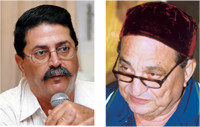
From left: Pervez and Mehrwan Irani
Jabalpur
According to Kerman Batliwalla there are 102 Parsis in Jabalpur but there are no children left to claim any prizes from the anjuman.

Kerman Batliwalla
Jamshedpur
Recounting the high quality of life in Jamshedpur "though to those who haven’t been there it is the back of beyond,” Jamshedpur president Jamshed Irani admitted, "Parsi numbers are not thriving.” When he first went there 35 years ago ("against the wishes of my grandmother”) there were 800 Parsis; now there are 200 with a large proportion of youngsters between the age of 10 and 25. In Jamshedpur "we are like any other community (settlement), fairly rich but with mobeds in short supply,” he noted and asked, "Can we work together to supply the requirements of the community? Let us not dissipate our energy…The rest of the world thinks of us as a close-knit and friendly community. We should think of ourselves that way.”

Jamshed Irani
Lucknow
The 23 Parsi families in Lucknow live in harmony, says the anjumn secretary Homi Sepai. However, since their last mobed left, they have not been able to replace him. Hence though they have a prayer hall, no ceremonies are being held. Being short of funds, they are using money meant for the mobed’s salary to maintain the property. They also have two rooms in the dharamshala on offer to visiting Parsis.
Mandvi
The 100 Parsi families of Mandvi have a paramobed serving them at a monthly salary of Rs 4,000, said Pervez Mandviwala. "The community is decreasing, but it would have declined further if Dinshaw Tamboly and the WZO had not given us implements, pumps, etc,” he added.
The heavy monsoon floods have adversely affected a number of Parsi families, noted Mohta adding, "The agriculturists have lost everything due to heavy rain. They have no money for food or kusti. People from Mandvi and Mandwa are trying to send their children to other anjumans, to Poona schools. A rehabilitation program with funds provided by the Bai Maneckbai Jeejeebhoy Trust and the WZO (is under way) but what about the daily income? They are not literate, they are weak in business. Rehabilitation is not easy.”
Behram Masani
Mhow
The Mhow anjuman pays its mobed a salary of Rs 12,000 per month plus free housing, electricity and water. Additional ceremonies nett him Rs 2,500 more, says president Behram Masani who is frantically looking for a second mobed and chasniwala to serve their 150-year-old adaran. With the majority of their 60 members over the age of 65, theirs is a problem not of poverty but of a dwindling population.

Navroze Daver
Nagpur
Two couples in Nagpur are availing of the BPP’s fertility clinic, said Navroze Daver. Despite resistance and inertia among youngsters, he hoped seven more couples will participate in a year’s time. The 19-acre Nagpur aramgah suffers the usual problem of encroachment. He acknowledged BPP trustee Dinshaw Tamboly’s assistance in raising funds for a boundary wall enabling the anjuman to use the land commercially.
Farroakh Govadia
Nargol
In Nargol the agiary and doongerwadi are in good shape and the anjuman has two mobeds in its service, says Farroakh Govadia. A cause for rejoicing was that the anjuman’s property, 23 acres according to the trust deed, was found to be 28 acres when measured. And the colony that Bombay builder Baji Lord has created has brought in seven or eight families from Bombay. "Some of them are always there. Their presence benefits the agiary.”
Seizing on Govadia’s comparative opulence of mobeds, Gandhi sought his help on behalf of other anjumans but Govadia, a supplier of firewood to the agiaries of Bombay, noted, "We have three fires so one mobed is not enough… We can send someone from Bombay, but they want over Rs 10,000 per month. The anjumans will not be able to afford them.” He attributed the shortage to the reluctance of mobeds to send their children to the madressas for training.
Panchgani
With 15 to 20 families, an aramgah and an agiary, the Panchgani anjuman is helped "financially and physically” by a couple of hoteliers, notes K. M. Tamboli. A scheme for the agiary ensures donors of Rs 5,000-6,000 a day of prayers on their behalf for five consecutive years.

Tehmasp Bharucha
Poona
The Poona Parsi Panchayat (PPP) has started a scheme of ownership flats as "all the poor and needy have been accommodated,” said trustee Dara Irani. The rate is Rs 999 per sq ft so that the cost of a two-bedroom flat falls in the range of 12 to 13 lakh rupees, noted co-trustee Tehmasp Bharucha. The terms of ownership comprise a long lease, he added.
They are nearing the completion of the students’ hostel project for which Irani thanked the Bai Maneckbai Jeejeebhoy Trust which had contributed 60 lakh rupees. He urged the anjumans present to ensure their children come to Poona to study and avail of the facility.
The PPP has moved to its new office at 873, Dastur Meher Road, Poona 411001. The number of deaths registered with them from January to date was 29, noted Irani, adding that while there is no payment enforced for funerary services, "we are receiving more money in collection boxes in the agiaries.”
Ratlam
While Parsis have been in Ratlam since 1890 and have a fully protected 15 bigah aramgah, the population now numbers 35 well-off individuals comprising 13 families – all married within the community, notes Tehmton Anklesaria. They have car, scooter and gas dealerships and celebrate festivals jointly with the anjumans of Indore and Mhow. Every two years they visit Udvada and with a timely request to the general manager of Western Railway arrange to get the Avantika Express to halt at Udvada both ways. "If you ask, you get from the government. I suggest that we ask for facilities,” says Anklesaria who is a member of the minorities committee at the district level. He added that the anjuman had asked for government help in digging a borewell in their aramgah and had been sanctioned a 50 percent subsidy.
Tehmton Anklesaria
Saronda
The Saronda anjuman has purchased additional land adjoining their century old agiary "just to see Parsipanu remains,” noted Dinshaw Patel. Their aim is to build quarters for a mobed. "We are trying to get the youth back, but some source of income has to be assured,” he added.
Sholapur
Anahita Desai who attended the executive council meet as representative of Sholapur, told the gathering that 80 Parsis reside there. Two unmarried mobeds provide priestly service but there may be a problem when they die, she noted.
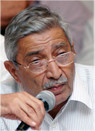
Dinshaw Patel
Surat
The Surat Parsi Panchayat (SPP) manages, 7,000 students but there are not even 200 Zarathushtis among them, noted its president Darayas Master, adding, "There are only 89 students at the Girls’ and Boys’ Orphanages, even though the entire boarding, lodging and tuition fees are borne by the SPP.” At the Nariman Home 40 infirm inmates are maintained free of cost. The bill for the SPP’s facilities amounts to 25 lakh rupees per annum, he said.
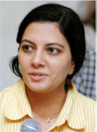
Anahita Desai
Three buildings with 61 flats have been constructed in the past two years at a cost of 2.13 crore rupees. Two buildings with 32 flats are under construction and two more with 80 flats are under planning. Master justifies the housing activity of the SPP on the ground that housing has become difficult for Parsis due to the high cost of real estate. Having allocated the highest priority to couples waiting to marry, Master was happy to announce the arrival of seven newborns with two more on the way. "We told the youths, you provide children, the community will provide shelter.” The SPP’s traditional tasks of providing medical help and relief of poverty continues.
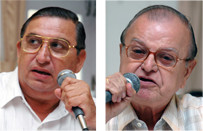
Fom left: Darayas Master and Yezdi Karanjia
Master made a strong plea to all the anjumans with dakhma lands to raise kathi trees to avoid encroachments as well as government acquisition of the property. In answer to Dara Irani, Master confirmed that the SPP had received 52 lakh rupees from the sale of Dorab Patel’s property in Poona.
Thana
The Thana anjuman counts 500 members — 60 youths among them — in its golden jubilee year excluding those who only have holiday homes there. President Rustom Cursetji was happy to announce 16 births to 14 deaths in his community this year. There is a move to renovate the agiary which has just celebrated its 225th anniversary. Since the edifice falls within the heritage rules, they need a no objection certificate. The size of the population in Thana does not support the cost of maintaining their own dakhma, noted Cursetji, but they are working towards the creation of a community hall and a reading room facility and also expect to launch their own WZCC chapter.
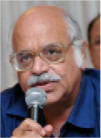
Rustom Cursetji
Vishakhapatnam
Despite its low population figure of 13, the Vishakhapatnam anjuman has been maintaining its aramgah, acquired in 1922, in very good condition, says Dinyar Nakra. He hopes however that new individuals would come and settle there.
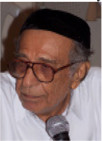
Dr Bahadur Jokhi
Vyara
The 50 Parsi families of Vyara are financially comfortable, says Dr Bahadur Jokhi. They have planted sag trees on their dakhma land to prevent encroachment. The agiary built by the N. F. Petit Trust, a community hall and an educational society established by a Parsi of Navsari which runs two high schools, are the other assets of the community there.
◆ ◆ ◆
From the archive