
When did we arrive?
Dr Rukshana Nanji examines the historical and archeological evidence of the Zoroastrian, Christian and Islamic connections with India

.JPG)
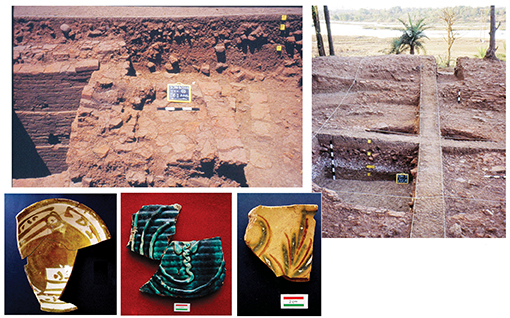
According to the Qissa-i-Sanjan, the Parsis landed in India in 936 CE and were welcomed by a king called Jadi Rana. The 864-line Qissa is attributed to Dastur Baman Sanjana who penned it in Persian in the last decade of the 16th century, as revealed to him by a wise Dastur "who was always famous for his virtue.” Nanji challenged many of the premises in the Qissa.
According to the Qissa, the migrants are believed to have left behind "palaces, gardens and villas” in Persia, she stated. While the Qissa states the early Zoroastrians "made women and children sit (in the ships) and they drove their ships fast towards India (see "Qissa-i-Sanjan… The obscure history of the men of the true faith,” Parsiana, July 2001), Nanji contended that "they did not suddenly flee from Persia.” The researcher stated that "it was a well considered move… They were (well) connected…they took informed decisions… They knew about navigation, had sturdy ships…They had connections with maritime trade of the time and knew where they would be welcome,” stated the academic. "They moved along the coastline from Diu, making a conscious decision to bypass the thriving port of Bharuch and chose to live in the port of Sanjan,” noted the archeologist.
"Parsis did not give the name Sanjan to the port town” as many believe, she explained. Sanjan was already, in 671 CE, a group of 24 villages called Sanajanamandala. As early as 820 CE, Sanjan had a multitude of cultures, including Islamic. The port (Sanjan Bunder) on the north bank of the Varoli River could accommodate ships of up to 80 tonnes. Fazal, the then ruler of the area, is believed to have sent a gift of a log of teak to the caliph in Baghdad in that year. The riverine port and market town is known in documents from the 11th century as Sanajanapattana.
"The word ‘Parsi’ appears nowhere in the first half of the Qissa… the migrants were known as behdins (people of the good faith),” noted Nanji. It is only after the purported fall of the Hindu kingdom, following a three-day battle with Sultan Mohammed, that the Zoroastrian migrants are referred to as Parsis in the Qissa, she stated.
"The Qissa has been discussed threadbare over the last 120 years… there is a lot of speculation… most Parsis vehemently defend the date of their arrival of 936 CE as correct,” noted the researcher. "However, this was never based on any archeological evidence,” she stated. There were Persian, West Asian and even Chinese cultural influences in the areas around Sanjan Bunder many centuries prior to the 10th century, she stated. She was part of a team that excavated several sites in Sanjan to help determine the relationship between the Zoroastrian migrants and the local population. The archeological expeditions were under the auspices of the Dr Homi Dhalla-founded World Zarathushti Cultural Foundation in the South Gujarat town. Since it was the first purely medieval site to be excavated in India, there was no reference material available, she noted.
"We could find nothing that could be identified specifically as Zoroastrian” in the first excavation in a 5 m x 7.5 m area in Sanjan Bunder or Machhiwad. The team did unearth antiquities and potteries from China, West Asia and India. A second expedition about 600 m away at Koli Khadi yielded a different kind of pottery — "pear shaped, open at both ends, very crude.” In addition, the team unearthed a funerary site which was "very shallow, about 80 cms from the ground with six skeletons, heads facing north, arms folded across their midriffs and feet placed together... All were in the age group of 35-45, but we "do not know (their) ethnicity,” stated the archeologist.
"In the third year we were still looking for the elusive Parsis…We studied literature available since 1800,” including volumes written by Dr Sir Jivanji Modi, noted Nanji. While oral legend has maintained that there were nine dakhmas in Sanjan, the team could locate only one on the outskirts of Sanjan Bunder, she said. "It was differently built from the present concept of dakhmas…it was a little mound, half a kilometer from habitation… there was a scooped out interior which made a crater…there was no deep well for waste matter.” The one m deep ossuary revealed the bones, some with bangles intact, of about 450 individuals, from babies to people of 65-70, "which is really old for that period.”
The next visit was even more productive, said the researcher. "We found a six-meter deep well near the dakhma, crammed with antiquities, with the same bangles as found in the dakhma…so there was some connection.” Among the finds were beads, including some from the Persian Gulf; glassware; Indian and Persian coins; amphorae; large containers used for trade; turquoise glazed ware "from a period much earlier than expected;” eggshell wares; drinking cups from the Sassanian or early Islamic period; Chinese wares from Changsha province of the kind that were "never expected to leave China (by a royal mandate).”
The "bulk of the material predates the 10th century,” Nanji had told the audience at the 10th World Zoroastrian Congress in Bombay in 2013 (see "Separating fact from fiction,” Parsiana, March 7, 2014). The team could find nothing that could be dated after the 13th century. Summing up the excavations, she told Parsiana that "We went thinking we would be able to verify some details of the Qissa…we came away having found an entire multicultural city...
"There must have been many migrations (by Zoroastrians)” to the west coast of India. "No group other than the Sanjan group was likely to have included mobeds, as they did consecrate a fire temple (Iranshah),” stated Nanji. The researcher’s doctoral thesis for the Deccan College Post-Graduate and Research Institute focused on "Merchants and Mariners: A study of Early Medieval Ceramics in India, with special reference to Sanjan.”
Zoroastrian guild?
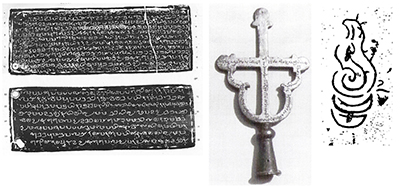
That the early Zoroastrians were engaged in trade in India even in 825 CE may be evidenced in the Kollam Copper Plates. These are a set of inscribed copperplates that list land endowments, privileges and titles bestowed circa 825 CE by a Hindu king to a christian church in Kollam in Malabar, detailed Nanji in an email to Parsiana. The Plates are today preserved in a church in Cochin, she observed. While the grant itself is written in Old Malayalam, signatures of the witnesses are in Pahlavi, Kufic (a calligraphic form of various Arabic scripts) and Hebrew, indicating a "large Jewish community of traders in Kollam (along with) Muslim Arab and Persian traders.” Some scholars have been able to identify some Zoroastrian names amongst the Pahlavi signatures, noted the archeologist.
Recent research has led scholars to suggest that the signatures on these Plates may be group signatures and not individual attestation, stated Nanji. "This would mean that each signatory…was a representative of a group/guild… There may have been trading guilds settled in the ports of Malabar... These settlements would have been contemporaries to the Gujarat…settlements,” stated the archeologist. "No other historical records exist for these Zoroastrian groups or settlements in Malabar nor is it known what happened to them.”
"Shaping trade”
When the Sassanian Empire (224-651 CE) arose in Persia, the Parthians and the Romans were already vying for trade with the East. "The Sassanians were responsible for shaping trade in the Indian Ocean as we know it… King Ardeshir I (ruled 224-242 CE) developed 18 ports in the Persian Gulf, which functioned well into the Islamic age,” stated Nanji. The Sassanians were controlling both the Silk Route and the sea routes originating in the Gulf. They were not particular about who was conducting the sea trade — Christians and Zoroastrians were both in the race. ("Christianity had already spread to Persia and the rest of the then known world by the middle of the first century CE,” she said.)
Nanji stated that the movement of goods and people during the early medieval period (seventh-13th century CE) was unprecedented. The Christians, Muslims and Zoroastrians who migrated towards the west coast of India were "all mercantile in nature…There were significant overlaps in their migrations, leading to multicultural settlements… They all received grants from local kings… all of them were sources of revenue for the local kings… There were a few skirmishes but things were more or less peaceful.”
"The Pahlavi inscriptions on certain crosses in South India show a direct link between the Persian Church and India,” Nanji revealed on September 18, while speaking on "The Cross on the Coast: A Brief Overview of the Christian Presence in Indian Ports.” The inscriptions on the six Crosses excavated in Malabar and one each in Goa and Anuradhapura, Ceylon, have not yet been deciphered with any certainty and numerous readings have been suggested, she mentioned. "Almost all of them are located either at port sites or on ancient trade routes, indicating that Christian merchants had settled there and (that there was a) Persian connection,” Nanji detailed in her email to Parsiana. It may be safely inferred that they were installed at a time when Pahlavi was still an extant language and was acceptable in Church worship, noted the archeologist.
While the arrival of Christianity in India is traditionally attributed to St Thomas the Apostle soon after the ascension of Christ, Nanji detailed that "historical, literary and Church records, as well as strong and continuous oral traditions of the Indian Christian communities, attest to the growth of the Christian presence in the Malabar.” There are records of priests and missionaries sailing on merchant ships to India. The Christian migrations to India were driven by both missionary zeal as well as trade, she stated. "Some of these migrations are attributed to religious persecution at the hands of the Sassanian kings and later by the Muslim conquerors, the archeologist stated.
The Christians received rousing welcomes from the locals along the coast, noted Nanji. They were given titles and land, were "allowed to sit on carpets and the women were allowed to whistle with one finger,” she narrated, in respect of some of the more unusual grants to the westerners. These grants are referred to in several traditional songs of Malabar Christians, she explained. Privileges granted by the local kings included sole control over ships, land routes, weights and measures. The Persian Christian Church had many bishoprics within their lands, with a Metropolitan (a bishop having authority over the bishops of a province) overseeing their churches in India and Ceylon, narrated Nanji. Most of these were trained in monasteries such as the one on Kharg Island in the Persian Gulf, she stated.
While Syriac was the liturgical language of the churches of the East, by the mid sixth century, the Bible was translated into Pahlavi, which was introduced as the language of liturgy in all the churches under it, including India and Ceylon. "It is believed that Pahlavi continued to be used in religious practice by the churches… until 1050 CE,” Nanji noted.
A new world
When a new world order emerged with the spread of Islam, there was no immediate persecution of Zoroastrians or Jews. The Sassanian and Byzantine Empires had already weakened due to internal strife, noted Nanji while speaking on "The Crescent and the Sea: The Arrival of Islam on Indian Shores” on September 19. While the first few caliphs were mortally scared of the sea, succeeding rulers strengthened the 18 sea ports set up by Ardeshir I. More ports were set up at Basra and Hormuz. Ommayid and Abbasid rulers were able to bring stability to the area. "The Red Sea and the Persian Gulf were now under one economy… Zoroastrian Persian culture was replaced with Arab Persian culture.” By 712 CE, Sind had two small trading outposts, and "India started to become the backbone of the economy for the Caliphate,” with swords and beads from Khambat finding their way to West Asia. The Chinese too were able to create demand for luxury goods like porcelain in West Asia.
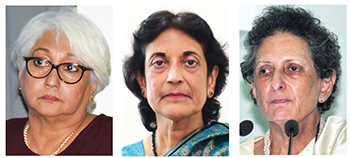
Dr Fleur D’souza, erstwhile head of department of history and vice principal at St Xavier’s College, who chaired the session on the Christian migrations stated that Nanji’s research, which puts together how multicultural communities flourished, is so relevant today when those to the "right of the center would like us to forget our past.” Dr Mariam Dossal, ex head of the department of history, Bombay University, who chaired Nanji’s talk on the Islamic influx commended her as a "meticulous researcher and interpreter of data.” Introducing Nanji, editor and publisher of Parsiana, Jehangir Patel who chaired the session on the Zoroastrian migrants stated that Nanji found archeology "intriguing and fascinating” as a profession. She had earlier told Patel that she would recommend archeology to anyone with an interest in history, and with an analytical mind, he mentioned.
Welcoming the audience on all three days, KRCOI honorary secretary Dr Nawaz Mody stated that their Government Research Fellowship was endowed by the government of Bombay in 1917, a year after the Institute was founded.