
Books
Tribute to a teacher
Zenobia Mistri — Teacher Par Excellence by Shireen Isal. Published in 2017 by Association Sargam; www.associationsargam.com. Pp: 102. Price: Not mentioned.
Zenobia Mistri — Teacher Par Excellence is author Shireen Isal’s (pictured) loving homage to a remarkable and inspiring teacher. At a mere 100 pages, this painstakingly researched and richly illustrated biography manages to paint a charming portrait of Zenobia Bamboat Mistri (pictured below) who became one of the most iconic teachers of the French language in Bombay during a career that began in the early 1930s and spanned 50 years.
 One of six daughters from a middle-class Parsi family, Mistri was born in Karachi but spent her early years in Bombay, where she graduated from St Xavier’s College with French and English as her chosen subjects. In defiance of the social conventions of the 1930s but encouraged and supported by her professors, Zenobia decided to pursue her passion for the French language and managed to raise the necessary funds to travel to France for her doctorate from the prestigious Sorbonne University in Paris. As Isal speculates, arrival in a foreign land must have been an overwhelming experience for the young Mistri. "Like so many overseas students, she must have realized the difficulties of reconciling an academic knowledge of French — albeit, in her case, with such proficiency — with its practical application, particularly of the spoken language,” Isal writes.
On her return to Bombay, Mistri took up teaching and acquired "something loftier: the power to transform lives, to enhance the independence and self-esteem of young aspirants, rich and poor alike, through learning.” Not only did scores of students benefit from Mistri’s brilliant grasp of the French language and her unique ability to teach it, but she also "became a link between east and west, India and France, creating a powerful legacy and proving a unique ambassador for that country.”
Through interviews with Mistri’s family members, friends and students, Isal traces her teacher’s long career teaching French, which began in Poona’s Dastur Nosherwan Girls High School and continued in Bombay’s Sophia College and Alexandra Girls’ English Institution. The book provides delightful insights of its central character — an educationist who was kind but also had a fiery temper and occasionally lost her patience with students who struggled with the vagaries of French irregular verbs. With a touch of humor, Isal notes that at Mistri’s first teaching job, the staff and students of Dastur Nosherwan School expected "a fashionable, modern Miss Bamboat, in fancy westernized clothes. After all, here was a lady who had recently returned from the world’s fashion capital. Imagine, then, their surprise when appeared a homely girl in a simple sari, with her hair tied back in a bun. It was a shock to them.” Mistri laughed it off saying, "What did you expect me to wear, a fancy hat and gown?”
At the age of 44, Zenobia married Pirosha Mistri, a widower who was more than 20 years older than her and the father of four grown-up children. She describes her marriage to Pirosha, a senior employee with Tatas and secretary of the Sir Ratan Tata Trust, as "the 16 golden years of my life.” After Pirosha’s death and her retirement from academia, Zenobia volunteered for many years at the Ratan Tata Industrial Institute. She passed away in December 1998 at the age of 95.
One of six daughters from a middle-class Parsi family, Mistri was born in Karachi but spent her early years in Bombay, where she graduated from St Xavier’s College with French and English as her chosen subjects. In defiance of the social conventions of the 1930s but encouraged and supported by her professors, Zenobia decided to pursue her passion for the French language and managed to raise the necessary funds to travel to France for her doctorate from the prestigious Sorbonne University in Paris. As Isal speculates, arrival in a foreign land must have been an overwhelming experience for the young Mistri. "Like so many overseas students, she must have realized the difficulties of reconciling an academic knowledge of French — albeit, in her case, with such proficiency — with its practical application, particularly of the spoken language,” Isal writes. On her return to Bombay, Mistri took up teaching and acquired "something loftier: the power to transform lives, to enhance the independence and self-esteem of young aspirants, rich and poor alike, through learning.” Not only did scores of students benefit from Mistri’s brilliant grasp of the French language and her unique ability to teach it, but she also "became a link between east and west, India and France, creating a powerful legacy and proving a unique ambassador for that country.”
Through interviews with Mistri’s family members, friends and students, Isal traces her teacher’s long career teaching French, which began in Poona’s Dastur Nosherwan Girls High School and continued in Bombay’s Sophia College and Alexandra Girls’ English Institution. The book provides delightful insights of its central character — an educationist who was kind but also had a fiery temper and occasionally lost her patience with students who struggled with the vagaries of French irregular verbs. With a touch of humor, Isal notes that at Mistri’s first teaching job, the staff and students of Dastur Nosherwan School expected "a fashionable, modern Miss Bamboat, in fancy westernized clothes. After all, here was a lady who had recently returned from the world’s fashion capital. Imagine, then, their surprise when appeared a homely girl in a simple sari, with her hair tied back in a bun. It was a shock to them.” Mistri laughed it off saying, "What did you expect me to wear, a fancy hat and gown?”
At the age of 44, Zenobia married Pirosha Mistri, a widower who was more than 20 years older than her and the father of four grown-up children. She describes her marriage to Pirosha, a senior employee with Tatas and secretary of the Sir Ratan Tata Trust, as "the 16 golden years of my life.” After Pirosha’s death and her retirement from academia, Zenobia volunteered for many years at the Ratan Tata Industrial Institute. She passed away in December 1998 at the age of 95.
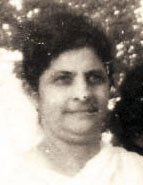
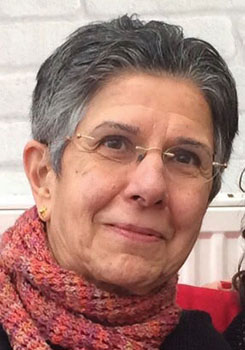
Zenobia Mistri (left) and Shireen Isal (right)
This is Isal’s third book — the previous two were also biographies, the first, a biography of piano teacher Olga Craen and Jules Craen, and the second a short biography of the Hindustani vocalist Lakshmi Shankar. With bachelor’s and master’s degrees in French, Isal is now based in the UK but lived in France for many years, where her first job in Paris was as cultural assistant at the Embassy of India. In between her writing projects, Isal’s profession is "artists’ management,” organizing recitals of Indian classical music by musicians from India in Europe.
It took Isal two years to research and write this "narrative of hope and achievement” about her French teacher. Isal says, "This book was possible because of the vast number of people — her students, family and friends scattered over three continents, archivists from the Sorbonne University and multiple institutes in Paris, who came forward with their memories in the course of which I discovered so much about this remarkable lady.” If her teacher had been alive, Isal would surely have merited full marks for this delightful pen portrait.
It took Isal two years to research and write this "narrative of hope and achievement” about her French teacher. Isal says, "This book was possible because of the vast number of people — her students, family and friends scattered over three continents, archivists from the Sorbonne University and multiple institutes in Paris, who came forward with their memories in the course of which I discovered so much about this remarkable lady.” If her teacher had been alive, Isal would surely have merited full marks for this delightful pen portrait.
◆ ◆ ◆
From the archive