
Observation
An exacting educationist
After 40 years as principal of the Bai Dhunmai Cawasji High School, Shirin Manekshana continued to impart free lessons to children from the neighborhood
"She was a tough cookie with a mushy core. Learning from her was easy. You scarcely realized that they were lessons that helped students in good stead through all facets of their lives.” Principal for four decades of the Bai Dhunmai Cawasji (DC) High School in Khandala, Shirin Manekshana’s lasting impact on the students under her care was recalled by New York based Dinaz Boga Kaprielian who had spent long summers with her aunt in Khandala.
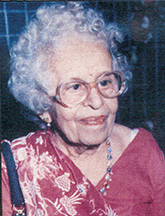 In spite of her nagging, bullying, coaxing and goading she was respected by her ex-students in India and abroad who constantly kept in touch with her, especially on her birthday. Had she lived for five more years, Manekshana would have completed her centenary on September 20, 2015. Many ex-students addressed the unmarried Manekshana as "Mumsoo” and attributed their career choices and their lives to the seeds of love, confidence and discipline she planted in their hearts when they were children. Even the then director of education, Poona, had commented that she ran one of the best schools in the state.
She meant a lot of things to a lot of people. Being a strong willed woman, she took under her wings children of all ages from different social strata at her boarding school. No sick child ever missed his/her mother under her matronly care. To her Canada based niece and writer Hiroshima Boga she was the "first model of a truly sovereign woman who not only took exquisite care of herself but also of the many people in her life whom she loved.”
Besides her ability to command respect and pin drop silence she was known for her persuasive skills that could "charm a python out of its skin” or wield "a hawaldar’s laathi (constable’s baton)… Parents, students, teachers and hamaals (office boys) at the School simply never knew which of these qualities she was going to use when,” recalled Sharookh Daroowala whose mother Kumi was a dear friend of Manekshana from the time they were teenagers.
For the many Parsi and non-Parsi students who were unable to afford the school fees, she would collect money by using her contacts with friends and trusts. To the locals in Khandala, Manekshana was better known as "badi bai (big ma’am),” reminisced her niece Nivedita Mehta who had studied at the DC School. Letters left for her at the railway station would be gladly delivered to Manekshana by the railway porters who knew her. With her strong loyalty to the DC School which she considered "my baby,” she turned down many lucrative offers from families and trusts who offered to sell their school to her or invited her to be principal, added Mehta.
In spite of her nagging, bullying, coaxing and goading she was respected by her ex-students in India and abroad who constantly kept in touch with her, especially on her birthday. Had she lived for five more years, Manekshana would have completed her centenary on September 20, 2015. Many ex-students addressed the unmarried Manekshana as "Mumsoo” and attributed their career choices and their lives to the seeds of love, confidence and discipline she planted in their hearts when they were children. Even the then director of education, Poona, had commented that she ran one of the best schools in the state. She meant a lot of things to a lot of people. Being a strong willed woman, she took under her wings children of all ages from different social strata at her boarding school. No sick child ever missed his/her mother under her matronly care. To her Canada based niece and writer Hiroshima Boga she was the "first model of a truly sovereign woman who not only took exquisite care of herself but also of the many people in her life whom she loved.”
Besides her ability to command respect and pin drop silence she was known for her persuasive skills that could "charm a python out of its skin” or wield "a hawaldar’s laathi (constable’s baton)… Parents, students, teachers and hamaals (office boys) at the School simply never knew which of these qualities she was going to use when,” recalled Sharookh Daroowala whose mother Kumi was a dear friend of Manekshana from the time they were teenagers.
For the many Parsi and non-Parsi students who were unable to afford the school fees, she would collect money by using her contacts with friends and trusts. To the locals in Khandala, Manekshana was better known as "badi bai (big ma’am),” reminisced her niece Nivedita Mehta who had studied at the DC School. Letters left for her at the railway station would be gladly delivered to Manekshana by the railway porters who knew her. With her strong loyalty to the DC School which she considered "my baby,” she turned down many lucrative offers from families and trusts who offered to sell their school to her or invited her to be principal, added Mehta.
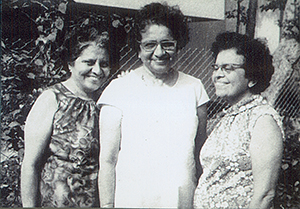
Shirin Manekshana ( top and above right) with Dolly Boga (center) and Amy Gustadji
Traveling with their aunt to different places in India, Mehta and her sisters Hiroshima and Parvana Boga Noorani learnt of the historical significance of various areas. "In fact I got interested in archeology because of the traveling we did with her when we were young,” added Mehta, curator of the Alpaiwalla Museum, who also remembered her as being passionate about books: "Maasi (mother Dolly’s sister) would read bits from the original Shakespeare to me before I turned six.”
Manekshana’s father Nadershaw, a government employee, and mother Piroja, a housewife, encouraged their three daughters and son to get a college education withstanding the societal pressures to marry them off. Born and educated in Indore, Manekshana completed her Masters in English literature from Christian College before proceeding to Calcutta to pursue her BEd from the Loretto College. Among her cherished memories was meeting Rabindranath Tagore at Shantiniketan, and a copy of Gitanjali autographed by him is among the family heirlooms. After teaching at the Batha School in Panchgani for some months, she accepted the principal’s post at the DC School. Following the death of her elder brother Behram in a tragic accident when he was 23, the responsibility of the entire family fell on Manekshana since her parents never recovered from the shock. Her sister Dr Amy Gustadji subsequently joined her at the School as teacher and consulting medical advisor.
Post retirement Manekshana was persuaded to take charge of the Parsi girls’ hostel in Surat where she helped groom children, mostly from Gujarat’s rural areas. She and Gustadji had then made their base in Navsari before relocating to Poona. Children from the neighborhood were always welcome to come and study at their place every evening at no cost for she was a firm believer that education was not to be commercialized. In fact, tuitions had always been anathema to Manekshana and during the Study Period at DC School, the weak students who needed extra help would be made to sit outside her office so that she could personally monitor their progress.
With a strong social consciousness, Manekshana believed in giving back to society. She was instrumental in procuring land for building an SOS village near Bhushi Dam in Lonavla for children of commercial sex workers and street children. She also served as a trustee of the National Association for the Blind in Lonavla.
Along with Daroowala and Gustadji she set up the Zoroastrian Winter Relief Fund where money and clothes collected in Bombay would be distributed in the rural pockets of Surat and Navsari. Subsequently the Fund’s sphere of activities extended to education, medical and religious activities too.
Short in stature, the two sisters would walk for miles and were referred to as "chaalwawaali bai (walking ladies).” The intrepid traveler had earlier remarked, "I love Paris in the spring.” Her keenness to visit Japan never materialized though. When Dr Zarir Udwadia had once asked Manekshana if she had lived life to its fullest she promptly retorted, "I lived it on my terms…my way.”
◆ ◆ ◆
From the archive