
In Memoriam
Empowering educationist
The timid tarried outside her office door, not sure of the reception they would earn from the formidable principal with her commanding voice. Once their diffidence was dispelled they would breeze in and out taking full advantage of the "Please do disturb” sign. Whilst a patient hearing was assured most times, principal Shirin Framroze Darasha’s genial smile was reserved for special occasions. However, for all who came within her sphere of influence at The J. B. Petit High School for Girls (JB) it was her forthright opinions they respected for these were expressed without favor of class, subject or age.
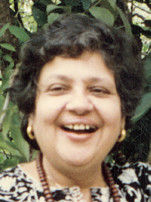
During the 34 years she served as principal Darasha was in favor of granting students unbridled license for critical thought, spurring them to mount on momentous journeys whilst endeavoring to lift another’s load. As she had earlier expressed in the School magazine Phoenix, to her the School was akin to "a treasure trove, waiting to be explored and discovered…a priceless institution of learning.”
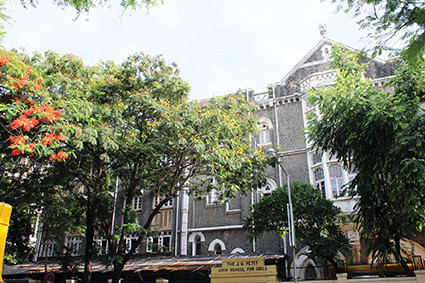
Shirin Darasha (top) and (above) The J. B. Petit High School for Girls
The iconic educationist succumbed to pulmonary fibrosis at her residence in Bombay on May 2, 2012 at the age of 73. A week later, the School convened a memorial meeting, "Remembering Shirin” when her contribution was warmly acknowledged. The avant-garde principal "laid the foundation for modern educational initiatives, reorganizing curriculum, introducing new subjects, pioneering novel, exciting methodology… She was our Ms Darasha — proud and spirited, a bear of a woman in her cave of an office…” remarked the current principal of the School Benaifer Kutar. Valuing the years she studied, worked as teacher and headmistress of the primary section under her and the guidance she received when she took over as principal, Kutar added, "She opened doors and minds and spaces, invigorating, empowering and transforming students, parents and teachers alike...She was big in all ways — in her loud booming voice that thundered over the intercom, her generous heart, her force of character, her wicked sense of humor, her towering reputation, her commitment to Kaizen (improvement).”
She introduced social studies to JB when she came in as principal in 1973. This is a subject that needs no text books and where students may appear for examinations with their journals open, she announced to the delight of students and disbelief of parents. Words like ‘ethnocentric’ and ‘stereotype’ were ingrained in the pupils whilst they were introduced to the culture of distant ethnic groups. She ensured that her classes were neither a bore nor a chore, preferring to simulate and stimulate. All those who were privileged to learn under her still have memories of composing verses in the form of a diamante (seven lines in the shape of a diamond with each line using words of specific nature) or haiku (Japanese form with the three lines traditionally restricted to five-seven-five syllables), dancing to the rhythm of Swahili songs, appreciating Japanese ikebana, kabuki theater, Greek and Roman culture.
Children should enjoy holding and opening their books, she believed, replacing drab brown paper covered books with bright hues that bore the individual imprint of the student. Uniforms too were designed to make them student friendly and JB was the frontrunner among Bombay schools to introduce ‘Friday Dress-As-You-Like’ so that after observing a disciplined and regimented life for four days, the students could attire as they pleased on the fifth day. When she learnt from one Lower Kindergartner that she dreaded to enter class because she found it "too dark,” Darasha immediately got the walls painted in a cheerful color.
"Every part of JB is infused by her dynamism and love of learning… She has transformed our lives with values that endure. She has given us a legacy… taught us to recognize a very special quality in each child and person, and to build on that potential,” remarked Anahita DeVitre who had studied at JB and subsequently became a JB teacher, parent and even principal.
Although "we did not really understand or appreciate the enormous contribution she made to the School and how she enriched the lives of those with whom she came in contact…all of us had great affection, great respect and great admiration for her,” declared JB trustee Yezdi Malegam. He was amazed to see shy, introvert young girls walk out of the portals of the School as "extroverts, with great confidence and a zest for life and the conviction that they had to look after the poor and the underprivileged.”
Darasha was particularly respected by those who were "rebellious and hated authority” for only she could rein them by being "sympathetic and nonjudgmental,” observed ex student Havovi Sethna. Despite her no-nonsense demeanor, she could take pranks and innocent mischief like stink bombs in her stride, acknowledged another ex student Jyoti Sanghi Ahuja. But disrespect to the national anthem or national flag she would not tolerate and for which a student would surely face suspension.
Darasha, who was unmarried, had shown an all consuming commitment to JB.In her last speech as principal she noted: "I have been fortunate that I’ve had this great opportunity to be a conduit or a channel through which I could create, share and disseminate my ideas, values, opinions and attitudes, my vision for JB… I have knocked at the gates of learning and the doors have swung open, magically, to new creative ideas and teaching techniques, and to a deeper, more meaningful understanding of the lives, needs and problems of the children and the teachers in my charge as well as myself.”

Any trace of elitism or consumerism was promptly denounced by the presiding deity of JB who ensured that admission to the School that was coveted by the upper class should not be out of reach for the middle class. In her orientation talk delivered to the parents of each fresh batch of entrants to JB she would reiterate the need to keep the children grounded to their roots instead of whisking them away to exotic locales and getting them ensnared with brand labels and theme parties. To impress upon the students the importance of caring for the underprivileged, among the first projects taken up in each academic year was the concerted effort to raise funds and rations and gifts for select nongovernmental organizations.
Whilst scripting plays for her students to enact annually, she ensured that the female protagonists were portrayed as strong women. Her play on Madame Bhikaiji Cama that was performed in 1988 was particularly well received by the Parsis and she was asked to restage it for the Fifth World Zoroastrian Congress two years later. Helping her create a professional production that was the envy of other schools each year were two strong-willed women, director Pearl Padamsee with sculptor Piloo Pochkhanawalla in charge of the sets. Darasha had to frequently serve as the buffer when their worlds collided, recalled her niece Huzan Sethna, a former teacher at JB. Giving her credit for converting JB to a magical school, Sethna related how "she swept away the cobwebs of the past…steamrolling over opposition… quite a juggernaut…” At a function to mark her 25 years as principal Darasha had related different episodes when she had to withstand pressure from government bureaucrats and blackmail attempts by those expecting her to succumb to their wily ways.
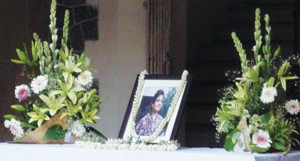
"Remembering Shirin” meet at the School and (top) badge sported by
students at the time of her retirement
students at the time of her retirement
Darasha’s own schooling was at Bombay’s Queen Mary after which she graduated in science from Sophia College. Before joining JB she had studied at the East-West Center in Hawaii and was a teacher at the Bombay International School. As reminisced some of her associates from Bombay International, "She was not only a teacher of students but a teacher of teachers.”
Her joie de vivre resonated among her circle of friends for whom she could rustle up excellent biryanis. She was a good pianist and also a member of the Paranjoti Academy Chorus at one time. Privileged to receive special treats and accompanying her to some of the finest cultural performances, Sethna candidly remarked, "As an aunt she was warm and generous but she could also be imperious, opinionated and pig-headed.”
Known to be a difficult and trying patient, one of her ex-students Dr Ayesha J. Sunavala who was summoned to treat her when her health was failing recalled her initial euphoria on being conferred the honor that rapidly vaporized when she wondered, "perhaps I had been chosen because I could be bullied.” To the young doctor’s relief, although Darasha had her anxieties, "the really difficult decisions she left to me, never asking for a second opinion from a senior consultant.” If Sunavala recommended hospitalization "she would wage war” but when impressed with the medico’s efficient functioning or the confidence she inspired she would beam that she was so proud of "my JB girl… We JB girls were her soundest investment…”
"Don’t pray for me; party for me,” she had told her close circle of friends. The "Remembering Shirin” meeting at JB may not have been in celebration mode but it did serve as bonding time for two generations of ex-students who had gained from her vibes and values. The evening started with the "rolling of 12 Oms” led by JB teacher Maya Shetye. Interspersing the speeches, other teachers Anahita Sanjana, Shehnaz Pardiwalla and DeVitre chanted some of her favorite scriptural verses and grand-niece Shara Sethna sang Amazing Grace.
It was the Buddhist philosophy that appealed to her more than any other religious doctrines. When Parsiana had interviewed her over two decades ago (see "The ‘Principal’ of Drama,” February 1988) Darasha had declared that she is not religious and thinks of herself as a human being rather than a Parsi. In the absence of any obsequial prayers by Zoroastrian priests, at the Chandanwadi electric crematorium her students chose to recite The Irish Blessing with which she would frequently end her School assemblies: "May the road rise to meet you. May the wind be always at your back. May the sun shine warm upon your face, the rains fall soft upon your fields and, until we meet again, may God hold you in the palm of His hand.”
Giving the principal credit for "setting the pulse” at JB and making it into a progressive school, JB teacher Bubla Basu reminisced how Darasha would convince her students that being a female should not be considered a weakness but perceived as a strength. Ex-student Arzanne DeVitre, a teacher in Norway, seemed to voice a common refrain when in her tribute she appreciated that Darasha had shown "generations of women how to be strong, to live for what they believe in, to trust in themselves and their excellence, to stand up for what is right.”
◆ ◆ ◆
From the archive