
A traveller’s tale
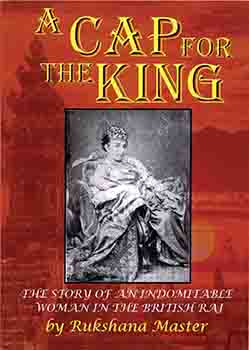
A Cap for the King: The story of an indomitable woman in the British Raj by Rukshana Master. Published in 2018 by the author, 1 Golden Miller Lane, Polegate, East Sussex BN26 5HW. Pp: 222. Price: £ 8.99 (Paperback).
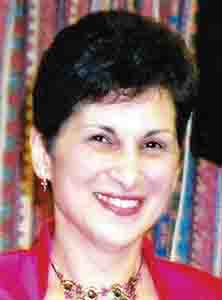
A Cap for the King is Rukshana Master’s affectionate account of "an indomitable woman in the British Raj” — her great-great-grandmother Dosebai Jessawalla (née Shroff). Master (pictured), a fashion designer and author, uses Jessawalla’s memoirs as the basis for this pen portrait in which she paints a vivid picture of a Parsi family’s life in 19th century India — a simpler era albeit one that was not without its challenges.
 Born into a wealthy family, Jessawalla’s life took an interesting trajectory thanks to her mother Meheribai (described as "intelligent, beautiful and headstrong”) who in 1842 took the unprecedented decision to send her daughter to a school run by an English schoolmistress. This was done at a time when "fathers entertained not the remotest idea of educating their daughters.” As Master reveals, "Meheribai’s young daughter going to and fro (to school) every morning with her servant created a great scandal amongst the Parsis, some of whom went so far as to send threatening letters to the family.”
In an article published in London in 1908, the Indian Magazine and Review wrote, "Meheribai Shroff distinguished herself by those qualities of which heroines are made. She realized the advantages of giving an English education to Parsi girls long before other women and even most men of her race… Her name deserves a prominent place in the history of women’s education in India.”
Meheribai’s bold decision to "wage war upon the custom of centuries” by educating her daughter gradually caused members of her own and other communities to "open their eyes to the vital importance of women’s education.” However, at the age of 17, her daughter Dosebai gave up her studies following the death of her youngest brother and shortly thereafter married Cowasjee Jessawalla, a widower with six children. The marriage was a happy one, and in between her 11 pregnancies and the tragic deaths of several of her children, Dosebai ran her household efficiently and pursued her flair for embroidery and her passion for travel, where her fluency in the English language came in handy.
For the greater part of the book, Master’s narrative focuses on her great-great-grandmother’s travels and her encounters and friendships with the lords and ladies of the British Raj. The social mores of the times and the customs and traditions mentioned in the earlier chapters make much more interesting reading than the minute details of Dosebai’s travels in India and overseas. But one assumes that Master has had to base her story on Dosebai’s memoirs, which presumably provided step-by-step accounts of her journeys by road, rail and sea and also of her meetings with the rich and famous.
Master livens up this travelog with witty observations and caustic asides, occasionally at her ancestor’s expense. For example, when Queen Victoria announced her intention to assume the title of Empress of India, Master notes that "the entire Indian population received this news with acclamation.” But adds, "This was, of course, Dosebai’s account — there were quite a few with a very different opinion.” When it became known that the public proclamation of Queen Victoria’s decision would take place at a Durbar to be held in Delhi, Dosebai, the "biggest fan of the Royal family”, immediately availed herself of the opportunity to visit the historical cities of North India. Needless to say, at the Durbar, Dosebai was "apportioned a very conspicuous place in the front row among leading officials and their ladies.”
 Several chapters in the book are devoted to Dosebai’s 1878 visit to London, Windsor Castle and the third Paris World’s Fair. The intrepid Dosebai even took a flight in a hot air balloon (her son Dadabhoy was not allowed to accompany her on the balloon flight for fear of an accident). Strangely, on almost all her travels, Dosebai was accompanied by one or the other of her sons or her brother but not by her husband, who presumably was busy minding his business. Stranger still, during her 1878 tour, while preparing to leave for Germany, Dosebai received word that "her dear husband was having some business problems. Although this news occasioned her great chagrin she did not give way to despair, but confined her travels on the continent to Germany, Italy and Switzerland only, and relinquished the half-formed plan of returning to London and seeing Scotland, Balmoral and above all, Queen Victoria.”
Page after page of details of Dosebai’s travels by road, rail and sea get a tad repetitive and monotonous, but we are constantly reminded that Dosebai, clad in her traditional embroidered saris, herself turned out to be a major attraction in Europe at the tourist spots she visited, where people had never seen a Parsi lady before. Indeed, being a bit of a novelty herself, Dosebai even managed to wangle a private audience with Pope Leo XIII, but was taken aback when she learned that the "rules of etiquette” for an audience with the pontiff required her to kiss his toe. Deeming this to be most unhygienic, Dosebai explained to the pontiff’s aide that her religion would not permit her to kiss His Holiness’ toe. The Pope graciously consented to allow Dosebai to kiss the fingers of his hand instead.
Dosebai’s proudest moment came during her world tour and on her second visit to England, when her friends in high places arranged for her to be presented to Their Majesties the King Emperor Edward VII and Queen Empress Alexandra. "To be presented to the Sovereign and the Queen had been the most ardent wish” of Dosebai’s life. It was on this occasion that she presented the King a cap of black velvet decorated with enamelled miniature portraits of Queen Victoria, Prince Albert, King Edward VII, Queen Alexandra and other members of the Royal family. The cap was intricately embroidered in gold thread and a crown studded with rubies and diamonds was placed on top of a miniature of the King. For Queen Alexandra, Dosebai designed a heavily embroidered dress front and bands with stars and flowers interlaced with gold and silver thread and studded with pearls. The gift items were placed in a box of carved sandalwood alongside two portraits of Dosebai, one taken nearly 30 years earlier and the second during her latest trip to London.
Whether Dosebai could have used her English education to better purpose instead of merely travelling around the world is a moot point that the book does not broach. But as Master explains, "The wide-eyed Dosebai decided that it was infinitely better to incur fatigue and danger and see the wonders of the world, than to live a long life of idleness and luxury.”