
Events & Personalities
Shining a spotlight
"Many people in Bombay only know the King Edward Memorial (KEM) Hospital from press reports when things go wrong. Obviously, no newspaper is ever going to print ‘Today, 500 patients came home from KEM very happy with their treatment.’ They think the drama is only there when things go wrong. I wanted to prove there is also drama when things go right,” wrote Gulserene Dastur (pictured, next page) in an email response to Parsiana’s queries about the 69-minute documentary film, Getting Better, she has made on the Hospital.
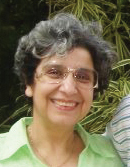 "The people who staff KEM are the bridge between Shining India and pauperized India.
"The system doesn’t work, they do. They could be earning 15 times higher salaries in private hospitals in India, but they stay where they are needed. It is people like these in all walks of life (who) keep India running, and the least we can do is recognize their contribution. That’s what I set out to do: shine a little spotlight on them,” she explained.
The 65-year-old who did her BA from Wellesley College, Massachusetts, USA in linguistics, and further studies at the University of Geneva in political science and languages, quit her studies in 1972 without a degree to help her father, Nari Dastur, deputy managing director of Air India who had taken early retirement to set up a small multinational firm called Atash, based in Geneva. The firm, which represented startup airlines in Europe, became successful, so she worked in aviation till 2004 after which she left to start writing a series of books on young adult science fiction. Just when she felt ready to look around for a publisher in 2008, her father, while on a visit to India, fell down and was taken to the ICU at Jaslok Hospital with a subcutaneous hematoma, where he survived for another two-and-a-half months.
"During that time, we saw many people in the waiting room who had sold all they had to be able to afford medical help for their relatives, and my mother and I felt the need to make some donation to help others in such straits,” Dastur continues. "My father’s neurosurgeon, a very caring doctor called Ranjit Nagpal, told me I would find the poorest people in most dire need in KEM Hospital, and put me in touch with Dr Ravi Ramakantan, head of the radiology department, who was also very much involved in various committees and funds of the Hospital pertaining to patient care and donations.” Whilst collecting donations from family and friends, and interacting with the doctor, Dastur met quite a few of his colleagues and students, and was impressed by their drive for perfection in unimaginably difficult conditions, and by "the serenity and confidence they got from exercising their profession.”
This was the genesis of the film. "The more I admired them, the more I compared them with the heroes the younger generation worshipped: film stars, sportsmen, even gangsters. Nothing wrong with that, but it seemed to me here were some amazing role models just going to waste. That gave me the idea of making a film on this highly underrated hospital…So I got permission from the Bombay Municipal Corporation to film, read six books on making documentaries, gathered a team, and shot from 2009 till 2013… A lot of the credit for the film also goes to my editor and co-director, Anupama Chabukswar. Two more years went in post-production (the film was financed by my share of my father’s life insurance, so we had to spend more time than money on some things) and now we are getting ready to tackle distribution.”
Describing the reactions to preview screenings as "gratifying,” Dastur explains that "apart from our natural audience, i.e. alumni of G. S. Medical College and doctors of Indian origin here and abroad, the Indian diaspora in general, we are also interested in approaching medical schools, hospitals and universities to have showings.” She is also applying to film festivals. Getting Better was to be screened at the Godrej Culture Lab in Vikhroli on April 7, reported Sunday Mumbai Mirror (SMM) on March 27, 2016.
Though many patients have problems with the Hospital, and Dastur has portrayed some of these incidents, the balance is in favor of the service rendered, reported SMM. While she was interacting with the ward ayahs (maushis) working at KEM, one of them told Dastur: "Main séva déta, aur paisa milta, kitna achha hain (I give service and receive money for it. It feels so good).”
The nobility of working for a public hospital was epitomized in this statement. "What surprised me was the serenity of the doctors. They love working there and realize that they are doing something that’s worth doing,” Dastur told SMM.
"The people who staff KEM are the bridge between Shining India and pauperized India. "The system doesn’t work, they do. They could be earning 15 times higher salaries in private hospitals in India, but they stay where they are needed. It is people like these in all walks of life (who) keep India running, and the least we can do is recognize their contribution. That’s what I set out to do: shine a little spotlight on them,” she explained.
The 65-year-old who did her BA from Wellesley College, Massachusetts, USA in linguistics, and further studies at the University of Geneva in political science and languages, quit her studies in 1972 without a degree to help her father, Nari Dastur, deputy managing director of Air India who had taken early retirement to set up a small multinational firm called Atash, based in Geneva. The firm, which represented startup airlines in Europe, became successful, so she worked in aviation till 2004 after which she left to start writing a series of books on young adult science fiction. Just when she felt ready to look around for a publisher in 2008, her father, while on a visit to India, fell down and was taken to the ICU at Jaslok Hospital with a subcutaneous hematoma, where he survived for another two-and-a-half months.
"During that time, we saw many people in the waiting room who had sold all they had to be able to afford medical help for their relatives, and my mother and I felt the need to make some donation to help others in such straits,” Dastur continues. "My father’s neurosurgeon, a very caring doctor called Ranjit Nagpal, told me I would find the poorest people in most dire need in KEM Hospital, and put me in touch with Dr Ravi Ramakantan, head of the radiology department, who was also very much involved in various committees and funds of the Hospital pertaining to patient care and donations.” Whilst collecting donations from family and friends, and interacting with the doctor, Dastur met quite a few of his colleagues and students, and was impressed by their drive for perfection in unimaginably difficult conditions, and by "the serenity and confidence they got from exercising their profession.”
This was the genesis of the film. "The more I admired them, the more I compared them with the heroes the younger generation worshipped: film stars, sportsmen, even gangsters. Nothing wrong with that, but it seemed to me here were some amazing role models just going to waste. That gave me the idea of making a film on this highly underrated hospital…So I got permission from the Bombay Municipal Corporation to film, read six books on making documentaries, gathered a team, and shot from 2009 till 2013… A lot of the credit for the film also goes to my editor and co-director, Anupama Chabukswar. Two more years went in post-production (the film was financed by my share of my father’s life insurance, so we had to spend more time than money on some things) and now we are getting ready to tackle distribution.”
Describing the reactions to preview screenings as "gratifying,” Dastur explains that "apart from our natural audience, i.e. alumni of G. S. Medical College and doctors of Indian origin here and abroad, the Indian diaspora in general, we are also interested in approaching medical schools, hospitals and universities to have showings.” She is also applying to film festivals. Getting Better was to be screened at the Godrej Culture Lab in Vikhroli on April 7, reported Sunday Mumbai Mirror (SMM) on March 27, 2016.
Though many patients have problems with the Hospital, and Dastur has portrayed some of these incidents, the balance is in favor of the service rendered, reported SMM. While she was interacting with the ward ayahs (maushis) working at KEM, one of them told Dastur: "Main séva déta, aur paisa milta, kitna achha hain (I give service and receive money for it. It feels so good).”
The nobility of working for a public hospital was epitomized in this statement. "What surprised me was the serenity of the doctors. They love working there and realize that they are doing something that’s worth doing,” Dastur told SMM.
◆ ◆ ◆
From the archive