
The photographic art of yore
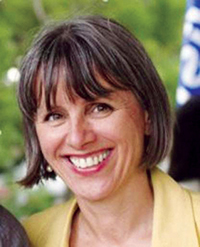
Susan Hapgood
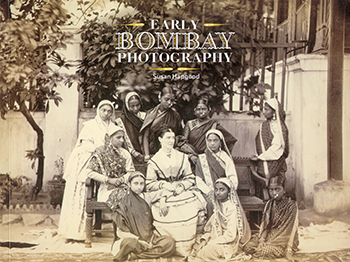 In many coffee table books, the text appears as an afterthought to lend the work an intellectual veneer. Or the writing is an outpouring of the photographer’s travails and tribulations and an explanation about the selection and why and how it was made. One usually glances at the text, admires the pictures and places it back on the table top. But Early Bombay Photography is an intriguing, delightful, 140-page paperback whose 95 photographs of Bombay and its inhabitants draw one to the text.
Hapgood, an art historian, author and New York based curator, has provided a readable and well researched text outlining the developments in photography in general, and Bombay in particular. "Long before the invention of moving pictures, and long before Bollywood, Bombay was the first Indian city where the photographic needs of the public…were catered to… by the 1850s, more Indians were practicing this new method in Bombay than anywhere else in the country, indeed perhaps in Asia.” The historian defines early photography as the period between 1839, when photography was introduced, to 1900 which saw the invention of mass-produced cameras.
Initially cameras were bulky, rudimentary contraptions that used fiery powder to create light and captured images on sturdy, glass plates; when subjects had to dress and pose till the photographer estimated the composition, light, mood and costumes were conducive and when the person behind the lens had one or maybe two chances to get it right. The exposure time for portraits varied between two to 20 seconds, notes Hapgood. Hence the subjects had to remain motionless for the duration. After the shoot, the wet collodian glass negative had to be developed with a mixture of syrup and chemical "immediately on the spot.” By the time the camera could be loaded with a new plate, the right amount of powder placed on the palette, the subjects may have tired or dispersed or the light may have darkened or brightened.
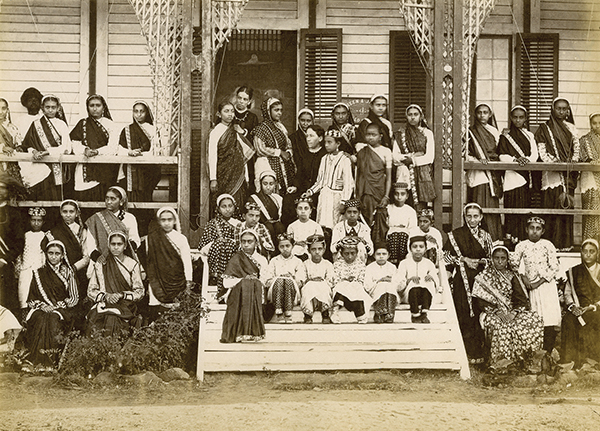
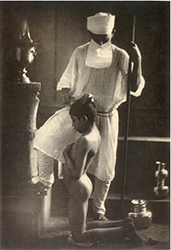
A Parsee Girls’ School, Bombay, 1880s by Edward Taurines, Collection of Gopal Nair, Bombay;
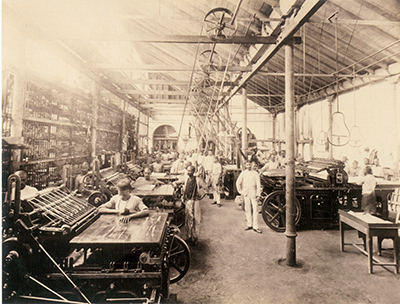
Machine Room No. 1, Times of India, 1898 by E.O.S. and Company, British Library, London;
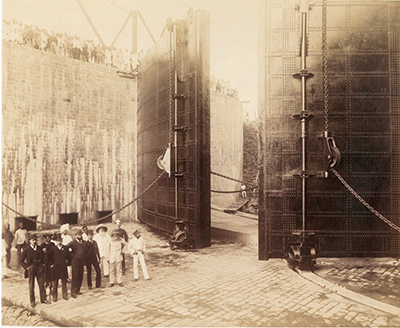
View of rear gates of under construction Victoria Dock, Bombay, 1888 by Edward Taurines, British Library, London;
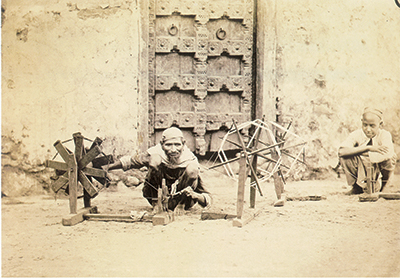
Worker preparing thread for sari weaving, circa 1870 by Shivshanker Narayen, British Library, London;
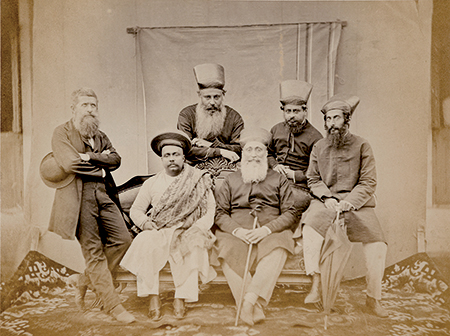
Portrait group, with Dr Bhau Dajee (2nd from left) and others, 1867 or earlier by Hurrichund Chintamon, British Library, London
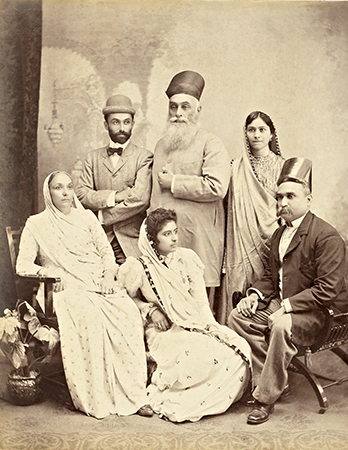
J. N. Tata and family, 1899 C.Schultz for Raja Deen Dayal and Sons, Bombay, Peabody Essex Museum, Salem
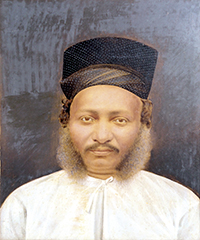
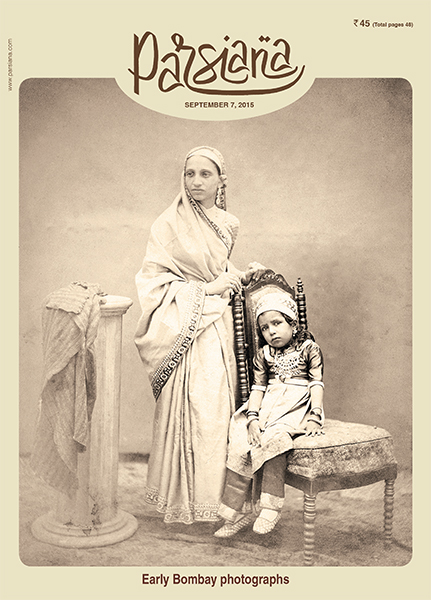
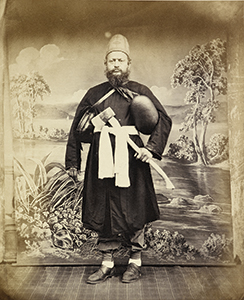
Portrait of an unknown Parsi, undated photographer unknown
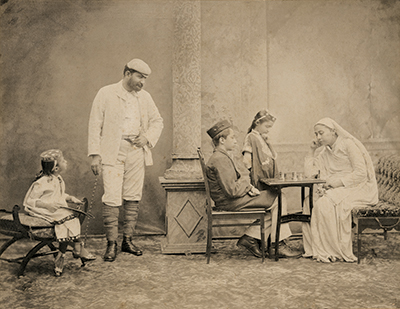
What strikes the seasoned eye on examining the carefully and artfully selected photos in the book published by Mapin Publishing, in association with the Contemporary Arts Trust and supported by the Navajbai Ratan Tata Trust and Sir Ratan Tata Trust, are the subjects selected by the photographers. The reader will want to linger over each frame to absorb the ambience, mood and period. The images reflect a more leisurely pace of life, when people dressed to suit the occasion and when their attire reflected their status and aspirations.
There is a self-portrait of the talented Shapoor Nusserwanji Bhedwar dressed like an English squire watching his family members playing a game of chess while another young girl stares up at him quizzically. "I paid particular attention to Bombay-based photographers who have been accorded less attention over the years,” explains Hapgood. "The aim in researching under recognized individuals — Narayan Daji, Hurrichund Chintamon, Shivshanker Narayen and Bhedwar — was to contribute new information for a local history that is still very much in formation, and highlight its importance within broader photographic tradition.”
Indeed, Bhedwar’s pictures are rarely seen even in the community though among the subjects he selected were the Parsis. According to Hapgood, while many photographers aspired to be artists, Bhedwar "was the first Indian to gain international recognition.” Noted 19th century photographer Alfred Stieglitz in The American Amateur Photographer wrote of Bhedwar’s "Initiation of a Parsi priest,” "the technical work…is beyond criticism,” and in referring to his other Parsi portrayals commented on the "richness of tone and delicacy rarely seen at a photographic exhibition.”
"A photo-graph of The Times of India machine room was shot by E.O.S., a long lived photographic firm founded by Purvesji Dadabhai... and by two successive generations of a Parsi family,” notes Hapgood.
Several of the other Parsis portrayed in the book were photographed by the internationally renowned Raja Deen Dayal, the less known Chintamon, and Englishmen Edward Taurines and Colin Murray who photographed a Tower of Silence in Bombay. (Today photography is banned at Doongerwadi.)
Sadly some of the original photographs published in the book, however, appear to have had their sides cropped. It is very unlikely the master of the art would have cut off people halfway or failed to include the entire piece of chair that a subject was sitting on. Perhaps the original prints may not have been intact, or compromises were made to accommodate the prints in the space available.
"It is clear that at least the Parsis, among the most affluent people living in Bombay then as they are today, heavily patronized the In-dian photography studios for their own portraiture,” notes the author.
Some historians view the camera "as a technological tool of the West used to create images for the verification and justification of colonial rule,” states Hapgood. But the Indian elite soon "harnessed photography for their own political, social and propagandistic purposes.”
Today with photography being within the reach of even the financially disadvantaged, everyone is empowered. Photos and videos can be shot even on mobile phones and instantly uploaded at almost no cost and made accessible to audiences throughout the world. In totalitarian regimes, dissenters manage to bypass censors and load photos and videos depicting the brutality of the state surreptitiously on the world wide web. At the everyday level self-portraits (selfies), family get-togethers and even anjuman functions are now photographed/filmed though quality is sometimes lacking. Photographers can shoot several frames in a second to capture the action or expression they want.
But when one looks at what the early photographers did with their rather unsophisticated or even crude equipment, one marvels at their mastery of the art. In the late 1800s Sirder Khan Bahadur Dorabjee Pudumjee, assisted by his brother Nowrojee specialized in portraits ("Distinctive portrayals” Parsiana, December 1986). A century later his works were considered "amongst the best in the period” by the curator of the Royal Photographic Society, Museum of Photography in London.
Amongst the other Parsi photo-graphers of repute were Sam Tata who was born, lived and worked in Shanghai for a number of years, some of that time with the legendary French photographer Henri Cartier-Bresson ("I’m somebody with a camera,” Parsiana, July 1984). He subsequently settled in Montreal, Canada. Dr Shernaz Cama of Parzor Foundation who has archived much material on the community, once showed us a large black and white print by Homai Vyarawala (around 4 ft x 2.5 ft) of an official, open air gathering around the time of Independence. The image was sharp, clear, the lighting and composition impeccable. She had a Speed Graphic Pacemaker camera with a flash attached, in which one had to replace the bulb after each shot.
H. D. Darukhanawala’s Parsi Lustre on Indian Soil (1939) is an invaluable archive of Parsi portraiture compiled from numerous sources by the intrepid author. Sooni Taraporevala’s book Parsis: The Zoroastrians of India; A Photographic Journey has captured some remarkable images of the contemporary community.
The techniques keep changing as do the subjects, but what constitutes a good photograph remains constant. The difference between the past and now is that photography is no longer the purview of the privileged. Today anyone can and should aspire to capture great imagery.