
Framed by Taraporevala
Home in the City. Bombay 1977 – Mumbai 2017 by Sooni Taraporevala. Published in 2017 by HarperCollins Publishers, A-75, Sector 57, Noida, Uttar Pradesh 201301. Pp: 128. Price: Rs 1,499.
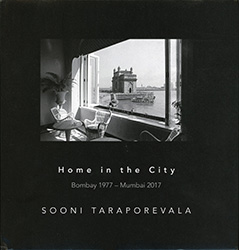 It’s as intimate as looking through a family album. As warm as your Aunty Freni’s parlor, sipping a cup of spicy chai (tea), dusting crumbs off the flaky mawa cake, from a bone china porcelain rose-plate, the last of a set that had been handed down to her from her mother during the time of her wedding. The clamor of the "Maximum City" Mumbai, that was once Bombay has been hushed by the sunlit memories of another day that frames Sooni Taraporevala’s black and white photographic essays.
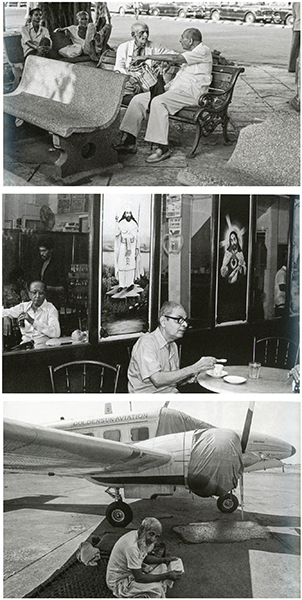
Obviously, these are Taraporevala’s stories. Though she explains that: "The photos that are most important to me have always had that je ne sais quoi (an indefinable quality that makes something distinctive or attractive) quality. The moment I try to intellectualize or deconstruct the image, it immediately loses its mystery and magic." It’s precisely this open-ended invitation that makes the viewer want to enter her world. For instance both British born American essayist Pico Iyer and British-Indian writer and Booker Prize winner Salman Rushdie who have contributed short essays to introduce the book, have used the photographs as points of departure into their own recollections of the city and its people.
Rushdie for instance is reminded of his own childhood in the city that famously spawned Midnight’s Children, his magnum opus. He goes on to comment: "The children of Bombay-into-Mumbai, ragged, cigarette-smoking, hustling on the street, stare out of these photographs, with too much knowledge in their eyes. Sooni Taraporevala has been showing us these children ever since Salaam Bombay."
Need we add that Salaam Bombay was the celebrated film made by Mira Nair, for which Taraporevala was the equally acclaimed screenwriter? Or that in this compendium of images there’s a sense that it’s an Ivory-Merchant filmography that segues effortlessly into Salaam Bombay, two white godas, or two Kathiawari horses, with the tips of their ears pointing inwards, carrying the chariot of curiosities that we know as Bombay that is also Mumbai?
For those who have loved Taraporevala’s earlier book Parsis: The Zoroastrians of India there is a slight sense of déjà vu a second Tango through the archival repertoire. There are images such as those of the poor leprous visaged Queen Victoria slumming it at the Bhau Daji Lad Museum at Byculla along with an armless and headless Lord Marquis of Cornwallis to keep her company, or yet another shot at the hotties of Kamathipura looking predictably tired, the plaster of Paris Ganeshas during the annual festival, not to mention the street hawkers, that remind us that yes, yes, these too are the clichés that define our Bombay. How can they be left behind? Then again, there is a shot of the empty ground where once the bakery of Palmer’s used to stand just when it has been razed and this brings forth a fresh batch of memories just like the quotidian bread loaves. As for the mysterious "Man in a Sola Hat" it could be the title of a film set in Forjett Street, named as it is after a British era policeman.
One cannot help but compare Taraporevala with another feisty Parsi woman photographer who went under the popular sobriquet of Dalda 13. Homai Vyarawalla (1913-2012) belonged to another age, perhaps a more heroic one. Vyarawalla is like a sparrow that dived between the interstices of history picking up the most glittering crumbs. Taraporevala is more like a stately pigeon. She stands on the apartment ledge of the city viewing the interior landscape of her home and those of the many people she has met and befriended in her years as a filmmaker. To use a phrase from another intrepid storyteller of telling details, she frames her pictures with immaculate attention to light, shadows, mood and subject, to create "a moveable feast" of familiar images. GEETA DOCTOR
Doctor, a longtime contributor to Parsiana, is a writer and critic.