
Books
Shipshape at War
The War Diaries of Ervad Jehangirji Jamshedji Vajifdar published for private circulation; Pp. 125.
The War Diaries of Ervad Jehangirji Jamshedji Vajifdar is a very interesting, detailed account that the writer kept on his assignments on hospital ships during the First World War. The book consists of two volumes: Volume I covers 1915-1916 and Volume II covers 1916-1917. The diary as a form is dying out so it’s thrilling for the reader to be privy to one written 100 years ago in a style that is simple and direct, almost like a chat over tea. Nergish Buchia, Vajifdar’s daughter, translated the diary from Gujarati to English so her grandson could access it and it is indeed a labor of love.
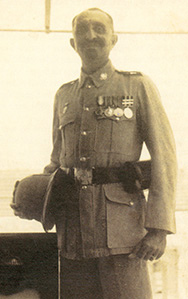
Jehangirji Vajifdar
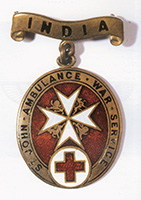
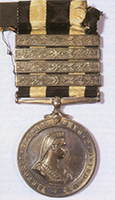
War medals
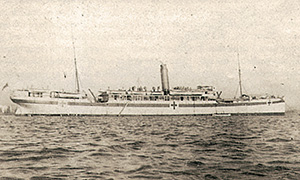
The Syria
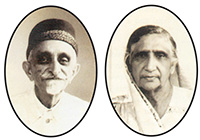
Jehangirji and Jerbanoo Vajifdar in the 1970s
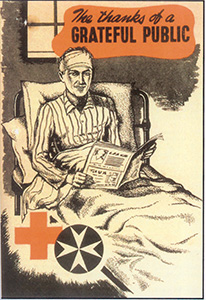
Poster of St John’s Ambulance
Vajifdar, who lived for 90 years, was born in Navsari in 1890 and schooled at the Byramjee Jeejeebhoy Parsi Charitable Institution, Bombay. He joined the St John’s Ambulance Brigade in 1913 and even after the war, attended parades at their headquarters in Dhobi Talao, Bombay, in full regalia. The book opens with a sepia tinted photograph of Vajifdar in full uniform, smiling proudly at the camera, a benign outlook towards the world reflected on his face.
When the War started, he was sent to Alexandra Dock to render first aid to the wounded soldiers. His work was voluntary and started officially under the aegis of the Government on August 15, 1914. There was no certainty as to the time of arrival of the ships, so he and other volunteers had to wait at the docks for hours to help the wounded disembark. Keen to join a ship as a storekeeper or writer, he got his appointment on the Hospital Ship Syria on July 26 1915, which also happened to be his birthday.
He writes: "Hospital Ship Syria was a mail steamer of P&O Company and used to ply between England and China…It used to (now) sail between Bombay and the Suez Canal carrying the sick and the wounded European patients were looked after by their own staff…as the natives did not understand their language.” Hospital ships were not allowed to carry arms. Another entry reads "…their prices are not for the likes of us but are meant for our British officers.” Two pounds was equivalent to Rs 30 and most prices have been mentioned in annas. The book is interspersed with certificates, Service Book extracts and postcards, which transport the reader into a world gone by.
In a moving account of a mentally ill incarcerated patient who broke free and jumped overboard, he states: "I immediately tried to jump overboard to save the man but I was caught and held by an officer…as it was strictly against regulations.” Another mentally ill patient jumped overboard two days later but since the body could not be found, "they threw a lifebuoy overboard — to notify any passing ship.”
Vajifdar met many Parsi Zoroastrians on his travels in various ports and struck up great friendships. At Aden, they could not go ashore as they were uncertain as to what time the injured were to be taken on board, so regrettably they couldn’t avail of the open invitation of Cowasji Dinshaw, "the King of Aden,” to see the city. At a makeshift hospital in Alexandria, Vajifdar was thrilled to meet some Zoroastrians belonging to the Poona Volunteer Corps "working under Sergeant Unwala at the British Hospital.” They also stopped at Karachi for disinfection against cholera which is an interesting tale of being put up in cage like structures till the job was completed. The daily bath even in freezing conditions on a rolling and pitching ship, the daily prayers, the count of special days in the Parsi calendar would gladden the hearts of traditional Zoroastrians.
Vajifdar’s style of writing is very simple and graphic: "We had to keep our life belts with us at all times and to keep them under our pillows at night. On the one hand, the ship is still rolling and on the other we are rushing about (for the fire drill). No time to scratch our heads and wonder what we had landed into!”
The War becomes very real for the reader with an entry made after Vajifdar substituted for a dresser: "…never having seen such grave injuries and hope to God never to see them again” and the direct exposure it provides into the War is priceless. The line in the diary about most patients being "brought from the trenches” makes the account very real. Another entry asserts that the workforce consisted mainly of women or elderly men as all the young men were at war. "The war news was becoming worse and there was a great shortage of men… There are many who are mentally deranged mostly because they have faced constant bombardment.”
Notes about the ship docking off Apollo Bunder and shore leave being granted, stints at Colaba Hospital, salary reductions during war time will all sound familiar to old hands of the defence services. There is the constant comparison of new sights with similar ones in Bombay which makes for very interesting reading. The trams in Port Said "are nothing compared to our Bombay trams.” Nelson’s Column reminded him very strongly of the "Khada Parsi” statue at Byculla. The steps leading up to St Paul’s Cathedral were reminiscent of "our Town Hall.” An entry around October 1915 states: "In front of the steps, there is a Memorial Statue…that reminded me of the space kept outside our Bombay Municipal Building for a statue of Sir Pherozeshah Mehta.”
On September 29, 1915 when they reached Suez, they were informed that they had to pick up patients from Port Said and proceed to London. "The very word London evoked such joy in me that even though it was war time, the thought of going to London and that too free of cost was nothing short of miraculous!” At Southampton, they realized that their slim finances (he had sent his pay home) prevented a tour of London but a helpful orderly of the Royal Army Medical Corps took them to see Southampton. "22.10.1915: There comes in the life of a person one lucky day which he remembers for the rest of his life…Col Davidson (bless him) had, as promised, obtained permission from India Office for 30 of us to visit London and (this was the best part) that too at Government expense!” The reader shares his joy when "to my surprise I learnt later that (Major Whitmore) had been instructed to put my name first!” He found, passing through Woking, that "there is even a resting place for Zoroastrians!” To modern day users of the London Tube, negotiating the various lines, this entry is interesting: "There is only one platform as there is only one train which goes round and round to big stations and then comes back to its terminal.”
One line entries about the beauty of Mecca and the Suez Canal by moonlight are enough for the reader to feel that they are with Vajifdar, admiring the view. His first view of a submarine at Gallipoli, his watching a plane dodging enemy fire and landing safely, accounts of firing close to the hospital ship, are all imbued with a sense of wonder that comes right through the direct reporting.
The frequency with which cases of the plague were reported and the quarantined ship floating offshore and then being "Claytonized” (isolated) is a recurring motif. The integrity of the Parsis is elucidated in small ways but becomes a strong imprint in the book. Vajifdar’s character stands out in many instances, not least being trusted to return to ship by 8 a.m. in an instance where shore leave would not normally be granted. He spoke up against the poor food conditions to which his class of nursing assistants were subjected (English food was foreign to their palates and the restriction on beef and pork resulted in only some rice and watery milk!) and, through his rapport with his superiors Col Davidson and Capt Higham, managed to have the rations due to them delivered directly and cooked specially for them. "I write this with humility only to point out that it was my nature to speak out only when it was absolutely necessary.”
Parsis revel in the respect the community receives from the world and Government and it was no different 100 years ago; in fact more so as seen in the record kept of the GIP (Great Indian Peninsular) Railway running three special trains for Zoroastrians to attend the consecration of the new agiary at Deolali.
Vajifdar was saddened to see black marketing on the part of the contractors entrusted with the job of providing sepoys, dhobis, sweepers, etc. A Brahmin had been fooled into signing up as a sweeper and was mortified to find out later what he was required to do. Even a Mohemmeddan… had signed up as a sweeper thinking he had signed up as a "sepoy.” The considerate colonel understood the situation and agreed to keep him on a sepoy’s pay and release him at the end of the month. "Now at that time we were heading for London, so we consoled the man that even if he worked as a sweeper for a short time, he would be lucky to see London!”
Towards the end of his stint, Vajifdar had a run in with his superior, Col Amsworth, who did not grant him leave on the grounds that he had refused to take an inoculation. Since the inoculation was voluntary, Vajifdar was in the right and, angrier than ever, was determined to go on leave. He knew the punishment for going AWOL (away without official leave) was a confinement to barracks, but decided to go anyway. When he returned, Col Amsworth sent him to the office of the Assistant Director Medical Services, where he met Lt Bernardo who decided to "keep him as a head clerk in his own office!” Vajifdar now had a shore job in Alexandra Dock, close to his residence. "Thus came an end to my ambulance ship service which I had served for 21 months and 23 days and during that time I had made 26 voyages in all and saw 10 cities on different continents.” The last line of the diary mentions a new experience gained in the employ of Col Bernardo — "Horse racing at the Mahalaxmi Race Course!”
◆ ◆ ◆
From the archive