
Books
“The memory of their lives”
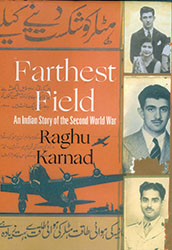
Farthest Field. An Indian Story of the Second World War by Raghu Karnad. Published in 2015 by HarperCollins Publishers, A-75, Sector 57, Noida, Uttar Pradesh 201301. Pp: 300. Price: Rs 550.
Raghu Karnad’s amazing book is both a memoir to his grandfather and his Parsi granduncles as well as a moving and vibrant account of India’s role in the Second World War.
From the very first sentence of the Prologue, the reader is drawn into a family which is described with sympathy, objectivity and good humor. The photographs of his grandfather Kodandera Ganapathy (Ganny) as well as his granduncles, Manek Dadabhoy and Godrej Khodadad Mugaseth (Bobby) are neither large portraits adorning the walls of his grandmother’s house, nor are embedded in a well-thumbed photo album where questions could have been raised about the identity of the individuals. "Instead they were isolated in dull silver frames on table tops” and inconspicuously doomed to oblivion. Hence, it is no wonder that by the time he decided to write the book, his grandmother as well as others of her generation had passed away, his mother’s knowledge was at best superficial and there was a general dearth of information.
From the very first sentence of the Prologue, the reader is drawn into a family which is described with sympathy, objectivity and good humor. The photographs of his grandfather Kodandera Ganapathy (Ganny) as well as his granduncles, Manek Dadabhoy and Godrej Khodadad Mugaseth (Bobby) are neither large portraits adorning the walls of his grandmother’s house, nor are embedded in a well-thumbed photo album where questions could have been raised about the identity of the individuals. "Instead they were isolated in dull silver frames on table tops” and inconspicuously doomed to oblivion. Hence, it is no wonder that by the time he decided to write the book, his grandmother as well as others of her generation had passed away, his mother’s knowledge was at best superficial and there was a general dearth of information.
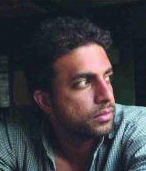
Raghu Karnad: fleshing out "forensic non-fiction"
The book starts in Calicut and Karnad creates a very vivid and charming picture both of the city with coconut trees and pink lotuses and Parsis living in a region with which they are not generally associated. There is abundant humor as the burning question of the day is not the outbreak of war but the price of eggs. The main protagonists of the story are the children of Khodadad and Tehmina Mugaseth: Nergish (Nugs) and her husband Ganny, Khorshed (Kosh) and her husband Manek and Bobby. A family tree would have certainly assisted the reader to decipher the family relationships at a glance.
Nugs marries Ganny; they are Karnad’s grandparents. Both are doctors and their relationship is portrayed with great sensitivity and affection. Ganny is a Kodava and, like the Parsis, the Kodavas take endogamy very seriously. Hence, it is no surprise that both husband and wife are ostracized by their respective families. In spite of suffering from asthma, Ganny joins the Indian Medical Services and is sent to Thal. Karnad includes a very poignant letter Ganny writes to his sister requesting her to befriend the pregnant Nugs whom he is forced to leave behind and report for duty. Another very heartrending episode in the book is the journey the heavily pregnant Nugs makes to Thal in July 1942 to take care of Ganny who finally succumbs to chronic asthmatic bronchitis at the age of 26.
Manek Dadabhoy who marries Khorshed (Kosh) becomes an officer in the air force and is sent to the North East Frontier provinces to fly over the territory and scrutinize it for a glimpse of a camp in a clearing. Karnad creates the portrait of a loving husband who daily carries Kosh’s photograph in his tunic pocket. In May 1943, while his plane is returning to base, on account of poor visibility and monsoon clouds, he flies into a hill and dies. He is buried in Imphal and his services are coldly acknowledged by a telegram, which thanks them "for their sacrifice.”
Karnad wastes no time in establishing Bobby’s mischievous and endearing character; he eats two plates of dhansak and is unable to pay for the meal. When he is questioned as to what sort of Parsi he is, he is very indignant and jumps on the table, exposes his sudreh and recites the Yatha Ahu Vairyo. He enlists on a whim but "with callous lack of effort, made the top student rank.” He joins the Bengal Sappers and after a period of boring administrative duties, he is sent to the North East Frontier provinces to take part in the offensive against the Japanese and ensure that they do not advance into India. Bobby’s death is shrouded in mystery. K. Sankaran Nair, in his book Inside I.B. and R.A.W., suggests that Bobby died playing Russian roulette. The family is distraught but it is Nugs who is most deeply affected. She believes that "he would never have sold his life so cheap.” Amid the pain and the desolation, she hears her daughter calling out to her and "her chair fell back and Nugs fled up the steps. Her day was just beginning.” It is not clear whose day is just beginning that of Nugs or her daughter but the book ends on an optimistic note.
Though the book is on one level a moving tribute to his grandfather and his granduncles, Karnad tells the amazing story of India’s role in the Second World War. In the huge canvas of world events and the major countries at war, one does not realize that the Indian army in the Second World War was the "largest volunteer force the world had ever known.” Karnad blends the personal stories of the protagonists and the narration of the horrific scenes of war with effortless skill. His descriptions of the war and of human suffering are intensely heartbreaking and the Imphal offensive of 1944 is so graphic and lifelike and the narration is so fast-paced and vital that the reader feels he has been transported onto the battlefield.
There has been much conjecture as to whether this book is fiction or non-fiction. Karnad himself slips out of the net by calling it "forensic non-fiction” — "forensic license, using fragmented evidence and testimony to build an account of their thoughts and beliefs.” Considering the amount of flesh he has had to put on the bare bones of the skeletons to create credible, warm and human characters, I don’t think that the words "forensic non-fiction” do the book justice.
Karnad’s prose is limpid and evocative: "...the rowdy waves of dawn, on a sea swollen by the late monsoon;” yet, it can be razor sharp and graphic when required in his descriptions of war and human suffering: the wounded soldiers "looking ready to cough once and dissolve into a heap of rags.” It is very tempting to quote from his work at length; to paraphrase it would be little short of blasphemy.
In his Prologue, Karnad says, "People have two deaths: the first at the end of their lives...and the second at the end of the memory of their lives...” It is through his efforts that the memory of the lives of his grandfather and his granduncles, thousands of soldiers who have lost their lives in the War, and the critical role played by India in this War will be remembered and will not "(quit) the world completely.”
◆ ◆ ◆
From the archive