
Religion made relevant
At the XVII North American Zoroastrian Congress emphasis was laid on creating community institutions suited to their conditions
"In the 241 stanzas of the Gathas, the word Mazda appears 164 times, the word Ahura, 131 times, Mazda Ahura 50 times and Ahura Mazda eight times." With these words featuring 353 times in all, "this makes Gathas the Book of God," explained Fariborz Rahnamoon in his talk on "The Gathas: A Beacon in the 21st Century" at the start of the third day of the XVII North American Zoroastrian Congress (NAZC) in Los Angeles on December 31, 2014. The word Mazda, denoting wisdom, and Ahura, as creator or creation, Rahnamoon believed Ahura Mazda should be understood as creator of wisdom or God, whilst Mazda Ahura would mean wisdom in creation. When a devotee asks God for wisdom in Yasna 28.1, it is "to create harmony between the universe and the inner self… (to work) towards perfection. It is not a patent to be kept in a closet but to be used for all mankind."
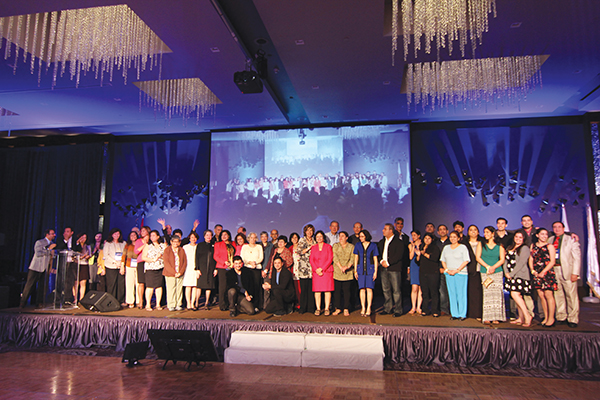
Portrayal of venerated women of ancient Iran
He interspersed his talk with additional information: Zoroaster’s name appears on a window pane in the British Columbia Parliament building; the expression "maaroo maathoo-bhéjoo khaee gayo (he is chewing my brains)" may well have derived from the legend of Zahaak who demanded the brains of two children be fed to him each day. President of the Zoroastrian Society of British Columbia, Rahnamoon is additionally chairperson of the Arbab Rostam Guiv Trust, Vancouver, director of WZCC (World Zarathushti Chamber of Commerce) as also founder and chapter chair of WZCC-British Columbia. (His Zoroastrian antecedents had been questioned at the time of the 10th World Zoroastrian Congress in Bombay in 2013 but the organizers who initially sought to bar him from speaking were faulted for their erroneous assumptions and had to ultimately include him.) Rahnamoon urged, "Let your good thoughts be known through your good words and result in good deeds to come to the next Congress in Vancouver in 2017."
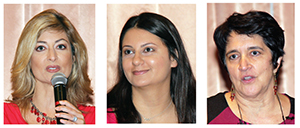
(From left) Neda Iranpour, Samanaz Kapadia and Kuma Deboo

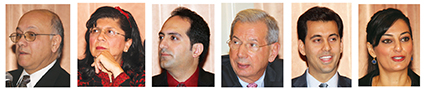
As against the discordant voices of the present, the philosophical views of the past were "produced primarily by priests…and were therefore homogeneous." Whilst "change is the new normal, permanence and constancy are timeless values." To the inheritors of a past that is "sometimes familiar but often alien," he questioned, "How useful is traditional knowledge?" Would it help us in being "good Zoroastrians because our parents were better Zoroastrians before us?" He then differentiated between innate, inborn or passive wisdom which is considered a female prerogative and acquired or active wisdom that is a male attribute. Wisdom and education went hand in hand, he stated and proceeded to show the causality streak with good education resulting in good habits that create a good character which is the basis of righteousness that eradicates evil and permits the flowering of wisdom.
Detailing the glory and persecution encountered by Iranian Zarathushtis of yore in different eras, in his presentation on "Proud to be a Zarathushti – Learning from the Past, Looking to the Future," Malcolm Bhesania, commented, "Today there is no Alexander (who plundered Persia). What are the lessons for migrants like us?...What is there to prevent us from surviving?... It was faith in their religion that sustained them." His head covered in a black topi, Bhesania, a software engineer, who regularly conducts tours to Iran to enable Zarathushtis to explore their history and heritage further noted, "We wear the sudreh-kusti for our spiritual development and not only as an outward symbol."
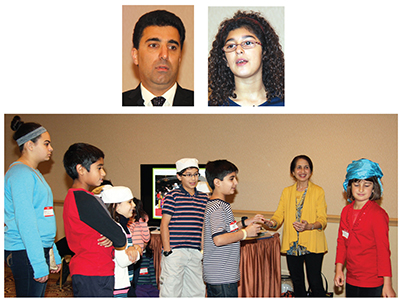
"There is reference to hydrologic (water) cycle in the Avesta," with clouds and rain giving rise to crops and food for mankind, remarked Dr Soroosh Sorooshian, distinguished professor of civil and environmental engineering and earth system science departments, and director of the Center for Hydrometeorology and Remote Sensing at the University of California, Irvine in his talk on "Zarathushtra’s Vision of Environmental Preservation and its Relevance Today: Earth, Water, Fire and Wind."
After depleting natural resources to burn fire one can’t "hope God will take care of (the ecology). Let us hope our religion is smarter," said the professor according to whom "burning fires, whether naturally or otherwise, means burning of biomass." The main heat engine of earth is the sun. Whilst global warming could result in more rainfall, intensification would lead to more droughts and severe floods, causing devastation. There would be impact on the population too with migrations from the rural to urban areas. According to him, 44% of the world population lives within 150 km of the sea. In India, 95% of water resources are used for agriculture, he stated, and revealed how Saudi Arabia has sought to conserve water by buying land in Argentina for agricultural purposes. Besides transfer, the other solutions to conserve water are through engineering modifications, control of wastage, storage and pumping.
The blue color seen on earth is the salt of the ocean, brown is from the dust, white is from the carbon dioxide, and green from the sulphur from volcanoes, he explained. In the northern hemisphere, the direction of the winds between latitudes 30-60° is from west to east because of which travel time is more on flights moving in the opposite direction against the winds, he stated.
The last of the Congress parallel sessions were conducted in the morning when Pilsum Master spoke on "Using Archeology and Linguistics to Determine the Time and Location of the Prophet Zarathushtra." A retired geologist who has worked in the Canadian mining industry for 33 years and in the IT (information technology) industry for 10 years, Master has since devoted himself to his interest in archeology and ancient history, especially related to Central Asia, Iran and South Asia.
"Global Community Connect… The Internet Way" was the subject of Yazdi Tantra’s talk. A chartered accountant by training, computer consultant by profession and entrepreneur developer by hobby, he explained how the five websites he has created have helped to unite the community.
"Holistic Health" was a topic that interested many delegates who were keen to hear Drs Farhad Contractor, Nikan Khatibi, Cyrus Mody, Parshan Namiranian and Freny Vaghaiwalla-Mody participate in a panel discussion led by Dr Parmis Khatibi, an anticoagulation and antithrombotic clinical specialist at the University of California, Irvine Medical Center, as also a clinical adjunct professor for the University of California, San Francisco School of Pharmacy and USC School of Pharmacy. Realizing that functional medicine looks at health and disease in its entirety as all systems (digestion, thyroid, immune, neurological) affect each other, they focused on treating patients through integration of the body, mind and spirit.
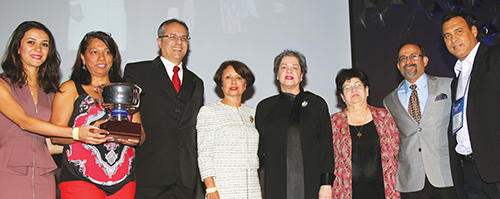
Yet another interesting session on "Zoroastrians Following a Non-Traditional Career Path" saw three ladies, panelists Kuma Deboo and Neda Iranpour in an interface with Samanaz Kapadia. Former warden at the Federal Correctional Institution in Glenville, Deboo is a criminal justice consultant working on critical issues like the treatment of LGBTI (Lesbian, Gay, Bisexual, Transgender, Intersex) inmates in correctional settings and compliance with the Prison Rape Elimination Act. Iranpour is an Emmy award winning evening anchor, reporter and weathercaster at San Diego 6 News who has been committed to informing, inspiring and entertaining viewers for the last 12 years. Kapadia who is programing manager at Fox Sports 1 has worked in the entertainment industry for the past nine years, honing her skills in production and programing.
Like the previous day, Afshin Sepehri and Nusha Sepehri shared their expertise of the Shahnameh. For young adults, Khushchehr (Khush) Italia, a pricing analyst for an aerospace distribution company, conducted a session on "Reflections: If I Only Knew…" where participants got an opportunity to brainstorm in groups to share their past experiences. The teen track session on "Making It Happen" showcased achievers pursuing careers they love. Moderated by Kayleene Writer, a specialist in family law, the session included Shehnaz Bhujwala, a civil litigator who helps victims of wrongful business and corporate practices obtain justice; and Anahita Sidhwa, a systems engineer. Additionally from the creative field were Zubin Mehta whose e-commerce business Mobilize Art enables people to purchase artworks for under $ 100 apiece; Canadian based filmmaker Yaz Rabadi who has written, produced and directed a number of films; and Mahfrin Santoke, an active musician and music educator in Los Angeles.
Factoring in FEZANA
The maximum time on the last afternoon was reserved for "FEZANA: The Way Forward… Nurturing Zoroastrianism in North America." Katayun Kapadia, president of the Federation of Zoroastrian Associations of North America, introduced her fellow office bearers — vice president Homi Gandhi, secretary Saghar Behroozi, treasurer Nilufer Shroff — and the working of the diverse standing and ad hoc committees. As per the umbrella body’s second 10-year strategic plan, the five goals for the 26 member associations and seven corresponding members were outlined by Mahrukh Motafram and Keshvar Buhariwalla: Showcase FEZANA around the world; increase awareness of FEZANA; foster hamazori by building strong relationships between Zarathushti groups and entities; advance religious education, cultural awareness and interfaith dialog; promote economic stability through fund-raising and prudent investments.
For member associations with their own libraries, Aban Rustomji who heads the FIRES (FEZANA Information Research Education System) committee recommended the creation of a unified catalog; donation of time, books and old photos; familiarizing the members with their website: www.fires-fezana.org
With FEZANA enjoying the status of UN-NGO (United Nations — nongovernmental organization), its subcommittee co-chair Afreed Mistry referred to the upcoming CSW (Commission on the Status of Women) Conference in March 2015; the observation of September 21 as the International Day for Prayer for Peace and October 2 as the International Day for Non-Violence. As part of its interfaith activities, members of FEZANA will participate in the Sixth Parliament of the World’s Religions at Salt Lake City, Utah from October 15-19, 2015.
The scholarship committee oversees the selection of 12 students to receive awards varying from $1,000 to 5,000 and welcomed the institution of new awards. The performing and creative arts scholarship committee confers five scholarships of $ 1,000 each year, reported Sherazade Mehta. Career building, social skills building and networking are the goals of ZYNA (Zoroastrian Youth of North America) subcommittee, mentioned co-chair Dr Parmis Khatibi. Vision, unity, leadership and education, being the goals of ZYNA, preservation, growth, development and strength will be their thrust for the future, mentioned Rayomand Ravji who will be leading the next Zoroastrian Games in Chicago, "the city of broad shoulders," from July 2-5, 2016. Jamshed Rivetna was happy to announce that the World Zoroastrian Youth Congress in 2019 has been awarded to FEZANA.
Their website which is a "gateway to FEZANA" had visitors from 124 countries in the last six months and one of the things people frequently come looking for is recipes for food, reported Arzan Wadia, co-chair of the website committee. Besides uploading videos of conference events, the linking of all multimedia information in a manner that is searchable makes them view their website as a "comprehensive repository." Subsequently Wadia with Diana Vania gave an overview of the Return to Roots program.
Realizing that "with each generation our ties to India’s well developed infrastructure diminishes," the diaspora is preparing to develop an infrastructure "that is unique to North America," mentioned Cyrus Rivetna. The immediate priority is a FEZANA center that can serve as an administrative office for FEZANA as also the North American Mobed Council and WZCC. Facilities for archival storage, an exhibition space, Zoroastrian shop will also be provided therein. Construction of darbe mehrs and community centers will be next on the list. "Reflecting Zoroastrian beliefs," they will "create an identity and functionality; develop a new style of architecture distinctive to North America." The necessity for retirement homes being oft expressed, that project too may be taken up.
"You are going to be inundated by me for requests for funds," forewarned Gev Nentin, co-chair of the funds and finance committee. "We are not in competition with your local association but we need your support otherwise these activities will not happen," he added.
Retrospective and reality
Whilst separating the teachings of Zarathushtra from the practices, "we are forming our own identity in North America," remarked Navroz Gandhi, president of the Zoroastrian Association of Metropolitan Washington Incorporated who in his "Retrospective of the Congress Proceedings" remarked, "We have such a talented community… We need to figure out how to give them attention and the respect they deserve." Pointing out that "with more education comes better decision making," he advocated that the community "develop good teachers. It is one thing to have material but if it is not communicated then all good intentions won’t help." He conceded that "not all traditions are bad. We have to examine what is relevant and useful… Evolution is not total assimilation… Religion is about spirituality and energy." Since parents serve as the primary role models, he reminded, "Children practice what they see and not what they are told to do." The role of a community is to move away from enforcement and focus on a lifestyle that involves "true practice of the faith." He recommended being "more cohesive and unified…and less judgmental." In connection with the community’s need for ecclesiastical service, he pointed out that with priests rendering voluntary service in North America, it is tough to balance work, prayer and life. "By volunteering our time and money" we can set examples to others. Seeing the increasing fraternization between Parsi and Iranian youth, Gandhi felt that the community is headed in the right direction.
The Sixth World Zoroastrian Youth Congress being held in Auckland from December 28, 2015 to January 2, 2016, is being "organized by and for the youth," stated Malcolm Bhote, a financial services consultant in London. The youth can look forward to being educated and having fun, he announced whilst inviting youngsters to visit their website 6wzyc.co.nz
During the three days of the XVII NAZC, a Mini-Congress for children aged five to 12 years educated them on religious and community matters through interactive sessions that included stories, role playing, games, Parsi and Persian foods, arts and crafts. Dedicated to this cause was Vehishta Kaekobad, a Sunday School teacher for the community youngsters who serves as school curriculum coordinator and a master teacher for the Houston Montessori Center. Assisting her was Naasha Dotiwala, a sophomore at Loyola University, New Orleans majoring in psychology.
Rendering childcare services for registrants aged 0-4 years were Meher Irani, a research scientist who holds a PhD in molecular biology, Shernaz Merchant who worked as a technician in research laboratories and a special education teacher in elementary schools; and Roda Mistry, a former secretary who has years of babysitting experience.
Dr Saroja Voruganti whose previous pilot studies had showed that Parsis suffered from a high rate of heart disease, obesity and type-2 diabetes, continued her efforts to determine genetic and environmental factors that influence the risk of metabolic diseases. Volunteer participants had to provide anthropometric and blood pressure measurements, blood and saliva samples, and give details of their lifestyle, diet and medical history.
Specially conducted Reiki sessions by Vera and Pesi Shroff on the three days of the NAZC urged participants to experience the life-force energy by addressing the root cause of the disease, removing energy blockages, adopting a heart-centered rather than a mind-dominated approach, and liberating oneself from past prejudices to experience creativity and divinity within.
The four platinum sponsors for the XVII NAZC were the Arjani, Baxter, Gandhi and Lakdawala families; the three gold sponsors were the Dalal family, Etihad Airways and the Zoroastrian Charity Funds of Hong Kong, Canton and Macao; and the three silver sponsors were Air India, the Sarkari family and the Traditional Mazdayasni Zoroastrian Anjuman. Among those who had contributed their mite through their artistic talent were Deenaz Paymaster Coachbuilder who donated two original oil on canvas paintings as a fund-raising gesture and dedicated the sale proceeds of Imperfect Fragments, a book of poems and reflections. Artist Jimmy Engineer donated his canvas prints to raise funds for the Congress and further gifted his prints of Asho Zarathushtra to the Congress delegates. Yet another artist Avi Mody donated one original mixed media painting to raise funds through auction.
Amongst the patrons of the Congress was Arzan Lali who was acknowledged for creating a registration system that provided a "seamless, efficient and beautiful experience for our delegates." Silver or gold paper bands strapped to one’s wrist were mandatory attire for the three days of the Congress and had to be shown before entry was granted at certain events.
The Congress brochure specifically listed 57 individuals/couples/families/associations as friends of the Congress. All those who had contributed to the success of the XVII NAZC were duly acknowledged on the dais and received a standing ovation.
The XVIII NAZC will be held in the summer of 2017 and hosted by The Zoroastrian Society of British Columbia.
The power of three
"On the Congress committee there were originally three Parsis and three Iranians, three males and three females, three from Los Angeles and three from Orange County… (Subsequently) Tehmi Damania, the then president of the Zoroastrian Association of California joined the committee," related DhunMai Dalal in response to Parsiana’s queries.
Initially Dalal was nominated as chairperson of the Congress and her co-chairs Khushroo Lakdawala and Darayus Mistry were brought in later. Once the dates, venue, theme, logo, website, honorees were decided, they had to promote the Congress to both communities, find donors and organize two sizeable fundraisers. They appointed seven subcommittees and regularly met with the chairpersons of the subcommittees. "We worked fairly harmoniously with consensus… The biggest challenge was not having the same vision for a unifying congress, one that was balanced in its views and speakers," she wrote.
Dalal was delighted to report that "the major accomplishment of this Congress was to have Persian participation and the anticipated huge numbers in attendance. After all, this region has a large Zoroastrian population in comparison to other regions of North America especially from the Persian community." Barring a few, the volunteers were mainly Parsis. "As the months went by …each committee took on their tasks with more gusto."
Having served as the chairperson of the Fifth North American Zoroastrian Congress in Los Angeles three decades ago and the first chairperson of the FEZANA congress committee for 10 years, Dalal firmly believes that future congresses too "should try for inclusivity…"