
Zoroastrians Abroad
Congress cognizance
The coming together of different denominations and age-groups within the community was reassuring for the organizers of the XVI North American Zarathushti Congress
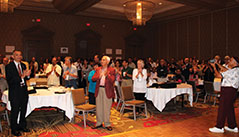

"A congress should inspire a desire to change and shape destiny,” asserted Dr Keki Dadachanji, chair of the program committee on the last day of the XVI North American Zarathushti Congress in New York in August 2012. He reminded the audience that from a deep-driven desire arises a will that leads to rendering deeds which ultimately shape destiny. At the end of the Congress the mathematics teacher felt "like a person with an address and a GPS (global positioning system). I don’t know the route or the detours… We have willing drivers (members of the audience) and the focus groups are the tools (agents of change) that will keep us moving in the right direction on this exhilarating journey.”
"What is your key takeaway from this Congress? What do you feel is most important for our community to achieve in the next two years? What are you willing to do to help our community achieve what you have identified?” These three queries raised by Dr Farrokh Mistree at the Congress Retrospective on the last day were meant to be issues for reflection before the next Congress in Los Angeles in 2014. Currently director of the School of Aerospace and Mechanical Engineering at the University of Oklahoma in Norman, Mistree has been actively involved with the Zarathushti communities in Sydney, Houston and Atlanta.
 The four legacy projects of the XVI Congress, as identified by Mistree, that could be carried forward to the XVII Congress are: continuation of dialog to explore and resolve challenges in the contemporary world; religious education of Zarathushti children, parents and adults; preservation of Zarathushti cultural heritage in Iran and India; addressing the issue of poverty of coreligionists in India. To pursue these projects with commitment and passion there is need for a strategic plan that is "grounded in Zarathushti religious thought, values and ethics, respectful of diversity and strong in collective giving,” he declared.
"Based on notes taken by me, summaries by moderators and over 150 feedback sheets,” Mistree was able to "observe, reflect, articulate” his understanding of what transpired at the Congress. To create good thoughts, words and deeds, the integration and interaction of spirit, mind and body that determine the Zarathushti identity is essential. Sessions on core beliefs, Zarathushti identity, navjote, etc helped sustain the mind, while the prayers and homage at the opening ceremony, the session on poverty appealed to the spirit, and the FEZANA gala and the NAZC banquet catered to the body, he summed up.
"Meetings were very cerebral. Include emotional and spiritual component in the meetings. Get parents to participate in the religious education of children. How do the Jews and Baha’is maintain their identity? What guidelines has the North American Mobeds Council given to build fire temples? Who will decide who can enter consecrated fire temples in North America? Foster both (traditional and liberal) groups so that there would be a safety net if one fails. Would religiosity improve if we prayed in a language we understood? How can we change yet not compromise on our doctrines and core values? What will the Zarathushti identity be in the next 50 years?” These were some of the points that Mistree offered for reflection.
 According to his analysis, the Congress offered avenues to learn, practice, teach, share and network: The keynote speeches and panel discussions, review of demography and sessions on Zoroastrian empires and basic course in Zoroastrianism had many lessons to offer. Anahita Dua’s life as a trauma surgeon, Roda Patel’s work at the Gram Seva Trust, Behrose Taraporewalla’s Stepping Forward project and Dr Behram Pastakia’s eye glass collection initiative, the session on combating poverty, preserving Persian heritage, return to roots show how the religion is put into practice. The teachers’ workshop demonstrated how religion can be taught, while the intergenerational workshop was an exercise in sharing. Opportunities for networking were offered by the World Zarathushti Chamber of Commerce, speed friending and social events for the youth.
One of the innovations of this Congress was the use of a clicker, to obtain instant audience feedback. With the majority of the responses veering towards progressive views rather than traditional thinking, Mistree cautioned that these views should not be considered as a reflection of what a North American thinks, keeping in mind that only a few hundred of the over 10,000 Zoroastrians in North America had chosen to attend the Congress. While video recording of certain sessions of the Congress like the Khorshed Jungalwala Memorial Lecture by Yuhan Vevaina, the navjote/sudreh pushi ceremony and kusti ritual, and the gala banquet night entertainment are already online, the entire proceedings too will be made available on http://nazc.zagny.org/category/videos/
Providing the youth perspective for the Congress Retrospective was Farrokh’s son, Dinsha Mistree, a PhD candidate in the Department of Politics at Princeton University who regularly counsels Zarathushti students applying for universities and graduate schools, and with Benafsha Shroff has built a website AgiaryConnect that facilitates the Zarathushti diaspora in getting religious ceremonies performed at fire temples. Observed Dinsha, "The adults have done a really good job in trying to engage us… It was a lot of fun. There were great activities.” He further appreciated the structure the seniors had given them, adding, "We are going to take over sooner or later.”
Respectful and relevant
"What is your key takeaway from this Congress? What do you feel is most important for our community to achieve in the next two years? What are you willing to do to help our community achieve what you have identified?” These three queries raised by Dr Farrokh Mistree at the Congress Retrospective on the last day were meant to be issues for reflection before the next Congress in Los Angeles in 2014. Currently director of the School of Aerospace and Mechanical Engineering at the University of Oklahoma in Norman, Mistree has been actively involved with the Zarathushti communities in Sydney, Houston and Atlanta.
The four legacy projects of the XVI Congress, as identified by Mistree, that could be carried forward to the XVII Congress are: continuation of dialog to explore and resolve challenges in the contemporary world; religious education of Zarathushti children, parents and adults; preservation of Zarathushti cultural heritage in Iran and India; addressing the issue of poverty of coreligionists in India. To pursue these projects with commitment and passion there is need for a strategic plan that is "grounded in Zarathushti religious thought, values and ethics, respectful of diversity and strong in collective giving,” he declared."Based on notes taken by me, summaries by moderators and over 150 feedback sheets,” Mistree was able to "observe, reflect, articulate” his understanding of what transpired at the Congress. To create good thoughts, words and deeds, the integration and interaction of spirit, mind and body that determine the Zarathushti identity is essential. Sessions on core beliefs, Zarathushti identity, navjote, etc helped sustain the mind, while the prayers and homage at the opening ceremony, the session on poverty appealed to the spirit, and the FEZANA gala and the NAZC banquet catered to the body, he summed up.
"Meetings were very cerebral. Include emotional and spiritual component in the meetings. Get parents to participate in the religious education of children. How do the Jews and Baha’is maintain their identity? What guidelines has the North American Mobeds Council given to build fire temples? Who will decide who can enter consecrated fire temples in North America? Foster both (traditional and liberal) groups so that there would be a safety net if one fails. Would religiosity improve if we prayed in a language we understood? How can we change yet not compromise on our doctrines and core values? What will the Zarathushti identity be in the next 50 years?” These were some of the points that Mistree offered for reflection.
According to his analysis, the Congress offered avenues to learn, practice, teach, share and network: The keynote speeches and panel discussions, review of demography and sessions on Zoroastrian empires and basic course in Zoroastrianism had many lessons to offer. Anahita Dua’s life as a trauma surgeon, Roda Patel’s work at the Gram Seva Trust, Behrose Taraporewalla’s Stepping Forward project and Dr Behram Pastakia’s eye glass collection initiative, the session on combating poverty, preserving Persian heritage, return to roots show how the religion is put into practice. The teachers’ workshop demonstrated how religion can be taught, while the intergenerational workshop was an exercise in sharing. Opportunities for networking were offered by the World Zarathushti Chamber of Commerce, speed friending and social events for the youth. One of the innovations of this Congress was the use of a clicker, to obtain instant audience feedback. With the majority of the responses veering towards progressive views rather than traditional thinking, Mistree cautioned that these views should not be considered as a reflection of what a North American thinks, keeping in mind that only a few hundred of the over 10,000 Zoroastrians in North America had chosen to attend the Congress. While video recording of certain sessions of the Congress like the Khorshed Jungalwala Memorial Lecture by Yuhan Vevaina, the navjote/sudreh pushi ceremony and kusti ritual, and the gala banquet night entertainment are already online, the entire proceedings too will be made available on http://nazc.zagny.org/category/videos/
Providing the youth perspective for the Congress Retrospective was Farrokh’s son, Dinsha Mistree, a PhD candidate in the Department of Politics at Princeton University who regularly counsels Zarathushti students applying for universities and graduate schools, and with Benafsha Shroff has built a website AgiaryConnect that facilitates the Zarathushti diaspora in getting religious ceremonies performed at fire temples. Observed Dinsha, "The adults have done a really good job in trying to engage us… It was a lot of fun. There were great activities.” He further appreciated the structure the seniors had given them, adding, "We are going to take over sooner or later.”
Respectful and relevant
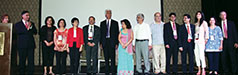
"Our goal throughout the planning stages has been to represent all sides of issues in a respectful, relevant and intelligent manner,” noted a statement by Congress co-chairs Ferzin Patel and Gev Nentin in the brochure brought out on the occasion.
"We have been working for the last two years” for the smooth running of the Congress co-hosted by the Zoroastrian Association of Greater New York (ZAGNY) and the Iranian Zoroastrian Association (IZA). Program tracks had to be decided, speakers with "left, right and middle” leanings had to identified. "Except for one, nobody said that ‘I will not be on the same panel as him,’” revealed Nentin referring to Ali Jafarey’s participation that had "created a furore on the Internet which we chose not to respond to. I don’t understand why the man is reviled the way he is.” Although Nentin had "no complaints, no regrets… most frustrating is when some events don’t go as planned… We were behind schedule on some things but in the end we caught up beautifully,” he commented.
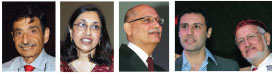 A banker working for the Fifth Third Bank in Ohio, over the 11 years Nentin has served as president of ZAGNY at different times, he has steered the body that has over 500 families as members. He is also involved with the ZAGNY Darbe Mehr project. "I have planned my post retirement career,” declared Nentin announcing that he has chosen to be involved with poverty amelioration work in India after attending the session on "Combating Poverty in our Community Abroad.” From the Congress platform he announced that the ZAGNY board has sanctioned $ 3,000 to assist volunteers who choose to go to the villages and another $ 7,000 for building lodgings for the poor.
The organizers ensured that at least one IZA representative was on every committee of the Congress. "The Iranian track (Preserving Persian Heritage) was completely on my shoulders,” mentioned IZA president Shirin Khosravi. Expecting a large contingent from Iran they were planning to equip Iranians with earphones so that they would get instantaneous translations from
 English to Farsi during the Congress. But with "nobody granted a visa although they had applied very early,” Khosravi felt it was "very disappointing and unfair… Islamic Iran feels threatened by Zarathushtis.” Despite Zarathushtis in Iran being "treated with respect, they are at a disadvantage when they apply for government jobs.” Director and solution architect for Merkle Inc, the largest marketing and information technology company in the US, Khosravi has been heading IZA for the last 10 years "as no one wants to take up” the responsibility. She feels very strongly about using the term Zarathushti: "We are all Zarathushtis. Parsi is the culture. The terms Parsi and Zarathushti are not interchangeable. If we use ‘Parsi’ we are preventing unity.”
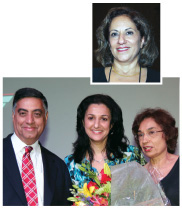
For the co-chair of the Congress Ferzin Patel, it was "heartwarming to see the merging of generations, with the young and the old coming together” for different sessions. From the time of the inauguration when priests of different age groups prayed in unison, the inclusion of a youth member on every panel discussion, the entertainment at the banquet when the youngsters ably directed the steps and moves, Patel was impressed that there was never an issue about "We don’t do it that way.” With Patel, a qualified clinical and developmental psychologist, looking after public relations and Nentin monitoring the financial aspects she felt there was never a crisis situation. "I try not to dwell on the negative. I am a problem solver.” To ensure that "IZA’s voice was not lost,” they had planned a fusion at every stage. This began with the two cookbooks inserted in the Congress tote bags specially crafted at the Vocational Unit of the Helen Keller Institute for the Deaf and Blind in Bombay, Parsi Kitchen giving Parsi recipes and Traditional Zarthushti Recipe Book from Iran offering Iranian, to the singing of Chhaiyé hamé Zarthoshti and Ae Iran.
Her parents Khorshed and Firoze Jungalwala being always involved in community work and having founded the Zoroastrian
 Association of the Greater Boston Area, Patel says "Growing up with them was interesting” as often seated at the same dinner table with them would be Khojeste Mistree, a fundamentalist, at one end and Dr Farhang Mehr, a liberal, at the other. From the time she was a teenager she has been involved with community work, helping in organizing congresses and other activities. Her fascination with the farohar that she wore all the time often served as an icebreaker, she realized. After her marriage to Rajan Patel who provided legal assistance for the Congress she has been involved with the Zoroastrian Intermarried Group (ZIG) and refers to their efforts to promote commonality by "integrating thought processes.” By candidly airing their views and socializing over potluck meals and celebration of different religious festivals at ZIG, she says, "It is amazing how it has helped to promote our religion. Non-Parsi spouses want to learn about our culture, heritage, religious tenets.” For Ferzin, the ultimate reward was to see her inlaws "come and support me at the Congress knowing I was doing work for my religion.”
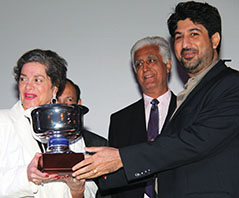
Contributing to the success of the Congress were those handling the logistics component, making Nentin express his admiration for "very capable people; hats off to Mehru Cama and Piroja Press.” To arrive at a package rate low enough to attract delegates was another dilemma and he appreciated that there were "fund raisers who helped.” The sole platinum sponsor for this Congress was Tata Global Beverages whose director Farrokh Kavarana was specially felicitated. The silver sponsors were Aban and Gev Nentin, ACuPowder International, LLC, Navroz Gandhi, Percis and Rakesh Bansal, NYLife and Pegasus Products and The Cover Company. The bronze sponsors were Air India, Celeste and Jerry Kheradi, and Anahita Kotval and Zubeen Shroff. There were many other committees too lending their ready support under their able chairs: the social committee was jointly headed by Cama and Khursheed Navder Dusaj; the program committee by Dadachanji, Homi Gandhi who headed the public relations committee and was also co-chair of the finance committee with Kerman Dukandar; the technology and audiovisual committee by Arzan Wadia and the exhibits committee by Arnaz Maneckshana and Nawaz Merchant.
 The spirit of the Congress was reflected in the logo specially conceived by Syracuse architect Navroz Dabu. Integrating the farohar with the afargan, the main body of the afargan doubled as the circular globe with a map of North America, and the division of the circle reflected the principle of duality in the Zarathushti religion. The flames of the afargan fire creatively depicted the New York skyline.
"Zarathushti existence in the contemporary world is secure,” announced Dadachanji. By adding the last two words he was able to enthuse confidence at the Congress that for three-and-a-half days had been exploring the theme "Zarathushti existence in the contemporary world.” Urging the delegates to "always be united in common vision and love for our community and religion,” he added, "Youngsters get alienated by divisions… Focus on now and move forward…”
◆ ◆ ◆
From the archive