
Footprints of the faith
Different generations dissected the importance of Zoroastrianism in their lives on the second day of the XVII North American Zoroastrian Congress
Using Power Point slides, the young mobeds on the panel, all dressed in their white duglis and pugrees referred to their accomplishments and trials, and expressed their views on bringing together Parsis and Iranians in their associations, their knowledge and understanding of prayers, their dialogs on matters of faith with non-Zoroastrians, and the practice of religion in India and overseas. These were the areas they were asked to focus on by the moderators Mobedyar Houtoxi Contractor, former president of the Zoroastrian Association of Pennsylvania and co-chair of the Zoroastrian Unity and Welfare Committee of the Federation of Zoroastrian Associations of North America (FEZANA), and Ervad Soli Dastur, the ever popular religion teacher from Florida who for the last 92 weeks has been distributing weekly by email, extracts from the Zoroastrian scriptures with recitation, correct pronunciation and translation, and also conducts teleconferencing classes in Zoroastrianism.
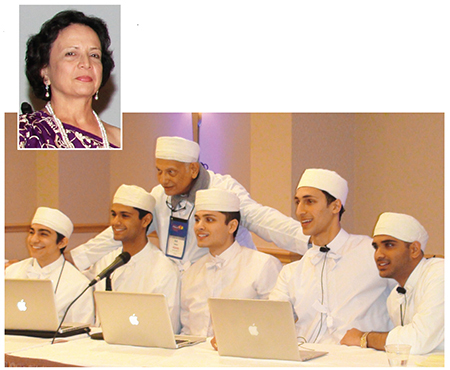
According to Ervad Rayomand Ravji, current president of the Zoroastrian Association of Chicago, "Serving as a mobed means more than performing religious ceremonies; we must add value to our community members.” He referred to the "three rings of responsibilities” with religion in the center that has to be balanced with family and career on either side. The Zoroastrian Association of Houston Youth Group is trying to celebrate more Iranian festivals to promote interaction among the Parsis and Iranians, stated Ervad Rayomand Katrak who served as treasurer and president of the Group and gladly substitutes as a Zoroastrianism teacher. Planning to get a degree in biology with a minor in chemistry he hopes to become a surgeon. Ervad Bahrom Firozgary, a first year medical student in Texas, shared his dreams of becoming a doctor while staying connected with his Zoroastrian and non-Zoroastrian communities, and felt more religious dialogs are needed at community events with multicultural activities to bring the Parsi and Iranian community together.
Believing that "As a mobed it is our duty to pass on traditions to the future generations,” Ervad Zerkxis Bhandara regretted that Gujarati is not spoken at home and parents insist on religion classes only until the navjote of a child after which prayers and the sudreh-kusti are forgotten. An undergraduate student of religious studies and teaching credentials in history, he reiterated, "If we do not retain these critical aspects of our heritage we will just be another ingredient in the American melting pot.” The youngest Ervad Burzin Balsara who is a ninth grade student and regularly volunteers for the Sunday School, fund-raising and other activities of the Zoroastrian Association of North Texas felt privileged to serve his community in ways that his friends could not.
When sending Parsiana a summary of this panel discussion Dastur specifically mentioned that the proceedings will be broadcasted as their 18th Tele Class when all the five young mobeds would participate through a conference call.
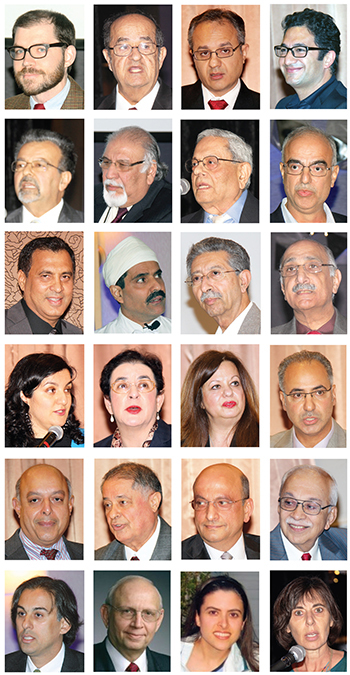
Although convinced that the current generation of any religious denomination cannot be held responsible for the actions of its forebears, Dr Daryoush Jehanian described to the atrocities perpetrated on Zoroastrians to make the community aware of "the Arab invasion and its consequences.” Co-founder of the Fravahar Zoroastrian Youth Organization in Iran and the Zoroastrian Association of Kansas, as also a trustee and president of the Rustam Guiv Foundation, Jahanian who is a practicing gynecologist spoke on "History of Zoroastrians through Political Analysis and Historical Letters.” Referring to poems that reflect the inner pain, he explained how "Zoroastrians suffered spiritually in a hostile environment. They lived in slavery and absolute misery.” They could not go to schools, ride horses, wear new clothes. "It is because of this misery that the belief and search for saviors is so strong.” Despite the destruction of worship centers, the taking away of orchards and gardens, and imposition of jezia "people did not abandon their old religion; did not give up their tenets to adopt new ones… They were able to teach a lesson to the world that glory is not everlasting, that cultural traditions should not be taken for granted.”
An illustrated presentation by Dr Jenny Rose on "Zoroastrian Footprints on the Chinese Silk Road” showed the presence of both Sogdian and Persian Zoroastrians along this path to the ancient city of Chang’an in China and beyond. Rose who holds a doctorate in Ancient Iranian Studies from Columbia University, New York and teaches Zoroastrian studies in the Department of Religion at Claremont Graduate University is familiar with important archeological, cultural and devotional sites in Iran, Central Asia and western China. She was able to piece together their funerary rites and beliefs through mural images of a priest with padan before a fire holder, an ossuary depicting the presence of a dog near a funerary bed, crossing of the Chinwat Bridge being a place of reckoning where in the waters below lurk monsters, judgment of the soul after death, Vohu Mano and musicians welcoming the soul into the ‘house of song,’ Daena or the inner conscience meeting the soul, a cup and flower symbolizing Haurvatat and Ameretat (perfection and immortal bliss). Their social and cultural life was deduced from images of diplomats running errands on horseback, hunting, playing with dice, the Persian lute, whirling dancers, seasonal festivals, Persian bazaar... Sasanian coins bearing images of kings like Shapur II, Hormuzd IV reflect the supremacy of the monarchs.
"What does it mean to be a member of the good religion in this world of cosmopolitanism,” enquired Dr Dan Sheffield who holds a PhD in Near Eastern Languages and Civilizations from Harvard University where he specialized in Iranian and Persian Studies. Delivering the Khorshed Jungalwala Memorial Lecture, in his talk on "Living the Good Religion among Others: Cosmopolitan Zoroastrian Thought from the Middle Ages to Modernity,” he sought to establish the identity of Zoroastrians through the parameters of language, food and ethics.
By praying in the ancient Avestan language, "the divine word of Ahura Mazda was carried from generation to generation.” Being a dead language though, Avestan is only read in translation. Whilst the theology is unchanging, the languages currently in use by the community are Persian, Farsi, Gujarati and English, explained Sheffield who offers undergraduate courses on Zoroastrianism and Orientalism at Princeton University where he also reads Avestan, Pahlavi and Classical Persian texts with interested graduate students. Iran is filled with linguistic diversity and includes Dari, a dialect that developed to ensure that the language of persecuted Zoroastrians was "not intelligible to the Farsi speakers.” With Iranis in India gradually losing the Dari language he felt "It is not right to say that the Iranis have maintained links with Iran because of their language. It has more to do with society and history.” Once the Zoroastrians in India started learning Sanskrit, Persian was forgotten. A Zoroastrian priest from the Bhagarsath panthak Ervad Rustam Peshtan Ardeshir Ardaviraf translated the Zarthosht Nameh from Persian to Prakrit (any of Middle Indo-Aryan vernacular languages).
The shared Iranian identity became more tenuous when European education prompted the Bombay Zoroastrians to abandon Persian in favor of English in the mid 19th century. But it was felt that even the aesthetic use of English language does not stir the soul like Persian which has been compared to "wine that dissolves rust in the heart.”
While the Arab conquest of Iran led to "a slow but steady decline in the Zoroastrian population, the Zoroastrian priestly communities remained highly literate, interpreting and reinterpreting their religious traditions according to the circumstances in which they found themselves.” The Mughal Emperor Akbar’s reign that is known for its tolerance towards all religions and the proclamation of the universal religion, Din-e-lahi, is supposed to be inspired by Dastur Azar Kaiwan, the Iranian mystic of the 16th century. Zoroastrian thinkers today have adopted this religious pluralism and are yet able to maintain their distinctive identity.
The Zoroastrian taste buds have evolved in a cosmopolitan context as in a Parsi kitchen, "Gujarati food, Persian favorites and the English custard coexist side by side.” A cookbook written by a Muslim scribe in the early 19th century was commissioned by a Zoroastrian, mentioned Sheffield.
One of the concurrent morning sessions was a discussion on "Zarathushtis: Days of Future Past” that focused on unity within the community whilst providing parallels from ancient Zarathushti (Pahlavi) texts. Participating in this session was Mobed Ardeshir Behi who after his postgraduate studies in biotechnology, software systems and biomaterials has applied himself to the study and propagation of Zoroastrian knowledge, and Dr Rastin Mehri who after earning his PhD from the School of Oriental and African Studies currently serves on the faculty of the Department of Humanities and Social Sciences at Douglas College in British Columbia.
The significance of the jashan ceremony as creating "a unique synergy with Ahura Mazda’s entire creation” was explained by Ervad Zarrir Bhandara who conducts religious classes at the California Zoroastrian Center (CZC) and has performed over 1,100 funeral ceremonies in his 41 years of practice as a priest.
Illumination and emancipation
Zarathushtra’s message relating to spiritual illumination for mankind, the import of his values, the disappointments, success, alliances and hostilities encountered by the prophet were explored in the panel discussion on "Yin and Yang of Zoroastrian Thought” moderated by Dr Khushroo Lakdawala, co-chair of the XVII NAZC and former president of the Zoroastrian Association of California (ZAC). A chemical engineer and MBA by training, he is global director for engineering and technology for Transparencies (aircraft windows) at PPG.
The four-member panel dialoguing with him included Dr Ardeshir Anoshiravani, a practicing psychiatrist, former president of the CZC and vice president of FEZANA. Offering a psycho-historical study of Zarathushtra’s time Anoshiravani mentioned how the prophet discredited imaginary gods and intermediaries, did not endorse popular rituals, spoke of freedom of choice whilst eschewing violence, and propagated love and goodness.
Founder of the Zoroastrian Society of Washington State, senior editor of the Zoroastrian Journal published by CZC and chairman of the education committee of the Zoroastrian Society of British Columbia, Behram Deboo described Zarathushtra as "a uniquely enlightened soul” who advocated compassion towards people suffering from physical, mental and spiritual ailments, and boundless love for God. His most important message was "You are free to choose but you are not free from the consequences of your choice.”
For Kaemerz Dotiwala, founder member of the Zoroastrian Association of Houston and first chairperson of FEZANA’s Zoroastrian Unity and Welfare Committee, usage of the term Zoroastrianism "was a vestige of the colonial period” and should be cast aside in favor of "Deen-E Mazda Yasni.” President of the Mazda Yasni Zarathushti Dar-E-Meher Funds that is endeavoring to construct the first consecrated dar-e-meher in the western world, he was convinced "Human beings are wholly good; only the choices are evil.”
Zarathushtra came as an emancipator from bondages like superstition and paved the way for a "new civilization based on enlightenment and reason,” reminded Farhad Sidhwa who learnt the importance of religion, spirituality and community from his mobed father Godrej who gave religious guidance to the Karachi community. According to him, "Zarathushtra’s mission was to give illumination to mankind” and was conducive for "transformation and evolution of spiritual consciousness.” The religion he founded was "not an ethical code but a science of all sciences; not a philosophy but a way of life.”
In a separate session on "Interfaith — Our Presence on the World Stage,” Mobedyar Maneck Bhujwala commented that although being a minority in a multicultural society Zoroastrians can be recognized in the world through participation in interfaith events. Co-founder of ZAC and the Zarthoshti Anjuman of Northern California, Bhujwala gives talks on Zarathushti religious beliefs at educational institutions, on the radio and TV and at interfaith conferences, and was nominated to serve as the FEZANA representative on the board of the North American Interfaith Council.
"Growing Up Zoro…!” a session on the teen track saw six young adults share their stories about building bonds within the Zoroastrian community whilst navigating various cultures during their school and college life. That an appreciation of their culture has impacted their life was also related by them. The session was moderated by Navroz Gandhi, president of the Zoroastrian Association of Metropolitan Washington Inc and a private investor who is also on the advisory board of WAMU — the National Public Radio Station in Washington.
The panel included Zerkxis Bhandara and three other males: Farhad Choksy, a sophomore at The Ohio State University who has been involved with the ZAC and The Mazdayasnie Connection since a young age; Shahyan Dalal who is studying aerospace engineering in Arizona and served on the Valley Avesta Youth Board after attending classes there; Deanyar Jahanian, an aspiring entrepreneur and project manager from California who attended weekly Avesta classes in San Jose for many years and last year played a major role in organizing the Zoroastrian Youth Summer Camp in San Jose in which over 70 children participated. The females on the panel were Kaizeen Mody, a first year medical student who has earned her Master of Science in Global Medicine and would like to serve the community as a physician whilst already collaborating on genetic population studies on US Parsi Zoroastrians; and Meher Pavri, an Indo-Canadian soprano who is pursuing a career in opera whilst establishing herself in the film/television industry in Canada.
Subsequently in a session on "Good Thoughts, Good Words, Good Deeds” moderated by Arzan Wadia, founder of the news portal Parsi Khabar, the teens learnt of the contributions of panelists Autusa Behroozi, co-founder of Raise 4 A Cause, Dinsha Mistree, co-founder of Zoroastrian Return to Roots and Agiary Connect, and Afshin Sepehri, co-producer along with his 10-year-old daughter Nusha, of the audio book The Stories of Shahnameh. Thereafter the youngsters worked in small groups to discuss how they could contribute to the community. A separate hour long session devoted to Shahnameh recital by the Sepehris as also a private showing of the Shahnameh exhibition by Silloo Mehta, founder of The Mazdayasnie Connection, were the other programs offered to the teens.
The WZO journey
"The World Zoroastrian Organisation (WZO) has always defended the right of all Zoroastrians to practice the faith as they please. It supports Zoroastrians facing oppression, irrespective of gender or ethnicity. Sadly some oppression is by our own community,” observed Darayus Motivala in his presentation on "WZO: My Journey with Them.”
"WZO is progressive, freethinking and open to new ideas. It is dedicated to Zoroastrian beliefs and works on the principles of the Gathas. It brings a global perspective to your own life,” reiterated the honorary secretary adding that its website is "a repository of information and news from around the world, welcomes articles from a wider audience and would gladly accommodate news of other organizations.”
It derives its funds from Zoroastrian and non-Zoroastrian individuals and organizations and so too does it assist both Zoroastrians and non-Zoroastrians in need. "Helping Zoroastrian refugees is an ongoing task” ever since WZO was formed in 1980 by senior members of the Zoroastrian Trust Funds of Europe to help displaced Iranians fleeing after the fall of Reza Shah Pahlavi. The driving force was Dr Farhang Mehr who suggested the organization be named WZO. Further, WZO would like to increase its amount of charity giving, spread Zoroastrian knowledge and organize more social events to bring the community together. In need of a place to work from, human resources and an area of worship open to all, they have recently purchased a plot on the west side of Great London on which will be built a community center and its new headquarters.
Navigating new territories
"I did a quick scan of the audience. Where are the parents of young children?” enquired moderator Trity Pourbahrami at the session on "Navigating Zoroastrian Parenthood: Raising Children in North America.” Director of communications for the California Institute of Technology (Caltech) Division of Engineering and Applied Science and a certified mediator and facilitator, Pourbahrami revealed how in the last six months she and her three co-panelists had been interacting regularly, sharing successes and challenges. "Suspend your judgment and listen to your Vohu Mano,” urged the mother of two young daughters who regularly teaches the Gathas whilst her husband Peter and the girls take Farsi classes.
Describing the "danger, adventure, joy” in becoming a mother after she had turned 50, Dr Natalie Gandhi candidly revealed the frustrations and fulfillment for her and husband Rusi on becoming parents of their "precious little divinity… who is so adorable and adored.” A philosopher and entrepreneur who married in her late 40s after devoting her early years to the academic world and in Silicon Valley’s challenging environment, she advised, "Don’t get caught up in the American trend… Marriage is fascinating” and quoted Friedrich Nietzsche "One must need to be strong...”
A licensed marriage and family therapist and a professor and child therapy program director at Phillips Graduate Institute in Los Angeles, Fereshteh Mazdyasni summed up the religious and community activities that should be advocated during the developmental years. Being considerably involved in child and youth Zoroastrian study classes in the San Fernando Valley and LA areas, she recommended that from age three to six, when logic is not fully developed, children should be taught the recitation of prayers. From age seven to 11 they should be taught about Zoroastrianism using an integrative approach, it is not enough to teach them concepts but help them articulate their understanding so that when their peers are confused about their religious identity and ask them "Z what?” "zebra what?” our children have sufficient knowledge to explain the similarities with other faiths. Ages 12-18 being the distraction years, whilst laying down the boundaries, give them space to grow, bring them together at Zoroastrian sports events if religion classes tend to get boring.
Sunday School classes for children "should be fun, something they look forward to, not what they dread,” stated Shahram Sohrab relating the reluctance of his two young children to attend them every Sunday. Having signed them up for the children workshop at the Congress, they were briefly brought to this session to hear their father talk. An electrical engineer working for Cadence Design Systems, he has held the post of treasurer with the Persian Zoroastrian Organization and is an active member of the CZC. Whilst appreciating that the Sunday School gives children "a sense of belonging, values,” he was strongly of the opinion that art, technology, sports, music, cookery should be woven into their schedule so that they can enjoy the learning process and forge lasting friendships with other children with whom they are undertaking the journey.
Wealth and wellness
Another panel discussion on the second day was on "How to Create Wealth for Yourself” moderated by Kavasji Dadachanji, founder and chief executive officer of Integrity Investment Advisors LLC, a wealth management firm and registered investment advisor based in San Diego. Two "extraordinary investors” Alayar Dabestani and Arda-e-viraf Minocherhomjee shared their insights and strategies for creating wealth whilst Tehemtan Arjani, an expert certified public accountant explained the tax impact in the US for inherited property and assets held in India, Iran and Pakistan.
Primarily involved with real estate investments, managing and developing projects like shopping centers, offices and industrial complexes, Dabestani’s latest project is the development of an assisted living facility in Washington. Minocherhomjee is a founder and managing partner of Chicago Growth Partners, a private equity firm managing $ 1.2 billion in assets. He was earlier managing director of William Blair Capital Partners and head of William Blair’s Health Care Research when he was involved in several initial and secondary public offerings. Arjani founded his firm Temo Arjani LLP in 1987 to offer expertise in estate planning and international tax after a long stint with Arthur Andersen where he was made partner.
In his address on "The Era of Zoroastrian Entrepreneurship in 21st Century USA,” Dr Meherwan Boyce observed that the Zoroastrian spirit has been one of "learning, leading and giving.” The migration of Zoroastrians from India, Pakistan and Iran as also the formation of the World Zarathushti Chamber of Commerce has been the cornerstone of this growth, added Boyce who founded Boyce Engineering International Inc, a global engineering company and after its sale launched The Boyce Consultancy Group LLC. Vice president of WZO he is a member of several business and community boards.
The two sessions devoted to health that morning were "Environmental Causes of Cancer: Fetus to Adult” conducted by Dr Shahram Yazdani and "Healthy Vegetarian Living” by Dr Armaiti May. An associate professor at the UCLA (University of California, Los Angeles) Department of Pediatrics, Yazdani shared the findings of his team’s research on heavy metals, radiation and the role of aviation air pollution causing cancer in children. A veterinarian in the Los Angeles area and an animal advocate, May stressed how diabetes, heart disease and some forms of cancer can be prevented or even reversed by adopting a healthy plant-based diet.
Working full-time as a price analyst for an aerospace distribution company, Khushchehr (Khush) Italia conducted an interactive session "Break Ya Ice” to enable the participants to learn more about each other as well as come together to complete a group challenge.
Time for talent
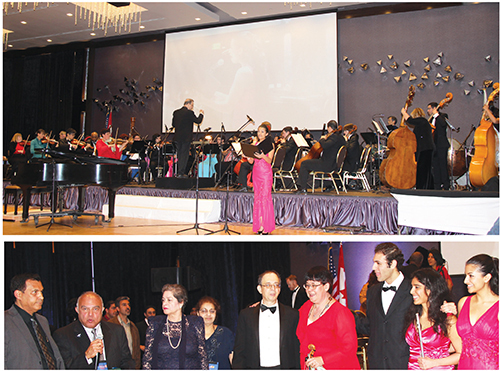
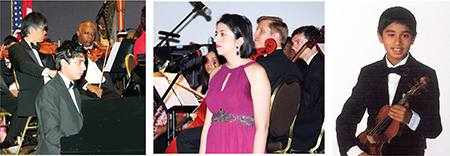
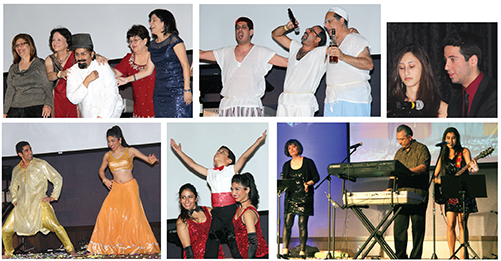
After the heavy dose of discussions through the day, the delegates looked forward to the evening entertainment that offered "A Classical Night at the Congress.” Performances by the World Zoroastrian Symphony Orchestra under the baton of conductor Adil Mehta, with vocalists Meher Pavri, Tina Siganporia, Ardavan Taraporewala, instrumentalists Neville Bharucha on the piano, Sarosh Mistry on the violin, Mahfrin Santoke on the flute saw the audience enjoy the melodious notes.
This was followed by "Majah Masti! Maximum Mischief!” when master of ceremonies Farhad Choksy and Shirley Limath engaged the audience until a new set of items were presented in quick succession: dances by Little Psy and His Ladies, Mara Sum, the popular Gujarati song, Habanera, Strangers in the Night, and further Masti. Post dinner The Z Band of Ziba Colah, Farrokh Firozgary, Navaz Kayani Irani and Ashdin Medhora kept the seniors and the juniors on the floor well past midnight.
A report on the FEZANA awards function and the last day of the NAZC will appear in the March 7 issue of Parsiana.