
Books
The radiance of Cyrus
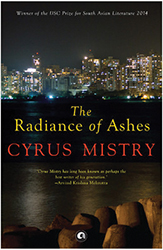
The Radiance of Ashes by Cyrus Mistry. Published in 2014 by Aleph Book Company, 7/16, Ansari Road, Daryaganj, New Delhi 110002. Pp: 322. Price: Rs 395.
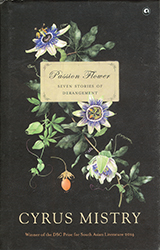
Passion Flower: Seven Stories of Derangement by Cyrus Mistry. Published in 2014 by Aleph Book Company, 7/16, Ansari Road, Daryaganj, New Delhi 110002. Pp: 199. Price: Rs 495.
It’s now the turn of Cyrus Mistry, known earlier as a playwright, to take center stage. A year ago he won the coveted DSC Prize for South Asian Literature during the Jaipur Literary Festival. This was given for his second book The Chronicle of a Corpse Bearer. It speaks of the lives of people born to live in the shadow of the Parsi towers of silence; or who, like them, inhabit invisible spaces, either by convention, or through lack of choice, in the seething chaos of the carnival that goes by the name of Bombay. Mistry too is a specialist of sorts on the minutiae of life in the closely knit Parsi baugs. He brings to his gaze, not the long distance telescope of (his novelist brother) Rohinton, but the microscope of a more humane medical practitioner.

Cyrus Mistry: many layered nuances
The Radiance of Ashes is his first book. It was written on the cusp of the events leading to the horrendous series of murderous attacks on Bombay’s tattered cloak of many colors sheltering its much-vaunted diversity, following the storming of the Babri Masjid. Picador first published the title in 2005. It has been re-issued by Aleph. They have simultaneously published a collection of seven short stories under the title Passion Flower with the rather unsettling sub-title Seven Stories of Derangement.
These show Mistry’s mastery of his original milieu, the Parsi family as well as the strange enchantments that lurk in Bombay’s secret inner layers left behind by chance and history. His character Percy Bhathena, a young Parsi boy abandoned by his father Boman — there is a recurring theme of errant husbands and missing fathers in Mistry’s oeuvre — becomes a member of The Bombay Gramophone Society quite by chance. Being inducted into this select group of aficionados liberates Percy from his doting mother into a world of magical sounds and whirling delight. It allows Percy to practice his dance steps at the very moment that his mother has been laid out in her deathbed. As the scene unfolds before us we are told that Percy could not rest. "His mind danced like a flame in a strong breeze. Strange thoughts inappropriate to his hour of grief flooded him, alongside the image of his mother’s ashen face, her jaw tied with a strip of cloth, her eyelids slightly ajar…” Is this a moment of liberation that we are watching, or a sign of the ‘derangement’ that the title of the seven stories has promised? Mistry’s gaze allows us to be sensitive to both readings at the same time.
 As though responding to the many layered nuances in Mistry’s work the cover of the short stories is an inspired one. It has an illustration of a variety of passion flower; one might guess that it’s the one known as Passiflora ligularis, with its sweet oval coral berries against a black background that fades into purple along the spine of the book and the back cover. There is one pendant fruit in orange with a smattering of filaments at the tip, hanging from a dry-gold colored calyx curving from a stem. It hangs from the lower middle of the cover, picking up the orange specks from the stamens of the Passiflora and the strap line at the lower edge. The cover illustration is by Beth Phillip and the cover design by Bena Sareen.
 Quite aside from the reference it may make to the rich embroidery in white, cream, silver and gold threads against a black Chinese silk sari that Parsi ladies used to import from China, the pendant fruit suggests just such a earring in Mistry’s earlier book The Radiance of Ashes. The main protagonist Jingo is the talented loner with a penchant for involving himself in other people’s lives, though as his passionately possessive girlfriend Cristina points out, it’s never a wholehearted surrender. He is the epitome of the existentialist hero, the "flaneur” who trawls the highways and byways of other lives without ever committing himself. In one scene he comes across a family living in a slum, where he has taken temporary refuge, where the man and his wife are busy at making cheap artificial earrings.
"The shiny, colored beads were in a box in front of him. His tools consisted of a wire-cutter, pliers, a box of glue and a small burner which served as a mini-furnace, presumably to bend and mold the metal wire. The burner hadn’t been lit, but there was also a small tin box on the floor in which lay some pieces of finished jewellery.” Nothing much happens. The couple presents him with a pair of earrings, we are told. "A memento for him to take back to wherever he had come from. Perhaps they still didn’t quite believe he belonged to this city.”
This small gesture is to have tragic consequences, as Jingo finds out. The scene, inconsequential as it seems in the larger canvas of the narrative, could also serve as a metaphor for the conflagration that will shake the small, singular bits of humanity that the author has assembled and reduce them into the phrase that he has used in his title the radiance of ashes.
Does not belonging make Jingo, and perhaps by inference, the author special?
 This is a question that haunts the hero of the title story "Passion Flower.” Anand Mahendroo is as far away from Jingo and his preoccupations with the inequalities of his city — Bombay — as can be imagined. He teaches in an exclusive school in the Palni Hills region of Tamil Nadu, better known as Kodaikanal, where he is trying to escape from a pregnant wife, Pamela, by engrossing himself in the search of a species of Passiflora, that may or may not grow there, a variety known as Passiflora boliviana. The mist covered hills, the thick "Shola,” or semi-tropical forest terrain, the presence of native tribes who are the true keepers of the plant lore of the region, the bratty kids are all gloriously evoked. There’s a type of Ambrose Bierce moment here when Anand finds himself hallucinating after falling off his bike and having to survive on eating wild mushrooms. (Bierce was a famous American short story writer. His mysterious disappearance in 1913 while on a trip to Mexico led to many different versions in film and fiction that continues to haunt writers.)
 Does it work? Does our hero find his Passiflora boliviana and thereby discover himself?
It depends. You’ll just have to read it and see. Is this derangement, or a certain type of enchantment?
◆ ◆ ◆
From the archive