
Books
Significance of the Sasanians
Sasanian Persia: The Rise and Fall of an Empire by Touraj Daryaee. Published in 2013 by I. B Tauris and Company Limited, 6, Salem Road, London W2 4BU in association with the Iran Heritage Foundation, 63, New Cavendish Street, London W1G 7LP. Pp: xxvi + 225. Price: Not mentioned.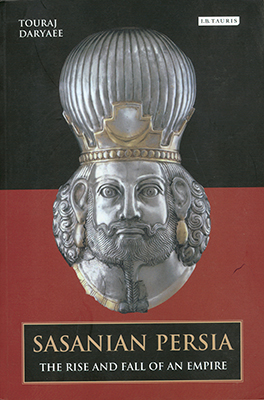
There is no doubt that this is a scholarly work of great academic importance. Yet the style is lucid and far from heavy-handed. It is, in fact, a highly readable history and the author fills in a lot of gaps of that particular period in world history, the Sasanian Empire.
Looking at it, one would not realize the book has less than 150 pages (excluding the bibliography and notes) with only five chapters. Most books that touch on Sasanian political history do so from the perspective of Rome during the period 200 AD to 700 AD, and that too, very cursorily. This is the first book the reviewer has come across which gives an overview of Sasanian political history.
The author quotes sources such as Ammianus Marcellinus who has much to say about the Sasanians in one chapter. After all, he lived in a time (fourth century AD) when he saw Persians in action and was privy to their manners and war capabilities.
The next chapter deals with Sasanian society, another subject that Daryaee informs us is difficult to tackle. The reason? The sources available are kind of late and reflect on the past. Another problem the author faces is how to reconstruct (or imagine) Persian society in the Sasanian period. He has provided a class-structured division of the society as, he maintains, the Sasanians themselves wished it to be presented, using the Sasanian Middle Persian texts to tell us how the society was to be conceived. The Sasanian Empire aimed to be an urban one. More people settled in cities, old and new, which were part of the Sasanian urbanization plan.
Various sources suggest that there were four classes recognized by the state. First, there were the priests — a class that was further divided as per rank and function. The chief priests; priests who tended the fires; expert theologians; judges and learned priests were all chosen from the ranks of the religious body.
Looking at it, one would not realize the book has less than 150 pages (excluding the bibliography and notes) with only five chapters. Most books that touch on Sasanian political history do so from the perspective of Rome during the period 200 AD to 700 AD, and that too, very cursorily. This is the first book the reviewer has come across which gives an overview of Sasanian political history.
The author quotes sources such as Ammianus Marcellinus who has much to say about the Sasanians in one chapter. After all, he lived in a time (fourth century AD) when he saw Persians in action and was privy to their manners and war capabilities.
The next chapter deals with Sasanian society, another subject that Daryaee informs us is difficult to tackle. The reason? The sources available are kind of late and reflect on the past. Another problem the author faces is how to reconstruct (or imagine) Persian society in the Sasanian period. He has provided a class-structured division of the society as, he maintains, the Sasanians themselves wished it to be presented, using the Sasanian Middle Persian texts to tell us how the society was to be conceived. The Sasanian Empire aimed to be an urban one. More people settled in cities, old and new, which were part of the Sasanian urbanization plan.
Various sources suggest that there were four classes recognized by the state. First, there were the priests — a class that was further divided as per rank and function. The chief priests; priests who tended the fires; expert theologians; judges and learned priests were all chosen from the ranks of the religious body.

Touraj Daryaee: penning a fascinating read
The warriors, comprising the second estate of the Sasanian Empire, worked to protect the empire and its subjects. The third estate consisted of the husbandmen and farmers. The fourth was far more numerous than the other three and treated somewhat separately by Zoroastrian law. They were the artisans.
The chapter on the religions of the Sasanian Empire is, perhaps, the most fascinating. Though Zoroastrianism was still the main religion in the empire, there were several other religions in existence as well which impacted Sasanian policies and views. But there is no doubt that the Sasanians were Mazda worshipers and created a view of Zoroastrianism that became the foundation of Zoroastrian tradition as it was until recent times.
Daryaee also reveals that the Sasanian emperors were religiously tolerant. Jewish Persians and Christian Persians lived peacefully side by side with Zoroastrian Persians. In fact, by creating a Persian-Christian church, the Persian Emperor brought a growing number of Christians under the control of the empire.
The chapters on texts and languages and the economy of the Persian Empire are no less fascinating for anyone interested in Persian history. It was an empire with multiple groups of people speaking different languages, some of them related. This chapter, perhaps, reads like a ‘menu’ of languages and texts, but even so, as the author informs us, one which is lacking in its entirety.
When historians talk about the ‘ancient’ economy, it is largely restricted to the Greek and Roman ones. The Persian economy, if referred to at all, is glossed over in passing. Daryaee has attempted to put the Persian economy of the times in its correct perspective. This part of the book is, perhaps, the heaviest. Still, the author has attempted to fill the enormous void in our knowledge of the economy of the times. He informs us that "there are ample sources for Sasanian economic history, but they are not textual, rather more material.” Coins, seals, archeological excavations along with disparate textual references provide information on the Iranian economy.
All that Daryaee offers is painstakingly researched material backed by 40 pages of notes and a 25-page bibliography. It may be just 150 pages, but the scholar-author has taken great pains to put together a work that could have easily been boring, but which has instead become a fascinating read.
So engrossing is the book that one forgets one is reading a scholarly academic work and gets involved in the "story.” Yes, story, for that is what it reads like. But then what is history, but a fable agreed upon?
Daryaee’s book examines the unique significance of the Sasanians not only in the development of Persian/Iranian civilization, but also in the development of Roman and Islamic history. The Sasanians were the last of the great ancient Persian dynasties who were the preeminent practitioners of Zoroastrianism. Founded in 224 AD by Ardashir I, the dynasty and its empire remained a dominant force in the Middle East for several hundred years until Yazdegard III, the last Sasanian king, was defeated by the Arab hordes of Islam in the seventh century AD.
Daryaee has provided the basic outlines of the history of the Sasanian Empire, reviewing its history, society, religion, economy, administration, languages and literature. Richard N. Frye, Emeritus Professor of Iranian Studies, Harvard University has called his book "a masterpiece of research and will be the last word on Sasanian Iran in all its aspects — from political history to religion, society and commerce.”
In these days of so much controversy regarding disposal of the dead, of particular interest is the section "The Signs of Being Zoroastrian” which forms part of the chapter titled "Religions of the Empire.” It tells us of the customs as they were more than 1,400 years ago. Times change. It is unfortunate that many of us do not change with them.
Those interested in Persian history and particularly that part of it of which so little is known and written about, the Sasanian Empire, should pick up this book. They will not regret it, for it is a terrific read, both informative and entertaining.
ROHINTON MODY
The chapter on the religions of the Sasanian Empire is, perhaps, the most fascinating. Though Zoroastrianism was still the main religion in the empire, there were several other religions in existence as well which impacted Sasanian policies and views. But there is no doubt that the Sasanians were Mazda worshipers and created a view of Zoroastrianism that became the foundation of Zoroastrian tradition as it was until recent times.
Daryaee also reveals that the Sasanian emperors were religiously tolerant. Jewish Persians and Christian Persians lived peacefully side by side with Zoroastrian Persians. In fact, by creating a Persian-Christian church, the Persian Emperor brought a growing number of Christians under the control of the empire.
The chapters on texts and languages and the economy of the Persian Empire are no less fascinating for anyone interested in Persian history. It was an empire with multiple groups of people speaking different languages, some of them related. This chapter, perhaps, reads like a ‘menu’ of languages and texts, but even so, as the author informs us, one which is lacking in its entirety.
When historians talk about the ‘ancient’ economy, it is largely restricted to the Greek and Roman ones. The Persian economy, if referred to at all, is glossed over in passing. Daryaee has attempted to put the Persian economy of the times in its correct perspective. This part of the book is, perhaps, the heaviest. Still, the author has attempted to fill the enormous void in our knowledge of the economy of the times. He informs us that "there are ample sources for Sasanian economic history, but they are not textual, rather more material.” Coins, seals, archeological excavations along with disparate textual references provide information on the Iranian economy.
All that Daryaee offers is painstakingly researched material backed by 40 pages of notes and a 25-page bibliography. It may be just 150 pages, but the scholar-author has taken great pains to put together a work that could have easily been boring, but which has instead become a fascinating read.
So engrossing is the book that one forgets one is reading a scholarly academic work and gets involved in the "story.” Yes, story, for that is what it reads like. But then what is history, but a fable agreed upon?
Daryaee’s book examines the unique significance of the Sasanians not only in the development of Persian/Iranian civilization, but also in the development of Roman and Islamic history. The Sasanians were the last of the great ancient Persian dynasties who were the preeminent practitioners of Zoroastrianism. Founded in 224 AD by Ardashir I, the dynasty and its empire remained a dominant force in the Middle East for several hundred years until Yazdegard III, the last Sasanian king, was defeated by the Arab hordes of Islam in the seventh century AD.
Daryaee has provided the basic outlines of the history of the Sasanian Empire, reviewing its history, society, religion, economy, administration, languages and literature. Richard N. Frye, Emeritus Professor of Iranian Studies, Harvard University has called his book "a masterpiece of research and will be the last word on Sasanian Iran in all its aspects — from political history to religion, society and commerce.”
In these days of so much controversy regarding disposal of the dead, of particular interest is the section "The Signs of Being Zoroastrian” which forms part of the chapter titled "Religions of the Empire.” It tells us of the customs as they were more than 1,400 years ago. Times change. It is unfortunate that many of us do not change with them.
Those interested in Persian history and particularly that part of it of which so little is known and written about, the Sasanian Empire, should pick up this book. They will not regret it, for it is a terrific read, both informative and entertaining.
ROHINTON MODY
◆ ◆ ◆
From the archive