
Books
A collision of cultures
The Reshaping of Iran from Zoroastrian to Muslim: A History of Cultural Transformation by Rashna Writer. Published in 2013 by The Edwin Mellen Press, Box 450, Lewiston, New York 14092-0450, USA; email: sales@mellenpress.com; website: www.mellenpress.com. Pp: xxviii + 498. Price: US $ 49.95 (soft cover).
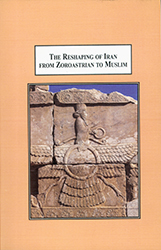 Had Rashna Writer’s quasi-historical effort been differently branded as Reshaping … from Pre-Islamic to Muslim, its "Cultural transformation” subtitle would have held greater substance, for it is observably politico-economic in direction. Her very subtitle indicates the unwisdom of her "reshaping” from Zoroastrian to Muslim — since her politicization without the balance of religio-cultural perspectives could have applied to any pre-Islamic Iranian minority!
Writer’s "Zoroastrian” becomes devoid of intellectual backbone — even a casual study of Albert de Jong’s Traditions of the Magi would have pointed her away from a presumption where post-Sasanian Zardushtis (Iranian Zarthushtis) became helpless pawns of political history. The long transition of Mazdayasnianism from the mid-seventh to 11th centuries and on to present times offers neither novel insight nor sustained description; indeed it displays some worrying errors of omissions compounded through exclusion of key figures like the scholar-priest Zadspram who many regarded as the last great Zoroastrian theologian!
In view of her schoolmarmish —call it "user friendly!” — style with an uncritical preference for recent authorities, the finished product must be largely categorized as belonging to the historical novel class. It proceeds in fits and starts and betrays a piecemeal approach that occasionally bursts into life. Nowhere does the devolution of post-Sasanian Mazdayasnian texts appear to have made any impression on her overviews: unexplored tracts await fresh assessments. The very evident reason is that the political historian in her has overshadowed any secure grasp of pre-Islamic Iran’s changing religio-cultural panorama. This crucial factor that all along has sustained the doughty Zardushtis to this day, shows up here in a haphazardly constructed manner: it fails to account for the determinedly continuing resistance to an alien religious irruption in their midst.

Rashna Writer: imbalances in history
The treatment of landmark personalities who "reshaped” Iran — through Iranization of Islam — remains skimpy without a fuller treatment of the drastic, course-changing reforms within post-Sasanian Mazdayasna: the transition towards Islamization is blurred. Sohrawardi and the beginnings of Sufiism have made no impact; nor have Peter Kingsley’s convincing articles prevailed. Henri Corbin’s En Islam iranien (In Islamic Iran) was never scanned.
From a well-regulated Sasanian system, continued under the Arabs whose primary purpose for the invasion of Iranshahr was land, loot, and military expansion, Sasanian administration became a tried and tested socio-cultural entity to be initially defended against the Arab religion through a proud nationalism.
That State system was arguably top-heavy and over-regulated; it is difficult to see why and how the rapacity of the raggle-taggle Arab tribes could be controlled by the Omayyad caliphs from far-off Damascus without recourse to force of arms and extortion of taxes for their military ambitions. Recognizing a superior culture with written religious and secular texts, the Arabs initially resorted to imposition through a series of interdicts: their early Qur’anic ideology would have failed from the outset to sway Iran towards Islam — hence the proliferation of placatory hadiths, "traditional sayings of their prophet.”
Writer’s "Coda” (end-piece) has better summed up the persistence of the "Idea of Iran” concept than her earlier chapters. The religious aspect of Iranianness is presented with the political Old Persian Ariya čiça (read as chithra), and, in any case the Sasanid kings were anxious to be religiously exalted with kē chihr az yazdān, "from the race of the gods,” and im bagh and oy bagh, literally "this god” and "that god,” to designate "present majesty” and "late majesty!” This pre-Islamic deification was all-important for Shi’a imams to claim descent from the (supposed!) union of the Arab Husain/Hossein with the Sasanian "Bibi Shahrbanu” — daughter of Yazdgard III — who had (supposedly) been captured by his Arab raiding parties.
Had Writer but seen it, it was solely to establish the "legitimacy to rule” that the de facto kings since Achemenian times had employed both political and religious epithets for its furtherance. The Arabs had long remained clueless.
Zardushti resistance to Islamic encroachment was exemplified in the short text Abar madan-i shah bahram-i varjavand, "On the advent of Shah Bahram-i Varjavand” where the sense of approaching evil times was assuaged by this defiant piece, foreshadowed in the Bahman Yasht. The repeated uprisings in Dailam province against the aliens with their new-fangled religion were to be finally crushed with the utmost ferocity by barbaric Arab forces.
Writer’s book remains at a level of political treatise which leaves unexplained the sustained intellectual force among the resilient Zardushtis. Much seems disregarded here — the painstakingly copied and transmitted socio-religious and commentarial literature by learned priestly scribes had long nourished the Iranian psyche, despite Islamic hindrances. Then followed the Rivayats.
Has the Hadhokht Nask been consulted, as claimed, in its Pahlavi Denkard appearance or has the original Avestic — so very different overall! — been expediently neglected for purposes of establishing pre-Islamic property rights? The Pahlavi text neither follows the Avestic, nor does it pertain to bequests and inheritances. Did the author really consult the Denkard VIII or was it wishfully misrepresented to suit some other vague purpose? Why otherwise is Hadhokht misspelt as Hadok in text and index? Some credible explanation would be useful!
The tightly regulated post-Mazdak Sasanian case laws reflected in the Madayan-i hazar dadestan lie outside of the Zoroastrian literature partition into 21 Nasks under Khosro I which obtains scant realization. Jehangir Tavadia had cogently argued the matter; Bartholomae, Pagliaro, and more recently de Menasce, Perikhanian and Macuch had offered penetrating insights into late Sasanian law — a compilation to counter the wholesale social disruption of the Mazdakite movements with their root problems and aftermath.
The robust manuscript tradition throughout various repressive regimes resulted in the Westergaard and Rask interventions under the hated Qajars. (Manekji Hataria was not there to exchange notes on the religion which had, in fact, sustained and buttressed the Zardushtis in their traditional Aryan faith, despite the insidious blandishments and vindictiveness of sectarian Islamic ideologes.)
The Bibliography presents some dubious features, raising the possibility that its compiler merely tacked on a later listing to an existing corpus of primary and secondary sources. Why else does one see an almost word-perfect, properly accented list diluted by a misspelt, unaccented list that may or may not have been advantageously consulted? Aspiring Parsi authors occasionally lay claim to works they have neither consulted nor meaningfully utilized: suspicions are raised.
Writer’s long-standing obsession with the term "emasculation” has been thoughtlessly misapplied here for both chapter title and its hapless subjects, the Zardushtis. Dr Jamsheed Choksy’s endorsement of this ignoble word in his indulgent Foreword is sad. Did Writer not consider that the scattered groups of internally exiled Zoroastrians had suffered enough harassment, hounding and humiliation under various regimes and venal officials whose callous depradations had so depleted this horrifically persecuted minority? Our Iranian co-religionists have throughout their troubled history exhibited exemplary resourcefulness and resilience. It was despoliation and not "emasculation,” physical or figurative!
Paradoxically, Writer has exonerated the vile first Qajar, the brutal Turkic eunuch Muhammad Khan, from this very accusation! Words fail to describe his unbelievably vindictive cruelty against the defenceless Kermani population. He had gloatingly overseen 20,000 gouged out pairs of eyes from these unfortunates displayed for his personal check; their women and children were enslaved. Yet, this monster receives only casual mention!
Mention of Kermani Zardushtis, of whom Writer’s enthusiastic informant Shahrokh Vafadari is a noted representative in England, poses other puzzles. Amidst notable Kermani scholars was the late Jamshid Soroushian — author, amongst other works, of the Farhang-i Behdinan and the Tarikh-i Zartushtian-i Kerman. Writer shows no cognizance of these titles which could have helped better focus her history.
The esteemed Keikhosrow Shahrokh, grandfather of another Zardushti representative here, was responsible among his many unselfish achievements for obtaining the British and Iranian authorities’ aid for the release from captivity and certain death of both Jamshid and his father Soroush Soroushian wrongly detained as spies in Syria.
The Soroushian commemorative volume Ataš-e dorun contains thought-laden contributions by Choksy, the late Richard Frye, Mary Boyce, and Vafadari among the several who knew and consulted Soroushian and his authoritative works. Writer seems quite unaware of these and the commemoration volumes — was it through negligence or tortuously unfathomable design?
Indeed some omissions and avoidances of people and institutions bring up the question whether these were the result of some internal political maneuverings which have led to imbalances in her perceptions of recent Zardushti history. For instance, when discussing the 18th century stalwart Kermani Dastur Jamasp "Velayati” and his timely forewarning of destruction of the Zardushti stronghold of Yazd at the hands of the Afghan invaders, his crucial visit to India remains untreated. What transpired there in Surat was pivotal: he taught Pahlavi to "three intelligent dasturs,” and pointed out the month’s difference between the Qadimi and Shahanshahi calendars (the result of neglecting the monthly intercalation in 12th century Iran). There would otherwise have been no Anquetil Du Perron later to benefit from Dastur Jamasp’s instruction.
Curiously, Tabari’s absurd anecdotal calendar piece from Pourshariati’s Decline and Fall of the Sasanian Empire is included; Dastur Jamasp’s observation and recommendations of Vafadari’s Ataš-e dorun are ignored. There has to be a rational explanation for Writer’s hop scotch selectivities.
Reshaping has a useful recounting of 16th and 17th century European travellers’ tales regarding the condition of the contemporaneous Zardushtis. Where Delphine Menant had assembled these in her splendid century-old survey of the Gabrs, as the Zardushtis were pejoratively called, Writer has assembled sizeable swatches of those vitally important narratives. They nicely propel her ethnographic notes and observations.
Sad then that Touraj Daryaee, de Jong, and Christensen have either been missed out or simply thought not worth consulting, for they could have considerably buttressed her argumentation. It reinforces this reviewer’s suspicion that anecdotage has occasionally supplanted solid researches elsewhere. Nevertheless, Writer’s latest book suffices as a meritorious but patchwork introduction to unresolved core questions whose ramifications extend well into current times. Author’s privilege, one surmises?
◆ ◆ ◆
From the archive