
Cover Story
A banker one can bank on
Retired RBI deputy governor S. S. Tarapore continues to advocate economic reforms to benefit the common man
While India has experienced several economic crises in the years after independence, the balance of payments crisis in 1991-92, where the foreign exchange position was so precarious that India had to pledge her gold, precipitated a profound change in the way India managed her economy. It triggered a paradigm shift in India’s industrial, trade, fiscal, monetary and exchange rate policies. No developing economy that has sought International Monetary Fund (IMF) and World Bank assistance in its adjustment process has managed to achieve the kind of turnaround that India did in the short period of only 18 months. These adjustment efforts, self willed and homegrown were managed by a small group of Indian experts among whom was Savak Sohrab Tarapore who retired as deputy governor of the Reserve Bank of India (RBI) in 1996.
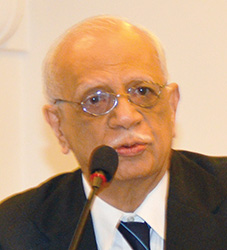
Savak Tarapore: "intellectual integrity"
Tarapore was executive director of the RBI at the time of India’s economic crisis in 1991-92 and was deputy governor between 1992-96. He assisted RBI governor Dr C. Rangarajan through the balance of payments crisis and the financial reforms thereafter. The now famous Rangarajan-Tarapore combine had a long symbiotic relationship and together the two steered India’s monetary policy during one of the most trying times in India’s economic history. The Rangarajan-Tarapore combine is considered to be the prime architects of initiatives in financial sector reforms.
Tarapore’s contribution, along with that of others, ensured that the delicate and complicated processes involved in the transition from a quasi-command economy to a market economy were set in motion with the minimum of dislocation. The policies pursued by India in the first four decades after independence had resulted in her becoming an inefficient, import substituting, uncompetitive, state driven economy. Post crisis, India became a competitive, export driven market economy, producing world class goods and services for world markets.
It is a universally acknowledged fact that the Rangarajan-Tarapore combine made an immense contribution to re-establishing economic stability and encouraging economic recovery. Dr Manmohan Singh, then India’s Finance Minister had implicit faith in Tarapore’s abilities. Dr Y. V. Reddy who succeeded Tarapore as deputy governor in 1996 and subsequently became RBI governor says, "He is the man from whom I learnt my central banking. In fact he was the one who persuaded me to accept the deputy governorship of the RBI. I cannot think of anyone who exemplifies professional, financial and intellectual integrity better than Tarapore.”
Tarapore believed in, and still believes in, a strong, unswerving, anti-inflationary monetary policy. Like any other senior central banker in the public eye at a time of crisis he had more than his fair share of critics and detractors. He was labeled as being rigid because of his unbending adherence to first principles. Tarapore believes that the most cruel and unfair tax that any society can inflict on its poorest is the tax imposed by high levels of inflation. If he was committed to any one purpose it was to curbing inflation. He warned that the checks for controlling the fiscal deficit in India were being loosened progressively in a climate which was becoming increasingly populist and lax. More recently, Tarapore argued that all that the excessive monetary expansion would buy was inflation. His words proved to be prophetic.
Tarapore was always concerned about the role monetary policy played in not only controlling inflation but in providing sufficient credit for the economy to recover and grow. But he was against loose credit, a fear which has been amply justified by the disconcerting growth of non-performing assets across the financial system. Given his reputation as being the ultimate monetary hawk (though a closer examination of the facts reveals otherwise), Tarapore was often a central target of the financial Press. But when he retired in September 1996, the Business Standard, one of his most trenchant critics paid him a rich tribute: "Financial journalism will never be the same without Tarapore…In an age of patronage and particularism Tarapore kept alive the idea that central banking was an intellectual occupation…the nation owes him a small debt for having stuck it out through the dark days and for having kept the candle of reason burning in the Indian temple of money where he chose to spend his working life as a priest.”
Kishori Udeshi, former RBI deputy governor observes that Tarapore has never ever compromised on his principles. "He has been unflinching in his principles on monetary management and uncompromising in articulating his views while in the RBI as deputy governor, and even thereafter. A man so straight in his dealings, so simple in his living, so humble in his interactions, so unbending to pressures, he dwarfs all before him as an exemplar of intellectual integrity.”
His alma mater Sheffield University recognized his stellar contribution when it conferred an honorary degree of Doctor of Laws on Tarapore. After completing his BA (Hons) Economics from Sheffield University and his MSc in Economics from London University, Tarapore joined the RBI as a research officer in 1961. During the period 1971-79 he was seconded to the IMF.
Tarapore also has strong views on fiscal policy. The direct tax regime which was punitive for the higher income groups in the 1970s and 1980s subsequently swung to being the most liberal regime on direct taxes. Tarapore was bold enough to argue that unlimited exemption of dividend income from taxes is tantamount to fiscal atrocity. But despite his strong views on a variety of subjects no one can accuse Tarapore of being dogmatic. All those who know him will attest to his sense of fair play, his willingness to accommodate views other than his own, and the ability to have an open mind.
C. Rangarajan, a former RBI governor, and till recently chairman of the prime minister’s Economic Advisory Council, observes: "He is a true central banker committed strongly to the objective of maintaining price stability. He did not mind being described as an ‘inflation hawk.’ For him, the best way for a central bank to promote growth is by maintaining a low level of inflation. He stood by this position even on occasions when it was not popular. He was fearless in the expression of his views. His contribution to the shaping of monetary policies in 1980s and 1990s was immense.”
Even after retirement, Tarapore continued to render yeoman service to his erstwhile employer. The RBI, loath to let go of one its most famous sons, appointed him to chair a number of official committees/boards including the Advisory Board on Banking, Commercial and Financial Frauds (1997-2001), Discount and Finance Houses of India (2001-2004) and the two Committees on Capital Account Convertibility (1997 and 2006). He was also a member of the Banking Sector Reforms Committee (1998) better known as the Narasimham II Committee. He is a distinguished fellow of the Skoch Development Foundation, New Delhi, and a member of the Gold Advisory Board of the American Principles Project (Washington DC, USA). It is to Tarapore’s great credit that he has resisted being associated with any corporate entity since retirement. Such integrity and adherence to principles is next to impossible to find in today’s avaricious world.
After retirement, Tarapore embarked with great success on his second career — as author, columnist and public speaker. Apart from authoring a number of books he is a regular columnist in financial newspapers such as the Business Standard, the Financial Express and Divya Bhaskar. Currently, he writes for the Hindu Business Line and also runs his own multi-language syndication with his column "Common Voice” being simultaneously published in a number of languages. His book A Commentary on India’s Financial Policies was published to much critical acclaim in 2013. His most recent book Interpreting Financial Policies for the Common Person is reviewed in the Books section (p 34). Tarapore is also greatly in demand as a public speaker. The same erudition and elegance of style which informs his writings, is also on display in his speeches, all delivered with perfect diction.
"My wife Farida is my biggest support and source of inspiration,” acknowledges Tarapore. He was born with a congenital cardiac defect, and acknowledges his debt to Dr F. E. Udvadia whose care enabled him to follow a punishing schedule in the RBI and thereafter. And of course he dotes on his two daughters, Zareen and Anjalee and his three grandchildren Riya, Neil and Kyra. We can only hope that with constant inspiration from his family, Tarapore will continue to serve the cause of economics and journalism with distinction for many more years.
Parsis of the RBI
The Reserve Bank of India (RBI) is nearly eight decades old and was one of the first central banks in the developing world. While a lot has been written about this institution, little is known outside the RBI about the meritorious service by Parsis to India’s central bank.
Over the years, a number of illustrious Parsis have served on the central board of the RBI. These include F. E. Dinshaw, Sir Homi Mody, N. A. Palkhivala, Jehangir P. Patel, Ratan N. Tata, J. J. Irani and Y. H. Malegam. The last three served simultaneously on the RBI board. Malegam, a current director, has completed 20 years on the board and is one of the longest serving directors in the annals of the RBI. The RBI has drawn on Malegam’s services for numerous boards, committees and groups and he is virtually a resident external adviser. P. N. Damry was the first Parsi deputy governor (1967-73). B. B. Paymaster, chief secretary, government of Maharashtra, served as chairman of the RBI Services Board. A. D. Shroff headed vital committees of the RBI and in fact was RBI governor Sir Osborne Smith’s first choice for the post of deputy governor. However, the British India establishment in New Delhi rejected his name as it was felt that Shroff was too close to the Indian nationalists and was a "Congress economist.”
One of the most highly regarded officers was P. J. Jeejeebhoy, head of the exchange control department, who set exacting standards of transparency in handling the rationing of scarce foreign exchange during World War II. He was an important, indeed indispensable, member of the Indian delegation on the sterling balances, a delegation which included the finance minister and the RBI governor. He was instrumental in negotiating the intricate arrangements on the drawdown of the large sterling balances built up during World War II as also the exchange rate arrangements for the rupee.
K. M. Mehta served the RBI from the 1940s to the 1970s and was eventually appointed executive director. There could not have been a more humane and soft spoken person than K.M.Mehta. True to his nature he would seek out RBI staff and endeavor to alleviate their problems. Similarly, persons from the public who came to him with a problem found a powerful ally. An oft quoted case was of a person trying to retrieve his late father’s equity shares in the then privately owned RBI; Mehta offered his personal surety to enable the person to retrieve his father’s shareholding. A. Thanawalla headed the department of banking operations and his prompt disposal of cases was legendary.
Another leading light is Chandi J. Batliwalla, who for long was the public face of the Parsis in the RBI. Her career straddled the RBI and the International Monetary Fund (IMF). Her outstanding work received encomiums from a number of RBI governors as well as managing directors of the IMF. She had not one, but two five-year stints with the IMF, and also wrote the history of the RBI’s role in managing India’s external sector for the RBI’s official history. But all the achievements of her career in the RBI and IMF pale into insignificance when one considers her outstanding work with the Red Cross over the last three decades. Even now this octogenarian (she is in her late eighties) thinks nothing of venturing into remote areas to help the disadvantaged segments of society.
Pilloo Mirza (the aunt of Keki Mistry, vice chairman and Chief Executive Officer of Housing Development Finance Corporation), was the first Parsi to work in the IMF (on deputation from the RBI). She was one of the most painstaking and reliable workers in the RBI and her seniors would often say that once Mirza had processed a case no further examination was necessary. Kara Patel who was a junior officer in the RBI was famous as a reputed homeopath and had his clinic on Princess Street. Top officials of the RBI were his patients.
Over the years, a number of illustrious Parsis have served on the central board of the RBI. These include F. E. Dinshaw, Sir Homi Mody, N. A. Palkhivala, Jehangir P. Patel, Ratan N. Tata, J. J. Irani and Y. H. Malegam. The last three served simultaneously on the RBI board. Malegam, a current director, has completed 20 years on the board and is one of the longest serving directors in the annals of the RBI. The RBI has drawn on Malegam’s services for numerous boards, committees and groups and he is virtually a resident external adviser. P. N. Damry was the first Parsi deputy governor (1967-73). B. B. Paymaster, chief secretary, government of Maharashtra, served as chairman of the RBI Services Board. A. D. Shroff headed vital committees of the RBI and in fact was RBI governor Sir Osborne Smith’s first choice for the post of deputy governor. However, the British India establishment in New Delhi rejected his name as it was felt that Shroff was too close to the Indian nationalists and was a "Congress economist.”
One of the most highly regarded officers was P. J. Jeejeebhoy, head of the exchange control department, who set exacting standards of transparency in handling the rationing of scarce foreign exchange during World War II. He was an important, indeed indispensable, member of the Indian delegation on the sterling balances, a delegation which included the finance minister and the RBI governor. He was instrumental in negotiating the intricate arrangements on the drawdown of the large sterling balances built up during World War II as also the exchange rate arrangements for the rupee.
K. M. Mehta served the RBI from the 1940s to the 1970s and was eventually appointed executive director. There could not have been a more humane and soft spoken person than K.M.Mehta. True to his nature he would seek out RBI staff and endeavor to alleviate their problems. Similarly, persons from the public who came to him with a problem found a powerful ally. An oft quoted case was of a person trying to retrieve his late father’s equity shares in the then privately owned RBI; Mehta offered his personal surety to enable the person to retrieve his father’s shareholding. A. Thanawalla headed the department of banking operations and his prompt disposal of cases was legendary.
Another leading light is Chandi J. Batliwalla, who for long was the public face of the Parsis in the RBI. Her career straddled the RBI and the International Monetary Fund (IMF). Her outstanding work received encomiums from a number of RBI governors as well as managing directors of the IMF. She had not one, but two five-year stints with the IMF, and also wrote the history of the RBI’s role in managing India’s external sector for the RBI’s official history. But all the achievements of her career in the RBI and IMF pale into insignificance when one considers her outstanding work with the Red Cross over the last three decades. Even now this octogenarian (she is in her late eighties) thinks nothing of venturing into remote areas to help the disadvantaged segments of society.
Pilloo Mirza (the aunt of Keki Mistry, vice chairman and Chief Executive Officer of Housing Development Finance Corporation), was the first Parsi to work in the IMF (on deputation from the RBI). She was one of the most painstaking and reliable workers in the RBI and her seniors would often say that once Mirza had processed a case no further examination was necessary. Kara Patel who was a junior officer in the RBI was famous as a reputed homeopath and had his clinic on Princess Street. Top officials of the RBI were his patients.
◆ ◆ ◆
From the archive