
Books
Inflation and other issues
 Interpreting Financial Policies for the Common Person by S. S. Tarapore. Published in 2013 by LexisNexis, 14th floor, Building No 10, Tower B, DLF Cyber City, Phase II, Gurgaon 122002. Pp: 191. Price: Rs 245.
After having served the Reserve Bank of India (RBI) with great distinction, Savak Sohrab Tarapore has used his many talents to start his second innings — as author and columnist. A well-respected opinion maker, Tarapore’s thought provoking columns and books have received much attention from policy makers and the lay reader alike. His latest offering, Interpreting Financial Policies for the Common Person, a collection of articles from his own multi-language syndicated column "Common Voice” from April 1, 2011 to March 31, 2013, is in many ways unique. This timely book seeks to make intelligible to the lay reader, in simple language, such economic and financial policies which impinge on the common man. The book is divided into eight parts and has 52 short chapters. Each part is centred on a broad policy issue.
While appreciating the need to generate employment, the writer is of the view that this should not be at the cost of accelerating inflation. In his writings on monetary policy he raises the concern that overwhelming emphasis on growth has resulted in interest rates being lower than what they should be. Tarapore emphasizes that official price indices understate inflation and invariably depositors end up with negative rates of return. He cautions that unless depositors are given a fair rate of return there would be a move away from financial savings to physical savings.
While appreciating the need to generate employment, the writer is of the view that this should not be at the cost of accelerating inflation. In his writings on monetary policy he raises the concern that overwhelming emphasis on growth has resulted in interest rates being lower than what they should be. Tarapore emphasizes that official price indices understate inflation and invariably depositors end up with negative rates of return. He cautions that unless depositors are given a fair rate of return there would be a move away from financial savings to physical savings.
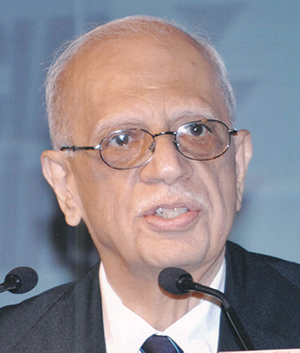
Savak Tarapore: common man’s cause
Tarapore has been in the forefront of the advocates for freeing the savings bank deposit rate which, under the controlled regime, was unfair to depositors. He bemoans the fact that when the savings bank rate was ultimately freed, banks resorted to cartelization, something he believes the Competition Commission of India should examine. The author debunks the myth that financial inclusion requires low interest rates. In fact, the first contact that the poor have with a bank is as a depositor and keeping interest rates low makes savers averse to the banking system.
Tarapore has also for long been a strong advocate of the need for humane treatment of the family of a deceased depositor. The system till 2005 was excruciating as the immediate family of the deceased were left without access to their own bank deposits. As Tarapore puts it: "Today we talk about customer service, financial inclusion, etc but in dealing with the death of a depositor, the litmus test is who you are and who you know.” Tarapore’s urging on this front yielded fruit when in June 2005 the RBI revamped the system to address this lacuna.
Tax refunds affect all of us and Tarapore is particularly harsh on the government whom he says cannot use the excuse of a resources crunch to deny the taxpayer legitimate refunds. "Deliberately holding back tax refunds is an infringement of the individual’s constitutional rights, morally repugnant and politically incorrect.”
In his writings on gold Tarapore leaves no doubt that he is a gold buff. He argues that the common man’s preference for gold has a strong logic and that over the long run gold has provided fantastic returns to the common man. He advocates the setting up of a gold bank which would facilitate the mobilization of idle hoards of gold. It was a matter of some satisfaction to Tarapore when the RBI’s Working Group on Gold (2013) recommended the setting up of such a bank. It remains to be seen if the RBI will accept its own Working Group’s recommendations.
It is quite obvious that Tarapore has made the common man’s cause his own. This collection of thought provoking articles should be of interest to economists, bankers, bureaucrats, academicians, policy makers and above all to the lay person who has found a powerful ally in Tarapore. These articles written in simple but elegant prose recall a bygone era in erudition and articulation. Here is an opportunity for those who missed reading the columns when they were published to gorge on the whole cake at one go, rather than the slices which were available only one at a time earlier.
◆ ◆ ◆
From the archive