
Universal responsibility
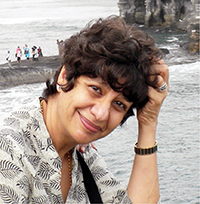
Dr Deenaz Damania: maintaining nature’s balance
All major faiths are represented during the deliberations and participants from all over India are exposed to the wisdom and teachings of different religions. Participants come from a variety of professional disciplines and are generally below the age of 40 years, she notes. Damania quotes the Tibetan spiritual leader’s value which forms the genesis of this inter-faith youth meet: "To meet the challenges of our times, I believe that humanity must develop a greater sense of universal responsibility. Each of us must learn to work not just for our own individual self, family or nation, but for the benefit of all mankind… Today we are so interdependent, so closely interconnected with each other, that without a sense of universal responsibility, a feeling of universal brotherhood and sisterhood, and an understanding and belief that we really are part of one big human family, we cannot hope to overcome the dangers to our very existence — let alone bring about peace and happiness.”
In addition to an exploration of the teachings of other major world religions, the young professionals and monks were introduced to an understanding of the concept of the mind and the brain by doctors and researchers at the National Institute of Mental Health and Neurosciences. They were informed about the many benefits of meditation and the need for a balance of science, morality and religion in one’s life, the email reveals.
"May I not disturb nature’s balance and harmony” is what Zoroastrians have being praying daily since the last 3,000+ years, Damania told her peers while explaining the importance given to the environment by the earliest followers of the Zoroastrian faith. She made special mention of the Amesha Spentas, the divine attributes of Ahura Mazda as also the importance of deeds and actions in the life of Zoroastrians. Just as the Cyrus Cylinder is looked on with reverence today as the world’s first charter of human rights, our faith also, perhaps for the first time, laid down strict rules for the preservation and protection of all natural resources gifted to human beings.
Damania also touched on the deep importance paid to the concept of human dignity in our scriptures. As a little girl, she had been so impressed at her father’s answer to a question she had posed: "Dad, what is the definition of a human being in our religion?” The answer had her spellbound and she has never forgotten his words: "Manas paoryo daama — man is God’s creation, in whom mind is his magnificence.” Damania adds that many years later, as a student of the behavioral sciences, those words proved to be prophetic. Today we are still grappling with the elusive understanding of the human mind which Zarathushtra had explored during his years of solitary retreat and contemplation, and his enlightened teachings on the subject form the core of the sacred Gathas.
Participants in the Pilgrimage program were happy to hear about Zarathushtra’s teachings and regretted that so little is known about this ancient, living faith. Damania mentions: "They wondered if there was a deliberate attempt at being secretive, or if it was just a function of the extremely small number of people who professed the religion today.”
Mehta’s milestone
The American Society of Cataract and Refractive Surgeons (ASCRS) conferred its highest accolade, the ASCRS Honored Guest Award on Dr Keiki Mehta, India’s first ophthalmic surgeon to receive this distinction. The award, which honors a luminary whose lifelong clinical and research work in the field has been exemplary and who has enhanced the cause of reducing blindness in the world, was presented at a glittering ceremony at the Boston Convention and Exhibition Center before an audience of 15,000 ophthalmic surgeons from all over the world at the ASCRS Annual Symposium held from April 24 to 29, 2014 in Boston, USA, mentions an email received by Parsiana from Luciano Gomes.
At the presentation ceremony ASCRS president Dr Eric Donnenfield lauded Mehta as a pioneer in cataract and refractive surgery and a prolific teacher who had earned the reputation of being the "Father of Indian Cataract Surgery” who had enhanced ophthalmology not only in India but internationally. Mehta, who is surgical chief and medical director of Mehta International Eye Institute in Bombay, developed the world’s first soft intraocular lens implant and a host of useful inventions over the years, mentions the email. He is invited to almost every live surgical ophthalmic workshop all over India to demonstrate and teach his latest and most innovative surgical skills and techniques, mentions Gomes’ email.