
Heroic, humorous, humane
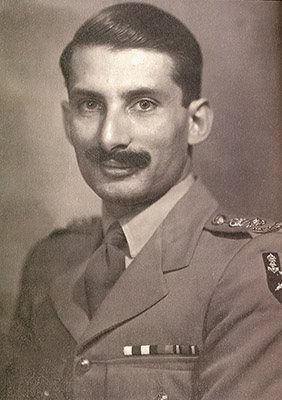
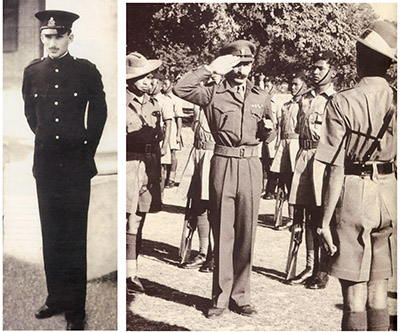
A book launched on the birth centenary of Field Marshal Sam Manekshaw, written by his ADC and wife, reveals many facets of his larger-than-life personality
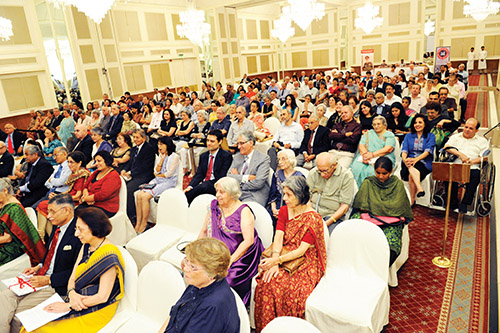
A section of the gathering
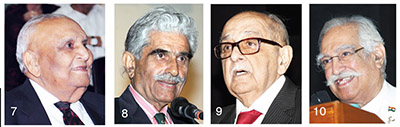
7) Lt Gen (Retd) S. K. Sinha; 8) Maj Gen (Retd) Ashok Mehta;
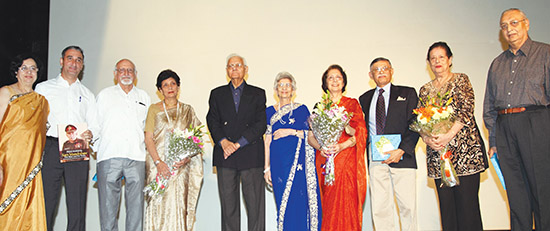
Photos: Navroz Behramfaram
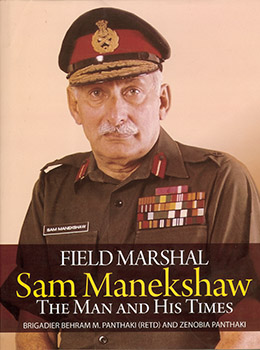
"It is dedicated to the men in uniform who laid down their lives for the country and to their widows whose sacrifice is in equal measure if not more,” the Panthakis informed Parsiana.
The chief speakers and guests for the DPA event were Fali Nariman, eminent jurist; Lt Gen (Retd) S. K. Sinha, former vice chief of Army Staff and Governor of Assam and later Jammu and Kashmir; Maj Gen (Retd) Ian Cardozo, chairman of the Rehabilitation Council of India and current vice president of The War Wounded Foundation; Maj Gen (Retd) Ashok Mehta, former director, Security and Political Risk Analysis; Sherry Batliwala and Maja Daruwala, daughters of the Field Marshal; poet and author Keki Daruwalla; Dadi Mistry, Parsi member on the National Commission for Minorities and DPA patron; DPA president Yezad Kapadia and the authors.
The event began with a prayer invocation by Ervad Cawas Bagli, panthaky of the DPA’s Kaikhushru Pallonji Katrak Dar-e-Mehr, followed by a welcome address by Adil Nargolwala, DPA honorary secretary. Veera Mavalwala, DPA honorary joint secretary, lit a "diva” before Manekshaw’s portrait placed on a flower bedecked table on the stage.
Kapadia spoke briefly about Manekshaw while Nariman extolled the "intimate, witty and scintillating story of the Field Marshal… brought to life by the erudite prose and photos” from Manekshaw’s longest-serving aide-de-camp (ADC) Behram and Zenobia. Nariman concluded his anecdotes about the Field Marshal with a remark, "This book will establish one’s reputation as an intellectual if seen by visitors at one’s home.”
Sinha, a former colleague of the Field Marshal at army headquarters, Delhi, spoke of Manekshaw’s strength as a great military thinker and leader and his prowess at restructuring the Army. If his views were not acceptable, he was even prepared to resign, Sinha noted.
He narrated an incident in September 1949, when they were posted to Military Operations in Delhi. When Sinha rode to office on his motorbike, Manekshaw asked if he had earned it in his dowry. When Sinha responded that he was unmarried, Manekshaw exclaimed he would get "something better” when he did marry!
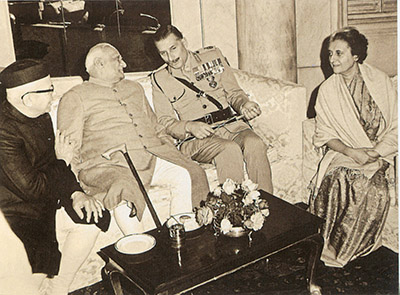
Some years later, seeing Sinha’s expression as Manekshaw alighted from his Raleigh car at Military Operations, Manekshaw explained, "I married rich! My wife sometimes allows me to use her car!”
"Manekshaw was very informal. He came out with atrocious comments without batting an eyelid,” commented Sinha amid laughter from the audience.
He further revealed that the surrender of 92,000 Pakistani soldiers, the birth of a new nation (Bangladesh) and the first decisive battle victory to the Indian nation in 2,000 years, were events of great historical importance. Manekshaw was rewarded for this feat by being elevated to the rank of Field Marshal by then Prime Minister Indira Gandhi.
Cardozo complimented the authors for dedicating the royalty from their book to the War Wounded Foundation and the War Widows Association.
He related how the news of Manekshaw’s elevation as Chief of Army Staff sent ripples of electricity through the Army’s ranks. When Cardozo stepped up to receive his Gallantry Award, the Sena Medal in January 1964 from Manekshaw, he was told, "You are lucky to be part of the finest regiment in the world. The Gorkhas make the best soldiers.”
Cardozo also spoke of three words which were Manekshaw’s guiding principles throughout his life in the Army — "love, fearlessness and willpower.”
"Love your country, your uniform, your job, your men and they will return your love hundredfold,” reminisced Cardozo of his chief. "Be brave, but not stupid,” was the comment on "fear.” "Believe in yourself; never give up,” he added.
Mehta spoke of a humorous incident when the Field Marshal was leaving the board of directors of the Escorts Group. His replacement was a gentleman named Naik. "Never in history has a Field Marshal been replaced by a Naik,” guffawed Manekshaw to Mehta, as he exited the company.
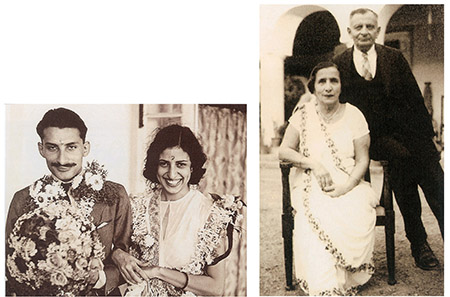
Amidst thunderous applause, Mehta suggested that "we begin a discreet and dignified campaign to ensure that the greatest soldier of our times is posthumously awarded the Bharat Ratna.”
On behalf of her sister and herself, Daruwala spoke of her father’s sense of humor, and of how he remained the joy of his grandchildren’s lives. He spoke Gujarati and loved Parsi food, songs and jokes. "Above all, he brought us up as equals,” she added.
"You love Sam Manekshaw, that’s all that matters,” she concluded.
Mistry described the Field Marshal as "the shining jewel of our community.” He also encouraged the community to "work towards” honoring him with the Bharat Ratna.
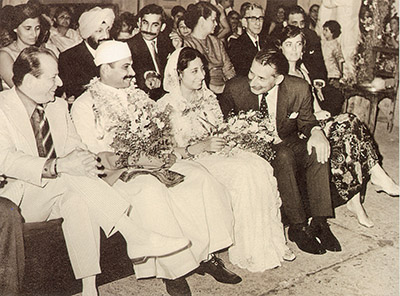
Zenobia spoke of Manekshaw’s humor which was self-deprecating or directed at his wife, Silloo. When she did not accompany Manekshaw on a tour, the hosts were disappointed. Regretting her absence, Manekshaw would say, "Silloo doesn’t travel on Saturdays. She considers them inauspicious. You see, she married me on a Saturday!”
As the lights in the hall dimmed, the authors presented a slide show of the landmark moments of Manekshaw’s life to the accompaniment of military marches of which one is the famous march ‘Sam Bahadur’ which was composed in honor of Sam.
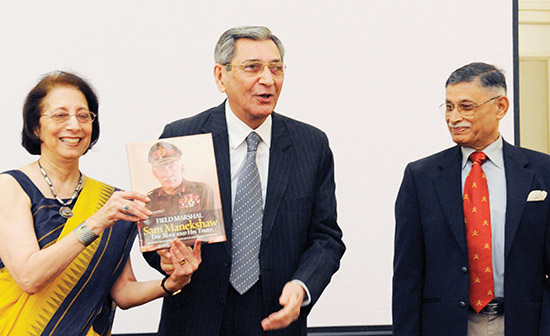
Kapadia officially launched the book. The event concluded with a sumptuous Parsi dinner organized by Dhun and Benaifer Bagli. The band of 4/8 Gorkha Rifles regaled the guests.
In July 1965 when Behram Panthaki was a "greenhorn” Second Lt in the 8 Gorkha Rifles he got instructions to report to Calcutta "within 72 hours.” The Eastern Army commander had asked for him to be his ADC. When he entered the office Sam Manekshaw was sitting with three dogs sprawled across the floor. Panthaki was "ignored.” After what seemed like "eternity” Manekshaw sternly inquired, "Will you work for me?” Before Panthaki could reply he was told to get out and get his instructions.
So related Panthaki, who retired as a brigadier, to an audience of around 300 at the Bombay launch of the book at the prestigious Trident Hotel, Regal Room in Bombay on April 14, 2014. Manekshaw was on the board of directors of Oberoi Hotels and the group sponsored the evening’s event in his memory.
Panthaki recalled Manekshaw was perturbed at the civilian clothes that Panthaki wore. He wanted his ADC as smartly dressed as he was. When explained that his salary did not permit him to buy a smarter wardrobe Manekshaw took him to the Bombay Dyeing showroom at Park Street in Calcutta and asked him to help with the selection of material for a blazer and a tweed jacket which he presented to him and followed it up thereafter by gifting him suits every year or every other year.
"Despite being a Parsi (Panthaki) had all the qualities of a Gurkha,” Manekshaw had observed. He used to tell Panthaki, "the higher you go, humbler you should become. Always be a lad.”
Zenobia referred to Silloo "as a solid rock behind him… very caring.” She raised 7.5 crore rupees for the Army Wives’ Welfare Association.
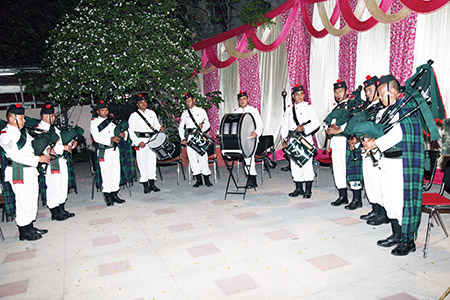
The band of the 4/8 Gorkha Rifles entertaining the gathering
Manekshaw’s grandson Jehan recalled that Panthaki’s father "married my parents” (Maja and Dhun Daruwala).
Zenobia recalled before her wedding Manekshaw sat next to her and inquired, "Are you sure you want to marry this man? You have five minutes left to change your mind.”
"He gave us a place in the sun,” said Col K. K. Puri, who functioned as master of ceremonies. Manekshaw was the first Indian trained commander-in-chief and Field Marshal of India. In World War II he was severely wounded with nine bullets embedded in his body. His commanding officer instructed on the spot that the Military Cross would be awarded to him as the medal "is not given to a dead man.” Manekshaw survived.
"He was a soldier’s general. He made it a point to make every soldier feel important... When he retired to Coonoor in 1976 he would go around the bazaar buying vegetables, mutton, etc. He was a good cook. He spent time with everybody,” said Puri. Sadly he noted, "since 1947 the government has not thought it worthwhile to build a war memorial” to honor its fallen soldiers.
Cardozo recalled that the Indian government did their "best to downsize” Gen K. S. Thimayya and Manekshaw. "But despite their efforts they became iconic soldiers.”
Manekshaw used to say, "The Gorkhas are the best soldiers in the world.” He spoke Nepali and urged Cardozo to do the same. [It is a regimental tradition that all Gorkha officers (and their wives and children) are expected to speak Nepali. The officers have to give Nepali exams.
Referring to an officer who lost both his legs in battle Cardozo recalled that "Manekshaw understood a wounded soldier is as good if not better than others.” He always looked to their interest.
Former Chief Justice of India Sam Bharucha released the book to loud applause from the gathering.
Bombay report by a Parsiana correspondent.