
ART
Rapturous rhapsody - I
Twenty odd events in about 10 differing genres were held at the NGMA
"I have dealt with 20 agencies and individuals, so it is a truly collaborative attempt and the success is shared by us all,” says Pheroza Godrej about The Zoroastrian Rhapsody (ZR) — initiated and conceptualized by her. ZR was a series of evening programs related to the community. These were sustained concurrently with the two exhibitions at the National Gallery of Modern Art (NGMA) — ‘Across Oceans and Flowing Silks — From Canton to Bombay 18th to 20th Centuries’ and ‘No Parsi is an Island’ to coincide with the 10th World Zoroastrian Congress (10WZC). Godrej interwove Parsi influence on the city. In her address to the audience at one of the ZR events Godrej lamented, "There are museums in Bombay dealing with trade; with monetary aspects of Bombay at the Mint; a maritime museum is located at Nhava Sheva. But there is no museum or gallery as to why Bombay became important over 300 years. Who was here prior to the city being built?”
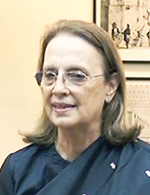
Pheroza Godrej conceptualized Zoroastrian Rhapsody
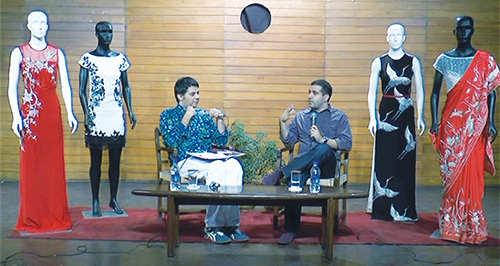
Alongside: Designer Ashdeen Lilaowala (far right) in conversation with Parmesh Shahani
ZR included talks, concerts, film projections, play and poetry readings, discourses and dialogs at the NGMA with the cooperation of the Ministry of Culture, Government of India, The Prince of Wales Museum and several individual contributors including co-curator Firoza Punthakey Mistree. The Godrej India Culture Lab was roped in as well. The evenings over these weeks were a potpourri of events showcasing Parsipanu through art, music, films, theater, readings highlighting social, cultural and environmental influences of Parsis.
It was inaugurated on December 26, 2013, by Dr Farokh Udwadia and Soli Sorabjee, (See NGMA: Enriched by the Exhibition, Parsiana, January 21, 2014). The themes and most artists were Zoroastrian. The ZR saw people of all denominations thronging the venue (Parsiana January 21, 2014). The first exhibition covered three levels of NGMA explaining the historic, business and artistic context of Parsi lifestyle especially embroidered textiles — garas, jhablas (tunic), ijars (pajama-type pants), kors (borders), sapats (footwear) and topis (head-gear), all worn by Parsis of the 19th and early 20th centuries. The ijar, worn by men and women was an imitation of the Iranian pantaloons, the Parsis having the hems of these embroidered.
Gaga over the gara
Ashdeen Lilaowala’s talk "Global gara” on January 3, 2014 heralded ZR with his expertise as a stylist, designs inspired by centuries of craft and craftsmanship of the Orient and Persia. The gara (sari) offers a blend of Chinese, British and Indian civilizations with a Parsi touch. Embroidered motifs on the gara seem to be from Chinese pagodas, figures, blossoms, pheasants, bamboo, bridges, bats and dragons to Indian love of peacocks, roosters and vine to British floral patterns of roses, daisies and peonies. Parsis seem to have commissioned fish, butterflies and even herons to adorn these Chinese embroidered saris specific to the Parsi women clientele who wore their status, financial clout and elegance, all wrapped up in these six yards.
In an academic talk on the same subject by Tulsi Vatsal, "Crossing Boundaries: The Story of Parsi Textiles” on January 11, 2014, she specified how there were repeat motifs of garas termed chakla-chakli or margha-marghi (birds), cheena-cheeni (Chinese figures), karoliya (spider) and kanda-papeta (roundels). Most saris had one or more of these designs with the main stitch being crewel (different embroidery stitches are used in crewelwork to create a textured and colorful effect) with extensive use of satin stitch (to create flat, filled areas within a design) or French knots (khakha) used in floral and fruit treatments for additional texture.
The TAPI Collection of Shilpa and Praful Shah comprises of rare and antique garments — jhablas, kors, garas and topis. Collected over decades, it was loaned to the NGMA for the exhibition. Vatsal and Lilaowala traced the origins of the gara to trade with China where ships carrying opium and sometimes other goods returned with Chinese textiles and artifacts. Shilpa Shah and Vatsal have co-authored a book Peonies to pagodas — embroidered Parsi textiles — the first ever work dedicated to Parsi textiles and the community’s love of Chinoiserie (art style reflecting Chinese influence).
Ashdeen Lilaowala’s talk "Global gara” on January 3, 2014 heralded ZR with his expertise as a stylist, designs inspired by centuries of craft and craftsmanship of the Orient and Persia. The gara (sari) offers a blend of Chinese, British and Indian civilizations with a Parsi touch. Embroidered motifs on the gara seem to be from Chinese pagodas, figures, blossoms, pheasants, bamboo, bridges, bats and dragons to Indian love of peacocks, roosters and vine to British floral patterns of roses, daisies and peonies. Parsis seem to have commissioned fish, butterflies and even herons to adorn these Chinese embroidered saris specific to the Parsi women clientele who wore their status, financial clout and elegance, all wrapped up in these six yards.
In an academic talk on the same subject by Tulsi Vatsal, "Crossing Boundaries: The Story of Parsi Textiles” on January 11, 2014, she specified how there were repeat motifs of garas termed chakla-chakli or margha-marghi (birds), cheena-cheeni (Chinese figures), karoliya (spider) and kanda-papeta (roundels). Most saris had one or more of these designs with the main stitch being crewel (different embroidery stitches are used in crewelwork to create a textured and colorful effect) with extensive use of satin stitch (to create flat, filled areas within a design) or French knots (khakha) used in floral and fruit treatments for additional texture.
The TAPI Collection of Shilpa and Praful Shah comprises of rare and antique garments — jhablas, kors, garas and topis. Collected over decades, it was loaned to the NGMA for the exhibition. Vatsal and Lilaowala traced the origins of the gara to trade with China where ships carrying opium and sometimes other goods returned with Chinese textiles and artifacts. Shilpa Shah and Vatsal have co-authored a book Peonies to pagodas — embroidered Parsi textiles — the first ever work dedicated to Parsi textiles and the community’s love of Chinoiserie (art style reflecting Chinese influence).
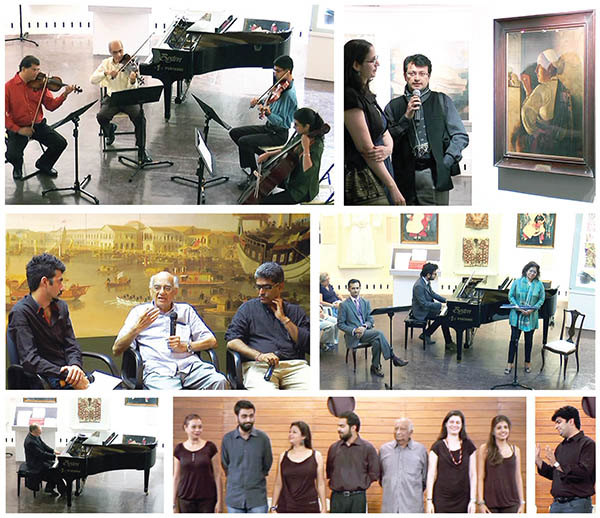
(L to R) 1st row: Parsi string quartet performing Haydn; Ranjit Hoskote elaborating on artists’ works;
2nd row: Kaiwan Mehta (left) with Kamu Iyer (center) and Vikas Dilawari; performing songs of Kaikhosru Sorabji;
3rd row: Mark Troop at piano; Sam Kerawala’s friends singing old favorites; Jim Vimadalal performing
Playing along
Three evenings were dedicated to western classical music and one to the genre of Parsi natak (drama). "Mozart to Mercury” was an evening of solos, duos, quartets and choral works sung or played entirely by Zoroastrian artistes. There were three "honorary Parsi” artistes as Godrej termed them, who were irreplaceable due to their talent and training – Patricia Rozario, Mark Troop and Karl Luchmayer. Wolfgang Mozart’s Magic Flute started the evening and "Farrokh ‘Freddie Mercury’ Balsara” (as the program advertised) ended it. Ushta Te: The Five Gatha Songs by Meher Madon-Jansen sung in original text by Zarin Ghadialy-Hodiwala — unknown to most music lovers in the city — were the Zoroastrian flavor of the evening. The youngest performer Soli Nallaseth, aged 15, breezed through Frédéric Chopin’s waltzes.
The second musical evening was dedicated to the mysterious, reclusive UK-based Kaikhosru Sorabji who forbade performance of his music till just a few years before his death in 1988. Born of a Parsi father and English mother, Sorabji commented freely on his musical colleagues with an acerbic tongue, as evident in the readings of his diaries and letters. His compositions – one, four hours long and another nine-and-a-half hours long – had not been heard for at least four decades as "better no performance than obscene travesty,” he averred.
In direct contrast to the grandiosity of Sorabji was "A musical evening with Sam Kerawala and his friends” in the mold of skits from longstanding nataks with re-hashed songs in Gujarati to favorites like Enjoy Yourself, Isle of Capri, Sway with Me, Never on a Sunday etc. Parsi humor, a brand in itself, was the highlight of the lighthearted evening: A geometry specialist is asked what he would say in geometric terms to "popat udi gayo” (parrot flown away). The answer: "polygon.” Another skit paraded a faux salesman peddling a bottle of cosmetics for Rs 100. On opening it, the purchaser protested that it is empty. The salesman jeered at him saying, "Can’t you read it says ‘vanishing’ cream?” There were several of these gags — some bawdy, some well-pickled repeats.
To harness the excellent acoustics of the erstwhile Sir Cowasji Jehangir Public Hall, a string quartet culled from The Symphony Orchestra of India (SoI) also thrilled the audience. Over and above the perennial favorites of Wolfgang Mozart, Johannes Brahms and Antonin Dvorak there was a relatively modern Astor Piazzola with his distinguished tango rhythms. Three musicians of the quartet are Indian — Carol George, Averell De Souza and Francis Mendes. The SoI has no Zoroastrian players, and a mere smattering of Indian players.
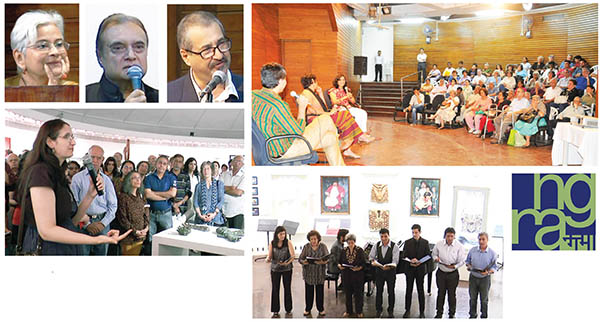
(L to R, top): Tulsi Vatsal; Zafar Hai; Mansoor Yezdi; discussion on Gangoobai;
Nancy Adajania expanding on Parsi artists; singers performing Freddie Mercury
Projecting the Parsi image
Three films with a Parsi connection were screened: Gangoobai by Priya Krishnaswamy, Café Irani Chai by Mansoor Showghi Yezdi and The Merchant Princes of Bombay by Zafar Hai. Gangoobai is the story of a maid who dares to dream. She travels from Matheran to Bombay on a whim to own a gara which she had first seen worn by her employer. The dreamer is so mesmerized by the sari that she spends a sleepless night wanting to acquire it and saves up for it. Gangoobai is fleshed out in how she touches several lives, the film weaving in human richness with interpersonal dynamics.
The symbiotic relationship between Irani cafés and Bombay — the only city once dotted with them — was highlighted in Café Irani Chai. Some persecuted Iranis came to India from Iran on foot 200 years ago. The film captures the hard work, customer-orientation of the immigrant and how the ubiquitous Irani café caters to scores of people – rich, poor, downcast, frolickers, students, business people, bachelors, outcasts — all under one roof. Bun-maska (bread laden with a thick coat of butter) or brun-maska (crusty bread and butter), associated with these eateries, are best savored when slurped with tea. To give the audience a taste, these were served prior to the screening. The film was in association with the Indo-Iran Society.
Sir Jamsetjee Jejeebhoy, Sir David Sassoon, Premchand Roychand and Jamsetji Tata are represented as The Merchant Princes of Bombay. Hai’s short documentary sketches a linear path in time, taking us through the technological changes that marked the 20th century — the decline of the great sailing ships and the rise of steam ones; the cotton boom that transformed Bombay and the effects of the Industrial Revolution (and of the opium trade). It touches on the life and times of two Zoroastrians (Jejeebhoy, an orphan who dominated trade and Tata, a visionary who brought the Industrial Revolution to his country). Also represented are Sassoon, a Baghdadi Jew who "came empty-handed and created a trading empire” and the Gujarati ‘Cotton King’ Premchand, "a speculator in the financial markets,” in the words of the filmmaker. Hai continues, "The merchant princes were fascinating men, who flirted with risk and adventure in their respective businesses, and at the same time gave a great deal back to the city to which they belonged.”
In a takeoff of the English poet John Donne’s poem "No Man is an Island” where he examines aspects of daily life, the exhibition ‘No Parsi is an Island’ was on the fourth floor at the NGMA Dome Gallery. This showcased paintings, sculptures, tapestry weaving, art installations, pop art and works of artists in different mediums from rope to metal. Art critics Ranjit Hoskote and Nancy Adajania presented their research "on the lost histories of Indian modernism (through this exhibit),” they told Hindustan Times. Adding, "We will be explaining that Parsi artists were participants in the drama of an unfolding cosmopolitanism in late-colonial and post-colonial India… and related strongly to projecting an Indian national modernity.” Hoskote and Adajania led a guided walk around the Gallery to introduce paintings, sculptures, journals and advertisements of 14 Parsi artists such as painters Pestonji Bomanji, M. F. Pithawalla, Jehangir Sabavala, Mehli Gobhai, Shiavax Chavda, Jean Bhownagary and Gieve Patel; two sculptors Piloo Pochkhanawala and Adi Davierwala and designer, weaver, art-revivalist Nelly Sethna. Some of these artists are recognizable by their paintings of Zarathushtra hanging in various agiaries.
The seven-week exhibition with contextual work of more than two years was feared to have been almost aborted when the 10WZC was in potential jeopardy. Godrej, as the spear header was determined to go ahead regardless of the Congress and kept ZR on track. It saw unexpected footfalls. Undoubtedly the loser would have been the city.
To be concluded
Three films with a Parsi connection were screened: Gangoobai by Priya Krishnaswamy, Café Irani Chai by Mansoor Showghi Yezdi and The Merchant Princes of Bombay by Zafar Hai. Gangoobai is the story of a maid who dares to dream. She travels from Matheran to Bombay on a whim to own a gara which she had first seen worn by her employer. The dreamer is so mesmerized by the sari that she spends a sleepless night wanting to acquire it and saves up for it. Gangoobai is fleshed out in how she touches several lives, the film weaving in human richness with interpersonal dynamics.
The symbiotic relationship between Irani cafés and Bombay — the only city once dotted with them — was highlighted in Café Irani Chai. Some persecuted Iranis came to India from Iran on foot 200 years ago. The film captures the hard work, customer-orientation of the immigrant and how the ubiquitous Irani café caters to scores of people – rich, poor, downcast, frolickers, students, business people, bachelors, outcasts — all under one roof. Bun-maska (bread laden with a thick coat of butter) or brun-maska (crusty bread and butter), associated with these eateries, are best savored when slurped with tea. To give the audience a taste, these were served prior to the screening. The film was in association with the Indo-Iran Society.
Sir Jamsetjee Jejeebhoy, Sir David Sassoon, Premchand Roychand and Jamsetji Tata are represented as The Merchant Princes of Bombay. Hai’s short documentary sketches a linear path in time, taking us through the technological changes that marked the 20th century — the decline of the great sailing ships and the rise of steam ones; the cotton boom that transformed Bombay and the effects of the Industrial Revolution (and of the opium trade). It touches on the life and times of two Zoroastrians (Jejeebhoy, an orphan who dominated trade and Tata, a visionary who brought the Industrial Revolution to his country). Also represented are Sassoon, a Baghdadi Jew who "came empty-handed and created a trading empire” and the Gujarati ‘Cotton King’ Premchand, "a speculator in the financial markets,” in the words of the filmmaker. Hai continues, "The merchant princes were fascinating men, who flirted with risk and adventure in their respective businesses, and at the same time gave a great deal back to the city to which they belonged.”
In a takeoff of the English poet John Donne’s poem "No Man is an Island” where he examines aspects of daily life, the exhibition ‘No Parsi is an Island’ was on the fourth floor at the NGMA Dome Gallery. This showcased paintings, sculptures, tapestry weaving, art installations, pop art and works of artists in different mediums from rope to metal. Art critics Ranjit Hoskote and Nancy Adajania presented their research "on the lost histories of Indian modernism (through this exhibit),” they told Hindustan Times. Adding, "We will be explaining that Parsi artists were participants in the drama of an unfolding cosmopolitanism in late-colonial and post-colonial India… and related strongly to projecting an Indian national modernity.” Hoskote and Adajania led a guided walk around the Gallery to introduce paintings, sculptures, journals and advertisements of 14 Parsi artists such as painters Pestonji Bomanji, M. F. Pithawalla, Jehangir Sabavala, Mehli Gobhai, Shiavax Chavda, Jean Bhownagary and Gieve Patel; two sculptors Piloo Pochkhanawala and Adi Davierwala and designer, weaver, art-revivalist Nelly Sethna. Some of these artists are recognizable by their paintings of Zarathushtra hanging in various agiaries.
The seven-week exhibition with contextual work of more than two years was feared to have been almost aborted when the 10WZC was in potential jeopardy. Godrej, as the spear header was determined to go ahead regardless of the Congress and kept ZR on track. It saw unexpected footfalls. Undoubtedly the loser would have been the city.
To be concluded
◆ ◆ ◆
From the archive