
10WZC
“To unite and advance”
The inspiration for meets and congresses also came from Zarathushtra who advocated the continuous “freshening” of life based on progressive knowledge
The Persian name for a get-together in conference or congress is gâhânbâr. Gâsân or gâhân is the plural form of the word Gâthâ that was eased into gâs and gâh in Pahlavi or Middle Persian. It means the five Gathas and nothing else. Bâr in Pahlavi and Persian is understood as "occasion, time, turn.” Thus gahanbar means to turn to the Gathas, because the Gathas "are the primal principles of life, (and) we wish to maintain our lives fresh as is the will (of Ahura Mazda) ... They are our guardians and protectors. They are food for our minds, in fact, they are food and clothing for our souls... We recite, sing, learn, memorize, chant from memory, practice, and teach them... We esteem each and every word, line, stanza, and song — the entire bound (book) of the Gathas... We also esteem all the questions and answers exchanged in regards to them.” (Yasna 55 and 58 and Vispered 13.14, 13.16, 18.24)
Celebration of festivals, traditionally for one and later for five days, involved reciting, chanting, explaining, understanding, and holding questions-and-answer sessions on each of the five Gathas of Asho Zarathushtra. The festival is rounded up with a feast prepared by collective participation and efforts, and merrymaking.
This inspires us to hold our countrywide and worldwide congresses to meet, discuss, resolve and work in the best spirit for the primal principles of existence; to update and refresh our Daena Vanguhi or good consciousness through progress and modernization; to unite and advance.
Celebration of festivals, traditionally for one and later for five days, involved reciting, chanting, explaining, understanding, and holding questions-and-answer sessions on each of the five Gathas of Asho Zarathushtra. The festival is rounded up with a feast prepared by collective participation and efforts, and merrymaking.
This inspires us to hold our countrywide and worldwide congresses to meet, discuss, resolve and work in the best spirit for the primal principles of existence; to update and refresh our Daena Vanguhi or good consciousness through progress and modernization; to unite and advance.
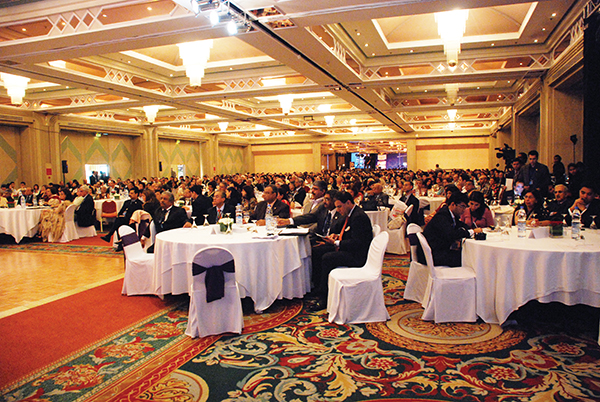
WZC: forum to meet, discuss and resolve
The continuous "freshening” of life was a unique recommendation of Zarathushtra who sought to impress that human life should be based on progressive knowledge that keeps it abreast of time. Having grown up in a natural environment, Zarathushtra’s divine doctrine advocates the preservation and promotion of the "living world” of animals, plants and environmental elements.
Zarathushtra does not divide human society in a pyramidal form with the solitary highest at the conical top and the multiple lowest at the broad bottom. His society is horizontal, made of units that join to make larger units. It starts with a home (demâna); homes make a settlement (vîs); settlements form a district (shoithra); districts create a country (dakhyu); and countries join to make the world (bûmi). The people peacefully settled are prosperous settlers (vâstrya-fshuyant) who form the world fellowship (airyaman), in which every person enjoys his/her due rights and no one suffers restraint or destitution. The idea of a truly united nations, composed of united families worldwide, is the ideal Zarathushtra envisaged almost 4,000 years ago!
Zarathushtra’s message, concise, precise and concrete in only 17 songs of 241 stanzas, a total of 6,046 words, was in five tunes that made people sing them gently or loudly, alone or in chorus, while idling or working. It is a masterpiece of literature that is poetry, prayer, inspiration and guidance, all at the same time. It is a unique practical map of a good, happy, productive and progressive life. He presents it and then requests one to study it with a clear mind and if convinced, accept it as a good guide. Constructive freedom is every person’s right. Zarathushtra is the foremost in declaring human rights.
Zarathushtra recommends that before the great choice for the way of life is made, one should take into consideration the divine doctrine presented by him and his companions. The choice of good as presented by him would eventually mean choosing the religion of good consciousness.
His 17 songs define some 20 "primal principles of life.” They are realized through divine enlightenment (Seraosha — Persian "sorûsh,” Gujarati "Sarosh”), which reveals many divine faculties, which in turn lead to the understanding of the principles that form the cosmos, an orderly universe. The most important are Spenta Mainyu: progressive mentality, the divine faculty that creates, maintains, and promotes; Asha: righteousness, the universal law that precisely regulates every move in the cosmos; Vohu Manah: the wisdom behind every righteous move; Vohu Khshathra Vairya: the good elected order that gives the universe true democracy; Spentâ Âramaiti: progressive serenity and tranquility acquired under a good order to promote the cosmos; Haurvatât: entirety and perfection achieved under tranquil conditions; and Ameretât, immortality and eternity attained through perfection.
Actualizing the principles in one’s thoughts, words and deeds helps one to achieve entirety and immortality, and a deviation results in suffering, hardship, retardation and delay in achieving the goal.
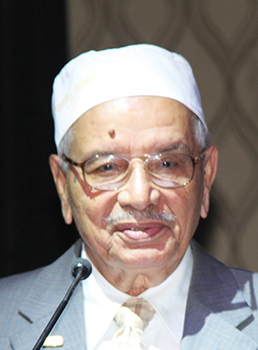
A founder director of the Zarathushtrian Assembly and a founder trustee of the Cyrus Society, Dr Ali Jafarey’s fields of specialization include Indo-Iranian history, geography, culture, religion, linguistics and literature. Author of 16 books in Persian and English on the Zarathushtrian religion and Iranian culture, Jafarey has taught at various universities and institutions in Iran and Pakistan.
◆ ◆ ◆
From the archive