
Seminar
Faith and fortune
The Banaji and Mehta families of Calcutta vied for secular and communal recognition
Their religious fervor made them establish separate fire temples in Calcutta. Their commercial interests extended to the China trade. Their political influence made them popular with the British and national leaders. In the pursuit of their similar aspirations conflicts emerged. Yet both the rival families have "left a tangible legacy,” conveyed Dinyar Patel in his paper on "The Banaji and Mehta Families: Forging the Parsi Community in Calcutta.” Speaking at the First Dastoor Meherjirana Library Conference in Navsari in January 2013 Patel noted, "Focusing on these two families helps us understand the intertwined relationships in the Calcutta Parsi community between commercial success, political influence and community leadership.”
A PhD candidate in the Department of History, Harvard University, Patel’s research revealed that the first Parsi known to have resided in Calcutta was a merchant, Dadabhai Byramji in the early 1770s. He was the grandson of Banaji Limji who is believed to be among the first Parsi settlers in Bombay.
A PhD candidate in the Department of History, Harvard University, Patel’s research revealed that the first Parsi known to have resided in Calcutta was a merchant, Dadabhai Byramji in the early 1770s. He was the grandson of Banaji Limji who is believed to be among the first Parsi settlers in Bombay.
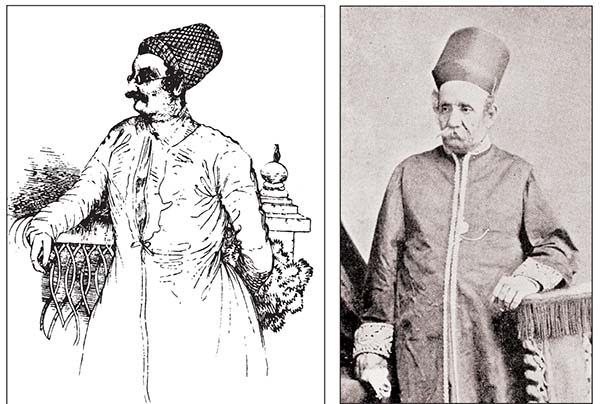
Banaji forebears: Rustomjee Cowasjee (left) and his son Maneckjee Photos: Parsi Lustre on Indian Soil
Yet, "another Banaji, Rustomjee Cowasjee (1790-1852) became the most prominent Calcutta Parsi in the early 1800s.” It was the China (opium) trade that brought Rustomjee to Calcutta around 1812. He entered the shipbuilding business, controlled many docks in Kidderpore and owned around 27-40 ships. He was equally active on the banking and insurance scene, helping float the Union Bank of Calcutta and the Sun Life insurance company where his son handled the China operations and his brother Framjee Cowasjee took charge of western India matters.
Well known among the Bengali intelligentsia who addressed him as "Rustomjee babu,” he was a close friend of Dwarkanath Tagore (grandfather of Rabindranath) and the two of them were the only Indians involved in the establishment of the Bengal Chamber of Commerce. In civic affairs too he played a leading role, improving the city’s sanitation and water supply.
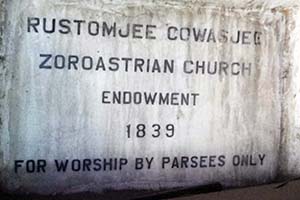
For the Parsi community he established in 1839 the city’s first fire temple or "Zoroastrian Church” on Ezra Street "which today is sadly in ruins,” reported Patel. To help "the Parsis put down their first truly permanent roots (there),” the previous year he had brought his family to Calcutta at a time when "it was considered socially unacceptable to bring one’s wife and children along.”
He died penniless, having lost his money four years earlier in the crash of one of the banks he had promoted. There remain in the city two geographic landmarks that bear his name: Rustomjee Street near Ballygunge Phari and Parsi Bagan, the site of his bungalow on Upper Circular Road.
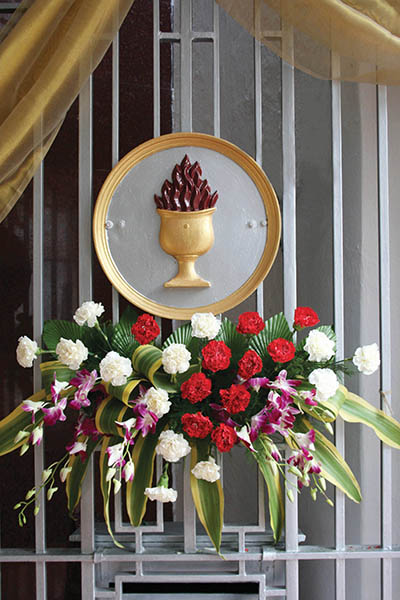
Mehta Adaran on its centenary
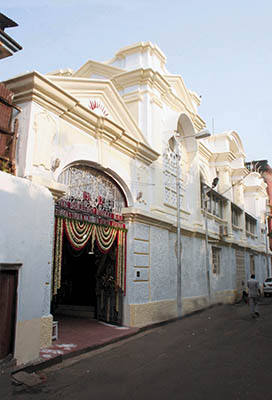
Ervad Dhunjeebhoy Byramjee Mehta’s Zoroastrian Anjuman Atash Adaran
"As Rustomjee’s fortunes sank, another Parsi, Dhanjibhai Byramji Mehta (1826-1907) was lured to Calcutta in search of wealth,” mentioned Patel. His Bombay based family relocated to Calcutta in 1860 and his son Rustamji (RD) soon became an important figure in Calcutta’s industrial development. With machinery brought from London "he helped construct the Empress Cotton Mills in Serampur, the first truly state-of-the-art cotton mill in Bengal.” By the turn of the century the father and son had diversified into jute and earned a mention in the New York Times in 1902 which reported, "The Petits and the Wadias had captured the cotton on the Bombay side. It remained for the Mehtas to cross over to the Bengal side and capture the jute.”
As RD’s reputation grew in commercial and political circles, so too did his stature in the Calcutta Parsi community, much to the chagrin of the Banaji family which still staked a claim to community leadership. Their differences were publicly aired in 1900 when RD was appointed the Persian consul in Calcutta, a post previously enjoyed by Rustomji’s son Maneckji and his grandson Hirjibhai who was then heading the Banaji family in Calcutta. Hirjibhai’s cousin Cowasji Dadabhoy, the Persian vice consul in Bombay accused RD of instigating an article in a Calcutta periodical in Persian that accused Cowasji of stealing the property of the Persian government including a carpet valued at Rs 60 and a portrait of the Shah. RD retaliated stating that Cowasji had offered him the Persian consulship for a bribe of over Rs 5,000. The consequent Consul Defamation Case that landed in the Bombay High Court was reported in detail by the media in the coming year. As reported in The Times of India of March 8, 1901, Cowasji did not file any direct charges against RD. However the editor of the newspaper was convicted of defamation and sentenced to prison for three months. Yet another post coveted by the two families was the sheriff’s which was earlier assigned to Maneckjee Banaji, (see "In Maneckjee’s memory”) then to RD for some years until in 1901 it went back to the Banaji family under Hirjibhai.
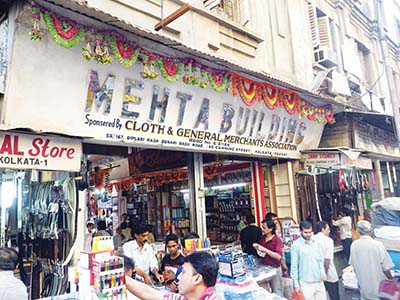
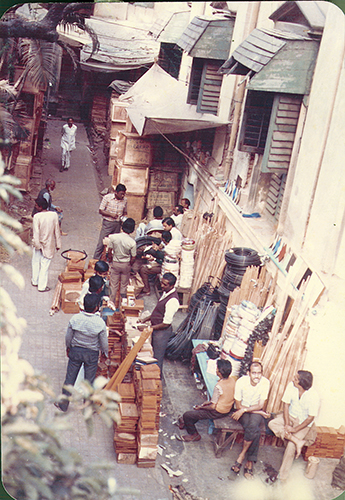
Mehta Building where the family ran their firm D. B. Mehta and Company;
plaque commemorating Rustomjee Cowasjee’s contribution to the Banaji fire temple (Photos: Dinyar Patel).
Hawkers on its premises in 1989.
The Mehtas established their own private dar-e-meher at their residence in 1890. But 21 years later RD constructed a new fire temple on Metcalfe Street and after the sacred fire was transferred there the temple in memory of his father was named Ervad Dhunjeebhoy Byramjee Mehta’s Zoroastrian Anjuman Atash Adaran and dedicated to the community. In 1910 RD had secured land for the erection of a new dakhma at Beliaghata and at the time of its foundation stone laying witnessed by 800 Parsis Dastur Kaikhusro Jamspasana gave a talk at the Corinthian Theatre owned by the film baron Jamshedji Madan.
On the political firmament too RD had made his presence felt as evinced by the Dadabhai Naoroji correspondence. At the time of the founding of the Indian National Congress in 1885, the Grand Old Man of India relied on RD’s "extensive ties with the Bengali political elite.” Vice president of the Indian Association, one of Calcutta’s premier political associations, and municipal chairman for Maniktala, RD was a leading figure in the public life of Calcutta. As summed up Patel, RD was "in many ways, a typical early Congress moderate, clamoring for political reform short of more ambitious claims like self rule.” In his correspondence in 1906 to Naoroji chosen as president of the Congress for that year, RD had written, "The Bengalis are fighting among themselves and anyone and everyone poses as a leader. In the lot we have some very good men and some self-seeking. I am sure your presence would tend to settle the matter down smoothly.”
The civic consciousness and philanthropy extended by members of the Mehta and Banaji families helped establish a good name for the community in Bengali society.
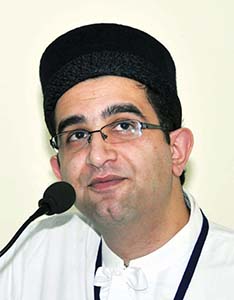
Dinyar Patel
In Maneckjee’s memory
When Maneckjee Rustomji Banaji was appointed sheriff by the government in 1873, he was the first Indian to be conferred that honor, according to a write-up in Parsi Lustre on Indian Soil. He was additionally a Justice of the Peace, honorary magistrate and municipal commissioner for Calcutta and its suburbs.
When the Shah of Persia appointed Maneckjee as the Persian consul in Calcutta in 1870, an honor he held for the next 21 years until his demise, the Parsis of Calcutta were justifiably proud that the head of their community had been selected to represent the interests of the Shah in the metropolis of the British Empire in India. Following a record 54 years of public life, to perpetuate his memory a fund was raised and a scholarship and a gold medal were endowed in his name at the Calcutta University.
When unveiling an oil portrait of Maneckjee in the Town Hall in 1898 the Lieutenant Governor of Bengal described the benefactor as "a cheerful and pleasant man — one of those cheerful people who are in this age of stress and worry the best promoters of social happiness and one of those pleasant people endowed with that pleasantness which arises from sweetness of disposition and broad geniality of nature.”
When Maneckjee Rustomji Banaji was appointed sheriff by the government in 1873, he was the first Indian to be conferred that honor, according to a write-up in Parsi Lustre on Indian Soil. He was additionally a Justice of the Peace, honorary magistrate and municipal commissioner for Calcutta and its suburbs.
When the Shah of Persia appointed Maneckjee as the Persian consul in Calcutta in 1870, an honor he held for the next 21 years until his demise, the Parsis of Calcutta were justifiably proud that the head of their community had been selected to represent the interests of the Shah in the metropolis of the British Empire in India. Following a record 54 years of public life, to perpetuate his memory a fund was raised and a scholarship and a gold medal were endowed in his name at the Calcutta University.
When unveiling an oil portrait of Maneckjee in the Town Hall in 1898 the Lieutenant Governor of Bengal described the benefactor as "a cheerful and pleasant man — one of those cheerful people who are in this age of stress and worry the best promoters of social happiness and one of those pleasant people endowed with that pleasantness which arises from sweetness of disposition and broad geniality of nature.”
◆ ◆ ◆
From the archive