
Cover Story
Colonial comforts
Parsi hoteliers of yesteryear vied successfully with their European counterparts to provide respectable residential rooms and services
"Sober in his habits, dependable in his dealings, paternal in his authority, discreet in his surveillance.” These qualities characterized Parsi hoteliers in the colonial days. With such a reputation, the proprietor and his premises "became a commercial asset,” commented Simin Patel in her talk on "Gentlemen prefer hotels: The hotel trade in Colonial Bombay” under the auspices of the K. R. Cama Oriental Institute (KRCOI) on August 30, 2013.

Simin Patel
Dwelling on the strains and successes of Parsi proprietors of hotels in and around Bombay, she conveyed how they functioned in the face of urban malaise like crime, vice, vagrancy, crowding and construction. In contrast were the European hoteliers with English newspapers bearing hotel advertisements welcoming guests on the one hand and court proceedings, coroner’s inquests, notices, on the other that exposed their domestic, particularly marital conflicts.
In his introduction to the speaker KRCOI president Muncherji Cama noted that Patel was a graduate teaching assistant in the department of international history at the London School of Economics and Political Science. She also created and runs a website bombaywalla.org that offers insight on the colonial structure and history of Bombay.
A final year DPhil student at Balliol College, University of Oxford, Patel’s research helped the audience learn how "the location is fitting for this talk. We are on what was originally called Apollo Street (now renamed Bombay Samachar Marg) on a plot of land on which Bombay’s first Ice House stood. Ice imported from America was stored on these premises and then sold for consumption to various culinary institutions. Next door is the building that formerly housed the Great Western Hotel that was run by Jewanjee and Company, a successful hoteliering conglomerate that owned six other hotels in and around Bombay.”
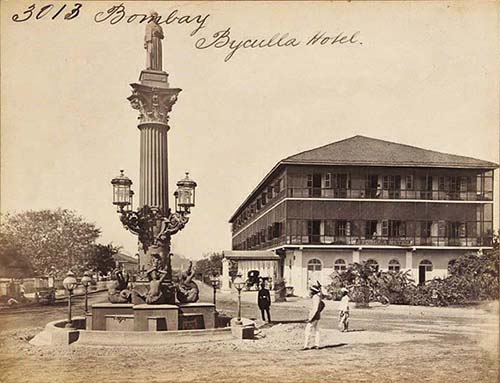
Byculla Hotel
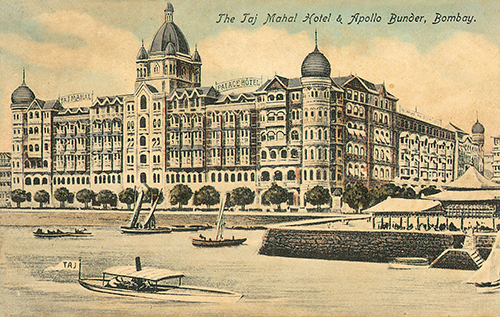
BombayThe Taj Mahal Hotel, Bombay
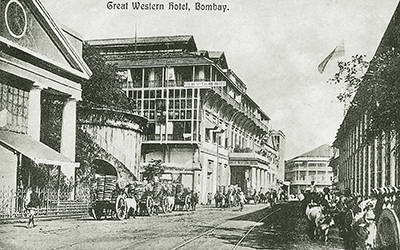
Great Western Hotel
Advertisements for Parsi owned hotels in the English newspapers boasted of commodious and comfortable accom-modation, a retinue of servants and attendants, a selection of the choicest wines, spirits and beers, culinary delights and a first class Thurston billiard table. Addressing the needs of a European clientele, "their offerings of commercial hospitality promised not only the material comforts of an English home but also the intangible benefits of a morally wholesome, secure and respectable residential establishment,” stated Patel. Parsi proprietors preferred to maintain a stricter segregation between their private quarters and that of the hotel. They chose not to venture into boarding houses where the blurred boundaries would have made them uncomfortable.
The choice of hotel names harked back to English locales or occasionally centered on a personage/title: Napier Hotel in Poona after Lord Napier of Magdala, Commander-in-Chief in India, Ripon Hotel in Mahableshwar after George Robinson, 1st Marquis of Ripon and Viceroy of India, Victoria Hotel and Prince of Wales Hotel in Bombay. "The names suggest how resolutely Parsi proprietors targeted the English traveller as well as how they chose to mark their presence in the burgeoning public spheres of Bombay and Poona. The Adelphi, Royal, British, English, Imperial, London, Hope Hall Family, Clarendon Family hotels sought to recreate in the midst of the bustling urban milieu of Bombay, pockets of an orderly England presided over by a benevolent Parsi patriarch,” she commented.
Hotel interiors were furnished with the comforts of a Victorian home — conversation half backed sofas, hanging Argand lamps with drops, partition screens, carpets, pianofortes, teapoys, cruet, pickle and egg frames, soup tureens. The similarity of artifacts at a Parsi run hotel and a British home in Bombay was most noticeable at public auctions when either a hotel closed or more commonly when a British civilian returned to England after a sojourn in Bombay.
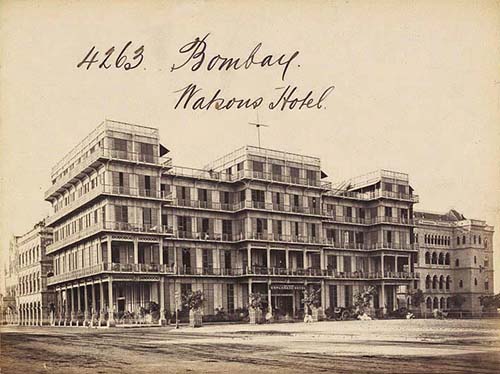
Watson's Hotel
Hotel vs home
With several residential premises available on hire for brief durations, the European visitors had an option of setting up a temporary home in Bombay rather than staying in a hotel. However, what gave hotels a competitive edge were "their offerings of the comforts of an imperial home without the drudgery of running one.” Some hotels like the Oriental Hotel in Mazagaon and Pestonjee Eduljee’s Bombay Exchange Hotel and Restaurant at Church Gate Street, charged monthly rates of Rs 50 and Rs 90 respectively.
Acting as a buffer between disgruntled guests and errant servants, hotel owners had to "pacify the former and discipline the latter, occasionally at the cost of the servant initiating legal proceedings against the proprietor for assault,” observed Patel. Hotel owners were frequent visitors to the Fort and Mazagaon Police Offices as they were answerable for cases that ranged from the payment of pending bills for wines, the recovery of debt and the charges of their staff. When Pallonjee was found guilty of assaulting Kistoo Manoel, a waiter in his employ at The Adelphi, he was fined five rupees. Apparently Manoel’s delay in preparing breakfast for a party of four before it left Bombay by a morning train resulted in one of the ladies not being served. For this delay the servant received seven blows and a black eye at Pallonjee’s hands.
With several residential premises available on hire for brief durations, the European visitors had an option of setting up a temporary home in Bombay rather than staying in a hotel. However, what gave hotels a competitive edge were "their offerings of the comforts of an imperial home without the drudgery of running one.” Some hotels like the Oriental Hotel in Mazagaon and Pestonjee Eduljee’s Bombay Exchange Hotel and Restaurant at Church Gate Street, charged monthly rates of Rs 50 and Rs 90 respectively.
Acting as a buffer between disgruntled guests and errant servants, hotel owners had to "pacify the former and discipline the latter, occasionally at the cost of the servant initiating legal proceedings against the proprietor for assault,” observed Patel. Hotel owners were frequent visitors to the Fort and Mazagaon Police Offices as they were answerable for cases that ranged from the payment of pending bills for wines, the recovery of debt and the charges of their staff. When Pallonjee was found guilty of assaulting Kistoo Manoel, a waiter in his employ at The Adelphi, he was fined five rupees. Apparently Manoel’s delay in preparing breakfast for a party of four before it left Bombay by a morning train resulted in one of the ladies not being served. For this delay the servant received seven blows and a black eye at Pallonjee’s hands.

Ruby Myers, alias Sulochana
Scandals on hotel premises were tricky matters for a Parsi proprietor largely because the parties involved were clients, taking sides was unprofitable and a hearing before a magistrate required him to attest embarrassing details as a witness. The unwanted publicity and dent to the hotel’s reputation were other unwelcome consequences of scandals, romantic or otherwise. The proprietor or manager was the first one summoned by guests to report thefts, occasions of slander, assault and adultery. When Dr Henry McGrath sought a confrontation with his wife Gertrude and her paramour Dr Charles Wiehe on December 23, 1870, at 11:30 p.m. Bomanjee Sorabjee, the manager at The Adelphi, was summoned as witness at 11.30 p.m.
The Prince of Wales Hotel at Elphinstone Circle, Fort was run by Dadabhoy Ardeshir Pochkhanavala and his partners, as recalls his grandson Feroze Dalal. It was another establishment that had its share of scandals, as Pochkhanavala’s brother was said to have had an affair with a European bar maid and fathered an illegitimate child Ruby Myers (1907-1983) who later became a famous actress under the stage name of Sulochana.
Instead of promoting the identity of the proprietor, the Taj Mahal Hotel chose to highlight the company brand and the name of the European manager, thus relieving the owner from any scandalous associations. Subsequently smaller establishments in Bombay adopted this practice too.
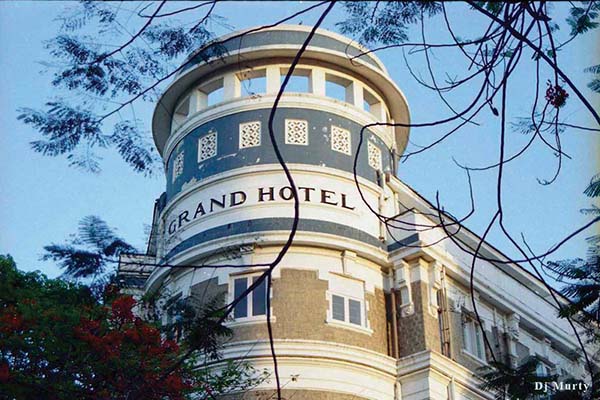
Grand Hotel
Enter the Esplanade
It was The Esplanade that changed the dynamics of hoteliering in Bombay. Offering over a 100 bed-rooms, carriage pick up and drop service to stations, multilingual staff, a hotel store, steam lift and doctor on call, it classified as a grand hotel. Other hotels in the same league were the Great Western Hotel (1883), the Apollo Hotel, The Majestic Hotel (1909) The Grand (1922). The Taj Mahal Hotel too was rated amongst the grand hotels.
The name, the aesthetics and amenities offered at industrialist Jamsetji Tata’s Taj Mahal Hotel "marked a shift towards indigenous naming practices and the promise of royal luxury, a significant elevation from the ‘home comforts’ hotels in Bombay had sought to recreate for over half a century,” declared Patel. Despite the provisions of a Turkish bath, livery stables, luxury suites, at the time of its opening in 1903, room tariffs at the Taj were Rs 6 and upwards comparing favorably with the rates of smaller hotels that had as early as 1871 charged between four to five rupees. Unlike the older models that had stressed on the privacy, security and even insularity of the establishment, Tata promoted a new, contained public sphere where guests could mingle, see and be seen.
Housing of a permanent orchestra, hosting of an array of international bands, the Ladies’ Drawing Room on the first floor were some of the other distinctive features of the Taj. But Tata’s most significant departure from its competitors was giving non-residents access to certain sections like a public billiard room and 12 shops strategically located on the ground floor of the Taj as well as restaurants at levels that offered the best view of the harbor.
Debunking the popular story that Tata started the Taj Mahal Hotel in 1903 in retaliation for being denied admission into the European run and owned The Esplanade Hotel, Patel revealed that John Watson’s The Esplanade is known to have admitted Indian guests as early as 1871, the year of its opening. She further referred to Jawaharlal Nehru who too in his autobiography denied the myth that his father Motilal had turned against British rule because he had been "blackballed” at the Allahabad Club.
Even in the 1870s, wealthy native travelers and their retinues had begun to opt for hotel accommodation rather than renting and maintaining one of the city’s many bungalows, available for short let. Yet in the 19th century, the elite, native clientele remained a small, almost insignificant number. For the upwardly mobile middle classes who were keen to partake of the educational and professional opportunities of big cities or experience a holiday at a hill station or seaside venue, hotels offered a novel, fashionable set-up and compared favorably with the older options of low budget sanatoriums and dharamshalas.
It was The Esplanade that changed the dynamics of hoteliering in Bombay. Offering over a 100 bed-rooms, carriage pick up and drop service to stations, multilingual staff, a hotel store, steam lift and doctor on call, it classified as a grand hotel. Other hotels in the same league were the Great Western Hotel (1883), the Apollo Hotel, The Majestic Hotel (1909) The Grand (1922). The Taj Mahal Hotel too was rated amongst the grand hotels.
The name, the aesthetics and amenities offered at industrialist Jamsetji Tata’s Taj Mahal Hotel "marked a shift towards indigenous naming practices and the promise of royal luxury, a significant elevation from the ‘home comforts’ hotels in Bombay had sought to recreate for over half a century,” declared Patel. Despite the provisions of a Turkish bath, livery stables, luxury suites, at the time of its opening in 1903, room tariffs at the Taj were Rs 6 and upwards comparing favorably with the rates of smaller hotels that had as early as 1871 charged between four to five rupees. Unlike the older models that had stressed on the privacy, security and even insularity of the establishment, Tata promoted a new, contained public sphere where guests could mingle, see and be seen.
Housing of a permanent orchestra, hosting of an array of international bands, the Ladies’ Drawing Room on the first floor were some of the other distinctive features of the Taj. But Tata’s most significant departure from its competitors was giving non-residents access to certain sections like a public billiard room and 12 shops strategically located on the ground floor of the Taj as well as restaurants at levels that offered the best view of the harbor.
Debunking the popular story that Tata started the Taj Mahal Hotel in 1903 in retaliation for being denied admission into the European run and owned The Esplanade Hotel, Patel revealed that John Watson’s The Esplanade is known to have admitted Indian guests as early as 1871, the year of its opening. She further referred to Jawaharlal Nehru who too in his autobiography denied the myth that his father Motilal had turned against British rule because he had been "blackballed” at the Allahabad Club.
Even in the 1870s, wealthy native travelers and their retinues had begun to opt for hotel accommodation rather than renting and maintaining one of the city’s many bungalows, available for short let. Yet in the 19th century, the elite, native clientele remained a small, almost insignificant number. For the upwardly mobile middle classes who were keen to partake of the educational and professional opportunities of big cities or experience a holiday at a hill station or seaside venue, hotels offered a novel, fashionable set-up and compared favorably with the older options of low budget sanatoriums and dharamshalas.
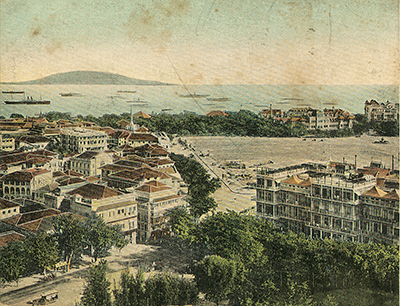
View from Rajabai Tower
Whilst natives were not excluded from partaking of early European or Parsi hospitality, Parsi-run hotels reassured potential and novice Parsi travellers through advertisements in Parsi publications. When Framji Pestonji Mogul’s Cyrus Hotel opened on Sleater Road in 1903, an advertisement read: "The hotel proprietor humbly appeals to a more generous sympathy and greater kind patronage from his worthy community in view of the fact that his business has to be restricted to the Parsi community because all his life he has firmly clung to the idea of respecting the social and religious susceptibilities of the Zoroastrians, though he is often being offered but does not accept, higher terms by the members of the sister communities.”
With the inclusion of pictorial images into marketing space, the image of the Parsi proprietor with his typical headgear and attire began to appear in advertisements for hotels, restaurants, cafes, confectionary shops and bakeries. Traces of this breed of Parsi hotel proprietors remain in the city spaces they shaped. At the death of many, funds were collected to erect memorials in the vicinity of their hotels. Dadabhay Boottee of the Napier Hotel was commemorated with a bust and fountain. A street was named after him in the Poona Camp.
In response to a question regarding the "iconic” Irani restaurants, Patel explained the Irani café was "a much later phenomenon.” The Iranis being poor migrants did not have the wherewithal to run eateries. They ran tea stalls selling a variety of bread, butter and tea. They capitalized on the "culture of the street” to capture clientele. "They served none of the food we think (of them serving) today.” The cafes were established only around 1910 to 1920.
Contrary to popular belief the early establishments did not discriminate on racial grounds. It was only later that public "space became more parochial.” So one read advertisements in the Parsi Press and publications of Parsi run hotels that restricted their clientele to Parsi boarders only.
Patel had to rely on advertisements and legal proceedings for her sources. She was unable to locate any hotel registers, recipe books or menus.
◆ ◆ ◆
From the archive