
Institutions
Development at Dadysett
Resistance to a proposed residential block within the Dadysett Atash Behram complex demonstrated varying community priorities
Nothing quite reflects the history of the Parsis in Bombay over the past two centuries as the Dadysett Atash Behram at Fanaswadi. The sacrosanct fire of the city’s first atash behram, ensconced in a sanctum sanctorum whose primitive simplicity evokes the essential sublimity of the Zoroastrian faith, continues to fan the flame of the devotee’s soul. But the majestic otlas flanking the courtyard, once an aesthetic public community backdrop for private celebration, now stand deserted and decrepit with street dwellers sleeping, bathing and loitering at will. There is neither financial and/or muscle power nor the will left in the aging, declining community to evict the trespassers. The resulting frustration finds vent in controversy and allegations of misdeeds which the trustees of the Dadysett Charity Trust (DCT) are unable or appear to do little to dispel. The current chapter in the Dady-sett Atash Behram story is the story of a community in decline.
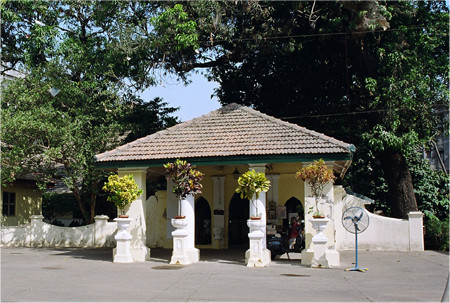
The portico of the Dadysett Atash Behram Photo: Homyar Mistry
On the property, entered through an imposing portico and a shaded walkway, in the immediate periphery of the Atash Behram, stand a structure meant to house the padshah in case of repair to the main building, a barn for the varasiya, a goat pen, bareshnum gah — a vacant area tucked into the corner for ritual priestly ablutions — and facing the temple’s entrance and joined to it by another covered walkway, Dadysett House, a two-storeyed structure with no aesthetic pretension but historically enriched by virtue of having been the residence of the founding Kadmi High Priests Mulla Kaus Rustom Jalal and his son Mulla Firoze. The duo were said to have designed and established the Atash Behram in 1783, conducting the many rituals over a period of more than three years that it takes to consecrate a fire-temple. It was in Dadysett House that the scholarly Mulla Firoze had continued with the intellectual preoccupations that had earned him the title of "mulla” during his long sojourn in Iran and built up a priceless collection of books and manuscripts.
The calm of this almost rural, almost forgotten nook in the feverish commercial activity that prevails between Gir-gaum and Kalbadevi Roads was disturbed when news of impending development by reputed builders Shapoorji Pallonji and Company of a seven-storied structure containing 70 flats in place of Dadysett House broke on the community’s consciousness. The 2.5 crore rupee project was said to be a gift to the DCT to house lower income Parsi families on rent, on leave and license basis, noted its managing trustee Ratan Lalkaka in an open letter to the community published in the Jam-e-Jamshed Weekly (June 13, 2004) and reiterated in an interview to Parsiana (see "The elusive dakhma land,” pg 94). It has been argued that their presence on the property would help to protect the padshah as well as augment the number of worshippers in the fire-temple.
But all seven High Priests of India as well as the most vocal section of the orthodox lobby panned the project in the media and at a public meeting convened by the orthodox mouthpiece, The Parsee Voice (PV), at Bombay’s Framjee Cawasjee Hall on June 10, 2004. "It is our considered opinion that constructing a residential building of 50-60 flats will bring in its wake much traffic, with noise, hawkers and other housing related activities to the doorstep of this sacred house of worship and its environs. Furthermore, we are informed that a new motorable road is planned through the Atash Behram complex itself which, in our opinion, will vitiate the solemnity and sanctity and destroy the spiritual ambience of the sacred fire,” notes a letter of protest dated June 7, 2004 addressed to the DCT signed by Dasturs (Dr) Kaikhusroo JamaspAsa, (Dr) Firoze Kotwal, (Dr) Peshotan Mirza, Meherji Meherjirana, Nadirshah Unvalla, Khurshed Dastoor and Cyrus Dastoor which was read out at the meeting.
The adversarial impasse was generated by the PV over a series of issues. The issue of April 1-15, 2004 devoted its entire four pages with the title "Serious crisis brewing at Dadysett Atash Behram: trustees out to destroy its sanctity!” The article detailed how not only Dadysett House but the bareshnum gah, the goat pen, the varasiya barn and the alternate site provided for the holy fire would be eliminated. Subsequent issues traced the history of Dadysett House and the establishment of the Mulla Firoze Madressa in honor of the late dastur in 1854 and the annexing of his Mulla Firoze Library (which the scholar had donated to the Kadmi Anjuman). Both institutions were initially located in Dadysett House.
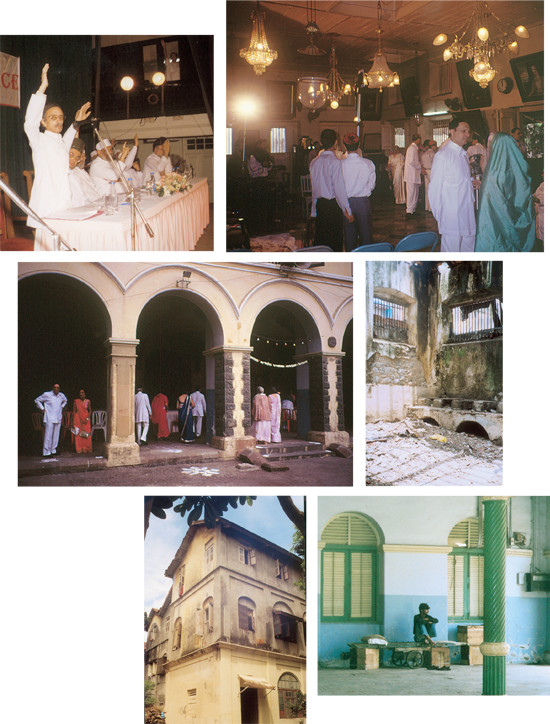
Top: The ‘ayes’ have it at the Framjee Cawasjee Hall Photo: A. F. Suder; Top (right) and center (left): The Atash Behram hall and the otla in happier times Center (right): The dilapidated kitchen of the left otla Alongside (left): Dadysett House Photo: A. F. Suder Alongside (right): A trespasser relaxing in comfort in the otla Photo: Arnavaz Mama
In "The ‘inside story’ of the demolition of Dadysett House” PV (April 16-17) notes, "The Parsee Voice has learnt that both the Mistry father-and-son... Pallonji and Shapoor, had expressed a very altruistic desire of constructing flats for Parsis. When a trustee of DCT heard this, he persuaded them to consider demolition of Dadysett House...and build a big structure for Parsis... Strangely, a Times of India report (May 1, 2004) now quotes trustee Ratan Lalkaka as saying, ‘The Shapoorji Pallonji family wants to construct the new building free of cost for poor Parsi families. All the money accruing from the sale of some of the flats as well as the transfer of development rights (TDR) will be put back into the temple’s fund.’” In July 2002 PV editor Adi Doctor and businessman Viraf Chiniwala met the Mistrys and "did their best to dissuade them from going ahead with their plans. A few months later, signatures of more than 200 Parsis were sent, strongly objecting to the demolition of the heritage building, to both the trustees and to Pallonji Mistry. There was no response from either!” states the PV.
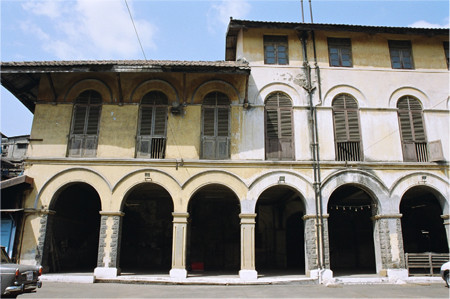
File photograph of the otla in earlier days Photo: Homyar Mistry
The public meeting began with Doctor announcing that the DCT and the Pallonji Shapoorji Trust had jointly decided to call off the project "in deference to the opinions expressed by our community’s religious scholars and with a view to prevent any division within the Parsi community over the proposal,” as per a missive addressed on bare paper (no letter head, no originating address, no date) "To the members of the Parsi Zoroastrian community” from the unnamed trustees of the DCT, ostensibly signed by Lalkaka (see "Proposed project, pg 90”). In view of the victory for the orthodox cause, Doctor was quick to emphasize, "Today’s meet concerns not only the Dadysett Atash Behram complex, but all future projects undertaken by atash behram/agiary trustees.” Doctor traced the history of the complex and referred to the DCT trustees’ claim of lack of resources for maintenance and administration as a "gimmick: My question is, have you ever approached the community to provide funds, made a public appeal?” Reproaching the DCT for doing things "on the sly,” he alleged that soil testing on the site had been undertaken by the trustees when the first need was to provide security against unauthorized intrusion.
At the meet Chiniwala declared Dadysett House to be "rock solid” and later provided Parsiana with the reports of chartered engineers and surveyors Doshi and Company and consulting engineers and architects K. R. Trivedi and Associates. [In contrast to the trustees’ depiction of the building as dilapidated, on the basis of which the Heritage Committee had sanctioned the demolition of the structure, these professionals describe the 200+ year-old structure as "reasonably well maintained...(having) considerable life span still left to be enjoyed by the occupants.” Both reports speak of the need for repair of the toilet block in the rear.]
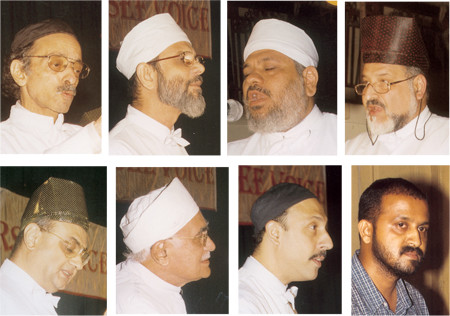
Clockwise from top left: Doctor, Mirza, Khurshed Dastoor, Mistree, Joshi, Mistry, K. N. Dastoor and Chiniwala
The more sensational part of Chiniwala’s speech was the revelation of over 37,000 sq yds of property at Walkeshwar belonging to the DCT. Originally an environmental basin for the private dakhma of the Dadysett family, he claimed that the High Court had granted a change of usage in favor of housing in the 1980s as the dakhma had been in disuse for 70-80 years. He urged the DCT to enlist the political clout and legal acumen available to the Mistry family to overcome problems of encroachment and litigation there and provide the community with housing on that land without disturbing the sanctity of the atash behram: "As the trustees claim that they want to help the community, why (don’t) they develop this land which if developed professionally and with integrity, can generate hundreds of crore rupees to the Trust?”
He also noted, "The trustees claim that they have no funds to run and maintain the property of the Pak Atash Behram Saheb and Agiary (close to Flora Fountain). Please tell us where (have) all the funds gone which were generated by transferring the various tenanted shops at the Flora Fountain property. For instance, last year the book shop having prime location at the Fountain property has changed tenancy and transformed into a florist shop with a new tenant. Do the trustees claim that this transaction which, under normal circumstances, would have generated substantial monetary consideration to the Trust, has failed to do so? And if it has generated tenancy transfer premium, then why has such capital income not been utilized...for repair to the Atash Behram?”
On the one hand Doctor read out a message from JamaspAsa wherein the Dastur noted that the DCT trustees had not taken the community in confidence, urged them to repair and strengthen old structures and desist from going ahead with the divisive project. The High Priest also suggested that the Mistry family build a new baug in the name of their illustrious forebear Shapoorji "who had great faith in the padshah saheb.” On the other, the DCT trustees’ letter stated, "We had...consulted vada dasturji Ja-maspAsa saheb at the very outset and he had, in writing, expressed his support for the project and termed it a ‘laudable’ project.” [See "The proposed project.” Parsiana’s subsequent request to Lalkaka for a copy of the Trust’s presentation to JamaspAsa and his response netted an evasive "This letter is not in our files. It may be with Shapoor (Mistry).”]
At this, the first public meeting of his career as High Priest of Udvada, Mirza concentrated on explaining to the audience the relevance and importance of each of the peripheral structures that the project would have displaced: "Without the bareshnum gah you cannot maintain an Atash Behram... the varasiya is a consecrated animal whose hair is the base for pav mahal ceremonies. It takes not less than six days to consecrate a new varasiya...space for the khajuri and pomegranate trees is essential...the milk of the goat is required for the ijashne cere-mony... They are all integral parts of the Atash Behram complex. It is sacrilegious to destroy any of them...”
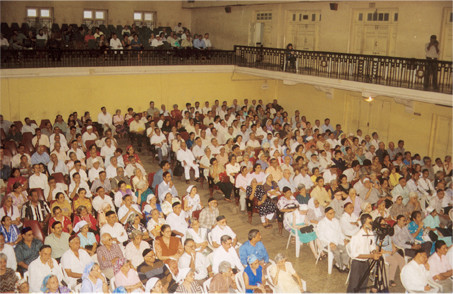
The audience in the F. C. Hall
Photo: A. F. Suder
Khshnumist lawyer and public speaker Kaikhushroo Dastoor challenged the erstwhile project on legal grounds noting that a donor’s intentions and the aims and objects of a trust cannot be subverted even by other commendable aims: the concept of cy près enjoins that the original objects of the trust, if no longer tenable, may only be replaced by other objectives closest to the original. "Housing instead of religion cannot be permitted by law.” He argued that a resolution passed by the community at a public meeting can be presented to a court of law as the voice of the community.
High priest Khurshed Dastoor of Udvada interjected the favorite orthodox bugbear of intercommunal marriage. Referring to the original DCT plan to house lower middle class Parsi families on the site, he asked, "Which Parsis will stay there? Intermarried Parsis? How will it affect the khoreh of the Atash Behram?” disregarding the fact that non-Zoroastrian tradesmen, servants and interlopers frequent the place anyway.
Orthodox rhetoric peaked with Zoroastrian Studies founder Khojeste Mistree asking, "Do we at the altar of monetary gain sacrifice the Atash Behram?... Today, pro rata we are the richest community in the world...We are logical people, not airy-fairy people. If we have properties with salubrious lands it is our job to preserve (them)...Lalkaka handed me the letter at 1 p.m. today...makes us out as the bad boys...We are not going to allow what happened at the Thoothi Agiary (at Walkeshwar), the Wadia Agiary at Lalbaug or the Vatcha Gandhy Agiary at Hughes Road (to be repeated)...” He noted that the High Priests as well as the kadmi mobeds at the Dadyseth Atash Behram and the Banaji Atash Behram had written to the Bombay Heritage Committee voicing their criticism of the per-mission it had accorded the project.
Doctor introduced conservation architect Pankaj Joshi who has spent almost a year compiling a dossier on all the fire-temples in Bombay and has appealed to the Bombay Heritage Conservation Committee to upgrade the status of all fire-temple complexes in India from grade III to grade IIB. Joshi’s request to the community to endorse his appeal had resulted in the suggestion being incorporated in the 10-point resolution read out by Hanoz Mistry at breakneck speed.
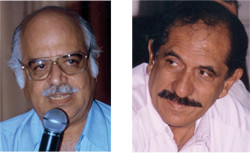
Cursetji (left) and Bhesania: ‘No scope for reasoned debate’
The resolution also expressed the repugnance of the organizers of the meeting to the proposed development; referred to the impugned project as a breach of trust of the "intentions of the donor as expressed in the original instruments of trust and culminated in the decree passed by the Hon’ble Justice Sir Dinshaw Davar in suit No 423 of 1906 Advocate General of Bombay vs Hirjee Ardeshir Dadi and Kharshedji Rustamji Cama (see pg 96);” conveyed that the proposed project violated the Parsi community’s fundamental rights conferred by the Constitution of India under Article 26; urged the Municipal Corporation of Greater Bombay and the Bombay Heritage Conservation Committee to cancel their respective permissions obtained by the DCT by "misrepresentation and suppression of material facts;” sought to bind the DCT now and in future to maintain the Atash Behram complex undisturbed and provide "proper resolution and... proper undertakings to the community as well as to the concerned authorities;” denounced any attempt now or in the future to develop any property of any fire-temple in India; and authorized the organizers of this meeting to implement the resolution.
Barring two individuals in the audience, the majority of whom had been transported to the meet in buses by the organizers, voted in favor of the resolution. Thana Anjuman president Rustom Cursetji and fellow trustee Pervez Bhesania, the dissenters, were neither in favor of the project nor of the manner of the presentation and contents of the resolution. They were refused an opportunity to express their views (see "We disagree”) and were nearly mobbed by the aye sayers at the end of the meet.
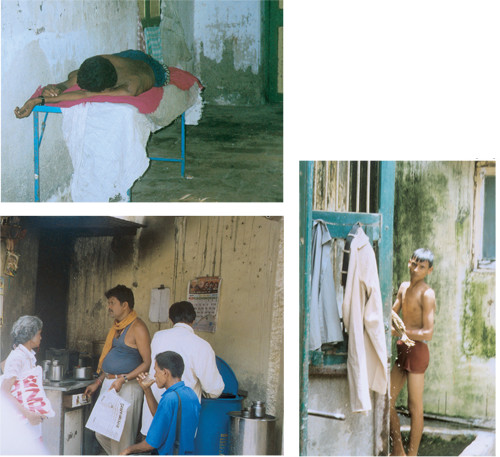
Above and below: Sleeping and bathing unhindered in the otlas. Below left: A tea stall leans against the outer wall of the complex, by the side of the main gate (Photos: Arnavaz Mama)
Congratulating the organizers as "excellent managers of this event,” Cursetji told Parsiana, "I’m very disturbed by the fact that all the learned priests and scholars missed the opportunity to be leaders...They have demonstrated that they have been able to mobilize an overwhelming majority on their side. However, history is replete with examples where the minority view has eventually prevailed and truth is not necessarily the prerogative of the majority. Why couldn’t The Parsee Voice have (made this) a democratic forum for all the voices in the community so that the community could decide based on reasoned debate instead of being led as a herd?”
Later development
Prompted by a couple of community members offering to share the cost of repairing the dilapidated kitchen of the left otla, Chiniwala says he discussed the issue with Lalkaka during a chance meeting at the Atash Behram. While Chiniwala’s rough estimate is a cost of one lakh rupees, Lalkaka has agreed to seek a quotation from the DCT’s own mason. Perhaps the adversarial face-off could soften into a more cooperative approach in the finer Zoroastrian tradition.
◆ ◆ ◆
From the archive