
Cover Story
The blessings of Bel-Air
Dr R. B. Billimoria Bel-Air Hospital celebrates its centenary by continuing its fight against infectious diseases
"The angel of death can no longer mow wide with his scythe at will. Let the young professional remember that we possess not as yet the power to destroy the enemy; but we can still work wonders.” Those words stated by Bel-Air founder Dr Rustom Billimoria in the sanatorium’s 23rd annual report 77 years ago still ring true today as the institute once founded to counter the scourge of tuberculosis (TB) today copes with the dreaded AIDS/HIV (acquired immunodeficiency syndrome/human immunodeficiency) virus. Located in the picturesque hill station of Panchgani 4,378 feet above sea level in the Western Ghats, the 100-year-old Dr R. B. Billimoria Bel-Air Hospital comprising 58 blocks sprawled over 44 acres celebrated its centenary on March 15 this year.
"Bel-Air has seen the sunset of one century and the sunrise of another. It has survived many ups and downs — trials and tribulations… it has surged into both the national and international arenas,” noted Homai Modi, honorary secretary of the Maharashtra State branch of Red Cross of which Bel-Air is a division.
"Bel-Air has seen the sunset of one century and the sunrise of another. It has survived many ups and downs — trials and tribulations… it has surged into both the national and international arenas,” noted Homai Modi, honorary secretary of the Maharashtra State branch of Red Cross of which Bel-Air is a division.
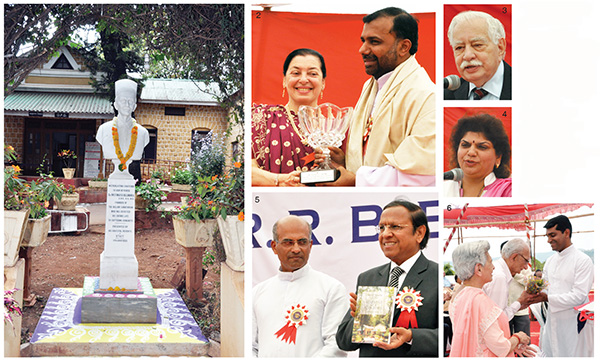
1) Bust of Bel-Air founder Dr Rustom Billimoria; 2) Homai Modi and Fr Tomy Kariyilakulam;
3) Kersi Gherda; 4) Lakshmi Karadkar; 5) Fr Thomas T. C. and Dr S. P. Agarwal
6) Presenting memento to Viloo and Eruch Ghadially among Bel-Air’s oldest employees
Red Cross state chairman Kersi Gherda recalled the progress Bel-Air had made despite financial handicaps since its 90th year celebration in 2003 inaugurated by the then President of India Dr A. P. J. Abdul Kalam. Gherda termed Bel-Air "a great place to be associated with.” Kalam had stated during his visit that Bel-Air’s environment gives the patients "emotional support” and described the doctors and staff as "people of strong mind…divine persons (who) cure pain in body and mind.”
Releasing a souvenir published for the centenary, Fr Thomas T. C. of The Missionary Congregation of the Blessed Sacrament (MCBS) which runs Bel-Air and director of the Asha Project in Satara for mentally challenged children spoke of how behind this "great institute” which tended to "the most neglected and poor,” lay a "painful story of its development.” He recalled how the Hospital’s dedicated director and moving force, Fr Tomy Scaria Kariyilakulam, popularly known as "Fr Tomy,” once rushed to Satara on his motorcycle to obtain a life-saving suction pump required for a 22-year-old female patient and on the way back met with an accident that resulted in a broken collar bone (see Trials and Tribulations).
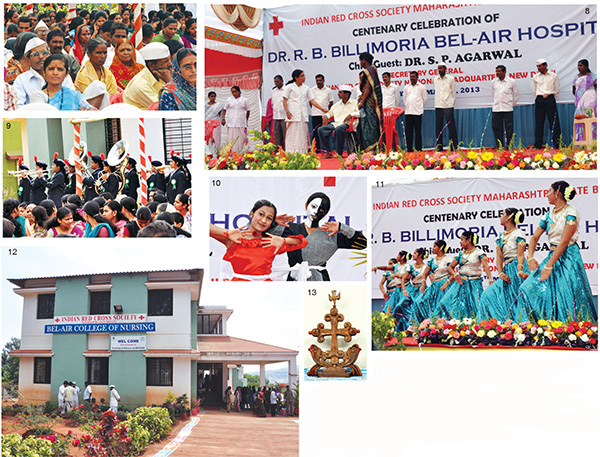
7) section of the audience; 8) skit performed by former patients who now work at Bel-Air; 9) all-women students’ band;
10 & 11) dance performed by nursing students; 12) College of Nursing; 13) cross in chapel
The story is recorded in a 160-page book Harvest of a Century "written in golden letters,” as stated by Thomas. The paperback authored by Modi and assisted by Parsiana’s then managing editor Arnavaz Mama was released at the function by Dr Satya Paul Agarwal, a renowned surgeon, secretary general of the Indian Red Cross Society, president of the Tuberculosis Association of India and former director general of Health Services, Government of India.
Noting he "cannot substitute for the President of India” who had been invited to inaugurate the celebrations but was unable to do so, Agarwal spoke of the paramount need "to invest first in health, not later.” India needed "a paradigm shift in priorities if you want to progress.” He noted that though the mortality rate for TB has come down from 25 percent to five percent, two million new cases were recorded every year, "the largest numbers being in India.”
"Over a 1,00,000 people are turned out of their houses on account of contracting TB. Children are removed from schools and colleges as the parents contract TB and there is nobody else to look after them,” said the surgeon.
As the body’s immunity weakened on account of the disease, the patients became more vulnerable to HIV. Malnutrition, stress, diabetes all contribute to the onset of TB. "It is a public health problem… Not only doctors, religious leaders, social workers” and others also could educate people about precautionary measures to be followed. Simple measures like covering one’s mouth while sneezing would arrest the spread of this illness that can "pop up any-where in the bones, lungs,” etc.
"New research is not being done” on TB as it is an illness affecting the developing world, said Agarwal. Medical research focused more on illnesses like diabetes that afflicts the developed world as well.
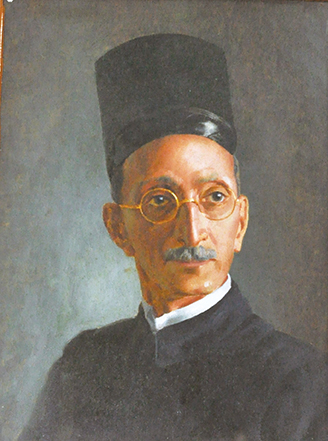
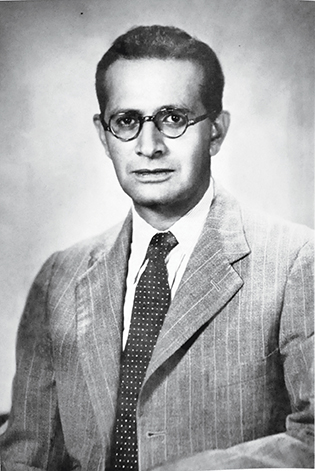
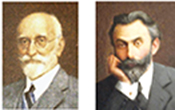
Portrait of Drs Rustom (left) and Bomi Billimoria
Terming the Red Cross "the largest humanitarian body in the world,” Agarwal lauded the organization’s efforts in controlling the spread of TB. He termed Modi, the "Mother Teresa of Bel-Air…the voice of the vulnerable.”
Lakshmi Karadkar, president of the Panchgani Municipal Council termed Bel-Air "the lifeline of Panchgani” on account of its excellent medical facilities and doctors. Following surgery on her husband at the Hospital for a fracture, she recalled a leading orthopedic consultant based elsewhere commenting "you could not have had better surgery anywhere else.” She applauded the institute’s "human touch” and the care they lavished on the economically disadvantaged.
Orthopaedic surgeon Dr Tuhid Irani is a consultant at Bel-Air as is his wife Dr Firoza, a gynaecologist.
While noting that Billimoria "led the country” in the battle against TB, Tomy foresaw "great things happening” at the institute. He praised "the excellent staff” at Bel-Air that made it possible for him "to roam the world” drumming up support for the institute and spreading the word on how the Hospital was tackling AIDS/HIV.
A message from the governor of Maharashtra, K. Sankaranarayanan published in the souvenir noted the 240-bed general hospital and TB and HIV/AIDS center has "rendered matchless service” to the disadvantaged while opening an Ayurvedic treatment center and a nursing college, the latter as Modi noted was the outcome of an article in Parsiana ("Legacy of love,” October 2003) by Mama who had visited Bel-Air around half a dozen times to write several lengthy articles on the facility for Parsiana. The write-up had caught the eye of reader Dr Mehroo Patel in Chicago who had worked at Bel-Air with Billimoria’s son Dr Bomi. Writing in Parsiana (August 2004), Patel observed, "The second generation of western Indians can volunteer their services…
"It may be flippantly argued that the focus has moved away from TB care to HIV/AIDS terminal care. (We) vehemently disagree with that simplistic statement. While HIV/AIDS care is one part of the whole hospital and sanatorium experience at Bel-Air, it is certainly not the dumping ground or terminal care concept… For those already victims of this affliction, (Bel-Air) offers the 21st century holistic, compassionate care, integrated with scientific evidence-based medicine, incorporating nutrition, personal and social hygiene in a truly beautiful and nurturing environment.”
Sirs Dorab (left) and Ratan Tata
She and her husband Minu, a professor emeritus at the University of Chicago at Illinois College of Nursing, took the initiative to forge an alliance between the University and Bel-Air to launch the College of Nursing at Bel-Air in 2006. The first batch of 20 students graduated on March 19, 2011.
"A memorandum of understanding with Breach Candy Hospital (in Bombay) ensures that 20 of our nurses each year are sent to work there,” elaborates Modi in a background note on Bel-Air sent along with the invitation to the centenary celebrations.
The Tata bequest
In 1912 Dr Rustom Billimoria along with a Dr Ichhaporia was returning to Bombay "after a futile search for a place for a tuberculosis sanatorium in Poona, when destiny played its first card,” notes Harvest of a Century. An unknown co-passenger by the name of Rustom Bharucha learnt of their unsuccessful forage and offered to try and help. Shortly thereafter they received a letter informing them a bungalow "large enough to house 12 patients, with a separate doctor’s cottage and guest room, dispensary, laboratory, servants quarters and stables” was available for Rs 1,200 a year. Thus Bel-Air started on December 1, 1912 with the assistance of a loan of Rs 6,000 from Sir Ratan Tata.
In 1912 Dr Rustom Billimoria along with a Dr Ichhaporia was returning to Bombay "after a futile search for a place for a tuberculosis sanatorium in Poona, when destiny played its first card,” notes Harvest of a Century. An unknown co-passenger by the name of Rustom Bharucha learnt of their unsuccessful forage and offered to try and help. Shortly thereafter they received a letter informing them a bungalow "large enough to house 12 patients, with a separate doctor’s cottage and guest room, dispensary, laboratory, servants quarters and stables” was available for Rs 1,200 a year. Thus Bel-Air started on December 1, 1912 with the assistance of a loan of Rs 6,000 from Sir Ratan Tata.
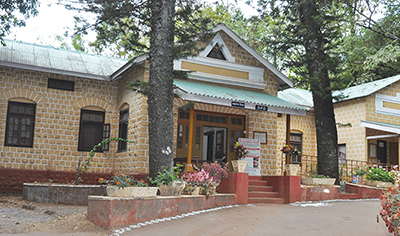
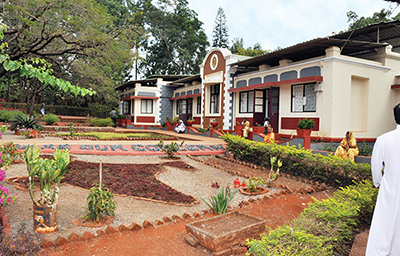
Outpatient department and Nowroji Wadia Block
As the premises fell short of the growing requirement of Bel-Air, a well-wisher Maneksha Pochkhanawala spoke to Tata’s brother Sir Dorab who generously donated the Dalkeith Estate in Panchgani to Bel-Air.
A specialist in chest diseases Billimoria’s "chief aim in life was to control the rampant spread of the disease (TB) in the country.” The Tubercle Bacillus was discovered in 1882 by Robert Koch and till the early 20th century those infected with the bacteria were "ostracized, neglected and condemned to an early death.” Treatment consisted of residing in a sanatorium for a long period of time. Many patients did not recover. "It is a mistake to think that there is any radical cure for tuberculosis. It is fundamentally a constitutional disease, in which the help of nature has to be invoked far more than that of drugs,” observed Billimoria.
"Every week the doughty doctor took the 3 p.m. train from Bombay to reach Wathar station at midnight. From there he took a tonga (a light horse drawn vehicle) — and even continued the nine-mile steep incline of the Parsani Ghat on foot when the rickety contraption broke down — to reach Panchgani at dawn. By the early 1920s the institution was the finest in Bombay state and had a national reputation.”
Raised as a devout Zoroastrian, by his father Bomanji, Billimoria was always clad in a Parsi dagla, white cotton trousers and a pugree. The book Dr R. B. Billimoria Bel-Air Sanatorium and Hospital, Panchgani (1912-2003) published by the Indian Red Cross Society, Bombay, documenting the history and resurgence of Bel-Air states Billimoria was "a man of few words, soft-spoken, civil, but without meaning to be discourteous, brusque… To most people he came across as fiery but kindly eccentric.” His niece Roda Billimoria recalls "he had no bedside manners but he had a heart of gold.”
His son Bomi studied and worked in England and returned to India in 1947 accompanied by his English wife Mavis, a professional midwife and nurse, and their one-year-old daughter Sarah.
.jpg)
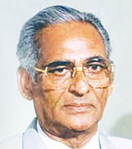
Dr P. C. Alexander (left) and Mehraban Zartoshty
Sarah Cheesman told Mama she remembered her grandfather as being "overpowering (and) very strict. Dad (who) was softer, quieter and very western in his way of life (was somewhat) in awe of him. Our navjotes were very quiet, at Silloo and Shapurji’s (Rustom’s brother) house. Grandpa had arranged for the priests.” She says Bomi always wore his sudreh-kusti though "I don’t know whether he knew the prayers. Dad died before grandpa and he was cremated, against grandpa’s wishes.”
In 1926 Rustom transferred the management of Bel-Air to a board of trustees. In 1965 control was handed over to the Indian Red Cross Society. "This arrangement worked smoothly till the 1990s, but from thereon, (with) budgetary constraints and receding public health care funding by the State Government, this important source of funding dried up, with the State reneging on its health care obligations. This was a lethal blow,” states Mama.
By the 1980s new anti TB drugs eliminated the need for hospitalization and the occupancy dropped sharply at Bel-Air. Donor fatigue, erratic government support, spiraling drug prices, land encroachment and labor militancy created a crisis.
"Into this seemingly hopeless quagmire walked a young tourist, a priest from Kerala,” writes Mama. "Astutely assessing the potential of the institution and the estate, Tomy approached the Red Cross authorities in Bombay with the proposal that his MCBS would be willing to manage the Hospital as a Red Cross project. In 1994 the Red Cross signed an agreement entrusting the administration of Bel-Air to the MCBS and appointing Tomy as the administrator.”
A donation of Rs 1.25 crore from the late philanthropists Mehraban and Faridoon Zartoshty and a firm handling of the labor situation set the institute back on track. An ayurvedic and naturopathy center was established in addition to the departments of orthopedics, pediatrics, general medicine and intensive care.
On his final visit to Bel-Air in 2001 as governor of Maharashtra and ex-officio president of the Red Cross Society of Maharashtra State, Dr P. C. Alexander stated, "I have visited Bel-Air regularly during the last eight years since I have been the governor of the State. I am impressed by the change I see today — the cleanliness of the place, the improvements that have been brought about and the additions made in the available medical facilities. The smiling plants and flowers welcome me and there is an atmosphere that permeates peace, tranquility and hope.”
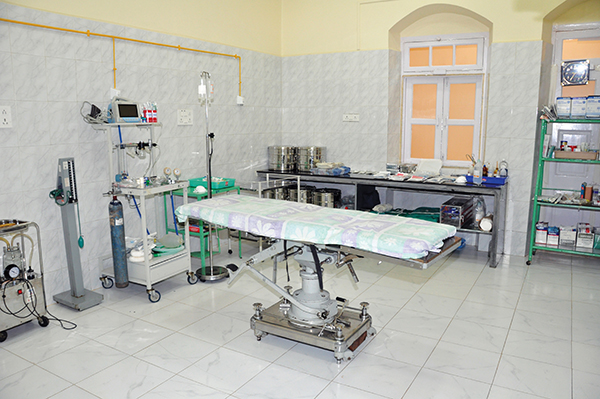
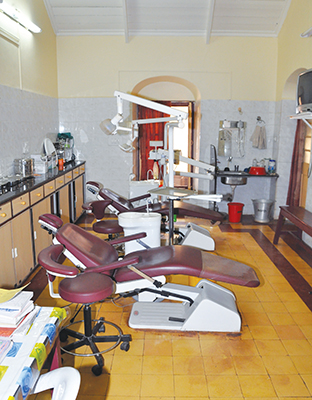
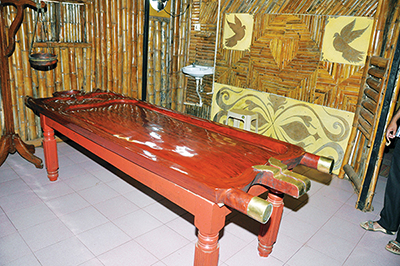
Surgical bed, dental department and ayurvedic center
On a tour of the complex following the centenary function one saw solar panels installed and plans for an in-house dairy and stoves fueled by gobar gas.
As Modi noted in concluding her brief speech, "I would like to mention what our founder realized and practiced — as we also do at Bel-Air. He believed that human beings, like nature’s creations, are happiest when linked with an emotional bond with their own. To provide this bond to patients is by far the best therapy to promote both physical and mental healing. This is spirituality in its highest form and has become the key to our institution’s success.”
If it were not for Modi and Tomy’s continued efforts, Billimoria’s pioneering legacy at Bel-Air would have been lost. The fortuitous combination of Modi’s consistent concern and fund-raising ability and Tomy’s vision, drive and dedication has ensured the survival of a much loved and required institution.
Donations to Bel-Air should be made in the name of "Dr Rustomji B. Billimoria Bel-Air Sanatorium Sub-Committee Indian Red Cross Society Maharashtra State Branch” and sent to 141, Shahid Bhagat Singh Road, Town Hall Compound, Bombay 400001.
Trials and tribulations
Extracts from Harvest of a Century
In 1994 Sister Dawn managed 20 patients. She was an extraordinarily good nurse. She needed a suction apparatus. It was a life-saving system in some cases. Tomy’s search in Satara led him to Surgimed, a shop run by Rajan Bhavne who showed him an item that cost Rs 3,750. Father said he was willing to buy it from the monthly stipend of Rs 1,500 he received from the congregation. For two to three weeks he went back and forth to negotiate on the price. By then Dawn was struggling to save a breathless 22-year-old girl who weighed a meager 27 kg. Dawn... turned angrily to Tomy: "If she dies I will hold you responsible.”
Father immediately got on his motorbike and sped over the very bad road to Satara and told Bhavne, "I’ll pay you in a week’s time, but I need the machine now.” Tomy was so forceful that Bhavne packed it up and put it on the motorbike. There being no traffic, Father rode very fast until suddenly, a herd of buffaloes appeared. He was tossed on the road and had multiple fractures but fortunately lived to tell the tale as he had worn a helmet! The machine was smashed and Father was admitted to the civil hospital. Friends paid for the damaged machine (the price was reduced) and a new one was provided. That was on January 2, 1995 when the girl died.
Extracts from Harvest of a Century
In 1994 Sister Dawn managed 20 patients. She was an extraordinarily good nurse. She needed a suction apparatus. It was a life-saving system in some cases. Tomy’s search in Satara led him to Surgimed, a shop run by Rajan Bhavne who showed him an item that cost Rs 3,750. Father said he was willing to buy it from the monthly stipend of Rs 1,500 he received from the congregation. For two to three weeks he went back and forth to negotiate on the price. By then Dawn was struggling to save a breathless 22-year-old girl who weighed a meager 27 kg. Dawn... turned angrily to Tomy: "If she dies I will hold you responsible.”
Father immediately got on his motorbike and sped over the very bad road to Satara and told Bhavne, "I’ll pay you in a week’s time, but I need the machine now.” Tomy was so forceful that Bhavne packed it up and put it on the motorbike. There being no traffic, Father rode very fast until suddenly, a herd of buffaloes appeared. He was tossed on the road and had multiple fractures but fortunately lived to tell the tale as he had worn a helmet! The machine was smashed and Father was admitted to the civil hospital. Friends paid for the damaged machine (the price was reduced) and a new one was provided. That was on January 2, 1995 when the girl died.
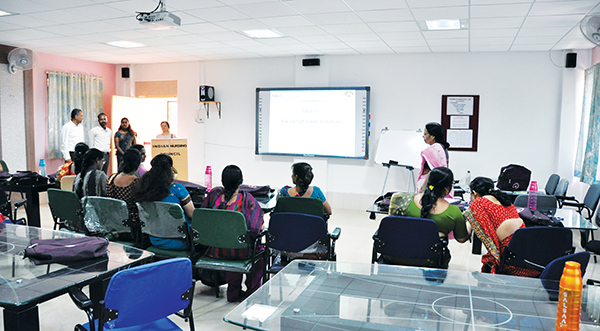
Classroom at the College of Nursing
Labor militancy in 1995 became a persistent headache. Tomy decided to take disciplinary action against the leader — Jaswant Vanne. The intention was to suspend him pending an enquiry but he needed to go to Satara and get legal documentation and advice. Ashok Kamthe who died in the terror attack in Bombay in 2008 was then Superintendent of Police (SP) of Satara…
"He told me,” says Tomy, "to meet his officers in the Panchgani police station and gave me his card. Next morning I went and spoke to the police inspector and explained the problem, came back by 10 a.m. and gave the suspension order. It was like a bomb shell. They did not expect me, who was new over here, to take such strong action. I was expecting a strike but there was a lot of movement. Around noon they filed a complaint that I had raped a woman. Here I was, a young priest and the written complaint had been made by a lady working in the Hospital. Other sweepers had signed as witnesses. They came with the support of (the) Shiv Sena (SS) leaders and wanted me arrested.
"I phoned Kamthe. He called the Panchgani police inspector and asked him to protect me… The mob was growing and the town was tense ... The police jeep came to take me to the police station. They gave me the written complaint but there was no mention of the time or place where the incident had allegedly occurred. The police questioned the woman and she eventually acknowledged that she had been put up to do this.
"The police wanted to put the SS leaders in jail. I interceded and told the police that I had no complaint against them. After that the SS became friendly. I won them over.”
"He told me,” says Tomy, "to meet his officers in the Panchgani police station and gave me his card. Next morning I went and spoke to the police inspector and explained the problem, came back by 10 a.m. and gave the suspension order. It was like a bomb shell. They did not expect me, who was new over here, to take such strong action. I was expecting a strike but there was a lot of movement. Around noon they filed a complaint that I had raped a woman. Here I was, a young priest and the written complaint had been made by a lady working in the Hospital. Other sweepers had signed as witnesses. They came with the support of (the) Shiv Sena (SS) leaders and wanted me arrested.
"I phoned Kamthe. He called the Panchgani police inspector and asked him to protect me… The mob was growing and the town was tense ... The police jeep came to take me to the police station. They gave me the written complaint but there was no mention of the time or place where the incident had allegedly occurred. The police questioned the woman and she eventually acknowledged that she had been put up to do this.
"The police wanted to put the SS leaders in jail. I interceded and told the police that I had no complaint against them. After that the SS became friendly. I won them over.”
While Tomy was struggling for resources for food for the patients and salaries for the staff, nothing was forthcoming from the Red Cross and the Hospital faced a huge debt. Into this already charged atmosphere came a notice from the Maharashtra State Electricity Board (MSEB) for Rs 7,15,000, claiming to be arrears and interest from 1983… Despite letters to the board protesting the bill and correspondence dragging on for a few months, when he was in Kerala for an important meeting of his congregation, he received a phone call that electric supply to the Hospital had been disconnected…
Tomy phoned the MSEB chairman in his office at Bandra East demanding to know how electric supply to a Red Cross Hospital — the only one serving poor people in the area — could be disconnected when big corporates were known to renege on payments for electricity. Tomy let it be known that the charges had been illegally altered from domestic to commercial tariff, that this had happened while he was out of station and the disconnection of electricity meant that the Hospital was also without water, being unable to pump water from its wells.
The chairman tried to draw him into further conversation but Tomy suggested that he reconnect the power first or face litigation in the Bombay High Court. Within a very short time thereafter he received a call from the Hospital saying the power had been reconnected.
Tomy phoned the MSEB chairman in his office at Bandra East demanding to know how electric supply to a Red Cross Hospital — the only one serving poor people in the area — could be disconnected when big corporates were known to renege on payments for electricity. Tomy let it be known that the charges had been illegally altered from domestic to commercial tariff, that this had happened while he was out of station and the disconnection of electricity meant that the Hospital was also without water, being unable to pump water from its wells.
The chairman tried to draw him into further conversation but Tomy suggested that he reconnect the power first or face litigation in the Bombay High Court. Within a very short time thereafter he received a call from the Hospital saying the power had been reconnected.
Laughable in hindsight, was the barber crisis. The barbers of Panchgani refused to serve anyone from Bel-Air for fear of infection. A mobile barber was found. He became quite comfortable with the patients, made money and got free treatment from the Hospital including an operation for hernia.
◆ ◆ ◆
From the archive