
Books
Desai’s deft depictions
The Bawaji: Chronicles of a Vanishing Community by Berjis Desai. Published in 2019 by Zero Degree Publishing, No. 55(7), R Block, 6th Avenue, Anna Nagar, Madras 600040. Pp: 231. Price: Rs 299.
Eminent lawyer Berjis Desai’s (pictured) latest book, The Bawaji. Chronicles of a Vanishing Community, is once again a wonderful collection of 50 "unforgettable bawas.” These pen portraits had first appeared in Parsiana between 2017 and 2019. The characters, ranging from the eccentric to the praiseworthy, are presented with Desai’s usual wit, humor, brilliant turn of phrase and, above all, compassion. No judgment is passed, no stringent criticism levied.
The first is a charming portrait of two elderly sisters who are caught in a time warp. The departure of the British seems to have left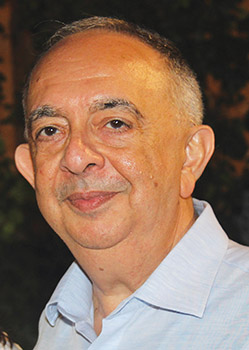 no impact on their lives. The thought of giving up English corsets, French frills and Chinese silk in favor of khadi was anathema to them. Desai evocatively creates a world of liveried butlers, rosewood dining tables, shepherd’s pie, Wedgewood tea service and ultra-thin bone china cups. The portrait is affectionately etched with a perceptive, though not unkind, comment about a sister reading her prayers "in English” while a servant carried the holy incense around the house "more to ward off mosquitoes than propitiate the holy fire.”
He sees similar characteristics in "The couple.” They invite four couples for dinner at 7.30 p.m., eat steak and kidney pie more often than the traditional Parsi fare, dinner is announced promptly at 8.15 p.m. by the tinkling of a bell and elegant table manners are expected of the guests. So British is the husband that he expected a cab driver to take him to Kala Ghoda by merely referring to his destination as the statue of the Prince of Wales. When the taxi driver was blank about the destination, the gentleman got confused and called it Kala Gadha.
Probably, the most eccentric is "The frogman” who travelled every day, immaculately dressed, from Navsari to Surat where he would get his shoes polished, consume a lemon soda and return home. He would then systematically undress and not wear on a single garment other than a black cap and strut around naked in his house with curtainless windows open to full view of the passersby. He had firmly decided that "clothes were just not meant for him.”
However, not all the characters are eccentric. Desai mentions in his "Author’s Note” that "the intention was not to simply titillate or entertain.” What is interesting is the humane portrayal of his subjects. They are rarely crudely classified as black or white but are presented in varying shades of grey which gives them a more human and endearing character. "The Head Priest” was efficient in the performance of his duties. He brought joy to his flock: not only were the prayers said more fervently but also the quality of the chasni improved. However, he was a compulsive gambler and was once even seen in a compromising situation with the lady manager of the orphanage he managed in his hometown. In "The gambler,” Homi places matka bets on numbers which are suggested in a dream by Saibaba of Shirdi. After successive wins, Homi forsakes matka in favor of the holy man and becomes one of his principal devotees. As Desai remarks, "he placed his bet, so correctly, on his Master.”
Eminent lawyer Berjis Desai’s (pictured) latest book, The Bawaji. Chronicles of a Vanishing Community, is once again a wonderful collection of 50 "unforgettable bawas.” These pen portraits had first appeared in Parsiana between 2017 and 2019. The characters, ranging from the eccentric to the praiseworthy, are presented with Desai’s usual wit, humor, brilliant turn of phrase and, above all, compassion. No judgment is passed, no stringent criticism levied.
The first is a charming portrait of two elderly sisters who are caught in a time warp. The departure of the British seems to have left
no impact on their lives. The thought of giving up English corsets, French frills and Chinese silk in favor of khadi was anathema to them. Desai evocatively creates a world of liveried butlers, rosewood dining tables, shepherd’s pie, Wedgewood tea service and ultra-thin bone china cups. The portrait is affectionately etched with a perceptive, though not unkind, comment about a sister reading her prayers "in English” while a servant carried the holy incense around the house "more to ward off mosquitoes than propitiate the holy fire.”He sees similar characteristics in "The couple.” They invite four couples for dinner at 7.30 p.m., eat steak and kidney pie more often than the traditional Parsi fare, dinner is announced promptly at 8.15 p.m. by the tinkling of a bell and elegant table manners are expected of the guests. So British is the husband that he expected a cab driver to take him to Kala Ghoda by merely referring to his destination as the statue of the Prince of Wales. When the taxi driver was blank about the destination, the gentleman got confused and called it Kala Gadha.
Probably, the most eccentric is "The frogman” who travelled every day, immaculately dressed, from Navsari to Surat where he would get his shoes polished, consume a lemon soda and return home. He would then systematically undress and not wear on a single garment other than a black cap and strut around naked in his house with curtainless windows open to full view of the passersby. He had firmly decided that "clothes were just not meant for him.”
However, not all the characters are eccentric. Desai mentions in his "Author’s Note” that "the intention was not to simply titillate or entertain.” What is interesting is the humane portrayal of his subjects. They are rarely crudely classified as black or white but are presented in varying shades of grey which gives them a more human and endearing character. "The Head Priest” was efficient in the performance of his duties. He brought joy to his flock: not only were the prayers said more fervently but also the quality of the chasni improved. However, he was a compulsive gambler and was once even seen in a compromising situation with the lady manager of the orphanage he managed in his hometown. In "The gambler,” Homi places matka bets on numbers which are suggested in a dream by Saibaba of Shirdi. After successive wins, Homi forsakes matka in favor of the holy man and becomes one of his principal devotees. As Desai remarks, "he placed his bet, so correctly, on his Master.”
 Unequivocal praise is lavished on "The city father,” a Parsi corporator who from humble beginnings became a benevolent landlord and fought crime fearlessly wherever he found it. He served his constituents 24/7 and was elected and re-elected in a largely Muslim constituency where he defeated Muslim candidates and made them lose their deposit. He was brutally assassinated when he took on an underworld don. Desai has less patience with "The minister” who is tremendously status and publicity conscious and is upset when, during a visit to Navsari, a horse-drawn carriage is sent for him instead of a car, and complains that the mullet (boi fish) has too many bones and the drinking water has not been boiled. Yet, Desai presents a human picture of the man who, when he lost his only son in a tragic accident, is "calm and composed” while delivering a vote of thanks at the funeral.
Desai once again presents a moving portrait of "The dancer” whose passion was BharatNatyam and Kathak. He performed in several dance dramas and fell in love with a co-dancer who promptly divorced him after the birth of their son. In spite of relative poverty and ill health, till the end of his life he remained "happy, helpful and non-judgmental. But his feet stopped dancing.”
In Desai’s hands, "The opportunist” takes on an unusual color. This gentleman lived in abject poverty and donated all his wealth and possessions so that he could help those in need. "He grabbed every opportunity… to serve the poor, the weak, and the defenceless.” In "The parents” he describes the selfless work done by a couple "to alleviate rural poverty.” The list of their achievements is endless: "sturdy cottages were built with basic furniture, sanitation, drainage, electricity, bore wells and agricultural interventions” are just a few of the things they started. They performed their job with dignity and perseverance never once stopping to "hit back at their critics” or "indulge in theological debates.”
In "The singer,” Desai describes a girl who manages to wow audiences as a qawwali singer. Mahaafrid is courageous and had no issue in dealing with lascivious stares, lewd comments or the censure of conservative priests. She fearlessly exposed the scandal of the rotting bodies lying in the Towers of Silence at the risk of her own personal safety and, while living a parsimonious life herself, established a trust for disadvantaged girl students and commercial sex workers.
What is most remarkable about this collection is that there is a balance between the eccentric and the serious, the lighthearted and the pioneers. Even though Desai presents Parsis, warts and all, the several sterling qualities of the community are gently highlighted — a concern for justice, even at overwhelming costs, charity to others even if it means living a threadbare existence, and a host of others. These values are not broadcast with a sense of pomp and self-praise. It is the tenderness and the deft touch which Desai brings to his characters, which makes each and every one a delight to read. FIRDAUS GANDAVIA
Gandavia holds a doctorate in English literature and is a retired chartered accountant. He is a compulsive reader of fiction.
◆ ◆ ◆
From the archive