
The critic and crusader
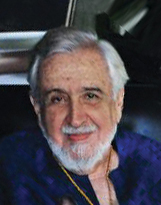 Died: Ardeshir Rustom Cowasjee, 86, Pakistan’s crusader columnist, activist and philanthropist, in Karachi on November 24, 2012 following chest infection.
"Now, old at 85, tired and disillusioned with a country that just cannot pull itself together in any way and get on with life in this day and age, I have decided to call it a day," wrote Cowasjee in his final column in Dawn in December 2011. It pained Cowasjee that the original idea of Pakistan as conceived by its founder Mohammad Ali Jinnah was forgotten soon after his death. To see the nation rescued from the depredations of its political, business, sectarian and ethnic leaders and turned into a thriving pluralistic country he strove relentlessly. Author of 960 articles that reflected his "passion for justice," the columnist had been conferred the 11th Jinnah Award in December 2011 in recognition of his outstanding and dedicated services to Pakistan (see "His words are feared…" Zoroastrians Abroad, Parsiana, January 7, 2012).
"Columnists are a peculiar breed of writers and perhaps no one assumed the persona of a columnist as well as Cowasjee. His age, pedigree, wealth and chutzpah gave him a vantage point that few could ever hope for. But what made Cowasjee such a beloved columnist for many readers was the mixture of gravitas and mischievousness that he brought to his writing," noted an editorial in Dawn acknowledging his weekly contribution over 22 years that was "a testament to the power of the pen in an era much before the revolution in electronic media transformed the media landscape and minted dozens of new stars. That Cowasjee was able to stay relevant even in the transformed media landscape of the last decade said much about his ability to connect with readers and act as a voice of inspiration amidst the uncertainty and chaos of history unfolding."
 "Cowasjee’s death represents the death of an old, far more cosmopolitan and tolerant Karachi. He was a Gujarati speaking Parsi gentleman of the old school — profane, blunt, outspoken, fearless," remarked Talat Aslam, senior editor of The News, adding, "His Sunday Dawn columns were a must-read as they voiced the frustrations of an educated, urbane readership watching their country’s decline at the hands of crooked politicians, greedy builders." The mafia being entrenched in the political parties which rule the country Cowasjee took many of them to court to stop encroachments on public land. As acknowledged well-known Pakistani writer Raza Rumi, "The courts and the governments, within a short period of time, had to take action in response to the issues he raised." His keen involvement in the late 1990s in the Karachi Building Control Authority’s Oversee Committee and the subsequent setting up of a Public Information Counter helped establish a modicum of transparency in the infamous "nest of corruption."
Convinced that the series of political and military rulers were misfits in a Pakistan that Jinnah had conceived, from the early 1990s Cowasjee moved away from his old rhetorical style of writing and opted to put hard facts and figures on paper as he "went about like a man on a one-way mission." He considered erstwhile Pakistan president Pervez Musharraf as the best of the worst. A friend turned critic of Zulfiqar Ali Bhutto, Newsweek Magazine recounted an incident in the early 1960s when Cowasjee and his wife Nancy raced to pick up a friend whose husband had kicked her out of the house. They drove the distraught woman to the country’s military ruler Gen Ayub Khan. Apparently the next day the General summoned Bhutto and served him an ultimatum: take back your wife or lose your cabinet post. Miffed by Cowasjee, Bhutto retaliated years later when he became prime minister, by nationalizing Cowasjee’s shipping business. Bhutto even had Cowasjee arbitrarily put behind bars for 72 days although some years prior the Prime Minister had appointed him managing director of the Pakistan Tourism Development Board.
A tweet by Abbas Nasir, former editor of Dawn commented, "He was an ardent critic of the religious parties who, according to him, steered Pakistan away from being a secular state." Nearly a decade ago banners went up in Karachi cursing Cowasjee for working against the so-called "ideology of Pakistan" and Islam, and the government had to post police guards outside his home in Karachi’s Bath Island area. Though provided by the government, the guards were largely financed and fed by Cowasjee. Undaunted by the death threats he received, he soldiered on.
 Journalist Saher Baloch recounted in The International News Cowasjee’s words when asked regarding the death threats, "They won’t kill me. Saala, yeh kaam bhi ooper waala sé karaaengé – ké boodhaa mar jay jaldi, kaheen iss ké wasté méhnat nahi karna paré (even this job they will ask God to do. They will pray that this old man dies so that they need not put in any efforts to achieve their aim)." As she further added, "He was not one to take a bait during an interview and neither did he play to the gallery. He was always true to himself and spoke his mind… Despite being a bitter critic of present-day Pakistan… he did not leave Pakistan and settle in a calmer, saner place despite advising everyone else to do so."
This was the period when Cowasjee was invited as guest on privately owned television channels that had exploded onto the scene. But on this medium, instead of articulating in English he chose to respond in his crude Urdu, freely using words like "khachar (mule), chariya (demented), chor (thief) among others to define politicians, military men and their followers," recalled Nadeem Paracha in New Age Islam. On one of the programs when he was asked to comment on the possibility of Pakistan becoming a nuclear power, he thundered, "Saalaa iss quam sé gutter to bandh hota nahi; bum kya chalayéga (how can this nation be a nuclear power when it can’t even plug an overflowing gutter)… He ultimately became a caricature of himself; or rather was reduced to being one by an electronic media…" In fact he swore so much that he was not deemed "fit" for live TV.
As acknowledged by Jugnu Mohsin in The Friday Times (TFT), "It took courage to be an outspoken non-Muslim in this increasingly intolerant country. And courage Ardeshir had aplenty. I will never forget how he came to every court hearing for my husband Najam Sethi (editor of TFT) when he was in prison in 1999. He would fly down from Karachi at 7 a.m. and be in court with me at 9 a.m. staring down the judge." For TFT’s 10th anniversary, on Cowasjee’s advice, the paper left blank space in lieu of the editorial with a brief explanation, "We leave this space blank as a respect for its editor…who is in prison without charge, and who has always written this article." The issue was reportedly sold out with innumerable copies hawked for double the price.
A hero to the progressive liberals, and an irritant to the bigoted fundamentalists, news of his death brought mourners of all faiths to the intrepid writer’s residence. Ironically even "politicians whom Cowasjee made a career of excoriating lined up in dutiful condolence, secretly relishing the chance to finally have the last word. Cowasjee would have been amused," reported Newsweek Magazine. After the completion of the rites, his body was carried to the Towers of Silence. The scene was quite different from the one in 2006 when following an obituary notice of "A. Cowasjee" on the pages of Dawn, some of his well-meaning fans, friends and bureaucrats rushed to his bungalow, only to find him pottering in his garden or playing with his dogs. "Tum fikar na karo. Hum abhi tak zinda hai (Don’t worry. I’m still alive)," Cowasjee shot back in his typical Urdu when he realized it was a case of mistaken identity that was prompting onlookers to peep over his low walls.
His sense of humor and practical jokes were legion, commented Roland deSouza on Haq’s Musings, referring to the time when Cowasjee dressed in a distinguished cream suit and colorful tie complete with a jaunty cane came to an exhibition at the Karachi Expo Centre where he was mistaken for Col Sanders of KFC. Making the best of the confusion, he happily started signing chits to the fast-food chain authorizing free Zinger burgers for the eager children gathering around!
Capt Kidwai of the Pakistan merchant navy remembered seeing Cowasjee on his favorite ship Ohrmazd while it was being built by the Burntisland Shipyard. Cowasjee was making the chief engineer blow different whistles so that he could choose the right pitch for the ship’s whistle that was being installed.
Born in Karachi to Rustom and Mucca Cowasjee, Ardeshir’s early education was at Bai Virbaijee Soparivala Parsi School after which he completed his graduation from the D. J. Science College. When World War II ended he joined his family business that encompassed merchant shipping and other interests. Journalist Saram Bokhari appreciated that Cowasjee often quoted Mahatma Gandhi in his op-eds, one of his favorite being, "You can know a lot about a nation by the way they treat their animals." Besides his pets, he also enjoyed his books, his garden and his art collection, being a sculptor and painter himself. When Parsiana had interviewed him (see "The Cowasjees’ candor," December 7, 2007) he had pointed to the Salvador Dali (Spanish surrealistic painter) sketches adorning his hall and delightfully recounted how he would show off his Dali nudes to orthodox Muslim visitors who turned away in embarrassment. As curator of Jinnah’s mausoleum Cowasjee had accompanied Dina Wadia to her father’s resting place.
Through the Cowasjee Foundation, he tried to assist the needy from all creeds and castes who came to him for financial assistance, advice and varied help. He liberally donated money for the education of needy students, the construction of parks, funded hospitals and a number of other causes. He is also known to have supported upright, young journalists financially. He had even helped establish Karachi’s second port. "He brought out the best in human kind…I will miss this gentle giant who symbolized the best in Parsi character and class in Karachi," commented Porus Dadabhoy appreciating their correspondence on good governance. Although a Zoroastrian, Cowasjee preferred to describe himself as a "humanist" because to him all religions were meant to promote humanitarianism.
Cowasjee had once expressed in his column, "And religion as preached and practised in the land has to be brought back to its proper place in the scheme of things — strictly a matter between a man and his God. The words of the maker of the country, Mohammad Ali Jinnah, must be respected and applied — religion is not the business of the state."
The outspoken octogenarian is survived by his son Rustom, daughter Ava, brother Cyrus and sister Zenia.