
Cover Story
Relevance and resilience
Zarathushti existence in the contemporary world was deliberated at the XVI North American Zarathushti Congress in New York in August 2012
"I hope you found what you came for,” remarked Gev Nentin, president of the Zoroastrian Association of Greater New York and co-chair of the XVI North American Zarathushti Congress (NAZC) at the concluding session of the meet at the Hilton Westchester Rye Brook hotel on August 5, 2012. As he further continued, "Some of you came to find a friend... I hope you found one. Some of you came to learn…I hope you learnt. Some only came for fun. Judging by how many were absent in the morning sessions… you must have had fun.”
"Zarathushti existence in the contemporary world” was the theme of the Congress and as remarked Nentin, "We do not have a common understanding of who a Zarathushti is, but our children and their children will be speaking the same language, enjoying the same food, listening to the same music, hip-hop and associated noises. Our children will be bound in a common religion practiced in the North American environment.”
Registered for the three-and-a-half days of the Congress were 575 delegates with another 100 strong contingent from Iran who could not attend as they were not granted visas on time. Ultimately only two from Iran were sanctioned their visas and could attend the proceedings. Besides the large local contingent from New York and neighboring New Jersey and Connecticut, the other association with maximum representation was from Houston, including their all Parsi band, Generation 1, that completed 10 years in 2012 and traveled at their own expense to play at the silver jubilee banquet of the Federation of Zoroastrian Associations of North America (FEZANA) on the opening night of the Congress on August 2. Delegates had also come from the west coast of USA, with the Zoroastrian Association of California making a special presentation to lure delegates to the 17th NAZC that will be hosted by them in end 2014. Delegates from Canada had joined in the Congress too as had some from India and a couple from the UK.
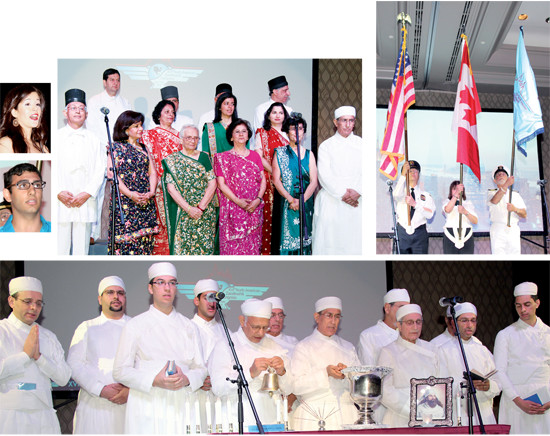
Singers, flag bearers and priests at the inauguration;
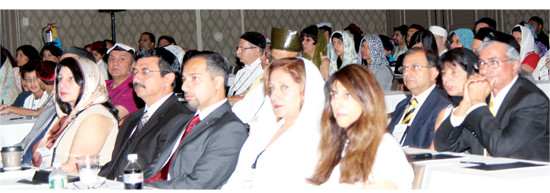
The majority of the participants though were aged 50 plus as evinced from the responses indicated by the audience at the start of sessions. With remote clickers in hand and questions displayed on three giant screens in the Westchester Hall where the main sessions for each day were scheduled, audience feedback was obtained almost instantly to many issues facing the community and the responses relayed to the audience in a tabular format in the next few seconds, thanks to the coordination of Adil Mistry and Khursheed Navder Dusaj. There was no mistaking the elation in the audience when they were asked to state their religious leanings and the responses indicated that 39 percent considered themselves progressive, 37 percent as moderate, 13 percent as traditional and 11 percent did not relate to any of these categories.
"You have seen the new face of ZAGNY — powerful, educated and technically far more sophisticated. The talent that came out was phenomenal,” enthused Nentin, thanking the youth "for being there for us” and urging them, "It is time they take on the leadership role.”
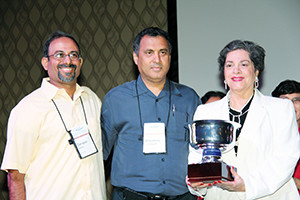
From left: Darayus Mistry, Khushroo Lakdawala and Dhunmai Dalal
A month before the Congress, co-chair Ferzin Patel was desperately scouting for volunteers to handle the endless chores that a program of this magnitude involves. She was overwhelmed therefore to get offers of help from certain quarters like the two brothers who after distancing themselves from their religion for several years were so fired by the "magnitude of brotherhood” they witnessed at the Zarathushti Games in Toronto in July 2012 that they wanted to reconnect with their Zarathushti roots. Instead of waiting to be approached, "Go out and help your community,” Patel advised the gathering who in the audience poll had admitted that only 31 percent take an active role in community affairs, 35 percent play a supportive role and 34 percent are rarely involved.
"We could learn a lot from each other,” commented Shirin Khosravi, president of the Iranian Zoroastrian Association that was co-hosting this meet with ZAGNY. Referring to the need for a greater collaboration between Parsis and Iranians Khosravi added, "I am so proud to be part of this harmonized alliance.” The organizers made sure that even the registration package would interest not only Parsis but also Iranians. Hence to supplement the efforts of a Parsi recipe book, was another brought out with Iranian recipes.
Most uplifting though was the inaugural ceremony when 12 priests with small electric lamps in hand walked down the central aisle as soprano Tara Jamshidian’s voice resonated in the Hall when singing the hymn Zarathushtra, composed by Parizad Irani with piano accompaniment from Neville Dusaj. The priests then chanted a benediction standing behind a table which bore an afarganiu, a big bell as also a photo of Zarathushtra. The hall was not filled with the fragrance of sandalwood but the dedication and determination to keep alight the torch of the religion. As the priests led the congregation in humbandagi, the wordings on the giant screen before them prompted everyone to join in the prayers. The singing of the Gujarati monajat Khudavind O Khavind was soon followed by an Irani Mazdayasni song where Jamshidian’s interjections infu-sed a fresh fervor in the singing of Khan Ashem Vohu. Equally impressive was Zal Shroff’s rendition of the national anthem with flag bearers Fali Shroff, Pam Shroff and Rohinton Cama carrying the national emblems.
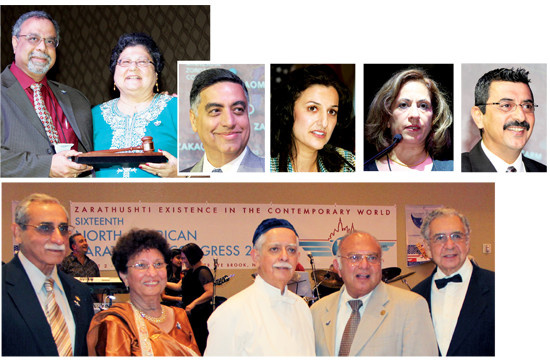
(center, from left): Bomi Patel and Katayun Kapadia, Gev Nentin, Ferzin Patel, Shirin Khosravi, Daraius Bharucha; (alongside) Rohinton Rivetna, Dolly Dastoor, Framroze Patel, Firdosh Mehta and Rustom Kevala
Tribute, a powerpoint presentation, recognized the efforts of several Zarathushtis who have brought honor to the community and the country. Specially singled out for attention was Mehraban Zartoshty whose "good deeds have been felt not only in North America but throughout the global community.” As retiring FEZANA president Bomi Patel had acknowledged in his letter to the family, "FEZANA and its members have been recipients of his generosity…He was one of the greatest Zarathushtis… kind, compassionate, who selflessly helped the community worldwide. His service knew no boundaries.”
On behalf of FEZANA that coordinates the activities of 27 Zoroastrian associations and 12 small groups in North America, Bomi Patel commented, "The Congress is an ideal event to meet and celebrate our heritage. It is a perfect opportunity to meet old friends and make new ones… It is because of hard work and dedication that this Congress is possible.” Supplemented FEZANA Congress committee chair Daraius Bharucha, "In our second diaspora, we have established ourselves as a community. We have moved beyond surviving and economic prosperity to developing hopes, aspirations and dreams as a community... We need to have a collective vision and path forward that is nurtured by forums such as these.” Having chaired the recently concluded Zarathushti Games that he described as "an explosion of Zarathushti youth” he was sanguine that the Congress would prove to be "an explosion of collective consciousness.”
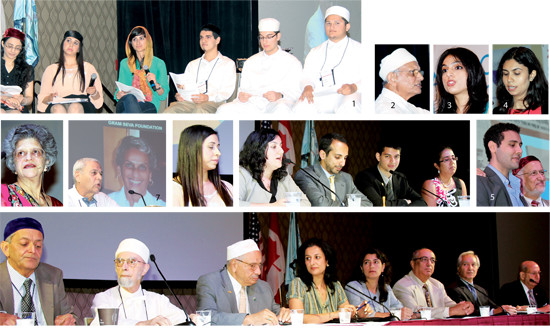
1 & 2. Youngsters portraying Amesha Spentas with Ervad Soli Dastur; 3. Dr Anahita Dua; 4. Rosheen Kabraji; 5. Dinsha and Furrokh Mistree; 6. Roshan Rivetna; 7. Drs Khushroo and Roda Patel; 8. Behrose Taraporewalla; 9. Triti Pourbahrami, Navroz Gandhi, Ervad Poruz Khambatta, Farzin Avari; 10. Jimmy Kumana, Dr Jehan Bagli, Dr Ali Jafarey, Ferzin Patel, Dr Parastu Dubash, Ervad Kobad Zarolia, Mohsen Zandieh and Ervad Cawas Desai
The last two years had seen coordination and cooperation not only among the host team but also the speakers who were required to collaborate with others on their respective panels. As commented Program chair Dr Keki Dadachanji, "How to survive without compromising one’s purpose… or compromising on our core beliefs and values…is a question many institutions and religions ask…The environment around us in North America is ever changing. Unless we adapt, we will lose relevance…” Having labored to bring in diversity of opinion, Dadachanji stressed, "We have to respect the people with whom we disagree… We hope the close of the Congress becomes an opening of a journey.”
Significant sessions
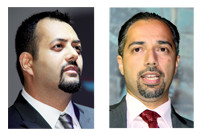
The keynote address on "Building a new world order — the role of Zarathushti values” was given by Dr Trita Parsi, president of the National Iranian American Council and an expert on US-Iranian relations. He challenged the audience to explore, "How did Zarathushtra overcome resistance without violence? How did he turn adversaries into allies?” Parsi asserted, "Humanity is in need of moral strength of Zoroastrian values… When international law is increasingly disregarded in favor of the law of the jungle…When peace is only considered a breathing time between states at war, when the world is facing a crisis of values, instead of Niccolo Machiavelli’s postulates, if Ashem Vohu is made mandatory reading and political science students are brought up on Zarathushtra’s Gathas where Yasna 34.2 stresses that each man must make his own choice, would not the world be different?” He commended scholar Ali Jafarey, founder of Zarathushtrian Assembly, for "sharing his ideas with new communities,” pointing out, "The wisdom of Zarathushtra goes well beyond us. His thinking is not just limited to us.”
The session on "Core Beliefs” saw Ervad Soli Dastur, a chemical engineer by profession, explain the significance of Amesha Spentas with the help of three young boys and three girls symbolically representing the archangels and their values. Alluding to Alfred Lord Tennyson’s poem, In Memoriam where he says, "Ring out the false, ring in the new,” Dastoor in his usual jovial style commented, "He must be a Zoroastrian.” To trauma surgeon Dr Anahita Dua who is born of a Zarathushti mother and Sikh father, "It is important to take Zoroastrian concepts into my daily life.” Explaining that the first two years of marriage can be most difficult, the recently married surgeon declared, "righteousness and love can resolve all issues.” Since she is constantly dealing with patients who are emotionally burdened, she has learnt to accept that "nobody is born evil. It helps me to deal with patients without judging them.” The life of the late Dr Roda Patel, a neonatal physician and cancer patient who used the time available to her to found the Gram Seva Hospital Trust was reviewed by her husband Dr Khushroo Patel, a cardiothoracic and vascular surgeon. With her passion to serve humanity, she worked in the interiors of India, exemplifying "Zoroastrian humanitarian thoughts, uplifting words and marvelous deeds.”
The session on "Intergenerational Dialogue: Motivation, Inspiration, Action!” saw over 50 percent in the audience aged 50+. The youths invited to the panel moderated by business consultant Navroz Gandhi were those who had taken upon themselves the responsibility of initiating constructive efforts. Behrose Taraporewalla referred to the Stepping Forward project that induced the youth to collect over 6,000 pairs of footwear that could be used by those in need. Believing that "you are in the world to change the world,” she impressed, "Your efforts make a difference.” Triti Pourbahrami referred to sharing her life with husband Peter Capak, who although not born a Zarathushti was chosen by her to be her "ham sar (spouse of like mind).” Whilst teaching Zoroastrianism to middle school students she was able to find significance in her own vocation at the California Institute of Technology’s Division of Engineering and Applied Science where she is director of communication. Ervad Poruz Khambatta recounted his experience of training as a navar "being a minority within a minority” that initially didn’t appeal to him until he realized that he was in a privileged position where he could make himself available for people, "to comfort people.” Having come to the XV NAZC to play with the Zoroastrian Symphony Orchestra, to Farzin Avari, starting a Sunday School in Atlanta was a spur of the moment decision although she had no experience. Endeavoring to build a community by teaching kids, she sought guidance that came readily from FEZANA elders. Recently she organized a Skype session with ZAGNY children. When she sometimes finds it too frustrating and wants to run away, "I get on the treadmill and run so that I can’t get too far!”
"Demographics determines destiny” was the subject of Roshan Rivetna’s study that she shared with the community. Having worked in the field of nuclear physics she is now devoting herself to community research. When comparing the 2004 figures with the ones obtained in 2012 she found that the recorded numbers in Canada showed an increase in eight percent with US indicating an increase of 33 percent. The strength of the North American community is estimated to be 20,728, an increase of 23 percent, with the largest concentration in California, followed by Ontario and New York. The percentage of intermarriage in the North American community is 59-60. The world population according to her estimate is 110,201 in 2012, a decline of 12 percent. The community with the highest growth rate though is Singapore (130 percent), followed by New Zealand (37 percent). With a count of 14,000, Iran showed a decline of 42 percent, Pakistan with 1,675 indicated a decline of 21 percent, and India with a projection of 61,000, a 12 percent decline. East Africa had a decline of 53 percent as compared to South Africa where there is a 17 percent growth. Community numbers in Australia and UK are more or less stable.
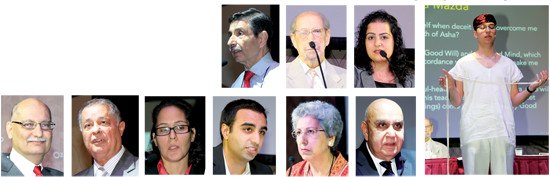
Clockwise from alongside: Lovji Cama, Kaikhosrov Irani, Nahid Dashtaki, Ervad Karl Khambatta, Dinshaw Tamboly, Armene Modi, Kaizad Cama, Dr Talinn Grigor, Alayar Dabestani and Dr Keki Dadachanji
In the following session on Zarathushti identity it emerged that although 92 percent from the audience were born of both Zoroastrian parents, merely 13 percent believed that only an individual born of both Zoroastrian parents could be considered a Zarathushti. An overwhelming 62 percent considered a Zarathushti as one who chooses for himself the teachings of Zarathushtra. At the session which had the maximum number of eight panelists, Jimmy Kumana, an expert in the field of industrial energy optimization, proposed that Zarathushti should be the primary identity and Parsi the subidentity for if "you don’t broaden the definition you are finished.”
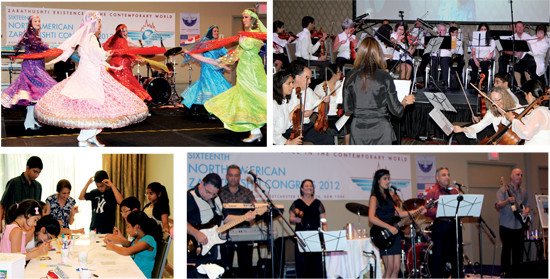
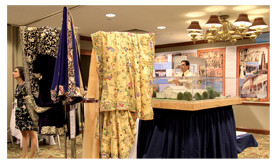
Clockwise from top left: Nomad Dance Troupe; ZAGNY Philharmonic Orchestra; Generation 1; children’s workshop; (below) exhibits on display
According to Dr Jehan Bagli, chairperson of the Research and Preservation Committee of FEZANA, we should recognize that the omnipresent spirituality of Ahura Mazda that is within each one of us is in the entire creation. "The religion of Zarathushtra is a religion of choice to fulfill one’s spiritual potential,” asserted Bagli. As reminded Dr Ali Jafarey, when we are regirdling ourselves as part of our kusti prayers we are asserting our choice of faith as Mazda worshipping Zarathushtis. The word Fravarane in our prayers implies "I choose for myself” and appreciate good thoughts, deeds and conscience that teaches self reliance and righteousness. As questioned Ferzin Patel, "If you go to a gym only once a month would it do any good to your body? Likewise if you were to attend a religious class only once a month, would it do any good for your soul?” Dr Parastu Dubash, former president of the Zoroastrian Association of Greater Boston Area, reiterated that "a navjote should be seen as the beginning of a lifetime of learning” with a service component included and its anniversaries observed to make it more meaningful.
Ervad Kobad Zarolia, founder president of the North American Mobeds Council (NAMC) regretted that Zoroastrians in North America have built community centers or banquet halls with just a small room for prayer to get tax exemption. "What we need is a place of worship to which Parsis, Iranis, Turks, Russians, any Zarathushti can go if he believes in Zoroastrianism,” he opined. "There is a humongous difference in the way we live after we become Zoroastrians,” declared Mohsen Zandieh, director of the New York State Association of Realtors, who was able to study the religion thanks to the guidance of the Iranian Zoroastrian Association, the California Zoroastrian Association and Jafarey. Ervad Cawas Desai who is a student of Zarathushti religion, particularly its history and evolution, was of the view that one’s religion is "not an accident of birth and an act of conversion is tantamount to saying that God has made a mistake.” He clarified though that "navjote is a declaration of faith and no power on earth can prevent an individual from doing so.”
The significance of the navjote ritual is rarely impressed on the initiate; it is "made into a beautiful party,” commented Lovji Cama when moderating the session on "The Navjote/Sudreh Pushi Ceremony and the Kusti Ritual.” The kusti ritual is to be seen as "harmonizing the physical self with the innate divine wholeness,” stressed Bagli. "The sacred congregational moment is lost and we often focus on the dinner that is coming after it,” pointed out Prof Kaikhosrov Irani, emeritus professor of philosophy at the City College of New York, referring to the navjote festivities that gain precedence over the solemn affirmation of faith before the congregation. In Iran, members of the community may perform the sudreh-pushi ceremony at any age and in groups to reaffirm their faith in Zarathushtra or they may not perform the ceremony. "But I do not consider them any less Zoroastrian,” stated FEZANA secretary Nahid Dashtaki. Ervad Karl Khambatta who has been teaching religion and Shah Nameh stories to ZAGNY children, performed the kusti ceremony whilst reciting the English translation of the Avestan prayers. Many in the audience were seen videorecording this ritual and there were even plans to relay it on Youtube.
"There is an insecurity about what to believe and whom to believe,” observed Dr Yuhan Vevaina, a lecturer in the Department of Religious Studies at Stanford University, when delivering the Khorshed Jungalwala Lecture on "Thinking with Zoroastrianism in the 21st century.” "The academia has failed you in providing engaging books,” he told the audience. "We have different things written for different audiences… very few academics…If we put in money where our big Zoroastrian mouth is, the future will be brighter,” he was confident, calling the youth to become anthropologists, sociologists, geneticists, scholars, instead of seeking mainstream, remunerative careers.
"Preserving Persian Heritage” was the session that brought to light the neglect of certain pre-Islamic sites and Zoroastrian pilgrimage places in Iran and the efforts of bodies like the Iranian Cultural Heritage Tourism and Handicraft Organization. "National festivals cannot be understood without knowledge of one’s Zarathushti roots,” explained Khosravi who was the moderator for the session. "Revival of Zoroastrian art became a trend and later a political identity,” mentioned Dr Talinn Grigor, associate professor of modern and contemporary architecture in the Department of Fine Arts at Brandeis University. The Tehran and Yazd Dare Mehrs and the Peer-e- Sabz, Pir Herish, Pir Naraki, Pire Narestane and Pir Pars Banoo continue to draw tourists even from the Muslim community who want to see the Zarathushti tradition of their forefathers, stated Alayar Dabestani who shared his own observances as also of Iranian architect Behmard Khosravi who was unable to get his visa on time.
The session on "Combating Poverty in our Communities Abroad” inspired many in the audience to pledge their time and resources for amelioration work when alerted to the economic vulnerability and demographic decline of the community in India. One meal at a US restaurant could fund the monthly bill of an underprivileged family in India, the audience was told. The panelists included Dinshaw Tamboly of The WZO Trust Funds, educator and social activist Armene Modi, and Priyanka Sinha who working on a mobile banking social venture in Hyderabad and being unable to attend, participated in the discussion with Skype technology. "How did we get to this level of poverty?” questioned moderator Kaizad Cama, a management consultant, making Tamboly refer to the "post-independence financial debacle of Parsi farmers due to the Tillers’ Act, the enforcement of prohibition, the State Transport Act (resulting in) the children working as laborers, chasniwallas. "A culture of dependency on doles and handouts instead of economic self sufficiency,” further complicated matters explained Modi. Being "isolated, the poor fear ostracism and a reduction in motivation to access resources,” said Sinha.
The final morning saw a presentation on FEZANA as a facilitating umbrella body looking after the well-being of member associations and individuals as explained Bomi Patel when symbolically handing over the gavel to the seventh president Katayun Kapadia. The FEZANA executive comprises of five elected office bearers who oversee the progress of 10 standing committees and 11 ad hoc committees. Last year they had a budget of $ 118,000 (Rs 5,900,000) but received only $ 4,000 (Rs 200,000) by way of donations. "We need your support,” stressed Patel.
The recipients of the FEZANA Awards this year were "role models:” Ervad Bahrom Firozgary, an aspiring surgeon who won the Shirin Nariman Dastoor Outstanding Young Zarathushti Student Award; Narius Dastur, an information technology technician for an integrated police agency who was conferred the Outstanding Young Zarathushti Award; Ervad Zerkxis Bhandara who plans to be a well-rounded and educated Zarathushti priest was recognized with the North American Mobeds Council Community Services Award; Rohinton Mistry, celebrated author, was the recipient of the Dinshaw Framroze Joshi Excellence in Performing Arts, Painting or Literature Award; Dr Firdaus Dhabhar, director of research at the Stanford Center on Stress and Health, and Dr Shahrokh Khanizadeh, research scientist with Agriculture and Agri-Food Canada with expertise in fruit genetics and fruit breeding were presented the Jamshed and Shirin Guzder Excellence in Business or Profession Award; Freyaz Shroff, co-chair of the FEZANA Welfare Committee and a volunteer with the World Zoroastrian Organisation Trust and the Parsi Resource Group was acknowledged with the Jamshed Pavri Humanitarian Service Award; and Firdosh Mehta, past president of FEZANA and a registered professional engineer was named winner of the Rohinton Rivetna Outstanding Zarathushti Award.
On behalf of Parzor, Rosheen Kabraji, manager of the Asia Program at Chatham House, gave an overview of their activities in the fields of oral tradition, intercultural studies, archival heritage, arts and crafts, and revival program. To further expand their work "we need museum curators, translators, musicologists, photographers,” mentioned Kabraji before referring to the first international conference that will be held at the Meherjirana Library in January 2013. Dinsha Mistree who works with a Zarathushti charity that helps poor coreligionists in India expressed his enthusiasm for the "Sharing Roots” program that he has envisaged whereby around 20 global youth could be offered an opportunity to visit India, its fire temples, interact with the youth of the area, attend lectures, cooking demonstrations, be exposed to the Zoroastrian customs and lifestyle of the community in India.
"If not now, when? If not you, who?” Taraporewalla’s quote was repeatedly used by Furrokh Mistree, director of the School of Aerospace and Mechanical Engineering at the University of Oklahama in Norman, in his summation of the proceedings. Emerging from the feedback forms at the end of sessions was the observation that the meetings were very cerebral and future congresses should include emotional and spiritual components. Among the other recommendations were: Parents should be made to participate in the religious education of children. "Would it improve religiosity if prayers are said in a language we understand?” Let the NAMC give guidelines to build fire temples in North America and who can enter therein. Foster both, groups of reformists and traditionalists, so that there would a safety net if one fails.
Simultaneous offer
Whilst the main sessions were being convened in the Westchester Ballroom, the adjacent suites were used to provide a platform for concurrent sessions. "Zoroastrian Empires: Common Themes and Changing Circumstances” was the subject of Daulat Kotval and Xerxes Kotval’s presentation. "Basic Course in Zarathushti Religion” was led by Sarosh Collector and the Teachers’ Workshop by Daraius Bharucha. Representing the Zarathushti Women’s International Network (ZWIN) in their discussion "Our Vision Going Forward” were Dolly Dastoor, Zareen Karani-Araoz and Ushtavaity Davar Canteenwalla.
The night before the Congress inauguration, the New York chapter of the World Zarathushti Chamber of Commerce had organized a symposium on "New Sciences and Commerce” with Jamshed Bharucha and Poruz Khambatta on the panel.
Specially geared for youngsters in the five to 12 age group was the Children’s Zarathushti Program conducted by Pearl Satarawala and Vehishta Kaikobad that kept them engaged throughout the day whilst their parents were attending other workshops. In fact this Congress even offered babysitting for those aged one to four for the first time, courtesy Hasina Master and Kamal Merchant.
One room had on display for the three days of the Congress an exhibition "The Good Religion for all time” whilst another gave an opportunity to vendors to merchandize their artefacts. In yet another room Dr Saroja Voruganti was conducting the "Genetic Study of Parsi Zarathushtis.”
Bonding at banquets
The evening programs for the three days of the Congress came in the form of FEZANA’s 25th year gala when past presidents were introduced, supporters recognized, the cake cut as dancers from the Nomad Dance Troupe entertained the audience. Later the gathering took the floor when Generation 1 played its pulsating music. On the second day of the Congress participants had the choice to enjoy an evening in New York city on buses arranged by the organizers or enjoy the music of Adi Tamboli and the stand up comedy of K-Von. The final Gala Banquet Night started with "A Hop-on/Hop-Off Tour of New York City,” a specially conceived presentation of song, dance and comedy show against the backdrop of New York’s most prominent landmarks. At the valedictory function were heard the youngsters on their keyboards and the ZAGNY Philharmonic Orchestra under the baton of Piroozi Cooper-Wittlin.
For the youth was scheduled a special Pre-Congress Mixer as also another Youth Night to enable them to reconnect with old friends and make new ones. The Speed Friending session accorded an opportunity to delegates of all ages to make new acquaintances. The identity cards hung around one’s neck, not only served as a name reminder but were the crucial markers that permitted entry during meal time during the three days of the Congress.
Forthcoming issues of Parsiana will carry detailed reports of the sessions.
◆ ◆ ◆
From the archive