
Trusts
Resurgence in Lonavla
The reconvening of the over 109-year-old Lonavala Khandala Parsi Zarthosti Anjuman signals a new impetus for transient and permanent residents of the hill stations
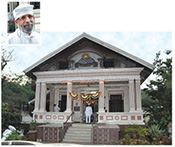 "The number of residents is growing. It is a rare case where numbers are increasing,” stated Saroosh Dinshaw, president of the newly reconvened Lonavala Khandala Parsi Zarthosti Anjuman (LKPZA). While many anjumans are defunct or moribund, a handful of property owners in the Western Ghats hill stations decided to revive the association that had once served a thriving Parsi population.
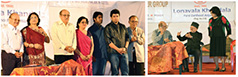
The LKPZA intends to modify the old trust scheme to expand its activities "to give to the poor, support education,” says LKPZA trustee Sam Choksey who has been a member of the Anjuman for over 15 years. The trust’s objectives are cosmopolitan. "In order to carry out these objectives…it is necessary to create funds and therefore we request all Zarthostis who visit Lonavla/Khandala regularly or are residents to become members of the Anjuman and donate funds,” states an appeal circulated to residents and visitors announcing an evening function at the Cowasjee Dinshaw Daremeher on November 10, 2012 to mark the Anjuman’s 109th anniversary.
 The impetus for the revival came some years back when the panthaky of the Daremeher, Ervad Zarir Tata, approached Choksey and others complaining about leakage in the agiary. Russi Cama, who had a home in Lonavla, longtime residents Nergez Balaporia, Maneck Shroff, Yezdi Daruvala, Fali Dhondy, Khurshid Cooper, Choksey and others formed a committee "to take up the job of doing up the agiary. We sent out circulars and managed to collect a handsome sum.” They not only repaired the roof but improved the general upkeep of the structure. LKPZA trustees Capt Percy and Arin Master pay for painting the agiary every two years. The two are active in organizing activities and permit their Bombay office to be used for Anjuman work, observes Choksey.
The LKPZA is now raising funds for their main asset, a small two-room structure near the agiary which they intend to turn into a guest house for Parsis. "We are in the process of upgrading and renovating the Anjuman Guest House” so that less well off community members can afford to stay, says Choksey. "Hotel prices have soared. Even (Parsi) sanatorium charges are high.”
The LKPZA also intends to attend the Federation of the Parsi Zoroastrian Anjumans of India meet in Bombay this January as invitees and will apply for membership.
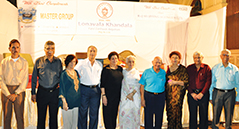
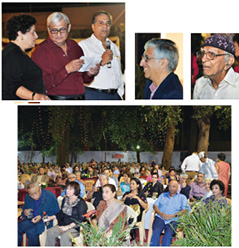
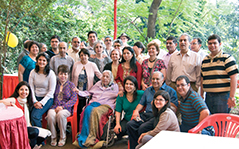
The new board comprising Dinshaw, Nergez Balaporia, vice president, Maneck Shroff, secretary, Adi Banajee, joint secretary, Rusi Anklesaria, treasurer, Rashida Shroff, Behram Dhabhar, Percy and Arin, Choksey and Roshni Bhavnagri meets once a month, though the trustees met five times in the 30 days prior to the annual function, notes Choksey. Over 300 people attended the contributory evening function which included skits by the Yazdi and Mehernosh Karanjia Group from Surat followed by dinner. The venue was filled to capacity and the organizers had to stop the sale of passes.
Capt Master thanked the gathering for the "overwhelming response,” adding, "the Anjuman is trying to get back on its feet.” He noted the Daremeher was "unique. It has two fires.” One is the original dadgah fire installed on June 3, 1899 and the second an adarian fire flown in from the Aden agiary on November 13, 1976. Master introduced the evening’s chief guest Farokh Subedar, chief operating officer of Tata Sons, thanked the donors who contributed money and paid for banners, voiced appreciation for the Karanjia troupe which performed free of charge and urged those present to become life members of the Anjuman for a fee of Rs 1,000.
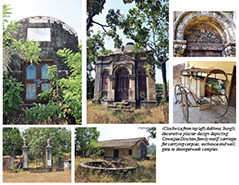
In the past the LKPZA had explored the possibility of acquiring a plot on the local doongerwadi lands. The estate comprises around 32 acres of which five surround the moribund dakhma and unkempt garden. There are about 15 to 20 bungalows on plots sold to Parsis, observes Dinshaw who is a trustee of the doongerwadi complex and the agiary. Around 12 to 13 plots are still unsold but he is disinclined to part with one for LKPZA stating "the creation of new assets is not required.” Besides, he views the plots as "fixed deposits” for the future should the agiary require funds at a later period. But during a round of the estate Parsiana’s guides noted there were few buyers for those who wanted to resell their plots. As property can only be sold to a Parsi, prices are less than the prevailing market rates but the number of buyers is restricted.
The actual date of the founding of the LKPZA is uncertain, says longtime Lonavla resident and local historian Maneck Shroff. He acquainted Parsiana verbally and subsequently with a handwritten article providing a brief history of the community in Lonavla before and since 1895. He noted that many Parsis initially came to the hill station to work for the Great Indian Peninsular (GIP) Railway Company when Bombay was first connected with Poona by rail.
"They required extra staff for the Ghats section. Due to this many Parsis and Iranis came to Lonavla for work. In the beginning only Europeans used to get engine drivers’ job, but for firemen and other jobs, Indians were taken. The firemen used to get Rs 3 per month. Before the railways, travellers used to come from Bombay till Khopoli probably on horse back and rested there in camps till morning. So in those days Khopoli was known as Campoli. Till 1950, I used to read a milestone stating ‘Campoli 5 miles,’ at the beginning of the Ghats, opposite to Baxter’s Bungalow on the road. So the travellers, mostly Europeans, used to pay four annas to four Marathas to carry them in chairs from Campoli to Lenoli (in those days Lonavla was known as Lenoli). The word Ghati came into existence as the Marathas used to work on the Ghats (hills).
The actual date of the founding of the LKPZA is uncertain, says longtime Lonavla resident and local historian Maneck Shroff. He acquainted Parsiana verbally and subsequently with a handwritten article providing a brief history of the community in Lonavla before and since 1895. He noted that many Parsis initially came to the hill station to work for the Great Indian Peninsular (GIP) Railway Company when Bombay was first connected with Poona by rail.
"They required extra staff for the Ghats section. Due to this many Parsis and Iranis came to Lonavla for work. In the beginning only Europeans used to get engine drivers’ job, but for firemen and other jobs, Indians were taken. The firemen used to get Rs 3 per month. Before the railways, travellers used to come from Bombay till Khopoli probably on horse back and rested there in camps till morning. So in those days Khopoli was known as Campoli. Till 1950, I used to read a milestone stating ‘Campoli 5 miles,’ at the beginning of the Ghats, opposite to Baxter’s Bungalow on the road. So the travellers, mostly Europeans, used to pay four annas to four Marathas to carry them in chairs from Campoli to Lenoli (in those days Lonavla was known as Lenoli). The word Ghati came into existence as the Marathas used to work on the Ghats (hills).
"The Parsi Anjuman of Lonavala-Khandala used to exist in 1890 or maybe before that. The then secretary of the Anjuman, Nadirshaw Navroji Punegar, wrote a letter on November 23, 1900 to Khanbahadur Muncherji Marzban to help the Parsis of Lenoli in constructing a dakhma. In the letter Punegar informed Marzban that in the last three years 35 Parsis had lost their lives due to malaria. Earlier the bodies used to be taken for disposal to Poona but during this time the railways refused to permit bodies to be carried on the trains due to (fear of) infection. So people used to bury the bodies in someone’s land. But later on (when) the landlords came to know, it was stopped. Punegar also informed Marzban that the Anjuman had collected Rs 2,500 from donations given by 200 resident Parsis and Parsi visitors to Lenoli.
"Ultimately the dakhma was declared open on February 1, 1903 for the Parsis and Iranis of Lonavla, after all the ceremonies were performed. During those days khandhias used to come from Poona to clean the dakhma from inside but some years back they stopped coming due to a shortage of khandhias in Poona and so the dakhma was neglected. People started complaining to Cowasjee Dinshaw who was in charge of the dakhma committee. In 1980 Cowasjee requested me to do something about cleaning of the dakhma.
"I willingly said yes, on behalf of the LKPZA. So from the Anjuman committee Soli Todiwalla, the manager of Marzban Sanatorium agreed to help me. Inside it we found five skeletons’ bones stuck on the pavis with tall grass growing all round. We removed the bones with great difficulty as they had been lying there for the last so many years. We also removed the grass. After that my son Percy cleaned it. Thereafter only one body, that of late Banoobai Irani, was laid by me in the dakhma. She was an old resident of Lonavla.
"Parsis and Iranis started visiting Lonavla before the Adenwalla agiary was built. Most of the Parsis purchased lands when they came to attend the opening of the agiary in 1899. Parsis built sanatoriums such as the Marzban Sanatorium, Jeejeebhoy Sanatorium, Mody Sanatorium, Dhunmai Cawasji School and Sanatorium, Central Hotel, Khandala Hotel and Kharadi Hotel. Some of the old Parsi families are Marzban, Adenwalla, Kharadi, Banaji, Balaporia, (Dinshaw) Irani, Vesuna, Choksey, Kurawalla, Allbless, Kotwal, Pavri, Shroff, (Rutonji) Contractor, Mody, Dadachanji, Postwalla, Engineer, Homawala and Cooper. In those days, Lonavla was full of Parsis.”
Due to the heavy rainfall in the area a European technocrat had advised the house of Tatas to use the water power to generate electricity, says Shroff. Accordingly the Walvan lake and dam was created and in 1910 power supplied to both Lonavla and Bombay.
"Ultimately the dakhma was declared open on February 1, 1903 for the Parsis and Iranis of Lonavla, after all the ceremonies were performed. During those days khandhias used to come from Poona to clean the dakhma from inside but some years back they stopped coming due to a shortage of khandhias in Poona and so the dakhma was neglected. People started complaining to Cowasjee Dinshaw who was in charge of the dakhma committee. In 1980 Cowasjee requested me to do something about cleaning of the dakhma.
"I willingly said yes, on behalf of the LKPZA. So from the Anjuman committee Soli Todiwalla, the manager of Marzban Sanatorium agreed to help me. Inside it we found five skeletons’ bones stuck on the pavis with tall grass growing all round. We removed the bones with great difficulty as they had been lying there for the last so many years. We also removed the grass. After that my son Percy cleaned it. Thereafter only one body, that of late Banoobai Irani, was laid by me in the dakhma. She was an old resident of Lonavla.
"Parsis and Iranis started visiting Lonavla before the Adenwalla agiary was built. Most of the Parsis purchased lands when they came to attend the opening of the agiary in 1899. Parsis built sanatoriums such as the Marzban Sanatorium, Jeejeebhoy Sanatorium, Mody Sanatorium, Dhunmai Cawasji School and Sanatorium, Central Hotel, Khandala Hotel and Kharadi Hotel. Some of the old Parsi families are Marzban, Adenwalla, Kharadi, Banaji, Balaporia, (Dinshaw) Irani, Vesuna, Choksey, Kurawalla, Allbless, Kotwal, Pavri, Shroff, (Rutonji) Contractor, Mody, Dadachanji, Postwalla, Engineer, Homawala and Cooper. In those days, Lonavla was full of Parsis.”
Due to the heavy rainfall in the area a European technocrat had advised the house of Tatas to use the water power to generate electricity, says Shroff. Accordingly the Walvan lake and dam was created and in 1910 power supplied to both Lonavla and Bombay.
"The first Anjuman annual dinner was organized by Noshir Cooper of Cooper’s Chikki. The dinner coupon was Rs 3 per head. He was a member of the managing committee of the doongerwadi and LKPZA. He was the first to introduce glucose chikki. He had excellent knowledge of cooking. He was very humble and helpful,” Shroff concludes.
The oldest Parsi resident, agewise, is Sheroo Eruchshaw Jussawalla (née Choksey) who lives in a house within walking distance from the agiary. Her father Bomanji ran the railway canteen importing provisions from the United Kingdom. "London sathé bahu contact hatu (had a lot of contact with London),” said Jussawalla who turned 101 this January 4. He also ran the Khandala Hotel. In those days the hill station received around 300 inches of rainfall.
Though Jussawalla spent the first five years of her life in Lonavla, when her father died of pneumonia the family moved to Poona. She studied at the Dastur School. The Lonavla agiary panthaky Shavaksha Fatakia performed her navjote. Her brother Nariman went to study in England but later when the independence movement started in India, he "burned his English clothes and wore khadi” as advocated by Mahatma Gandhi. Her younger brother, Savakshaw studied at Fergusson College and took to teaching. Sheroo married Eruchshaw and the couple lived in Bandra for many years.
"For the last five years she has been confined to a wheelchair,” discloses her son Percy. She maintains an "open house… everyone comes… has a meal with her… she is very religious.. She advises people on prayers. People come to her with their problems. She is an avid reader.” When asked what she reads Sheroo replied "philosophy.” The walls of the hall in her house are adorned with her paintings meticulously copied from books, cards and other literature, notes daughter-in-law Thrity.
Balaporia enjoys the status of longest residence in Lonavla. Her grandparents Pallonji, who worked for the railways as head clerk, and Jerbai came to the hill station in 1884, she informed Parsiana. Pallonji, who died in 1942, was treasurer of the Anjuman. Her father, Jamshedji, acquired a newspaper agency for the area and started The Book House which he ran. Balaporia continued to run it until 1985. Since the early days Lonavla has grown dramatically, she observes. "It’s so crowded. There are housing societies and societies and more societies…It’s not a hill station now. That’s the pity of it.”
The revival of the moribund LKPZA though means the community will once again have a voice for setting things right.
The parish priests
The first panthaky of the Cowasjee Dinshaw Daremeher, appointed in 1899, was Ervad Pavri followed by Ervad Rana. After that came Ervad Shavaksha Fatakia who had worked under Ervad Rana until the latter’s death in 1918. He was also in charge of the dakhma. He was very fond of gardening and planted rose bushes and trees like coconut, chikoo, safed kanda (love apples), mangoes, etc which you see today on the agiary and dakhma grounds. He used to collect Rs 3 from Parsi bungalow owners. I still remember him as he had performed my navjote and also a jashan for the opening of my new bungalow. Fatakia died in 1972 and was followed by his son Phirozeshah who was panthaky till January 1987.
Framroze Panthaki was panthaky from 1987 to 1990; when he died his wife Motibai looked after the panthak with the help of another mobed.
From June 1, 1990 to July 1996 Ervad Hoshang Rustomji Randelia was panthaky. Along with his wife Arnavaz and son, he made the agiary popular. He prayed loudly and people came from Bombay by taxi to have prayers recited by him. His wife used to clean the agiary well.
Ervad Marzban Gonda took up the panthak for a few days from July 17, 1996 and thereafter Behram Dhabhar, a trustee of the Anjuman, looked after the agiary when there was no panthaky.
Ervad Zarir Tata, the current panthaky took over on April 25, 2000.
The first panthaky of the Cowasjee Dinshaw Daremeher, appointed in 1899, was Ervad Pavri followed by Ervad Rana. After that came Ervad Shavaksha Fatakia who had worked under Ervad Rana until the latter’s death in 1918. He was also in charge of the dakhma. He was very fond of gardening and planted rose bushes and trees like coconut, chikoo, safed kanda (love apples), mangoes, etc which you see today on the agiary and dakhma grounds. He used to collect Rs 3 from Parsi bungalow owners. I still remember him as he had performed my navjote and also a jashan for the opening of my new bungalow. Fatakia died in 1972 and was followed by his son Phirozeshah who was panthaky till January 1987.
Framroze Panthaki was panthaky from 1987 to 1990; when he died his wife Motibai looked after the panthak with the help of another mobed.
From June 1, 1990 to July 1996 Ervad Hoshang Rustomji Randelia was panthaky. Along with his wife Arnavaz and son, he made the agiary popular. He prayed loudly and people came from Bombay by taxi to have prayers recited by him. His wife used to clean the agiary well.
Ervad Marzban Gonda took up the panthak for a few days from July 17, 1996 and thereafter Behram Dhabhar, a trustee of the Anjuman, looked after the agiary when there was no panthaky.
Ervad Zarir Tata, the current panthaky took over on April 25, 2000.
Maneck Shroff
◆ ◆ ◆
From the archive