
Anjumans
“A resting place carved from stone”
The Lonavla doongerwadi grounds house the living instead of the dead
Wading through the waist high grass dampened by the unseasonable November cloudburst, one spied the blackish colored, stone dakhma rising beyond the overgrown shrubbery.
Fifty years ago when Lonavla was still a sleepy Western Ghat hill station 2,000 ft (609 m) above sea level, weeping willows encircled the town’s lone Tower of Silence. Now the 33 acre estate is dotted with modern day bungalows built without any connection to its former Yadava, Mughal or British architectural history.
Fifty years ago when Lonavla was still a sleepy Western Ghat hill station 2,000 ft (609 m) above sea level, weeping willows encircled the town’s lone Tower of Silence. Now the 33 acre estate is dotted with modern day bungalows built without any connection to its former Yadava, Mughal or British architectural history.
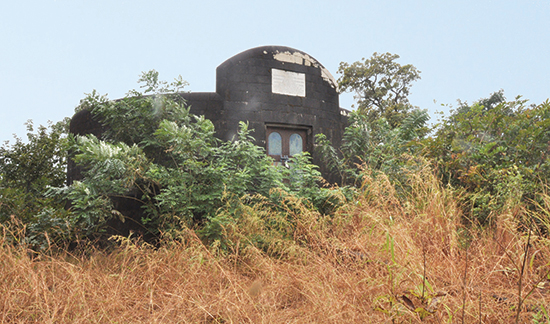
Unused Lonavla dakhma built in 1903
Multi-colored, balconied, ground or ground-plus-one-storey, gated bungalows with manicured gardens are situated a considerable distance away from the wall that encloses the forlorn Tower of Silence, a bungli, well and residential quarters. These are the only structures that architecturally hark to the days when the 13th Lord Elphinstone discovered Lonavla and its sister hill station Khandala in 1871.
An antique horse drawn hearse still stands on the veranda of the single-storied, Mangalore tiled quarters to once again remind one that this is a hallowed precinct for laying the dead to rest. Interestingly the name Lonavla, according to Wikipedia, is derived from the words Len, a resting place carved from stone and Avali, a place which has a series of such Len around it. Old timers called the resort Lenoli.
Initially Parsis working for the railways resided in the hill station; others came later. The first anjuman dinner was courtesy the Cooper family who initially ran a tadi nu pithu (a stall selling fermented juice tapped from a toddy tree) in the 1950s, and now runs the renowned Cooper Chikki outlet situated in the bazaar area adjacent to the Lonavla railway station, recalls Maneck Shroff, a long time resident and trustee of the Lonavla Khandala Parsi Zarthosti Anjuman (LKPZA). The charges for the dinner were three rupees plus a one rupee donation.
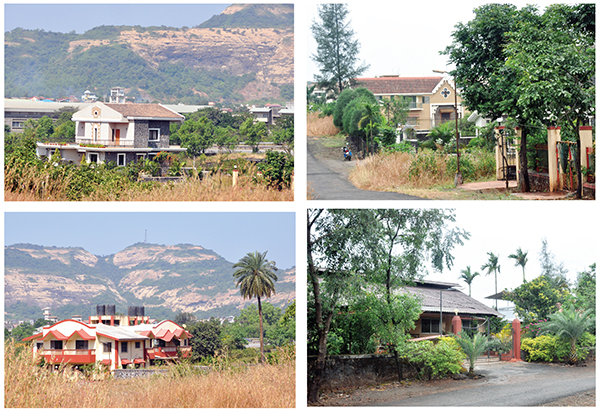
Private bungalows built on plots auctioned by the Lonavala and Khandala
Parsi Zarthosti Dokhma (Tower of Silence) Funds
The dakhma was built in 1903 but Shroff claims people were scared to venture to Doongerwadi for fear of snakes. The bodies were carried to Poona instead. Subsequently the Lonavla dakhma was again put to use.
Periodically the dakhma would be cleaned and the bones consigned to the bhandar (well). He recalled having to scrape the skin of five corpses in the dakhma that were stuck to the pavis. The lands were then cultivated with papaya trees. The last body to be consigned was of Banubai Irani in October 1988.
Concern and consent
The utilization of the lands surrounding the defunct dakhma for housing and the manner in which the land allotment was made provided a case study to those anjumans struggling to hold on to their doongerwadi properties. At the meeting of the West Zone B representatives of the Federation of the Parsi Zoroastrian Anjumans of India (FPZAI) in Bilimora on October 19, 2014 many delegates voiced concern about their doongerwadi lands lying unutilized and the possibility of encroachment or acquisition by the government.
Their fears are not unfounded. Vast tracts of the Surat doongerwadi lands have been encroached upon. The few acres left in the Surat Parsi Panchayat’s possession are encircled by a high wall; but at the entrance numerous vendors with fruit and vegetable laden handcarts hawk their produce. The story is repeated in countless other community properties across India. The Iranian Zoroastrian Anjuman delegates told the FPZAI gathering in Bombay in January 2013 of the anxiety they faced protecting their 2,000 acres of grassland in Palghar.
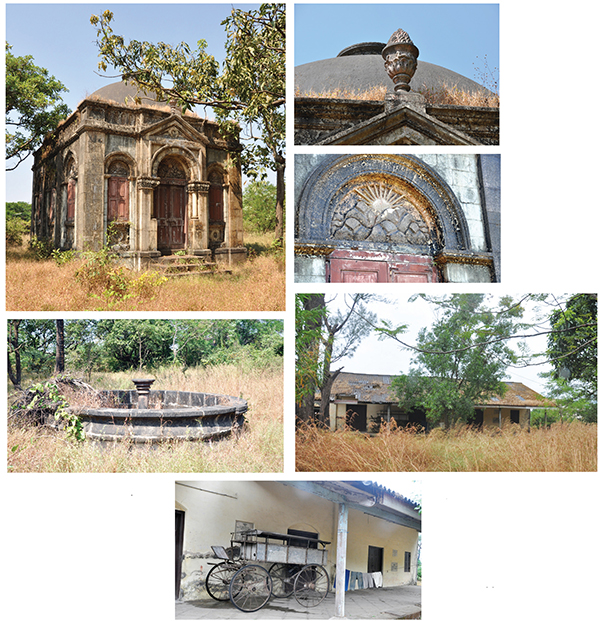
Clockwise from top left: Sagdi, section of structure and Dinshaw/Adenwalla family crest;
residential quarters with hearse on veranda; and well with fountain
Several years ago some trustees of the Thana anjuman left a FPZAI meeting hosted by them in Thana mid-way because a wall leading to their doongerwadi property had either collapsed or had been breached. Thana too has provided for housing on a plot adjacent to the dakhma ground. In Bombay, Godrej Baug is constructed on a plot abutting Doongerwadi. Here the Bombay Parsi Punchayet (BPP), the house of Godrej and other donors paid for the construction of 17 buildings including the mobed quarters.
In Lonavla, the initiative for developing the doongerwadi land was taken by the then trustees of the Lonavala and Khandala Parsi Zarthosti Dokhma (Tower of Silence) Funds (LKPZDF). On May 11, 1983 Cowas and Khodaparast Dinshaw, Boman Minocherhomji and Rustom Kuka initially placed an advertisement in the Jam-e-Jamshed and received offers ranging from Rs 52 to Rs 71 per sq m (10.7 sq ft). Trustee Saroosh Dinshaw recalled his father Cowas’ rationale for selling the plots: "He was scared he would lose the land. There was no boundary wall.” In October 1986 the trustees approached the Charity Commissioner (CC) "seeking sanction for the sale of the plots of land at village Tungarli, Lonavla, Taluka Mawal, Dist Poona at the rate of not less than Rs 80 per sq m with certain conditions.”
Dinshaw Mehta who was then not a trustee of the BPP told Cowas that the plots had to be sold only to Parsi Zoroastrians and not others as Cowas had reportedly proposed to do. Mehta assisted the trustees financially in having the plots demarcated and when Cowas was diffident about whether the sale would go through or not, Mehta said he offered to underwrite the entire amount for any unsold plots.
When awaiting the CC’s ratification of the proposed sale a public notice was placed in the Free Press Journal and Jamé on September 17, 1987. An auction was held on October 10, 1987 at the K. R. Cama Oriental Institute.
On the day of the auction the hall was packed with eager buyers. The bidding became more hectic as the plots got fewer, recalls Mehta. Two plots were given to architect Rusi Khambatta in lieu of payment for his services. Lawyer Bucky Bhesania of Mulla and Mulla, Cragie Blunt and Caroe was the solicitor for the transaction. Mehta said he did not bid to avoid allegations that he assisted out of any ulterior motives. He also avers the unsold plots were set aside for community purposes "an old folks home,” etc and were not to be sold.
In Lonavla, the initiative for developing the doongerwadi land was taken by the then trustees of the Lonavala and Khandala Parsi Zarthosti Dokhma (Tower of Silence) Funds (LKPZDF). On May 11, 1983 Cowas and Khodaparast Dinshaw, Boman Minocherhomji and Rustom Kuka initially placed an advertisement in the Jam-e-Jamshed and received offers ranging from Rs 52 to Rs 71 per sq m (10.7 sq ft). Trustee Saroosh Dinshaw recalled his father Cowas’ rationale for selling the plots: "He was scared he would lose the land. There was no boundary wall.” In October 1986 the trustees approached the Charity Commissioner (CC) "seeking sanction for the sale of the plots of land at village Tungarli, Lonavla, Taluka Mawal, Dist Poona at the rate of not less than Rs 80 per sq m with certain conditions.”
Dinshaw Mehta who was then not a trustee of the BPP told Cowas that the plots had to be sold only to Parsi Zoroastrians and not others as Cowas had reportedly proposed to do. Mehta assisted the trustees financially in having the plots demarcated and when Cowas was diffident about whether the sale would go through or not, Mehta said he offered to underwrite the entire amount for any unsold plots.
When awaiting the CC’s ratification of the proposed sale a public notice was placed in the Free Press Journal and Jamé on September 17, 1987. An auction was held on October 10, 1987 at the K. R. Cama Oriental Institute.
On the day of the auction the hall was packed with eager buyers. The bidding became more hectic as the plots got fewer, recalls Mehta. Two plots were given to architect Rusi Khambatta in lieu of payment for his services. Lawyer Bucky Bhesania of Mulla and Mulla, Cragie Blunt and Caroe was the solicitor for the transaction. Mehta said he did not bid to avoid allegations that he assisted out of any ulterior motives. He also avers the unsold plots were set aside for community purposes "an old folks home,” etc and were not to be sold.
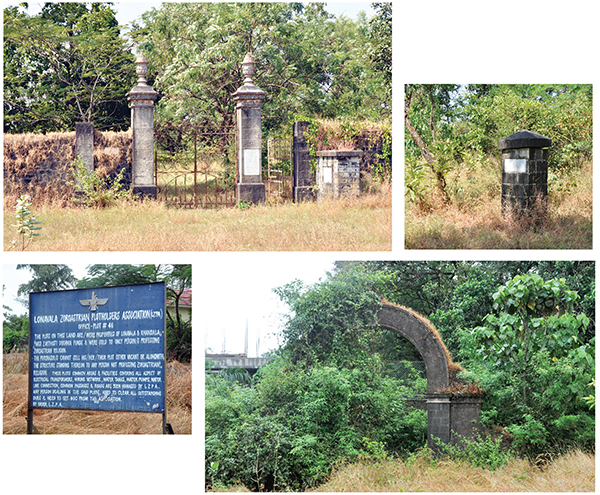
Clockwise from top left: Doongerwadi gate; stone post with marble plaque instructing worshippers to stop at that point;
earlier entrance archway and Lonavala Zoroastrians Plotholders Association signboard
For the plots closest to the towers of silence, the buildings were to be single-storey structures with a height restriction of 19 feet (5.79 m) "from the plinth level to the apex of the roof,” while those at a distance were permitted ground-plus-one-storey with a limit of 31 feet (9.45 m). The plots could be sold only to Parsi Zoroastrians. "It was also stipulated that the users will be Zoroastrians only and if at all necessary, the plots will be let, sub-let or otherwise transferred to persons, only professing Parsi Zoroastrian faith.” The CC K. M. Desai observed in his order dated August 6, 1991 that the plots could not be sold for a period of five years from the date of his order.
Out of the 71 plots demarcated 57 "were offered for sale and the rest of the plots retained by the trust… The plots (range) between 1,072 sq m (11,539 sq ft) to 1,549 sq metre (16,673 sq feet)... The average price on the basis of the highest offers given by different persons for each plot, is Rs 176.39 per sq m,” noted Desai or around Rs 2,00,000 to Rs 3,00,000 a plot. (A plot was reportedly sold towards the end of 2014 for around Rs 80,00,000 — editors)
In the sale agreement or (indenture of conveyance) made with each purchaser it is stated that while the plots were to be used by Parsi Zoroastrians alone "this covenant shall not apply to any domestic servant, attendant, governess, nurse or any bonafide employee or temporary guest of the purchasers.”
The unsold plots retained with the trust were to be used "either for sanatorium or rest house and/or for carrying out other charitable” objectives.
The trustees had asked for an additional sum of Rs 36,000 when selling the flats. While sanctioning the increase the CC noted "the additional development cost for the development of the land in question includes the cost of development of those 14 plots which have been retained by the applicant trust.” Saroosh noted whatever money was realized from the sale of the plots went into levelling of the land, roads, electric poles, etc. In some cases the work had to be re-done as it was not properly executed.
Some years back Saroosh merged the LKPZDF with the Cowasjee Dinshaw Trust which also manages the Cowasjee Dinshaw Adenwalla (CDA) Agiary in Lonavla "for ease of management.” Consolidation of the trusts also makes them more financially viable, he notes.
Shroff recalls that Cowas "had agreed to give two plots for the use of poor Parsis.”
Sam Choksey, also a trustee of the Anjuman, had requested the current trustees to spare a plot for a sanatorium for visiting Parsis. But Saroosh who is also the president of the LKPZA is unsure if the necessary funds can be raised for such a venture and questions whether the facility will be adequately utilized allowing for the number of existing sanatoriums in Lonavla and Khandala. "First utilize the Anjuman’s assets to the fullest,” said Saroosh referring to a proposed guest house tenanted by the Anjuman that is still to be renovated and put to use.
He would prefer to keep the plots as a "fixed deposit” for future contingencies and "charitable objectives for the community in the future.” Saroosh’s primary concern though is the upkeep of the CDA Agiary. "I want the Agiary should survive for another 100 years.” He notes each year costs are increasing for "kathi, salaries and maintenance” of the 115-year-old structure which houses two fires, one having been flown in from Aden. He notes that the building, Mount View, situated in the Agiary complex has been given on leave and license basis as a guest house for the employees of the Poona based company Thermax, courtesy Anu Aga. This augments the fire temple’s income.
By housing two fires the CDA Agiary also served as a model for anjumans that have an excess of fire temples but few devotees and dwindling income; the Doongerwadi land development shows how the property can be safeguarded and utilized to advantage. Developing community property is fraught with dangers. But doing nothing can be far worse.
◆ ◆ ◆
From the archive